
Launching or expanding a brewery is not just a creative decision. It is a serious investment decision that will impact your production efficiency, product quality, and long‑term profitability. At the center of this decision is one core topic: choosing the right beer brewing equipment.
For many breweries, HGMC® beer brewing equipment has become a trusted solution because it combines engineering precision, modular design, and real business results. However, even the best equipment will not perform well if it is not correctly matched to your production capacity, growth plans, and technical requirements.
This guide will walk you through how to select beer brewing equipment in a professional, data‑driven way. It is written for brewery owners, investors, head brewers, and technical managers who want reliable numbers, not marketing slogans.

1. Start With a Precise Diagnosis of Your Production Capacity
Before you look at any catalog or quotation, the most important step is to understand your own production capacity and future growth. The right beer brewing equipment is not simply “big” or “small”. It must match:
- Your current annual output
- Your expected growth in the next 3–5 years
- The production frequency of your core products
1.1 Analyze Historical Sales Data
Use at least 3–5 years of historical sales data to calculate your average annual growth rate and seasonality.
Key questions to answer:
- What is your current annual production volume in liters or kiloliters?
- How fast has this volume been growing per year?
- Are there strong seasonal peaks (for example, summer or festive seasons)?
- Which SKUs or beer styles drive the majority of your revenue?
With this information, you can project a realistic production demand curve for the next few years instead of relying on guesswork.
1.2 Convert Targets into Equipment Size
Once you know your target capacity, you can translate that into the required size of your mashing and fermentation systems.
For example:
- Assume your annual target production capacity is 10,000 kiloliters.
- You plan to produce two batches per week.
- In this case, the volume of a single‑batch mashing system should be around 100 kiloliters.
This type of calculation ensures that the scale of your beer brewing equipment is directly linked to your actual production plan, not just to marketing promises from suppliers.
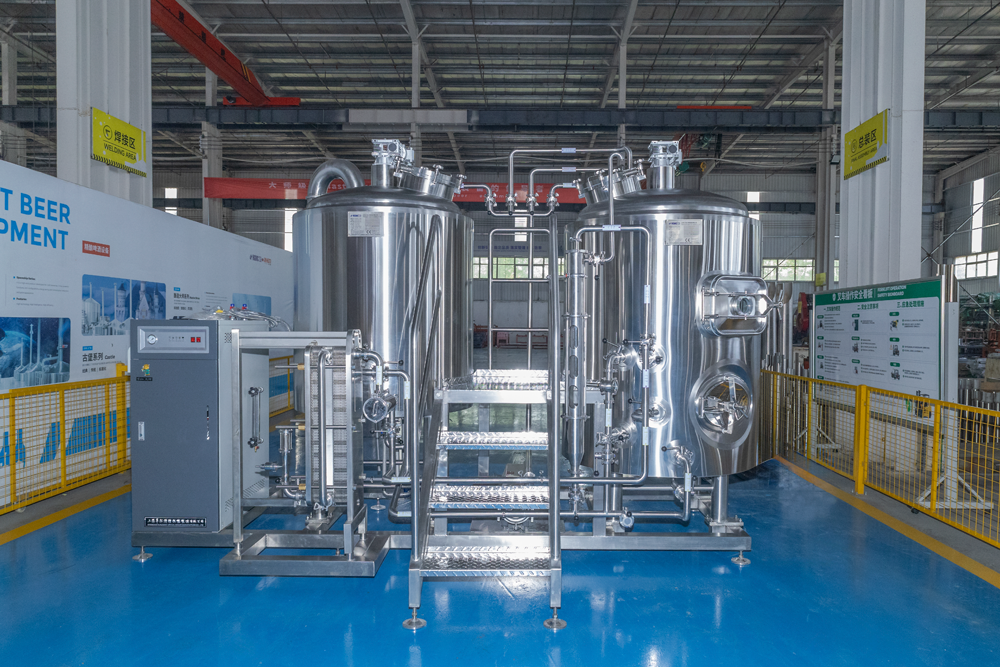
HGMC offers mashing pot specifications ranging roughly from 500 liters up to 500 kiloliters, with thermal efficiency as high as 92%. That level of efficiency can lead to about 15% reduction in energy consumption costs during the wort preparation stage, which significantly improves your cost structure over time.
2. Real‑World Impact: A Craft Brewery Case Study
To understand how the right HGMC beer equipment can change the economics of brewing, consider the case of a craft brewery with an annual production capacity of 8,000 liters.
After a detailed capacity diagnosis and process analysis, the brewery selected a set of matching HGMC beer brewing equipment:
- Equipment utilization rate increased from 70% to 88%
- Annual profit rose by 25%
The improvement was not only due to larger tanks. It came from:
- Better alignment between mashing volume, fermentation capacity, and demand
- Higher thermal efficiency and lower energy consumption
- More stable and predictable brew cycles
This example shows that choosing HGMC beer brewing equipment is not just a purchase decision, but a strategic investment that can transform your operation and profit margin.
3. Investment Analysis: Look Beyond the Purchase Price
For any serious brewery project, investment analysis and cost‑benefit modeling are at the core of decision‑making. Many investors focus heavily on the initial purchase cost of beer brewing equipment, but long‑term costs matter more.
3.1 Understanding the Investment Structure
In a typical brewery project:
- The initial equipment budget usually accounts for 30–40% of the total project investment.
- However, the life cycle cost of the equipment (energy, maintenance, downtime, labor, and raw material utilization) will have a larger financial impact over time.
This is why professional investors and brewery owners look at:
- Payback period
- Internal rate of return (IRR)
- Total cost of ownership over 5–10 years
3.2 Payback Example: 50,000 Kiloliter System
Consider an HGMC beer equipment solution designed for an annual output of 50,000 kiloliters:
- The average payback period of the automated mashing system is about 2.5 years.
- Why so fast?
- Raw material utilization rate can reach 99%, reducing malt and adjunct waste.
- Labor costs per 100 liters of beer can be reduced by 20% thanks to higher automation and better process integration.
This combination of high extraction efficiency and lower labor cost helps brewers recover their initial investment quickly while building a more competitive cost structure.
4. Modular and Scalable: Reducing Future Expansion Costs
One of the most underestimated topics in choosing beer brewing equipment is future expansion. Very few breweries stay at the same scale forever. Many grow rapidly, and some outgrow their original equipment in only a few years.
HGMC has designed its modular and scalable brewing systems to address exactly this challenge.
4.1 Lower Secondary Investment Cost
According to an industry investment analysis report in 2023, customers who choose a modular, scalable HGMC system can:
- Reduce secondary investment cost by up to 40% when expanding production capacity.
The reason is simple:
- The core control system and infrastructure can be reused.
- New modules such as extra fermenters or upgraded mashing systems can be added without completely rebuilding the plant.
This approach avoids heavy demolition and re‑installation costs, and keeps your brewery productive even during expansion.
4.2 Predictive Maintenance and Downtime Reduction
HGMC also emphasizes predictive maintenance and data‑driven monitoring in its beer brewing equipment:
- Predictive maintenance strategies can reduce unplanned downtime by up to 85%.
- This directly protects annual output value that can reach several million yuan for mid‑ to large‑scale breweries.
In other words, the equipment is not only designed to brew beer, but also to protect your revenue stream by keeping the system running reliably.
5. Flexible Capacity: Growing from 20,000 to 50,000 Kiloliters
The flexibility and future scalability of your equipment largely determine how fast and how far your brewery can grow.
HGMC beer equipment is built around a modular design principle, allowing expansion in units of roughly 20% capacity increase.
5.1 Example: Step‑By‑Step Expansion
Imagine a brewery starting with an initial production capacity of 20,000 kiloliters:
- With a modular HGMC system, the brewery can gradually increase capacity to 50,000 kiloliters within three years.
- Expansion is executed by:
- Adding fermentation tank groups
- Upgrading or expanding the control system
- Throughout this process, the overall equipment effectiveness (OEE) loss can be controlled within 5%, which is very low for such large upgrades.
5.2 Seamless System Integration
The HGMC central control platform is designed for seamless integration of new modules:
- The number of managed data points can grow from around 500 to more than 2,000 without replacing the core system architecture.
- This is especially important for breweries that plan to:
- Add new production lines
- Introduce more SKUs
- Implement advanced quality tracking or traceability systems
A rapidly growing craft beer brand, for instance, used HGMC beer brewing equipment to complete three capacity ramps within five years. Each upgrade period of production suspension was controlled within seven days, ensuring that the brewery could continue to meet a fast‑rising market demand.
6. Why Technical Details Matter: From Micro Parameters to Macro Results
It is often the seemingly minor technical parameters that decide the final brewing quality and operational efficiency. When you evaluate HGMC beer brewing equipment, pay close attention to:
6.1 Precision of Process Control
- Fermentation Temperature Accuracy
- Can the temperature control accuracy of the fermentation tank reach ±0.1°C?
- This directly affects:
- Yeast metabolism
- Flavor compound formation
- Consistency of product profiles from batch to batch
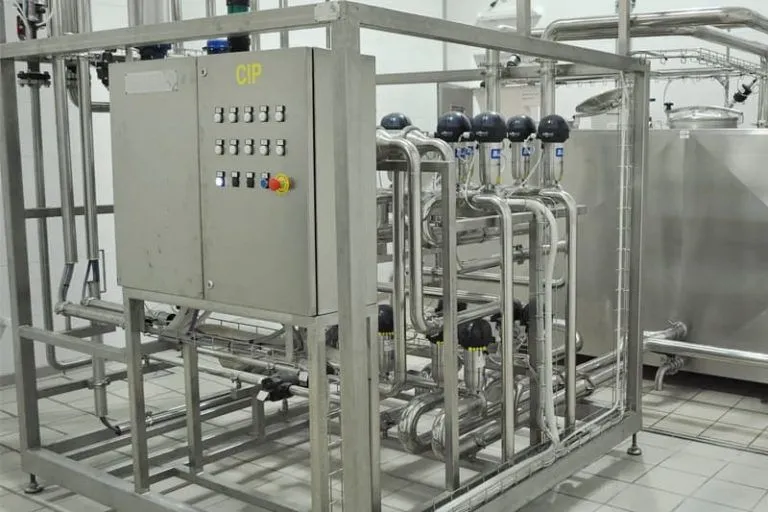
- CIP System Flow Deviation
- Is the flow deviation of the CIP cleaning system less than ±3%?
- This is closely related to the reliability of hygiene and safety, ensuring that cleaning and disinfection are both complete and consistent.
- Saccharification Yield Stability
- An excellent configuration should keep the batch‑to‑batch standard deviation of saccharification yield below 0.5%.
- This translates into:
- More stable raw material costs
- Predictable extract yield
- Consistent wort quality for every brew
6.2 Compliance With International Standards
Beer brewing equipment operates under high temperature, pressure, chemical and microbial conditions. To ensure safety and long‑term reliability, make sure your system:
- Meets international standards such as ASME BPE and CE.
- Has a surface finish (Ra value) below 0.6 microns, which can:
- Reduce the probability of microbial contamination by more than 90%
- Simplify cleaning and improve long‑term sanitation
These are not just technical labels. They represent engineering quality, regulatory compliance, and risk control. If you plan to export beer or welcome audits from international partners, standards like ASME BPE and CE are essential.
7. From Equipment Purchase to Long‑Term Competitive Advantage
Many breweries treat beer brewing equipment as a simple procurement item. In reality, it is a long‑term strategic asset. Every detail you evaluate today will influence your competitiveness for the next decade.
When you consider HGMC® Beer Brewing Brewery Equipment, keep in mind three key dimensions:
7.1 Capacity and Growth Alignment
- Does the system match your current production volume?
- Can it scale smoothly to your 3–5 year target?
- Are there clear, modular pathways to expand by 20% increments or more?
7.2 Operational Efficiency and Cost Structure
- What is the thermal efficiency of the mashing and heating systems?
- How much energy can you save, and how quickly will this offset the initial investment?
- How high is the raw material utilization rate, and what does that mean in annual cost savings?
- How many operators are needed per shift, and how does automation reduce labor cost per 100 liters?
7.3 Quality, Safety, and Compliance
- Can the fermentation temperature be controlled within ±0.1°C?
- Is the CIP flow deviation ≤ ±3% across critical lines?
- Is the saccharification yield variance kept under 0.5% from batch to batch?
- Does the system comply with ASME BPE, CE, and other relevant standards?
- Is the Ra value < 0.6 μm on product‑contact surfaces to minimize contamination risk?
By systematically reviewing these aspects, brewery owners can move from “buying tanks” to building a high‑performance brewing platform.
8. How HGMC Beer Brewing Equipment Supports Different Brewery Scales
HGMC designs and manufactures beer brewing equipment for a wide range of brewery sizes, including:
- Start‑up craft breweries
- Smaller brewhouses with flexible, multi‑product capability
- Focus on quality and consistency from batch one
- Growing regional breweries
- Medium‑scale systems with modular expansion options
- Strong emphasis on OEE, labor efficiency, and energy savings
- Large industrial breweries
- High‑capacity, highly automated systems up to tens of thousands of kiloliters per year
- Advanced process integration, traceability, and digital monitoring
Because HGMC solutions cover mashing pot specifications from around 500 liters to 500 kiloliters, breweries at different stages of development can find a precisely matched configuration.
9. Turning Technical Decisions Into Business Results
When you stand in front of a line of stainless steel tanks, it is easy to see them simply as hardware. But for a serious brewery, every technical choice is a financial choice.
By choosing well‑designed HGMC beer brewing equipment, you can:
- Optimize thermal efficiency and reduce energy bills
- Maximize raw material utilization and stabilize cost per liter
- Improve labor productivity and reduce dependence on manual operations
- Achieve consistent product quality and pass demanding audits
- Expand capacity with minimal disruption and lower secondary investment
- Protect your annual output and revenue through predictive maintenance and robust control systems
In this sense, a carefully evaluated equipment budget is not just a capital expense. It is a long‑term investment in your brewery’s core competitiveness.
10. Conclusion: A Framework for Selecting Beer Brewing Equipment
To summarize, when you evaluate beer brewing equipment and consider HGMC® Beer Brewing Brewery Equipment, follow this step‑by‑step framework:
- Quantify your current and future capacity
- Use historical sales data and 3–5 year growth projections.
- Translate annual targets into brewhouse and tank volumes.
- Model your investment and payback
- Consider life cycle cost, not just purchase price.
- Evaluate payback period based on energy savings, labor reduction, and raw material utilization.
- Prioritize modularity and scalability
- Choose systems that allow 20% stepwise expansions.
- Reuse core control and utility infrastructure to reduce secondary investment.
- Demand precise process control
- Temperature control accuracy, CIP flow stability, and saccharification yield variance must all meet strict targets.
- Ensure compliance and hygienic design
- Look for ASME BPE, CE, and Ra ≤ 0.6 μm on product‑contact surfaces.
- Treat sanitary design as a direct driver of product safety and brand reputation.
- Connect technical specs to financial outcomes
- Ask how each parameter affects cost per liter, downtime, and profit margin.
- Choose configurations that have proven in practice to increase utilization and profit, as in the case of the craft brewery that raised utilization from 70% to 88% and profits by 25%.
By following this framework, you can move beyond simple catalog comparisons and make decisions with authority, data, and confidence. The right HGMC beer brewing equipment does more than brew beer. It supports your brand’s quality, protects your investment, and creates a solid foundation for long‑term growth in an increasingly competitive global beer market.
