
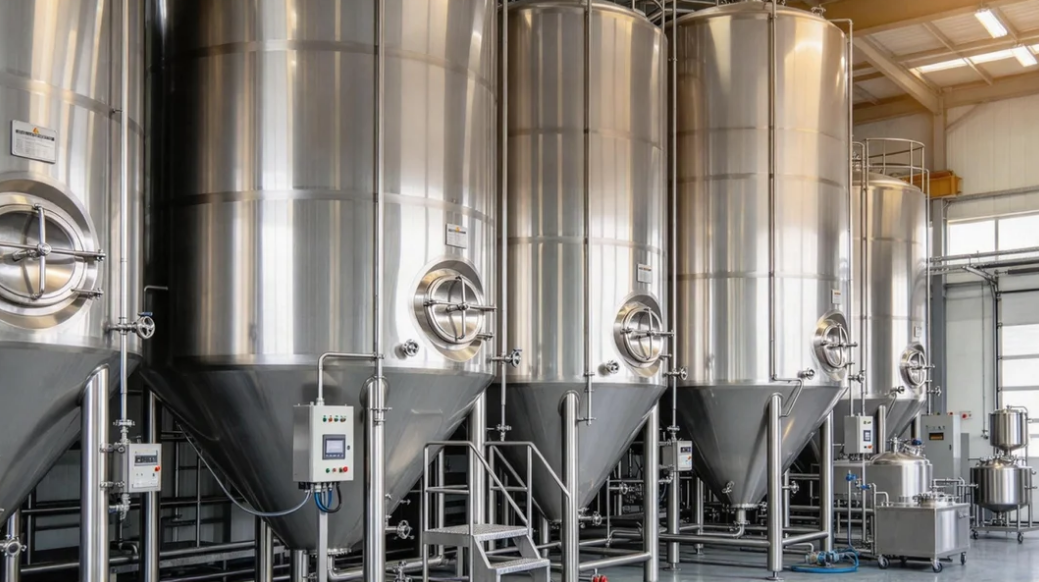
Choosing high capacity fermentation tanks for a turnkey brewery requires more than comparing tank volumes. Buyers should evaluate production targets, fermentation cycles, cooling performance, material quality, factory space, and the complete equipment supply scope. The right configuration helps commercial breweries maintain consistent production, reduce bottlenecks, and prepare for future expansion. Before investing in large fermentation vessels, buyers should compare technical specifications and ensure that tanks, cooling systems, cleaning equipment, and piping work together as an integrated production system.
What Capacity Should Buyers Choose for a Commercial Brewery?
The best fermentation tank capacity depends on actual production demand and the brewery’s operating schedule. Large tanks are suitable for breweries producing consistent batches at high volumes, while smaller tanks provide greater flexibility for businesses serving multiple beer styles.
A brewery with stable demand may benefit from several large fermenters that match its brewhouse output. This configuration can simplify production planning and reduce the number of vessels required for a given total volume.
However, breweries producing seasonal beers or small specialty batches may prefer a combination of large and small tanks. This arrangement allows different beers to ferment independently without leaving excessive unused capacity.
Before choosing a tank size, buyers should evaluate:
- Target annual and monthly beer production.
- Brewhouse batch volume and brewing frequency.
- Fermentation and maturation time.
- Number of beer styles produced simultaneously.
- Expected production growth over the next three to five years.
The goal is to balance tank utilization with production flexibility rather than simply purchasing the largest available vessel.
Which Specifications Matter When Buying High Capacity Fermentation Tanks?
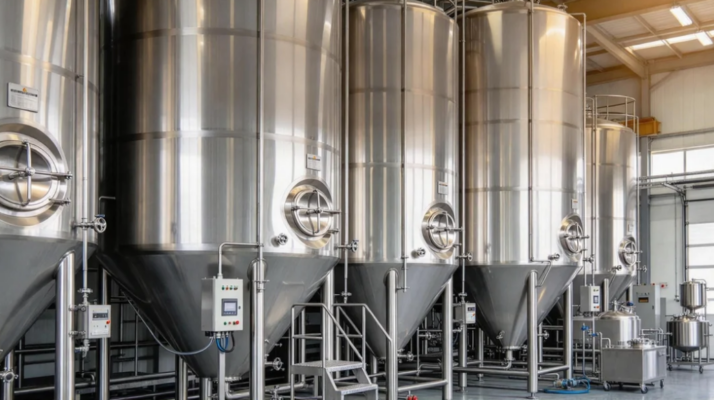
Tank specifications directly affect operating performance, installation requirements, and long-term reliability. Buyers should compare working capacity, gross capacity, stainless steel grade, cooling design, dimensions, and pressure ratings before approving an equipment quotation.
How Do Tank Capacity and Material Affect Selection?
Working capacity indicates the usable volume available for fermentation, while gross capacity includes additional internal space. The difference is important because beer needs suitable headspace during fermentation.
For example, a 5,000L fermentation tank may have a gross capacity of 6,250L. This additional volume supports operating headspace, although the final filling level must follow the manufacturer’s design and the brewery’s process requirements.
SUS304 stainless steel is commonly used for commercial beer fermentation tanks because it offers corrosion resistance, cleanability, and durability when properly fabricated and maintained. Buyers should also inspect weld quality, surface finish, seals, and cleaning arrangements.
Example of High Capacity Fermentation Tank Specifications
The following table summarizes an example 5,000L fermentation tank configuration listed by HGMC. These specifications should be confirmed against the final quotation and approved technical drawings.
| Parameter | Example specification | Purchasing consideration |
|---|---|---|
| Working capacity | 5,000L | Match brewhouse batch volume |
| Gross capacity | 6,250L | Verify available headspace |
| Material | SUS304 stainless steel | Confirm material grade |
| Dimensions | Approx. 2,100mm diameter × 4,000mm high | Check installation clearance |
| Cooling method | Jacket section cooling | Match cooling requirements |
| Heat exchange area | 7.2m² | Verify actual cooling load |
| Inner shell thickness | 3.0mm | Confirm engineering specifications |
| Outer jacket thickness | 2.0mm | Check approved design |
| Listed working pressure | 0.09MPa | Verify applicable pressure requirements |
Note: These are example specifications, not universal requirements for every brewery. Final dimensions, pressure ratings, and construction details depend on the selected model and applicable standards.
What Should a Turnkey Fermentation Tank Solution Include?
A turnkey fermentation tank solution should coordinate vessels with the auxiliary equipment and services required for operation. Purchasing tanks separately without checking system compatibility can create additional installation costs and production delays.
Fermentation Tanks and Accessories
The main supply may include fermentation vessels, sample valves, temperature sensors, pressure gauges, manholes, discharge fittings, and cleaning devices. Buyers should request an itemized list to identify which accessories are included and which must be purchased separately.
Cooling and Temperature Control
A suitable cooling system is essential for maintaining fermentation temperatures. Depending on the project, the configuration may include cooling jackets, glycol circulation, chillers, pumps, sensors, and automatic temperature controls.
Cooling capacity must account for the number of tanks operating simultaneously. A large fermentation cellar can experience production delays if the chiller cannot meet the combined cooling demand.
Cleaning, Piping, and Connections
Cleaning-in-place (CIP) equipment, transfer pumps, sanitary valves, and product piping help connect the fermentation cellar with the rest of the brewery. Their layout should support efficient cleaning, drainage, maintenance, and beer transfer.
Buyers should also confirm whether installation supervision, commissioning, operator training, and after-sales support are included in the turnkey contract.
How Can Buyers Prepare for Large Fermentation Tank Installation?
Proper site preparation helps prevent costly modifications after equipment delivery. High capacity tanks require sufficient access, structural support, utility connections, and maintenance clearance.
Before placing an order, buyers should verify door dimensions, ceiling height, lifting arrangements, floor load capacity, drainage, electrical supply, and cooling connections. Approved equipment drawings should be checked against the actual factory layout.
The installation sequence also matters. Positioning large tanks before surrounding equipment and piping are completed may simplify access and reduce handling difficulties.
After installation, the brewery should complete the required connection inspections, safety checks, cleaning procedures, and commissioning tests before starting commercial production.
What Determines the Cost of a Turnkey Fermentation Tank Project?
The total project cost depends on more than tank capacity. Tank quantity, stainless steel specifications, cooling equipment, automation, accessories, piping, transportation, and installation requirements all influence the quotation.
Customized tanks and integrated cooling systems may require a larger initial investment than standard vessels. However, comparing quotations solely by purchase price can overlook differences in included equipment, technical specifications, and support services.
To obtain an accurate quotation, buyers should provide their production target, preferred tank sizes, brewhouse capacity, factory layout, available utilities, and expected delivery location. They should also request a clear breakdown of equipment supply, installation, commissioning, and warranty responsibilities.
A well-defined project scope makes supplier comparisons more reliable and helps control unexpected expenses.
Conclusion: How Can Buyers Select the Right Fermentation Tank Configuration?
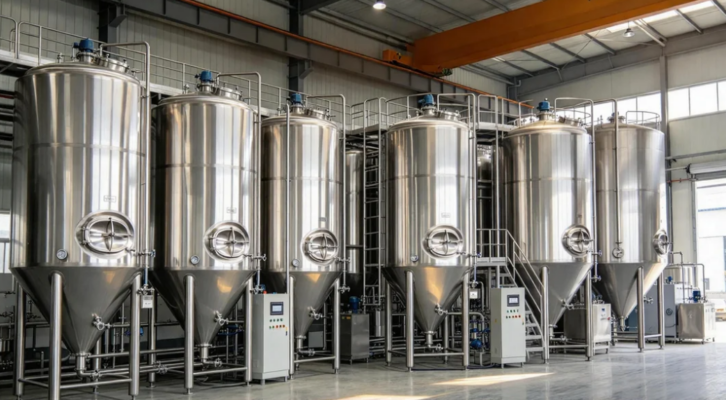
The right high capacity fermentation tank solution combines suitable vessel sizes with reliable cooling, efficient cleaning, and compatible brewery connections. Large tanks can support consistent, high-volume production, while smaller vessels offer flexibility for changing demand and diverse beer styles.
Before choosing a turnkey solution, buyers should compare working capacity, material specifications, cooling performance, installation conditions, and the complete scope of supply. A coordinated system can help improve production planning and provide a practical foundation for brewery expansion.
Frequently Asked Questions
1. What Size Fermentation Tank Is Suitable for a Commercial Brewery?
The appropriate size depends on brewhouse batch volume, fermentation time, production frequency, and product variety. Buyers should calculate required working capacity and total fermentation volume before selecting individual tanks.
2. Why Is Stainless Steel SUS304 Commonly Used for Fermentation Tanks?
SUS304 stainless steel offers corrosion resistance, cleanability, and durability for typical brewery applications when correctly fabricated and maintained. Buyers should verify the material grade and fabrication quality before ordering.
3. What Equipment Is Included in a Turnkey Fermentation Tank Solution?
A project may include fermentation tanks, cooling equipment, temperature controls, CIP systems, pumps, valves, piping, and selected installation or commissioning services. The exact scope should be confirmed in writing.
4. How Can Buyers Reduce the Cost of a Fermentation Tank Project?
Buyers can control costs by matching tank capacity to realistic demand, selecting appropriate automation, confirming utility requirements early, and comparing itemized quotations. Planning for future expansion can also help avoid unnecessary equipment purchases while preserving room for growth.
