
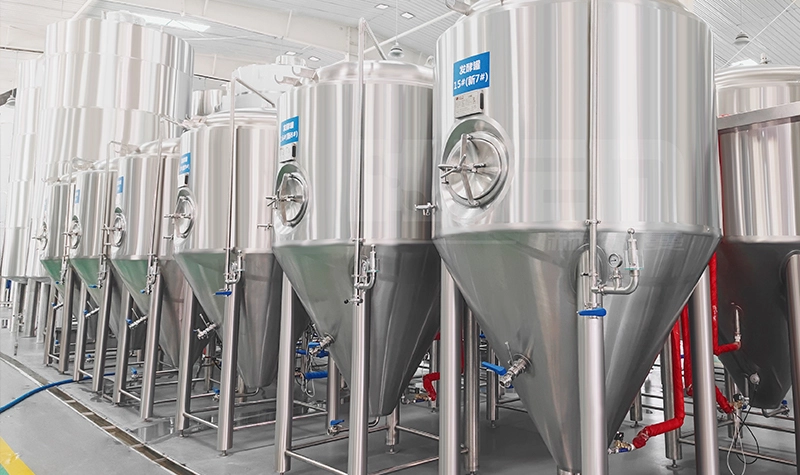
Selecting the right beer brewing tanks is one of the most critical decisions for any brewery operation. Whether you’re launching a new craft brewery or expanding an existing facility, understanding the nuances of brewing tank selection can significantly impact your production efficiency, beer quality, and overall return on investment.
According to the Brewers Association’s 2024 industry report, the craft beer market continues to grow, with over 9,500 breweries operating in the United States alone. This growth has driven innovation in brewing equipment technology, making it essential for brewery owners to stay informed about the latest developments in tank design, materials, and functionality.
Understanding Beer Brewing Tanks: Types and Functions
Primary Fermentation Tanks
Fermentation tanks, often called fermenters or FVs (Fermentation Vessels), are where the magic happens. These vessels house the wort after it leaves the brewhouse, providing the controlled environment necessary for yeast to convert sugars into alcohol and CO2.
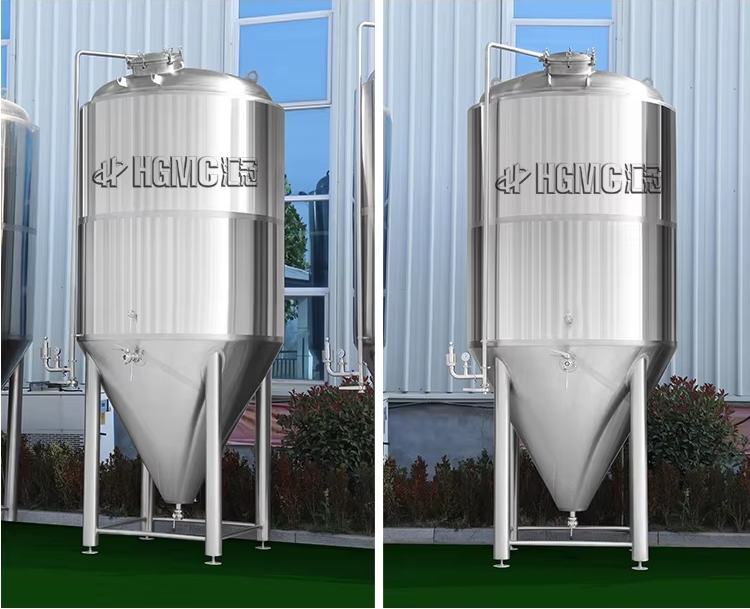
Key specifications:
- Temperature control systems (glycol jackets)
- Pressure rating: typically 14.5-30 PSI
- Cone angles: 60-90 degrees for optimal yeast collection
Bright Beer Tanks (BBTs)
Bright beer tanks serve as conditioning and storage vessels for beer after fermentation is complete. These tanks allow brewers to carbonate, clarify, and store finished beer before packaging.
Industry data: According to a 2024 survey by Craft Brewing Business, 78% of professional breweries use dedicated bright tanks to improve beer clarity and consistency.
Unitanks
Unitanks combine fermentation and conditioning functions in a single vessel, offering operational flexibility and space efficiency. These versatile tanks have become increasingly popular among craft breweries.
Advantages:
- Reduced beer transfers (minimizes oxidation risk)
- Lower initial capital investment
- Simplified CIP (Clean-in-Place) procedures
- Space optimization
Serving Tanks
For brewpubs and taprooms, serving tanks allow beer to be served directly from the cellar, maintaining optimal freshness and reducing packaging costs.
Industry Insight: The American Society of Brewing Chemists (ASBC) reports that minimizing oxygen exposure during transfers can extend beer shelf life by 30-50%, making unitank systems particularly valuable for quality-conscious breweries.
Key Factors to Consider When Choosing Brewing Tanks
Production Capacity Planning
Proper capacity planning begins with understanding your target production volume. Industry best practices suggest sizing your cellar to accommodate 2-3 times your brewhouse capacity to allow for proper fermentation scheduling.
Example calculation:
- Brewhouse: 10 BBL (310 gallons)
- Recommended fermentation capacity: 20-30 BBL
- Typical configuration: 2-3 fermentation tanks of 10 BBL each
Temperature Control Requirements
Different beer styles require different fermentation temperatures:
- Lagers: 45-55°F (7-13°C)
- Ales: 60-72°F (15-22°C)
- Specialized styles: May require even tighter control (±1°F)
According to research published by the Master Brewers Association of the Americas (MBAA), precise temperature control can improve fermentation consistency by up to 40% and reduce off-flavor formation.
Turnover Rate Analysis
Formula: Annual Production Capacity = (Tank Volume × Turns per Year) × Number of Tanks
Industry benchmarks (Brewers Association data):
- Small craft breweries (< 15,000 BBL/year): 12-15 turns/year per tank
- Mid-size breweries (15,000-100,000 BBL/year): 18-24 turns/year per tank
- Large craft breweries (> 100,000 BBL/year): 24-30 turns/year per tank
Automation and Control Systems
Modern brewing operations increasingly rely on automation for consistency and efficiency. Fully automatic turnkey beer brewing systems can:
- Monitor and adjust temperatures automatically
- Track fermentation progress via sensors
- Integrate with brewery management software
- Provide real-time alerts and diagnostics
Material Choices for Brewing Tanks: Stainless Steel vs. Others
Stainless Steel: The Industry Standard
304 Stainless Steel
- Most common grade for brewing tanks
- Excellent corrosion resistance
- Cost-effective for most applications
- Suitable for fermentation, bright tanks, and storage
316 Stainless Steel
- Superior corrosion resistance
- Recommended for coastal locations (high salt environment)
- Better performance with acidic or high-chloride cleaning solutions
- Premium pricing (typically 15-20% more than 304)
Comparative data from the Stainless Steel Industry Association:
- 304 SS lifespan in brewery applications: 20-25 years
- 316 SS lifespan in brewery applications: 25-30+ years
- Maintenance cost difference: 316 SS requires 10-15% less maintenance over lifetime
Alternative Materials
Plastic/HDPE Tanks
- Lower initial cost (30-40% less than stainless steel)
- Limited to smaller sizes (typically under 5 BBL)
- Shorter lifespan (5-10 years)
- Primarily used for homebrewing or pilot systems
Copper Vessels
- Traditional material for kettles and mash tuns
- Excellent heat conductivity
- Aesthetic appeal for customer-facing brewhouses
- Not suitable for fermentation (copper is toxic to yeast)
Cost-Benefit Analysis: While stainless steel represents a higher initial investment, industry data shows a Total Cost of Ownership (TCO) advantage of 35-40% over a 20-year period compared to alternative materials, primarily due to durability and lower maintenance requirements.
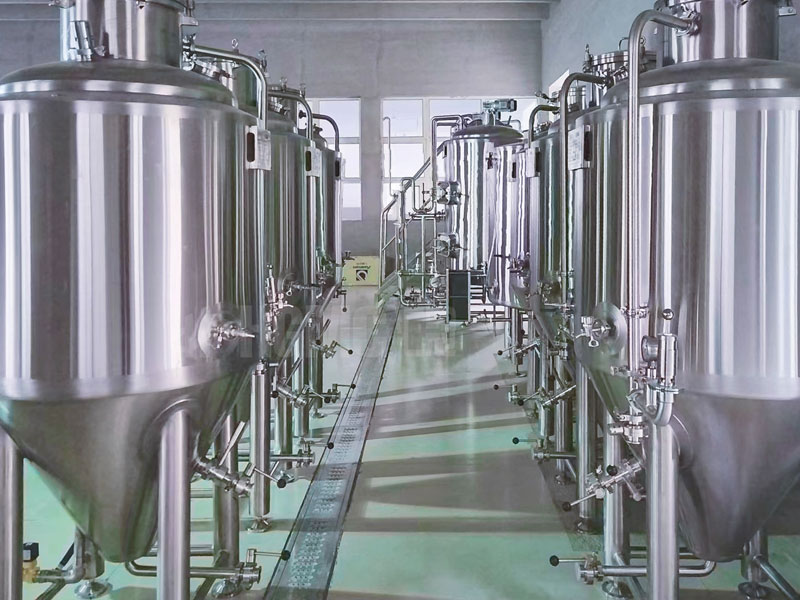
Sizing Your Brewing Tanks: Capacity and Space Requirements
Understanding Barrel (BBL) and Hectoliter (hL) Measurements
Standard conversions:
- 1 BBL = 31 US gallons = 117.3 liters
- 1 hL = 100 liters = 26.4 US gallons = 0.85 BBL
Common Tank Sizes and Applications
1-7 BBL Systems
- Ideal for: Brewpubs, nanobreweries, pilot systems
- Production capacity: 100-700 BBL/year
- Space required: 500-1,500 sq ft for complete system
10-20 BBL Systems
- Ideal for: Small craft breweries, expanding brewpubs
- Production capacity: 1,000-3,000 BBL/year
- Space required: 1,500-3,000 sq ft for complete system
30-60 BBL Systems
- Ideal for: Regional craft breweries
- Production capacity: 5,000-15,000 BBL/year
- Space required: 4,000-8,000 sq ft for complete system
100 BBL+ Systems
- Ideal for: Large production breweries
- Production capacity: 20,000+ BBL/year
- Space required: 10,000+ sq ft for complete system
Ceiling Height Requirements
Minimum ceiling heights by tank size (including top fittings):
- 5 BBL tanks: 12-14 feet
- 10 BBL tanks: 14-16 feet
- 20 BBL tanks: 16-18 feet
- 30+ BBL tanks: 18-24 feet
Source: Architectural guidelines from the Brewers Association Brewery Operations Manual
Floor Loading Calculations
A critical but often overlooked consideration is floor loading capacity.
Example calculation for 20 BBL tank:
- Tank volume: 20 BBL = 620 gallons = 5,170 lbs of liquid
- Tank weight (empty): ~800 lbs
- Total filled weight: ~6,000 lbs
- Tank footprint: ~16 sq ft
- Floor loading: 375 lbs/sq ft
Industry standard: Most industrial facilities are designed for 250-300 lbs/sq ft, so larger tanks may require floor reinforcement.
Design Features to Look for in Brewing Tanks
Cooling Systems
Glycol Jacket Design:
- Dimple jackets: Better heat transfer, more durable
- Conventional jackets: Lower cost, adequate for most applications
- Zone control: Allows different temperatures in different tank sections
Performance benchmarks:
- Cooling capacity: Should achieve 2-5°F drop per hour
- Glycol concentration: Typically 30-35% propylene glycol
- Insulation: 2-3 inches of polyurethane foam (R-value 6-7 per inch)
Cone Design and Yeast Harvesting
Optimal cone angles:
- 60-degree cone: Maximum yeast compaction, requires more vertical space
- 70-degree cone: Balanced performance, most common
- 90-degree cone: Space-efficient, suitable for clean ales
According to research from the Siebel Institute of Technology, proper cone design can improve yeast viability by 20-30% and reduce fermentation time by 10-15%.
CIP (Clean-in-Place) Systems
Effective cleaning is non-negotiable in brewing. Modern tanks should include:
- Spray balls with 360-degree coverage
- Tri-clamp fittings for easy inspection
- Smooth interior surfaces (electropolished to 0.5 Ra or better)
- Adequate drainage with no dead zones
Industry data: Proper CIP design can reduce cleaning time by 40-50% and water usage by 30%, according to studies by the Institute of Brewing and Distilling.
Pressure Rating and Safety Features
Standard pressure ratings:
- Atmospheric tanks: 0-3 PSI (primarily for serving tanks)
- Low-pressure tanks: 14.5-15 PSI (most fermentation tanks)
- High-pressure tanks: 30-60 PSI (for specialized applications)
Essential safety features:
- Pressure relief valves (PRV)
- Vacuum relief valves
- Pressure gauges
- Carbonation stones for controlled CO2 introduction
Port Configuration and Accessibility
Standard ports include:
- Top manway (18-24 inch diameter for tank access)
- Racking arm or bottom outlet
- Sample port
- Thermowell for temperature monitoring
- CIP spray ball connection
- Pressure gauge port
- PRV connection
Cost Considerations: Budgeting for Brewing Tanks
Price Ranges by Size and Configuration
Approximate costs (2025 market data):
| Tank Size | Basic Configuration | Fully Equipped Unitank |
|---|---|---|
| 3.5 BBL | $8,000-$12,000 | $12,000-$18,000 |
| 7 BBL | $12,000-$18,000 | $18,000-$28,000 |
| 10 BBL | $18,000-$25,000 | $28,000-$40,000 |
| 15 BBL | $25,000-$35,000 | $38,000-$55,000 |
| 20 BBL | $32,000-$45,000 | $50,000-$70,000 |
| 30 BBL | $48,000-$65,000 | $70,000-$95,000 |
| 60 BBL | $85,000-$120,000 | $125,000-$175,000 |
| 100 BBL | $140,000-$200,000 | $200,000-$280,000 |
Note: Prices vary based on specifications, manufacturer, and regional factors. Data compiled from industry surveys by Craft Brewing Business and Brewers Association supplier directories.
Total System Investment
Tanks represent only part of your total investment. A complete turnkey beer brewing system includes:
Component breakdown (percentage of total investment):
- Brewhouse (mash tun, lauter tun, kettle, whirlpool): 25-30%
- Fermentation tanks: 30-35%
- Bright tanks: 10-15%
- Glycol chilling system: 8-12%
- CIP system: 5-8%
- Hot liquor tank and related: 5-7%
- Controls and automation: 5-8%
- Installation and commissioning: 8-12%
Financing and ROI Analysis
Industry benchmark ROI timeline:
- Nanobreweries (1-3 BBL): 3-5 years
- Small craft breweries (7-15 BBL): 4-7 years
- Mid-size breweries (20-60 BBL): 5-8 years
According to the Brewers Association 2024 Economic Impact Study, breweries that invest in quality equipment see 25% faster ROI compared to those who opt for budget alternatives, primarily due to lower maintenance costs and better operational efficiency.
Hidden Costs to Consider
- Installation: 10-15% of equipment cost
- Site preparation: $10,000-$100,000+ depending on facility
- Permits and inspections: $5,000-$25,000
- Spare parts inventory: 3-5% of equipment cost annually
- Training: $2,000-$10,000
Maintenance and Durability of Brewing Tanks
Preventive Maintenance Schedule
Daily tasks:
- Visual inspection for leaks
- Pressure and temperature monitoring
- CIP after each batch
Weekly tasks:
- Check and clean sample ports
- Inspect gaskets and seals
- Test PRV functionality
Monthly tasks:
- Inspect spray balls
- Check glycol levels and concentration
- Inspect manway gaskets
Quarterly tasks:
- Calibrate temperature probes
- Pressure test (if required by local regulations)
- Deep clean and inspect cone internals
Annual tasks:
- Complete system inspection
- Replace worn gaskets and seals
- Recalibrate all sensors
- Passivation treatment (if needed)
Expected Lifespan and Replacement Cycles
Component lifespans (with proper maintenance):
- Stainless steel tank body: 20-30+ years
- Glycol jackets: 15-20 years
- Gaskets and seals: 1-3 years
- Pressure relief valves: 5-10 years
- Spray balls: 5-10 years
- Temperature probes: 3-5 years
Research from the Master Brewers Association indicates that proper maintenance can extend equipment life by 30-40% beyond manufacturer estimates.
Common Issues and Solutions
Problem: Temperature control inconsistency
- Cause: Inadequate insulation or glycol system sizing
- Solution: Add supplemental insulation, upgrade glycol chiller
Problem: Incomplete yeast harvesting
- Cause: Improper cone angle or insufficient cooling
- Solution: Adjust harvesting procedure, ensure proper cooling throughout cone
Problem: CIP inefficiency
- Cause: Spray ball clogging, incorrect chemical concentration
- Solution: Regular spray ball maintenance, water chemistry analysis
Turnkey Solutions: Comprehensive Brewery Systems
For breweries seeking a complete solution, fully automatic turnkey beer brewing systems offer significant advantages:
What’s Included in a Turnkey System
- Complete brewing equipment:
- Milling and grain handling
- Brewhouse vessels
- Fermentation tanks
- Bright beer tanks
- Glycol chilling system
- CIP system
- Automation and controls:
- PLC-based control systems
- Touch-screen HMI interfaces
- Automated valve systems
- Recipe management software
- Support services:
- Engineering and design
- Installation and commissioning
- Training programs
- Technical support
- Spare parts programs
Benefits of Turnkey Solutions
Consistency: Systems from HGMC and similar manufacturers undergo stringent testing procedures before delivery, ensuring all components work seamlessly together.
Customization: Despite being “turnkey,” modern systems offer extensive customization options to meet different process choices of different brewers, from traditional methods to innovative techniques.
Scalability: Quality turnkey systems from 1BBL to 100BBL can be designed with future expansion in mind, protecting your long-term investment.
Time to Market: Turnkey solutions typically reduce installation time by 30-50% compared to sourcing components separately.
Quality Assurance: Leading manufacturers like HGMC subject each brewing system to comprehensive testing including pressure tests, CIP functionality verification, temperature control validation, and full system integration checks before shipment.
Frequently Asked Questions (FAQ)
Q1: What size brewing tanks do I need for my startup brewery?
A: The answer depends on your production goals and available space. For a startup brewpub serving primarily on-premise, a 3.5-7 BBL system is typical. For a production-focused craft brewery with distribution plans, 10-20 BBL is more common. Calculate your target annual production and work backwards: if you want to produce 500 BBL/year and can turn tanks 15 times annually, you need approximately 33 BBL of total fermentation capacity (divide by 15).
Q2: Is 304 or 316 stainless steel better for brewing tanks?
A: For most inland brewery applications, 304 stainless steel is perfectly adequate and cost-effective. Choose 316 stainless steel if:
- Your brewery is in a coastal location (salt air corrosion)
- You use aggressive cleaning chemicals with high chloride content
- You want maximum longevity (25-30+ year lifespan)
- Budget allows for the 15-20% premium
According to the Stainless Steel Industry Association, 304 SS properly maintained will serve breweries well for 20-25 years.
Q3: How many fermentation tanks do I need per brewhouse batch?
A: Industry best practice suggests a ratio of 2.5:1 to 3:1 fermentation capacity to brewhouse capacity. For example, with a 10 BBL brewhouse, you should have 25-30 BBL of fermentation capacity. This allows for:
- Proper fermentation time (10-14 days for ales, 21-28 days for lagers)
- Flexibility for seasonal beers
- Contingency for slower-than-expected sales
The Brewers Association recommends starting with at least 3 fermenters per brewhouse system.
Q4: What’s the difference between a fermenter and a unitank?
A: A traditional fermenter is designed specifically for primary fermentation and typically transfers beer to a bright tank for conditioning. A unitank performs both fermentation AND conditioning in the same vessel, featuring:
- Higher pressure rating (30+ PSI for carbonation)
- Carbonation stone
- Sample port
- More robust cooling system
Unitanks cost 25-40% more but eliminate one transfer step, reducing oxidation risk and labor.
Q5: How much does it cost to install brewing tanks?
A: Installation typically costs 10-15% of the equipment purchase price. For example:
- 7 BBL tank ($15,000): $1,500-$2,250 installation
- 20 BBL tank ($40,000): $4,000-$6,000 installation
This includes:
- Rigging and positioning
- Glycol line connections
- Basic plumbing and electrical
- System testing
Complex installations with extensive facility modifications can cost significantly more.
Q6: What maintenance is required for brewing tanks?
A: Daily maintenance includes visual inspections and proper CIP after each batch. Weekly tasks include gasket checks and sample port cleaning. Monthly inspections should cover spray balls and glycol systems. Quarterly tasks include temperature probe calibration. Annual maintenance should include complete system inspection and passivation if needed.
According to MBAA guidelines, breweries spending 2-3% of equipment value annually on preventive maintenance experience 50% fewer emergency repairs.
Q7: Can I expand my system later?
A: Yes, quality systems are designed for expansion. When planning:
- Ensure adequate glycol chiller capacity (size for 150% of initial tank volume)
- Include extra CIP capacity
- Design electrical systems with growth in mind
- Maintain consistent tank sizes for operational simplicity
Most breweries expand within 2-3 years, so planning ahead is wise.
Q8: What’s the lifespan of a stainless steel brewing tank?
A: With proper maintenance:
- Tank body: 20-30+ years
- Glycol jacket: 15-20 years
- Fittings and valves: 10-15 years (with regular replacement of wear items)
The Master Brewers Association reports that well-maintained tanks often exceed 30 years of service life.
Q9: Do I need separate bright tanks or can I use unitanks?
A: Both approaches work. Unitanks offer:
- Lower initial investment
- Reduced transfers (less oxygen pickup)
- Simpler operations
Separate bright tanks provide:
- Faster tank turnover
- Dedicated conditioning space
- Better for complex beer portfolios
Many breweries use a hybrid approach: unitanks for core beers, separate bright tanks for specialty products.
Q10: What should I look for when choosing a brewing equipment manufacturer?
A: Key factors include:
- Experience: Look for manufacturers with 10+ years in the industry
- Testing protocols: Ensure systems undergo pressure testing, CIP validation, and full integration testing
- Customization capability: Can they adapt to your specific brewing process?
- Support: What training, spare parts, and technical support do they provide?
- References: Request contact information for existing customers
- Certifications: Check for relevant quality certifications and safety standards compliance
Manufacturers like HGMC with long-term customization experience and turnkey solution capabilities can provide comprehensive support from 1BBL to 100BBL systems.
Conclusion: Making the Right Investment
Choosing brewing tanks is a significant investment that will impact your brewery’s operations for decades. By carefully considering the factors outlined in this guide—tank types, materials, sizing, design features, costs, and maintenance requirements—you can make informed decisions that support your brewery’s success.
Key takeaways:
- Plan for growth: Size your system for 2-3x your initial production targets
- Don’t compromise on quality: Premium stainless steel and proper design pay dividends over 20+ years
- Consider turnkey solutions: Fully automatic systems offer consistency, testing, and integrated support
- Factor in total costs: Include installation, maintenance, and hidden costs in your budget
- Prioritize flexibility: Choose systems that can adapt to different brewing processes and styles
Whether you’re establishing a 1BBL pilot system or a 100BBL production facility, partnering with experienced manufacturers who provide perfect beer equipment design and personalized custom brewing solutions ensures your investment delivers optimal performance and reliability.
The craft beer industry continues to evolve, and having the right equipment foundation positions your brewery for long-term success in this dynamic market.
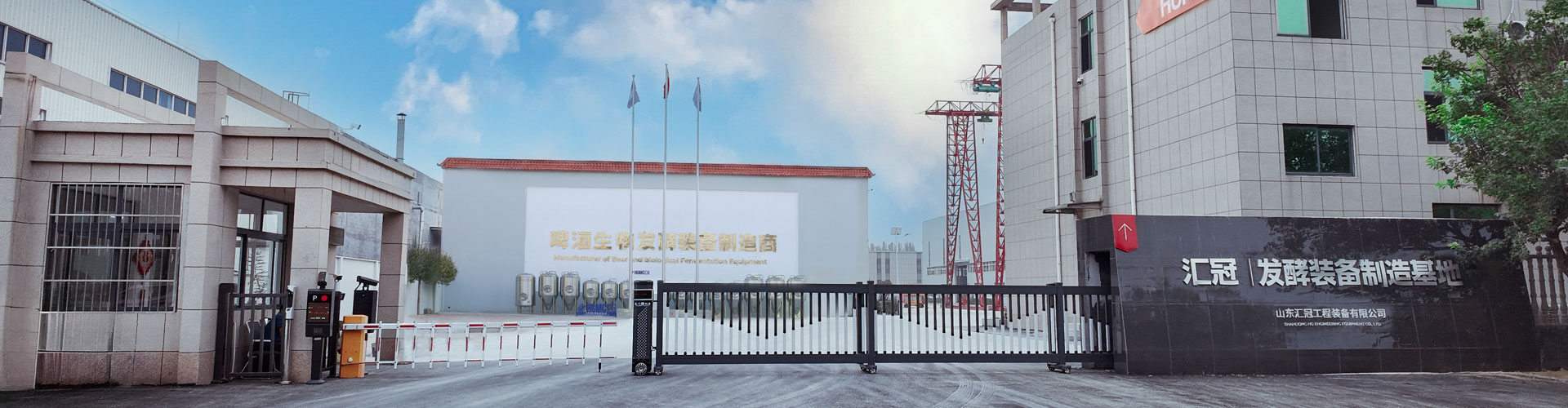
About HGMC: HGMC provides fully automatic turnkey beer brewing systems designed to meet the different process choices of brewers worldwide. With extensive customization experience and capability to supply commercial beer brewing equipment from 1BBL to 100BBL, HGMC delivers perfect beer equipment design and personalized brewing solutions. Each brewing system undergoes stringent testing procedures before launch, ensuring reliability and performance for breweries of all sizes.
