Choosing the right automatic brewing equipment for a bar requires balancing beer demand, available space, production capacity, and operating costs. A suitable system can improve brewing consistency, simplify daily operations, and help bar owners maintain a reliable supply of fresh draft beer. Before purchasing, buyers should compare brewhouse capacity, fermentation tank volume, automation functions, cooling requirements, and cleaning systems. The best investment is not necessarily the most advanced system, but one that matches the bar’s sales forecast and long-term business plan.
What Should Buyers Look for in Automatic Brewing Equipment?
The right automatic brewing equipment should automate essential brewing tasks without making the production process unnecessarily complicated. Depending on the configuration, automation may control temperature, pumps, heating, process timing, and selected transfer operations.
For bars with limited staff, these functions can reduce repetitive manual work and make brewing schedules easier to manage. However, buyers should distinguish between semi-automatic and fully integrated systems because the actual level of automation varies between suppliers.
Before requesting a quotation, clarify which operations are automated, which require manual intervention, and whether operators need specialized training.
Which Equipment Components Should a Bar Brewing System Include?
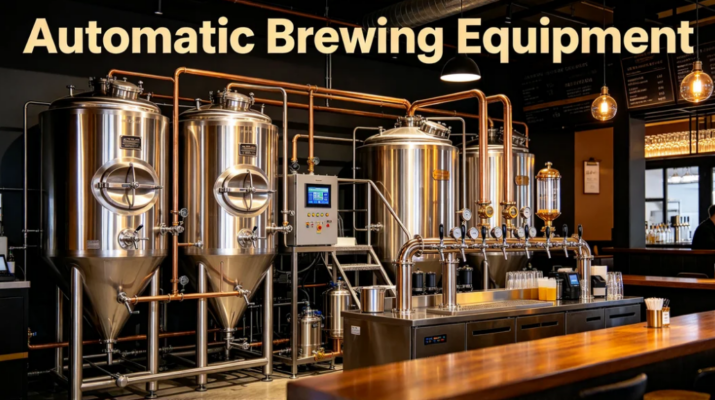
A complete bar brewing system should cover brewing, fermentation, temperature control, cleaning, and beer dispensing. Purchasing only a brewhouse may leave important gaps that increase installation costs later.
Brewhouse and automation controls
The brewhouse performs mashing, lautering, and wort boiling. Buyers should compare vessel configurations, heating methods, batch capacity, and control systems according to their production requirements.
A two-vessel brewhouse may suit a compact bar with moderate demand, while a three-vessel configuration can provide greater process flexibility. The appropriate choice depends on the available floor space, brewing frequency, and desired workflow.
Fermentation tanks and cooling equipment
Fermentation tanks determine how much beer can ferment and mature simultaneously. Bars offering several beer styles may need multiple tanks to maintain product variety and avoid production delays.
Cooling equipment is equally important because wort and fermenting beer require appropriate temperature management. Buyers should ensure that chiller capacity matches the combined cooling demand of the brewhouse and fermentation tanks.
Cleaning and draft beer equipment
Cleaning systems, sanitary pumps, valves, and food-contact piping help maintain hygienic production conditions. Depending on the serving arrangement, the system may also require bright beer tanks, kegs, beer transfer lines, and dispensing equipment.
These components should be planned together to avoid compatibility problems and unexpected installation expenses.
How Much Brewing Capacity Does a Bar Actually Need?
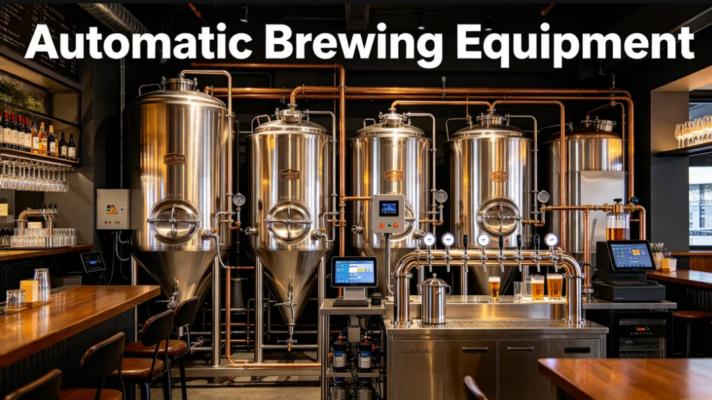
Buyers should select brewing capacity according to expected beer sales rather than choosing the largest system that fits the premises. An undersized system can struggle during busy periods, while oversized equipment may increase capital investment and operating costs.
Estimate average daily sales, peak demand, the number of beer styles, and the time required for fermentation and conditioning. Remember that brewhouse batch capacity is not the same as the volume of finished beer available for sale each day.
The following table provides illustrative configurations for initial planning. Actual specifications depend on the supplier and project requirements.
| Parameter | Compact Bar Brewery | Growing Bar Brewery | High-Demand Bar |
|---|---|---|---|
| Illustrative batch size | 100–300 L | 300–500 L | 500–1,000 L |
| Brewhouse configuration | 2 vessels | 2–3 vessels | 3–4 vessels |
| Fermentation setup | Several small tanks | Multiple medium tanks | Larger or multiple tanks |
| Automation level | Basic or semi-automatic | Semi-automatic to advanced | Advanced integrated controls |
| Suitable application | Small bars and pilot production | Busy bars and taprooms | High-volume venues |
| Main consideration | Space efficiency | Production flexibility | Output and workflow efficiency |
These ranges are planning examples, not guaranteed standard models or manufacturer specifications. Buyers should request a customized configuration based on actual demand.
How Can Buyers Compare Automatic Brewing Equipment Specifications?
The most useful comparison focuses on operational requirements rather than price alone. Two systems with similar batch capacities may differ significantly in automation, cooling performance, installation needs, and included accessories.
Before selecting a supplier, compare:
- Material: Confirm the stainless steel grade used for product-contact surfaces, such as SS304 or SS316 where appropriate.
- Automation: Request a list of included controls and automated operations.
- Heating method: Compare electric, steam, or other available heating options against local utility conditions.
- Cooling capacity: Check whether the proposed system supports simultaneous fermentation and brewing requirements.
- Cleaning arrangements: Confirm cleaning procedures, connections, and any included cleaning equipment.
- Service support: Ask about installation guidance, operator training, spare parts, and warranty terms.
A detailed specification sheet makes quotations easier to compare and reduces the risk of overlooking essential equipment.
What Installation Requirements Should Buyers Check Before Ordering?
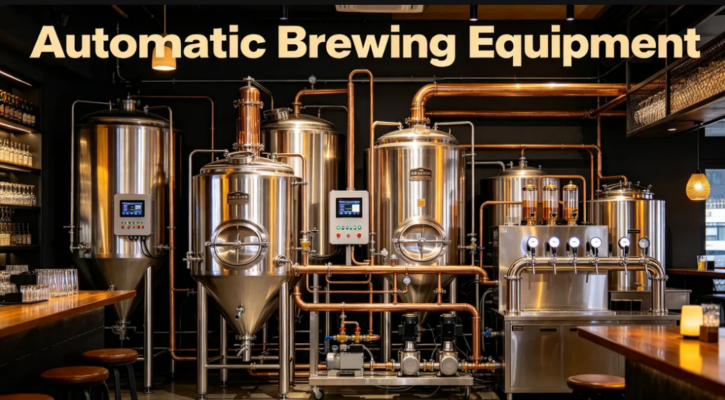
Buyers should confirm that the premises can accommodate the complete system before placing an order. Equipment dimensions alone do not show whether staff will have sufficient access for cleaning, maintenance, and safe operation.
Measure the available installation area and check doorways, floor loading, drainage, ventilation, electrical supply, water supply, and heating or cooling utilities. Brewing areas also need an efficient workflow that separates production activities from busy customer-service routes.
For existing bars, a layout drawing can help identify installation constraints early. Suppliers should receive accurate site dimensions and utility information before finalizing the equipment design.
How Can Buyers Control the Total Cost of an Automatic Brewing System?
The total investment depends on more than the brewhouse purchase price. Fermentation tanks, cooling equipment, controls, piping, installation, transportation, and commissioning may all affect the final budget.
Buyers should request an itemized quotation that clearly identifies included equipment, optional features, installation services, and exclusions. They should also consider ongoing electricity, water, cleaning materials, maintenance, and labor costs.
Avoid paying for automation functions that do not support the intended production process. At the same time, leaving out essential cooling or cleaning equipment can create additional costs after installation.
How Should Buyers Select a Reliable Brewing Equipment Supplier?
A reliable supplier should understand the bar’s production plan and explain why a particular configuration is suitable. Rather than accepting a generic quotation, buyers should provide expected output, beer styles, available space, preferred automation functions, and draft-serving requirements.
Ask for equipment specifications, layout drawings, control-system details, warranty conditions, and after-sales support arrangements. Confirm whether the supplier can integrate brewing, fermentation, cooling, and dispensing equipment into one workable system.
The best automatic brewing equipment is a practical match for the business, not simply the system with the highest capacity or most features. Careful planning helps bar owners improve brewing consistency, control investment costs, and maintain a dependable supply of fresh beer.
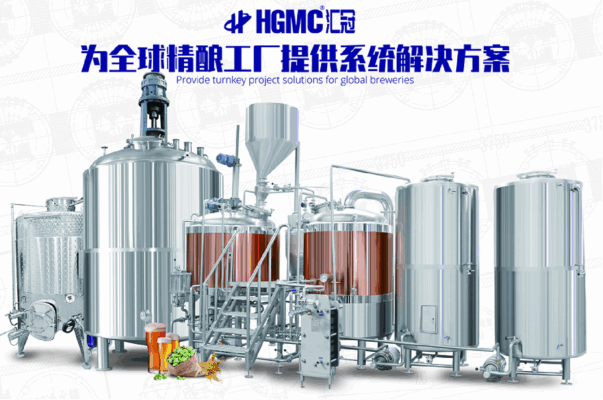
HGMC is the world’s leading manufacturer of beer brewing equipment. We produce brewery equipment, beverage equipment and canning/bottling lines. We have more than 30 national authorized patents and more than 20 high-tech achievements. We provide a full range of services, including individual equipment and turnkey projects. All products are in compliance with the ISO9001: 2015 quality management system, exported to more than 120 countries in the world, and have won recognition and praise from customers.
Frequently Asked Questions
1. Is automatic brewing equipment suitable for a small bar?
Yes. Compact and semi-automatic systems can suit small bars with limited production space. Buyers should prioritize manageable batch sizes, simple controls, and sufficient fermentation capacity.
2. Does automatic brewing equipment eliminate the need for trained staff?
No. Automation can reduce manual adjustments, but operators still need to monitor production, maintain sanitation, inspect equipment, and manage beer quality.
3. How many fermentation tanks does a bar need?
The number depends on batch size, fermentation time, sales volume, and the number of beer styles offered. Multiple tanks can help bars produce different beers on separate schedules.
4. What information should buyers provide when requesting a quotation?
Provide the target batch size, estimated daily or weekly beer demand, beer styles, available installation space, utility conditions, preferred automation level, and draft or packaging requirements. This information helps the supplier recommend a suitable configuration and prepare a more accurate quotation.
