
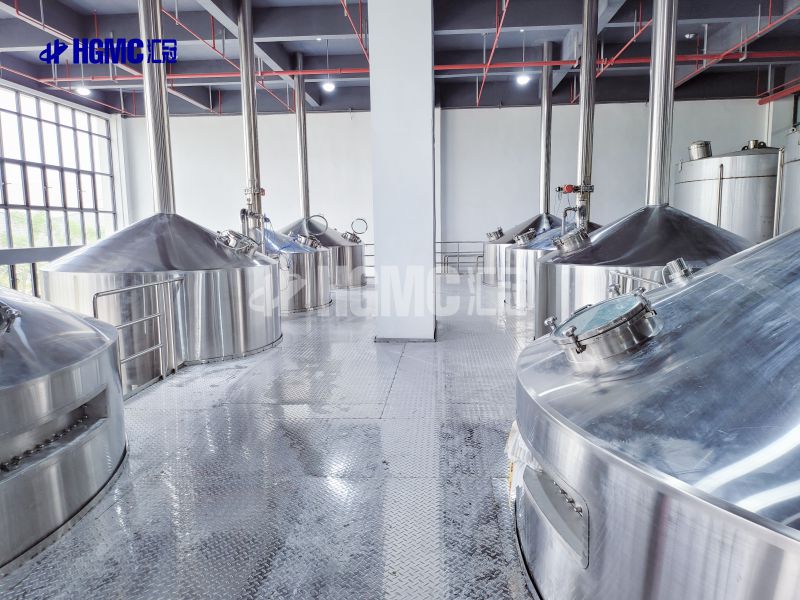
If you are planning a new craft brewery build-out or upgrading production capacity, choosing the right beer brewing equipment supplier is one of the most important decisions you will make. The supplier affects more than equipment pricing. It affects beer quality consistency, uptime, cleaning outcomes, energy use, expansion flexibility, and long-term service costs.
The craft segment continues to evolve. In the U.S., craft brewers produced 23.1 million barrels in 2024 (down 3.9% year-over-year), while craft beer’s retail dollar value rose to $28.8B (+3%) and employment increased to 197,112 (+3%).[1] This combination (volume pressure, value resilience, and labor growth) is pushing breweries to invest in equipment that improves yield, efficiency, and differentiation.
At the same time, market research firms consistently project steady expansion of the brewery equipment category. For example, one industry report estimates the global brewery equipment market at USD 18.45B in 2024 with continued growth through 2030.[2]
1) What to Look for in Craft Beer Equipment Suppliers
A strong craft beer equipment supplier should be evaluated across capability, compliance, engineering quality, and lifecycle support. Consider these criteria before requesting a quote.
A. Scope: can they deliver “brewhouse to bright tank” (and beyond)?
Many suppliers can quote a brewhouse, but fewer can reliably deliver a complete system:
- Milling + grist handling
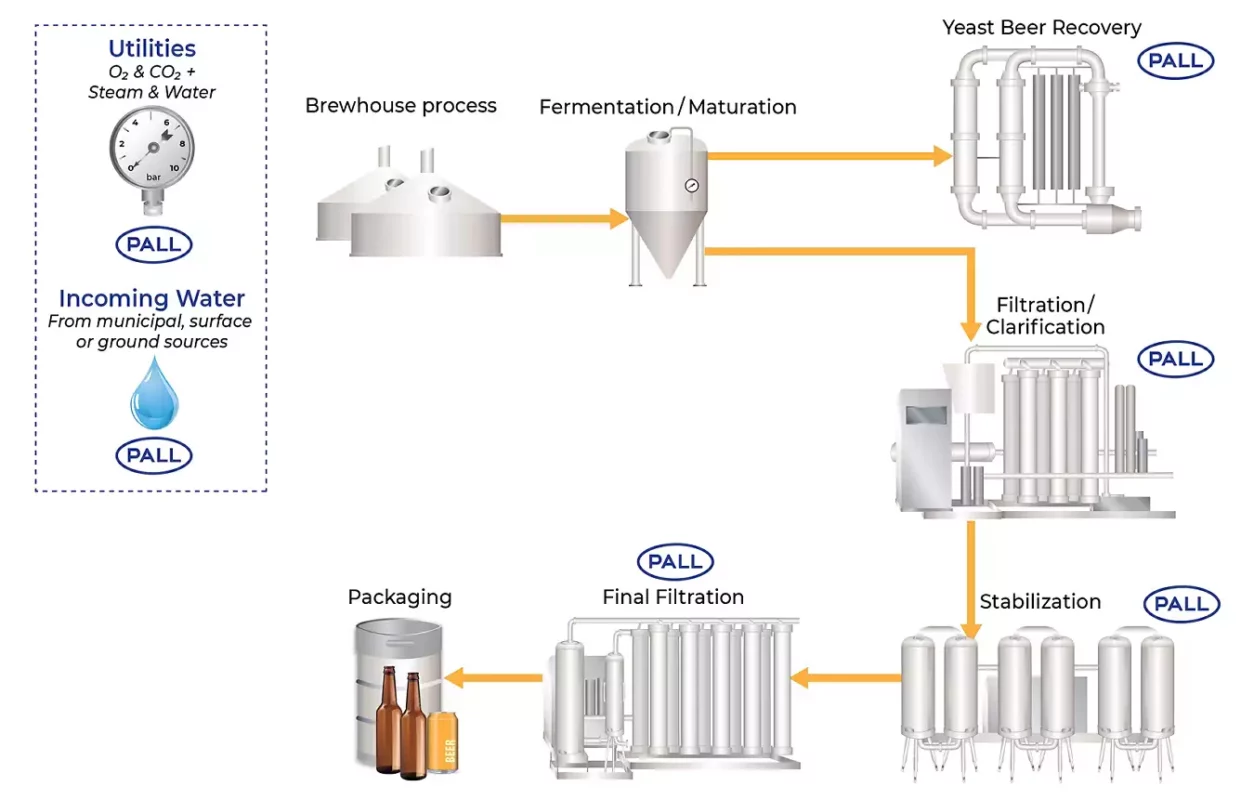
- Brewhouse (mash/lauter tun, kettle/whirlpool, HLT/CLT, heat exchanger)
- Cellar (fermenters, brite tanks, yeast brink, CIP)
- Utilities (steam/electric heating, glycol, air, water treatment)
- Packaging (kegging, canning/bottling, labeling, pasteurization if needed)
- Automation + instrumentation (flow, temp, pressure, gravities where applicable)
If you need turnkey delivery, confirm they can provide:
- P&ID diagrams, GA drawings, and 3D layout
- Full bill of materials and utility consumption assumptions
- Installation guidance and commissioning checklist
B. Manufacturing quality and standards you can verify
Ask for evidence, not promises:
- Material: 304/316 stainless steel, with clear documentation
- Welding: sanitary TIG welding, consistent bead quality
- Surface finish: internal tank finish appropriate for sanitary brewing
- Passivation/pickling: documented cleaning and corrosion protection
- Quality control: pressure tests, leak tests, FAT (Factory Acceptance Test)
C. Compliance and safety
Depending on the destination country and plant design, you may need:
- Pressure vessel compliance (region-specific)
- Electrical compliance (region-specific)
- Food-contact hygiene standards
If a supplier exports globally, they should be experienced in preparing the documentation you need for import, inspection, and insurance.
D. Project delivery ability (timeline + risk management)
A supplier is also a project partner. Evaluate:
- Typical lead time range for your system size
- On-time delivery record
- Packaging and shipping methods
- Installation supervision availability
- Warranty response time and spare parts policy
Use a simple weighted scorecard to compare vendors objectively.
| Criteria | What to verify | Suggested weight |
|---|---|---|
| Engineering & process design | P&ID, heat balance, utility sizing | 20% |
| Build quality | Welds, finish, material certs, QC | 25% |
| Automation | Control logic, sensors, HMI, remote support | 10% |
| Hygiene & CIP design | Sprayball coverage, dead legs, drainability | 15% |
| Delivery & commissioning | Timeline, FAT/SAT, install guidance | 15% |
| Service & warranty | Spares, response time, warranty terms | 15% |
2) Top Suppliers for Craft Beer Brewing Equipment (How to Build a “Top List” That Buyers Trust)
“Top suppliers” is a high-competition keyword. To meet Google’s quality expectations, avoid vague claims like “best” without method. Instead, publish a transparent methodology.
Recommended methodology for a credible “Top Suppliers” section
You can rank suppliers using publicly checkable factors:
- Years in brewing equipment manufacturing
- Installed base (number of breweries served, if verifiable)
- Certifications and compliance documentation
- Product range (brewhouse + cellar + packaging)
- After-sales network (local partners, spare parts)
- Case studies (photos, references, commissioning videos)
- Lead time clarity (documented production schedule)
If you do list brand names, add a disclaimer:
- “This is not a paid ranking.”
- “Selection depends on region, brewhouse size, and utility constraints.”
If you prefer to avoid naming competitors (often better for B2B), create categories:
- “Best for 5–10 BBL brewpubs”
- “Best for scalable 20–50 BBL production breweries”
- “Best for turnkey projects with packaging”
This structure still matches buyer intent without creating legal or credibility risks.
3) Key Features of Quality Craft Beer Equipment
Quality in beer brewing equipment is about repeatability. Great equipment reduces variability in:
- Lauter performance
- Whirlpool trub separation
- Fermentation temperature control
- Dissolved oxygen pickup
- Cleaning outcomes
A. Brewhouse design features that matter
Look for:
- Properly sized heat exchanger for target knockout time
- Well-designed whirlpool geometry and inlet for trub pile formation
- Accurate flow metering and temperature sensing
- Mash mixing and lautering that fits your grist composition (especially high adjunct use)
B. Fermentation and bright tank details
Key items:
- Jacket zoning (better control across different fill levels)
- Pressure rating appropriate for your carbonation and transfer processes
- Racking arm quality and seal design
- Sample valve and PRV quality
C. CIP and sanitary design (often undervalued)
CIP performance affects beer stability and tank turnaround time. Evaluate:
- Spray device coverage and pump sizing
- Drainability (avoid pooled caustic/acid)
- Minimizing dead legs and unnecessary fittings
D. Automation: right-sized, not overcomplicated
Automation is a major trend in equipment adoption. Market research notes growing use of automation/IoT to improve consistency and reduce labor.[2]
Practical automation features:
- Recipe control for brewhouse steps
- Fermentation temperature profiles
- Alarm and event logs
- Remote troubleshooting options (when allowed)
4) Comparative Reviews of Leading Craft Beer Suppliers (A Framework You Can Publish)
Instead of “reviews” based on opinions, publish a comparison matrix based on measurable items from quotes and technical documents.
What to compare across supplier quotes
- Tank wall thickness and jacket design
- Valve and gasket brands (where disclosed)
- Pump curves and motor specs
- Instrumentation list (temp, pressure, flow, DO where applicable)
- Utility assumptions: steam/electric load, glycol load, water consumption
- Scope clarity: what is included vs optional
Visual: Quote Comparison Checklist (example)
| Line item | Supplier A | Supplier B | Supplier C |
|---|---|---|---|
| Brewhouse vessels included | ✅ | ✅ | ✅ |
| Heat exchanger model + sizing sheet | ✅ | ⚠️ | ✅ |
| FAT (Factory Acceptance Test) | ✅ | ❌ | ✅ |
| Automation scope defined | ⚠️ | ✅ | ✅ |
| Commissioning support | Optional | Included | Optional |
Legend:
- ✅ = clearly included with documentation
- ⚠️ = partially defined
- ❌ = not included or unclear
5) Understanding Pricing Structures for Brewing Equipment
Pricing confusion is common because “brewing equipment price” includes many components beyond tanks.
A. Typical quote components (what drives total cost)
A realistic equipment budget often includes:
- Equipment manufacturing (tanks, brewhouse, piping)
- Control system and instrumentation
- Packaging and crating
- Shipping and customs
- Installation (mechanical + electrical)
- Commissioning and operator training
- Utility systems (glycol, steam, air, water treatment)
- Spare parts and consumables
B. How to request quotes that are comparable
Send every supplier the same “RFQ pack”:
- Target brewhouse size (e.g., 10HL/20HL etc.)
- Brews per day target
- Fermenter count and sizing philosophy
- Packaging format goals (keg only, cans, bottles)
- Available utilities and constraints (power, steam, water)
- Building layout or at least dimensions
C. Market context: why buyers still invest
Even when craft volume is uneven, market value can remain strong. In 2024, the U.S. craft segment saw retail dollar growth to $28.8B and accounted for 24.7% of retail dollar sales.[3] That environment rewards breweries that can:
- Improve stability and shelf life
- Increase efficiency and reduce losses
- Differentiate with new styles and faster changeovers
6) Customer Support and Warranty Considerations
After-sales support is where cheap equipment often becomes expensive.
A. What a strong warranty actually looks like
Ask for:
- Warranty duration and what is covered (vessels, valves, automation)
- Exclusions (improper CIP, chemical misuse, operator error)
- Response time targets
- Spare parts availability and lead times
- Remote diagnostics policy (especially for PLC/HMI systems)
B. Service readiness checklist
- Do they provide a spare parts list by system?
- Are wear parts standardized (gaskets, valve seals)?
- Is documentation complete (manuals, wiring diagrams, P&IDs)?
- Can they support commissioning in your time zone?
7) Trends in the Craft Beer Equipment Supply Market
Several trends are shaping equipment selection in 2026:
Trend 1: Automation and data-driven brewing
Modern breweries are using automation to increase repeatability and reduce labor intensity, which aligns with market commentary about automation and advanced control in brewing equipment.[2]
Trend 2: Sustainability and efficiency
Breweries increasingly demand:
- Water-saving CIP designs
- Heat recovery options
- Lower steam/electric consumption
Trend 3: Modular expansion planning
Instead of buying “too big” at the start, many projects prefer:
- Expandable cellar layouts
- Additional fermenter ports and future-ready glycol headers
- Space planning for future packaging lines
Trend 4: The equipment market continues to grow
Multiple market research sources project ongoing growth for brewery equipment overall, with global estimates around USD 18.45B (2024) and continued growth ahead.[2]
Q&A (FAQ) — Craft Beer Brewing Equipment Suppliers
Q1: What is the biggest mistake when choosing a brewing equipment supplier?
Choosing based on headline price only. The real cost often comes from unclear scope, weak documentation, long downtime, and poor CIP design.
Q2: How can I compare suppliers fairly?
Use the same RFQ pack for every supplier and compare:
- Technical drawings and P&IDs
- Instrumentation lists
- FAT/commissioning scope
- Warranty and spare parts policy
A comparison matrix (like the one above) makes gaps visible quickly.
Q3: What data shows craft brewing is still a serious market?
Even with volume pressures, craft retail value remains strong. The Brewers Association reported $28.8B craft retail dollar value in 2024 (+3%), and craft accounted for 24.7% of U.S. beer retail dollar sales.[3]
Q4: What should be included in a “turnkey brewery equipment” quote?
At minimum:
- Brewhouse + cellar equipment
- Piping design and scope definition
- Utilities assumptions
- Automation scope
- Commissioning and training plan
If packaging is in your plan, include it early to avoid layout rework later.
Q5: Which is better: manual, semi-automatic, or fully automatic brewhouse?
It depends on labor cost, consistency goals, and batch frequency. Automation can improve repeatability and reduce operator workload, and is a continuing trend in equipment modernization.[2]
Conclusion: A Buyer’s Checklist You Can Use Today
Before signing, make sure you have:
- A clear scope list (included vs optional)
- P&ID + layout drawings
- Utility sizing assumptions
- FAT + commissioning plan
- Warranty terms + spare parts list
- A comparison scorecard across all quotes
If you want, tell me your target brewhouse size (e.g., 10HL/20HL), packaging plan (keg/can/bottle), and export market (EU/US/UK/etc.). I can adapt this article into a more product-led version (still educational and SEO-safe), and tailor the visuals and comparison tables to your exact offering.
