
Introduction: Why Brewery Machinery Innovation Matters Now
Beer is no longer competing only on taste—it competes on consistency, operational efficiency, sustainability, and freshness at the moment of consumption. This shift is happening while breweries face more complex market dynamics: in the U.S., craft retail dollar sales increased to $28.8B in 2024 and represented 24.7% of the $117B U.S. beer market, even as craft volume declined.[1] That combination—premium value with tighter volume—pushes brewers to protect margins through smarter equipment and tighter process control.
Meanwhile, equipment investment continues to grow globally. For example, one industry report estimates the global brewery equipment market at USD 21.61B in 2024, projecting continued growth through 2033.[2] Whether a brewery is expanding capacity, retrofitting for energy savings, or upgrading packaging for shelf stability, modern brewery machinery has become a strategic lever—not just a production necessity.
1) Advancements in Automated Brewing Control Systems Enhancing Efficiency
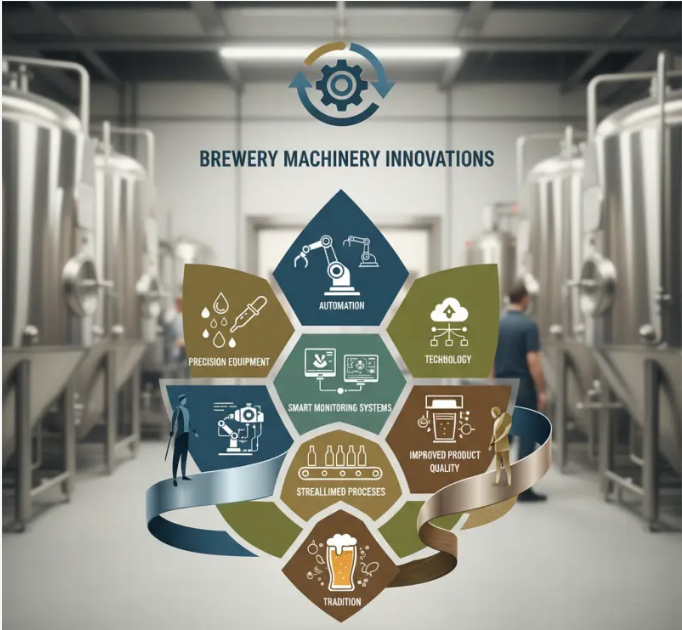
Automation has moved far beyond basic temperature controllers. Today’s modern brewhouses often integrate PLC/HMI control, recipe management, sensor feedback loops, and historian data logging to help brewers repeat results batch after batch.
Key operational gains typically come from:
- More stable mash temperatures (higher extract consistency)
- Repeatable boil vigor and evaporation targets
- Automated CIP sequencing (less downtime and fewer sanitation misses)
- Better batch records for root-cause analysis when flavor drifts
2) Impact of IoT on Real-Time Monitoring in Brewery Operations
IoT in breweries is not “technology for technology’s sake.” It solves practical problems that directly affect beer quality and operating cost:
- Fermentation temperature drift and cooling inefficiency
- Glycol system performance issues
- Dissolved oxygen (DO) excursions during transfer and packaging
- Abnormal CIP conductivity or flow (cleaning failures)
- Compressed air leaks and steam losses
How IoT changes decision-making
Traditional brewing often relies on periodic checks. IoT enables continuous monitoring—turning issues into alerts rather than surprises. For example, a slow rise in fermentation temperature overnight becomes a notification, not a next-day quality defect.
3) Innovative Filtration Technologies Improving Beer Clarity and Taste
Filtration is no longer only about “clear beer.” It’s about:
- Stability (colloidal and microbiological)
- Flavor preservation (avoiding oxidation and stripping desirable compounds)
- Reducing beer loss and waste streams
Modern breweries are upgrading filtration strategies to match beer style and brand positioning:
- Bright beer tank management and gentle transfer
- Better differential pressure control
- Improved filter media management and automated cycles
- Sterile filtration approaches for microbiological stability (in some operations)
Data point you can responsibly cite on process energy context
The U.S. DOE/LBNL “Energy Efficiency Opportunities in the Brewery Industry” report notes breweries can use significant water and energy across operations, and discusses energy demands of steps like pasteurization and the broader process context.[3] While filtration specifics depend on the system, referencing this kind of authoritative process benchmark source supports credibility when discussing why optimized unit operations matter.
4) Cutting-Edge Yeast Management Solutions for Consistent Fermentation
Yeast is the “living engine” of beer production. Even with the best brewhouse, inconsistent yeast handling can cause:
- Slow or stuck fermentations
- Off-flavors (diacetyl, sulfur, esters beyond target)
- Variation in attenuation and mouthfeel
Modern yeast management solutions increasingly include:
- Controlled yeast propagation systems
- Viability/vitality measurement routines
- Standardized harvesting and storage temperatures
- Sanitized, closed-loop yeast transfer to reduce contamination risk
- Data logging: pitch rate, generation count, fermentation curves
5) Sustainable Brewing Equipment Reducing Water and Energy Consumption
Sustainability has become a cost issue, a compliance issue, and a brand issue.
Water benchmarks (authoritative)
The DOE/LBNL brewery efficiency report describes that incoming water to a brewery can range widely (example range: 4–16 barrels of water per barrel of beer) depending on practices and operations.[3] This wide range is exactly why modern equipment and controls matter: “best practice” performance is achievable, but not automatic.
BIER (Beverage Industry Environmental Roundtable) also reports industry progress: its executive summary notes water use and energy use ratios decreased over the benchmarking study period (water down 8%, energy down 11%).[4] This is useful as a “macro” proof point that efficiency initiatives work at scale.
Practical equipment-driven sustainability upgrades
- Heat recovery on wort boiling and hot water systems
- Variable frequency drives (VFDs) on pumps, compressors, and fans
- High-efficiency glycol chilling with improved controls
- Automated CIP with conductivity-based rinse endpoints (avoid over-rinsing)
- Leak detection + flow metering across utilities
- Water reuse loops where appropriate (site-specific safety considerations)
6) Integration of Artificial Intelligence in Recipe Development and Quality Control
AI in brewing is most valuable when applied to repeatable decisions with lots of data. In practice, AI-driven systems often focus on:
A) Quality control analytics
- Detecting abnormal fermentation patterns early
- Linking sensory results to process data (“this off-flavor appears when X happens”)
- Predicting final gravity and diacetyl rest timing based on historical curves
B) Predictive maintenance
- Motor current signatures, vibration, temperature, and run-time patterns
- Reducing unplanned downtime by scheduling service before failure
C) Recipe and process optimization (within guardrails)
- Suggesting parameter adjustments to hit target ABV/IBU/body more consistently
- Helping manage raw material variability (malt specs, hop lot changes)
7) New Packaging Technologies Enhancing Freshness and Shelf-Life of Beer
Packaging is where great beer can be protected—or ruined. The key technical enemy is oxygen.
A packaging equipment story that readers understand (and Google values) should be simple:
- Lower oxygen pickup → fewer oxidation off-flavors → longer shelf life
Authoritative, quotable oxygen sensitivity point
KHS (a major packaging equipment manufacturer) notes beer reacts very sensitively to oxygen and discusses how oxygen pickup can affect flavor; it also references practical dissolved oxygen thresholds and the reality that oxygen pickup can occur across multiple process steps.[5]
What modern packaging lines do better
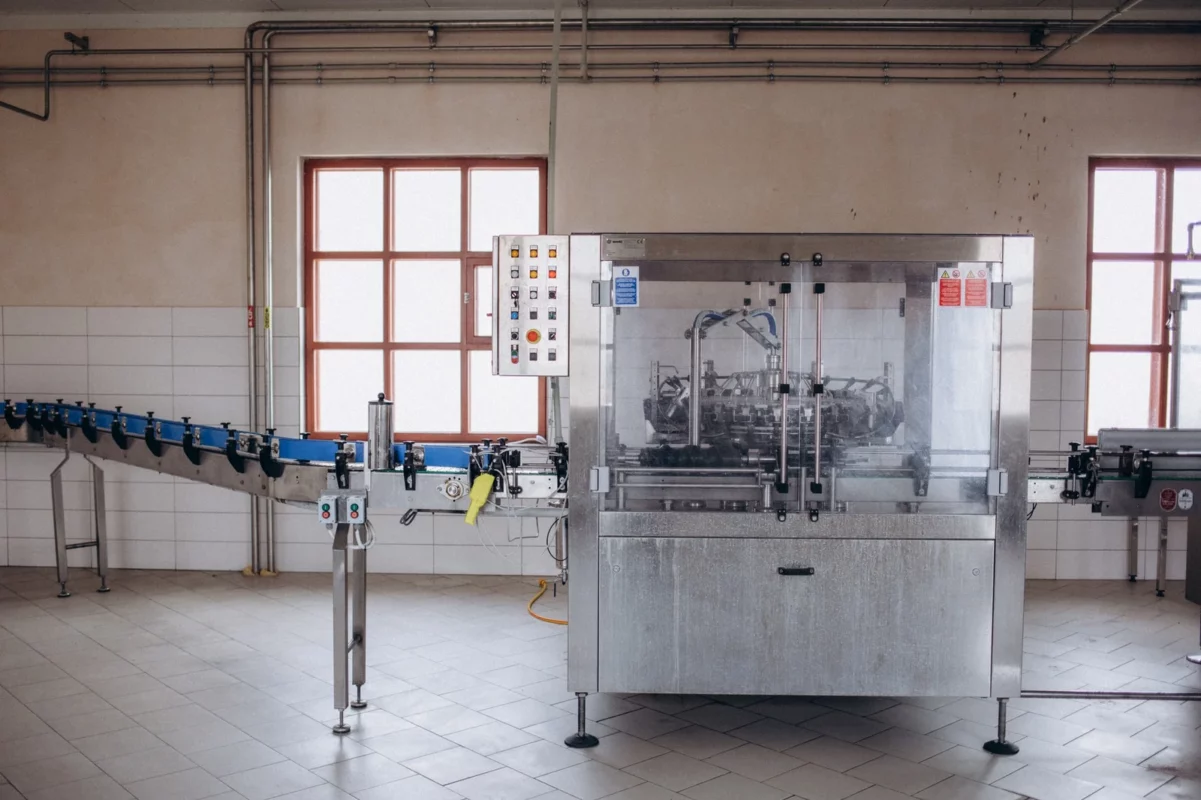
- Improved CO₂ purging / evacuation strategies
- Counter-pressure or isobaric filling approaches where appropriate
- Better seam/crown control and inspection
- Inline DO measurement and automatic diversion when out of spec
- Smarter changeovers to reduce exposure during stops/starts
Frequently Asked Questions (FAQ)
Q1: What are the most impactful brewery machinery upgrades for improving efficiency quickly?
Automation (PLC/HMI), CIP optimization, utility metering (steam/water/electric), and fermentation monitoring usually deliver the fastest operational improvements because they reduce rework, downtime, and variability.
Q2: How does IoT actually reduce brewery operating costs?
IoT reduces costs by catching problems early (temperature drift, cooling inefficiency, abnormal CIP cycles, leaks), preventing waste and avoiding unplanned downtime. Continuous monitoring also supports better utility optimization.
Q3: Why is dissolved oxygen control so important in packaging?
Beer is highly sensitive to oxygen; oxygen pickup accelerates flavor degradation and can cause oxidation off-flavors. Modern filling technology focuses on minimizing oxygen pickup to protect freshness.[5]
Q4: What water usage levels are “normal” for breweries?
Water use varies greatly by brewery type and practices. One authoritative industry efficiency report notes a wide range of incoming water usage (4–16 barrels water per barrel beer).[3] The practical takeaway is that equipment design and cleaning strategy strongly influence where you land in that range.
Q5: Does AI in brewing replace brewmasters?
No. AI is best used for pattern recognition, early warnings, and decision support (quality analytics, predictive maintenance). Final decisions still rely on brewing expertise, sensory goals, and brand standards.
Q6: Which innovations best support sustainability goals?
Water/energy metering, heat recovery, VFDs, optimized CIP, and real-time monitoring typically produce the clearest resource reductions. Benchmarking organizations report that industry-wide water and energy ratios have decreased over time—evidence that these approaches work when executed well.[4]
Conclusion: Innovation That Pays Back in Quality, Cost, and Brand Trust
Brewery machinery innovations are no longer optional upgrades—they’re the core infrastructure behind consistent flavor, stable quality, efficient operations, and reliable shelf life. Automation creates repeatability, IoT creates visibility, filtration and yeast management protect product stability, sustainability systems reduce resource intensity, AI makes complex operations more predictable, and packaging technology preserves freshness where it matters most: in the customer’s glass.
