
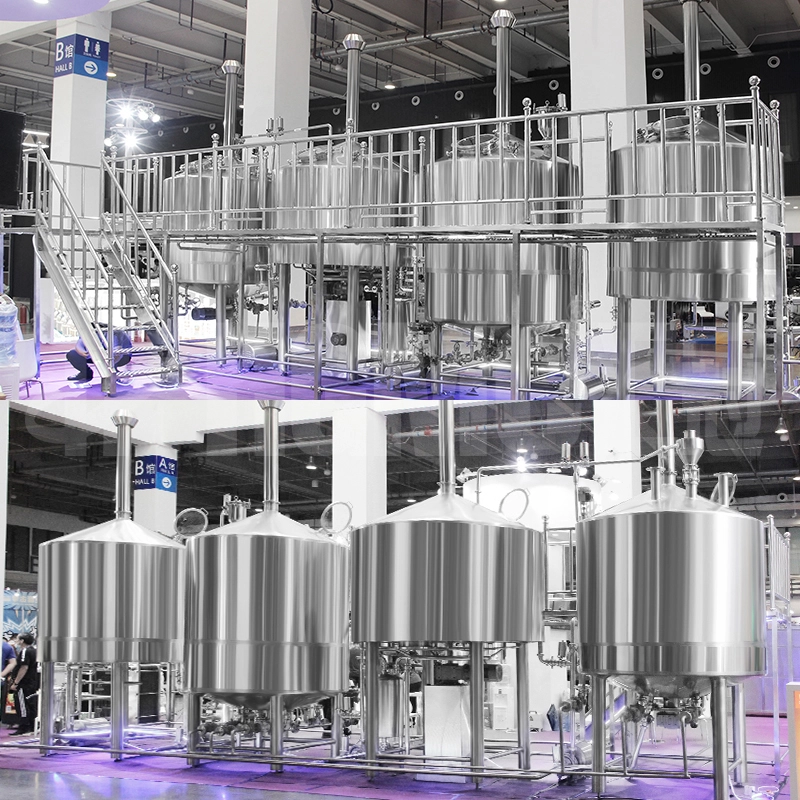
Homebrewing can be a fun, hands-on hobby. But once you move into commercial beer production, the requirements change completely: you need repeatable quality, consistent throughput, strict sanitation, worker safety, and equipment that performs reliably under daily high-volume use.
This article is written for commercial breweries (and for buyers searching for “Beer Brewing Equipment”), with a practical breakdown of the full production chain—hot side, cold side, utilities, packaging, quality control, and facility considerations—plus a Q&A section designed to match common purchasing concerns.
Quick industry context (why equipment decisions matter)
Commercial brewing is a capital-intensive manufacturing business. The global brewery equipment market was estimated around USD 18.45B in 2024 and is expected to keep growing, driven by new brewery builds, expansions, automation, and packaging upgrades (multiple market research firms report a mid-single-digit CAGR). In the U.S. alone, the Brewers Association reported 9,778 small and independent breweries operating in 2025—an indication of how competitive and mature the market has become.
In other words: breweries win by producing consistent beer, minimizing downtime, controlling oxygen pickup, improving energy and water efficiency, and scaling smartly. Equipment choices determine all of that.
1) What is “commercial beer brewing equipment”?
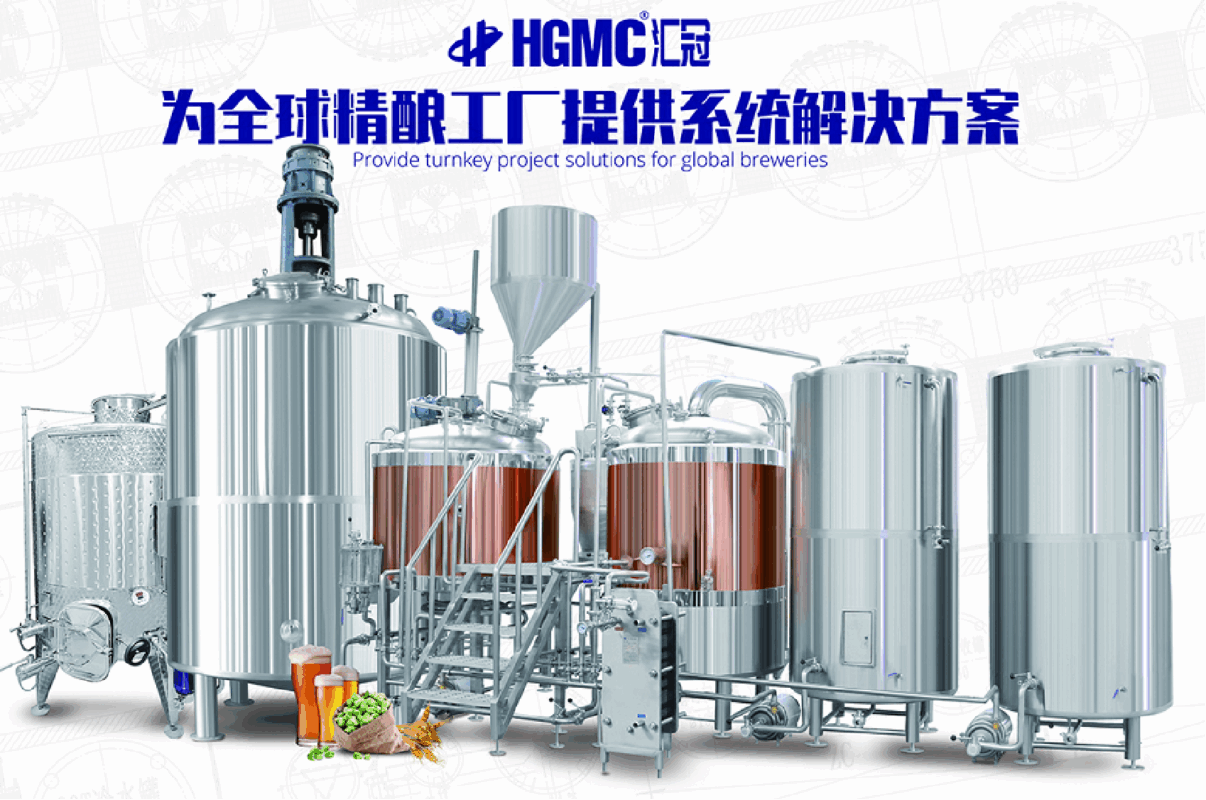
Commercial beer brewing equipment is the integrated system of vessels, piping, controls, utilities, and packaging machines used to convert malt, water, hops, and yeast into finished beer at production scale. It typically includes:
- Brewhouse (hot side wort production)
- Fermentation and conditioning cellar (cold side)
- Cooling and temperature control (glycol)
- Cleaning and sanitation (CIP)
- Packaging (kegging/canning/bottling)
- Quality control lab instruments
- Utilities and building infrastructure (steam/electricity, water, drainage, ventilation)
- Safety systems and maintenance tools
A key difference from homebrewing is that every subsystem must be designed for:
- Hygienic engineering (sanitary fittings, drainability, cleanability)
- Process control (repeatable temperatures, flow rates, timing)
- Compliance and safety (pressure vessels, PRVs, electrical protection)
- Productivity (fast turnarounds, efficient cleaning, low DO packaging)
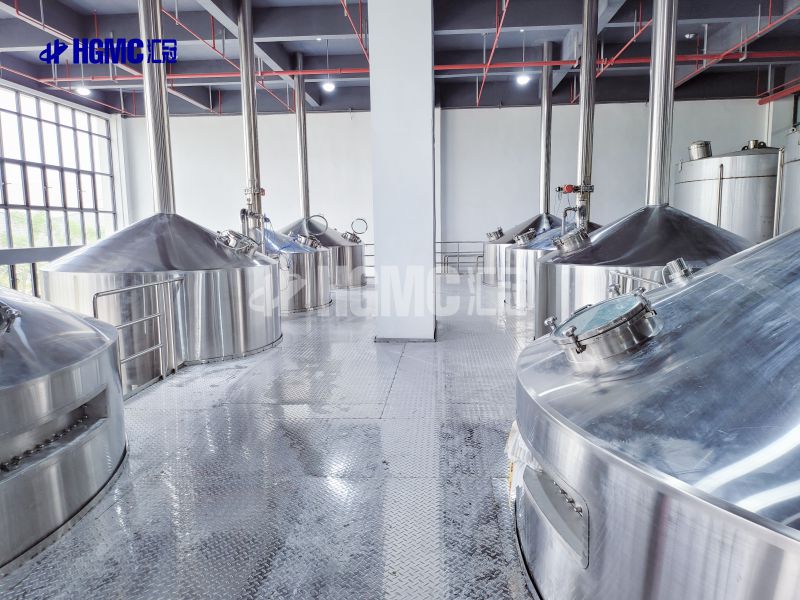
2) Brewhouse equipment: the “hot side” (where wort is made)
2.1 Milling and grist handling
A commercial brewhouse begins with consistent milling and dust-safe handling.
Core components:
- Malt mill (2-roller, 4-roller, or 6-roller)
- Grist case / hopper
- Augers or conveyors (screw, bucket elevator, belt)
- Grist hydration (optional but common for efficiency and reduced dust)
- Dust collection (often overlooked, but important for safety and cleanliness)
Buying tips:
- Prioritize consistent crush and low flour variability (helps lauter performance)
- Verify throughput (kg/hr) matches batch cadence
- Consider explosion-proof and dust control measures if required locally
2.2 Mash tun / lauter tun (or combined mash-lauter)
The mash/lauter section determines extract yield, wort clarity, and brewhouse cycle time.
Common options:
- Mash tun + lauter tun (two-vessel approach)
- Mash-lauter combination vessel (space and cost efficient)
- Mash filter (plate-and-frame style; high efficiency, fast separation, drier spent grain)
What to look for:
- Heating method (steam jackets, internal calandria, direct fire less common in modern commercial systems)
- Mixing design and motor sizing (avoid dead zones)
- Lauter design (false bottom area, rakes/knives, grain-out)
- CIP coverage and full drainability
2.3 Kettle and whirlpool
The kettle is where you boil and build bitterness, drive off volatiles, and sterilize wort. Whirlpool separates trub and hop matter.
Core features:
- Steam or electric heating (steam is common for larger plants)
- Condensing stack or steam condenser (to reduce odors/heat)
- Whirlpool geometry for good trub cone formation
- Proper venting and safety controls
2.4 Wort cooling: heat exchanger + oxygenation
Most commercial breweries use a plate heat exchanger (PHE) for fast, efficient cooling.
Key components:
- Plate heat exchanger
- Hot wort pump
- Flow meters / valves
- Aeration/oxygenation (inline)
- Inline filter/strainer (optional)
- Inline sensors (temperature, pressure; sometimes turbidity)
Critical quality point:
- Oxygen management starts here. Good brewers aim to control oxygen exposure during transfers to protect shelf life and flavor stability.
2.5 Brewhouse piping, valves, and automation
A modern brewhouse is a hygienic piping network, not just vessels.
Recommendations:
- Use sanitary stainless steel (often 304; 316 for more aggressive environments/chemicals)
- Standardize tri-clamp sizes to simplify spares
- Choose valve types based on application (butterfly vs seat valves)
- Consider automation level (manual / semi-auto / fully automated with recipe control)
3) Fermentation and conditioning: the “cold side” tanks
3.1 Fermentation tanks (FVs) and unitanks
Most commercial breweries use cylindroconical fermenters, often with:
- Glycol jackets (multiple zones preferred)
- Insulation
- Sample valve
- Thermowell
- CIP spray device
- Racking arm
- Yeast dump and harvest ports
- PRV and vacuum relief where applicable
Unitanks allow fermentation + conditioning/carbonation in one vessel, which can reduce transfers and oxidation risk, and simplify tank planning for smaller breweries.
3.2 Bright beer tanks (BBTs)
BBTs are used to:
- Clarify and stabilize beer
- Carbonate to final spec
- Buffer beer for packaging runs (so packaging doesn’t block fermentation)
What matters most:
- Pressure rating appropriate for carbonation
- Carb stone configuration
- Gentle, low-oxygen transfers
- Stable temperature control
3.3 Specialty tanks
Depending on beer program:
- Yeast brink / yeast storage tanks
- Hop dosing tanks or hop guns (for hop-forward production)
- Mixing/blending tanks
- CLT (cold liquor tank) for efficient water management
- Dedicated sour beer tanks (to reduce cross-contamination risk)
4) Glycol chilling system (temperature control backbone)
Temperature control is one of the biggest “quality multipliers” in brewing. A glycol system typically includes:
- Glycol chiller (air-cooled or water-cooled)
- Glycol reservoir
- Pumps (often redundant)
- Manifolds and solenoid valves
- Insulated supply/return piping
- Tank jacket zoning and sensors
Sizing mistakes are common. Undersized glycol capacity leads to:
- Slow crash cooling
- Inconsistent fermentation temps
- Reduced throughput and higher defect risk
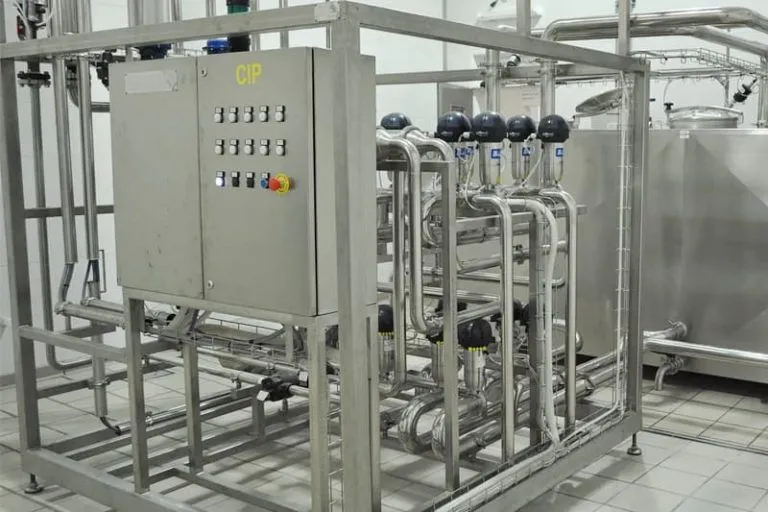
5) CIP cleaning and sanitation systems (non-negotiable)
CIP (Clean-In-Place) is essential for:
- Microbiological stability
- Equipment life
- Labor efficiency
- Repeatability
Typical CIP setup:
- CIP cart or central CIP station
- Chemical tanks (caustic, acid, sanitizer)
- Heat source (hot water)
- Pumps with adequate flow and pressure
- Return lines and filters
- Spray balls / rotary spray heads
- Conductivity, temperature monitoring (for more advanced systems)
A well-designed CIP system reduces cleaning time, chemical consumption, and contamination risk—directly improving brewery profitability.
6) Packaging equipment: kegging, canning, bottling
Packaging is often where breweries win or lose on shelf stability. Even great beer can fail if packaging introduces oxygen or inconsistent fills.
6.1 Kegging line
Core components:
- Keg washer (semi-auto or auto)
- Keg filler (counterpressure)
- CO2 supply and controls
- Keg tracking/inspection tools
- Optional: steam or chemical sanitation loops
6.2 Canning line
Typical components:
- Depalletizing/feeding (manual or automatic)
- Can rinse (ionized air/water)
- Fillers (counterpressure or open fill depending on scale)
- Seamer
- Lid feed
- DO (dissolved oxygen) monitoring (strongly recommended)
- Date coder, labeler or shrink sleeve
- Pack-off and case packing
6.3 Bottling line
Often includes:
- Bottle rinse/washer
- Filler, crowner/capper
- Pasteurization options (tunnel pasteurizer, flash pasteurization depending on product goals)
- Labeling and packaging
Key purchasing advice:
- Match packaging speed (CPM/BPM) to realistic sales forecasts
- Prioritize low DO performance, not just speed
- Plan upstream buffer capacity (BBT size, filtration if used, transfer lines)
7) Utilities and facility requirements (what Google buyers often overlook)
Commercial brewing is a utilities-heavy operation. Plan early for:
- Water supply capacity and treatment (filtration/RO where needed)
- Drainage and wastewater (pH, solids, local discharge rules)
- Electricity (3-phase supply for many systems)
- Steam boiler (if steam heated) or sufficient electrical heating capacity
- Compressed air (oil-free preferred for hygienic areas)
- Ventilation and humidity control (especially on hot side)
- CO2 safety (gas storage, monitoring alarms, ventilation in cellar)
- Flooring, slopes, and trench drains in wet production zones
Water efficiency note:
Water-to-beer ratios vary widely by brewery size and practices. Universities and sustainability reports often cite that highly efficient large breweries can reach roughly 2–4 barrels of water per barrel of beer, while smaller breweries may be significantly higher. This is a powerful talking point for “efficient brewing systems” and CIP design in marketing—because water and wastewater costs are real pain points.
8) Quality control (QC) lab equipment
For consistent production and fewer recalls/returns, many commercial breweries invest in basic QC.
Common QC tools:
- pH meter
- Hydrometer/densitometer
- DO meter (especially important for packaged beer)
- CO2 meter
- Microscope and hemocytometer (yeast health)
- Incubation and plating tools (micro checks)
- Turbidity/haze measurement (optional)
- ATP swabs (sanitation verification)
Even a small QC program supports better brand trust and consistency—key selling points for commercial equipment buyers.
9) Commercial brewery equipment buying checklist
When your prospects compare suppliers, these are the decision points they care about:
- Capacity planning and expansion path (modular design)
- Material grade and thickness (304 vs 316; weld quality; internal finish)
- Pressure ratings and safety compliance (PRV, vacuum relief, documentation)
- Hygienic design (full drainability, minimal dead legs, CIP coverage)
- Automation level (manual vs PLC/HMI; recipe control; data logging)
- Lead time, installation support, commissioning and training
- After-sales service and spare parts availability
- Energy and water efficiency features (heat recovery, efficient cooling, CIP optimization)
FAQ (Question & Answer Section)
Q1: What is included in a complete commercial beer brewing equipment set?
A complete set typically includes a brewhouse (mash/lauter/kettle/whirlpool), fermentation tanks or unitanks, bright tanks, a glycol chilling system, a CIP cleaning system, utilities integration (steam/electric, water, drainage), and packaging equipment for kegs/cans/bottles. Many projects also include water treatment and basic QC lab instruments.
Q2: What’s the difference between a fermenter, a unitank, and a bright beer tank?
- Fermenter (FV): primarily for fermentation; beer is often transferred out for conditioning/carbonation.
- Unitank: designed to ferment and carbonate/condition under pressure in the same vessel.
- Bright beer tank (BBT): used after fermentation to clarify, carbonate, and hold beer for packaging.
Q3: How do I choose the right brewhouse size (BBL/HL)?
Start from realistic sales volume and brewing frequency, then build a brewhouse size that fits your desired weekly output and staffing. Many breweries also plan cellar capacity at multiples of brewhouse capacity to avoid bottlenecks.
Q4: Is it better to invest in automation for a new brewery?
Automation improves repeatability, reduces labor intensity, and can lower water/chemical usage through more controlled CIP and process steps. For startups, a balanced approach is common: automate temperature control and critical timing first, then expand to advanced automation as production scales.
Q5: What are the most common equipment mistakes new breweries make?
Common mistakes include undersizing glycol chilling, buying too few tanks, ignoring packaging DO control, under-planning drainage/wastewater, and choosing equipment layouts that create inefficient workflows and long hose runs.
Q6: What stainless steel should be used for brewing equipment—304 or 316?
304 stainless is widely used and suitable for many breweries. 316 offers better corrosion resistance in more aggressive environments (certain chemical regimes, high chloride exposure). The right choice depends on cleaning chemicals, water chemistry, and long-term durability targets.
Q7: How important is CIP system design?
Extremely important. Poor CIP design leads to longer cleaning cycles, higher contamination risk, more downtime, and inconsistent beer quality. Buyers should evaluate spray coverage, pump sizing, heating, return lines, and the ability to verify concentration/temperature.
Q8: What packaging line should I choose: canning or bottling?
Canning is often favored for craft distribution because it’s light-protective and shipping-friendly, while bottling can be preferred for certain brand positions and markets. The best choice depends on your sales channels, target volumes, and desired shelf-life performance.
Conclusion
For commercial breweries, “Beer Brewing Equipment” is not just a list of tanks—it’s a complete production system where brewhouse design, cellar capacity, glycol performance, CIP sanitation, and packaging quality must work together. If your Google Ads landing page content clearly explains this system view, includes an FAQ, and supports claims with credible market/industry references, it will read as authoritative and convert better.
