Draft beer systems are no longer just “nice-to-have” hardware for pubs—they’re a profit engine and a quality-control tool. A well-designed draft setup protects beer flavor, improves pour consistency, reduces foam waste, and strengthens the customer’s perception of freshness and professionalism.
This matters even more as the on-trade (bars/pubs/restaurants) scene continues to evolve in China. Market research indicates that draught beer is benefiting from premiumization, urban nightlife growth, and a rising interest in Western-style pubs and craft beer bars. Grand View Research estimates China’s draught beer market at USD 3.36 billion in 2024 and projects it could reach USD 6.38 billion by 2033 (7.5% CAGR).[1] Globally, the draught beer market was estimated at USD 41.45 billion in 2023 and is expected to grow at a 5.3% CAGR from 2024 to 2030 (per the same source).[2]
In this guide, we’ll cover the real-world decisions that make or break a pub’s draft program—from system selection and technical specifications to cleaning routines and customer experience—plus a comparative look at leading draft beer brands in China.
About HGMC (Manufacturer Background)
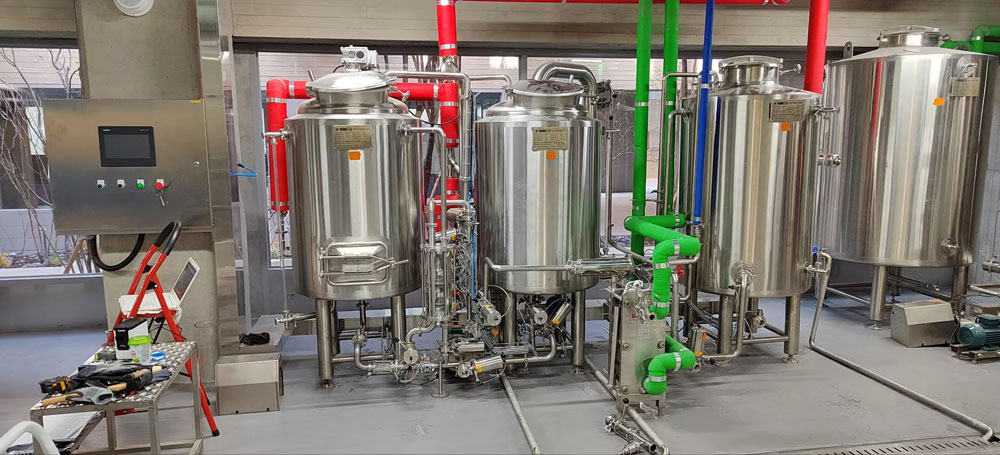
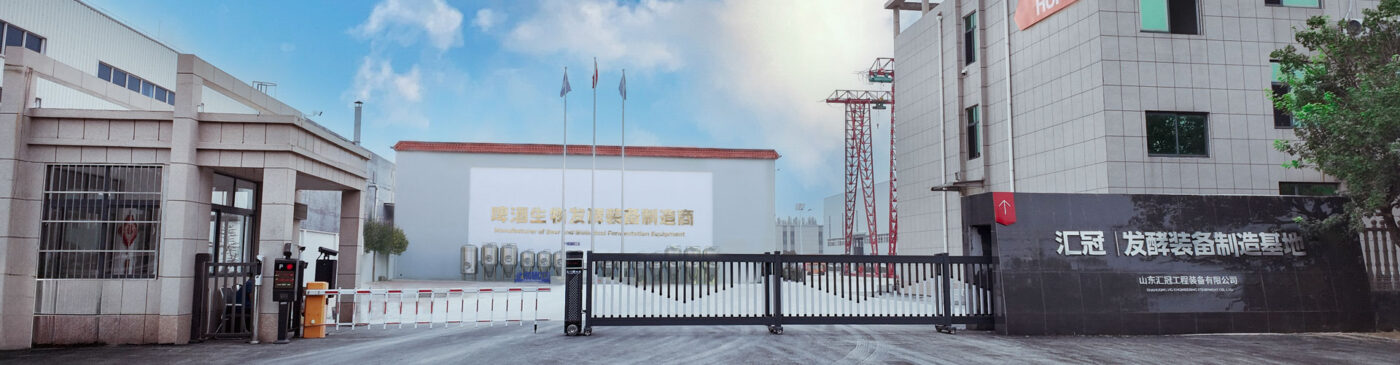
HGMC is the world’s leading manufacturer of beer brewing equipment. We produce brewery equipment, beverage equipment, and canning/bottling lines. We have more than 30 national authorized patents and more than 20 high-tech achievements. We provide a full range of services, including individual equipment and turnkey projects. All products are in compliance with the ISO9001:2015 quality management system, exported to more than 120 countries worldwide, and have won recognition and praise from customers.
For pubs, distributors, and beverage investors, this manufacturing capability matters because draft beer systems work best when design, component selection, fabrication quality, and after-sales service are treated as one integrated project—not disconnected purchases.
1) Top Benefits of Installing Draft Beer Systems in Pubs
Benefit 1: Better beer quality and more consistent taste
Draft beer quality can degrade quickly if temperature control, line hygiene, or dispense balance is poor. Off-flavors, carbonation loss, and foamy pours are often symptoms of system-level issues rather than “bad beer.”
To standardize best practices, the Brewers Association publishes the Draught Beer Quality Manual—positioning it as a major resource for installers, wholesalers, retailers, and brewers, covering line cleaning, system components, design, gas dispense/balance, and sanitation.[3]
When a pub’s system is designed and maintained according to recognized guidance, customers get a pint that matches the brewer’s intent more closely—helping the pub build trust and repeat business.
Benefit 2: Reduced waste and higher gross margin
Foam isn’t only a presentation issue. Over-foaming typically translates into:
- Beer poured down the drain
- Slower service
- Lower customer satisfaction (“Why is my pint half foam?”)
A draft system that holds stable temperature from keg to faucet, and maintains proper line balance, reduces these losses. Over time, cutting waste is one of the most direct ways draft equipment pays for itself.
Benefit 3: Faster service during peak hours
When pours are predictable, staff can serve faster. This helps during:
- Weekend rush
- Live events
- Happy hour
Consistency also reduces staff “workarounds,” like constantly adjusting regulators or using incorrect pouring techniques to compensate for system issues.
Benefit 4: Stronger positioning for premium and craft offerings
Many customers associate draft beer with “freshness.” With a stable, clean system, pubs can confidently run:
- Rotating taps
- Seasonal craft selections
- Imported kegs with stricter serving requirements
Benefit 5: Long-term scalability for multi-site operators
For pub groups and chains, a standardized draft specification across stores makes operations easier:
- Training becomes repeatable
- Spare parts can be centralized
- Quality is more consistent across locations

2) Key Features to Look for in Draft Beer Systems
Choosing a draft beer system is not about buying a tower; it’s about building a controlled cold chain from keg to glass.
Feature A: Correct system type for your layout (direct draw vs long draw)
In simple terms:
- Direct draw: kegs are close to taps
- Long draw: kegs are remote, requiring stronger cooling and careful trunkline design
If your pub wants a visually attractive bar with storage in a back room—or you plan multiple tap stations—long draw becomes relevant and engineering details become critical.
Feature B: Cooling method and temperature stability
Common cooling approaches include air-cooled and glycol-cooled designs. For longer distances, glycol systems are often chosen because they can hold stable temperature across the run (especially when correctly insulated and properly sized).
Temperature stability doesn’t just improve taste; it impacts foaming, carbonation, and pouring speed.
Feature C: Hygiene-oriented materials and cleanability
Beer lines and fittings must support regular cleaning and safe food-contact performance. On the broader food equipment side, recognized sanitation standards exist for beverage dispensing equipment. For example, NSF highlights NSF/ANSI 18 as a standard establishing minimum food protection and sanitation requirements for manual food and beverage dispensing equipment and related components.[4]
Even if a pub is not legally required to certify to a particular standard, these principles are useful: hygienic design, cleanable surfaces, safe materials, and a system that makes correct cleaning easier.
Feature D: Dispense gas and pressure control flexibility
A draft system should allow proper adjustment and monitoring of:
- Regulator settings
- Gas blends (where applicable)
- Line pressure stability
Correct dispense control reduces foam, preserves carbonation, and improves repeatability across different beer styles.
Feature E: Reliable components + after-sales support
In pub operations, reliability is money. Consider:
- Parts availability (faucets, couplers, seals)
- Service response time
- Documentation quality (drawings, commissioning checklist, cleaning SOP)
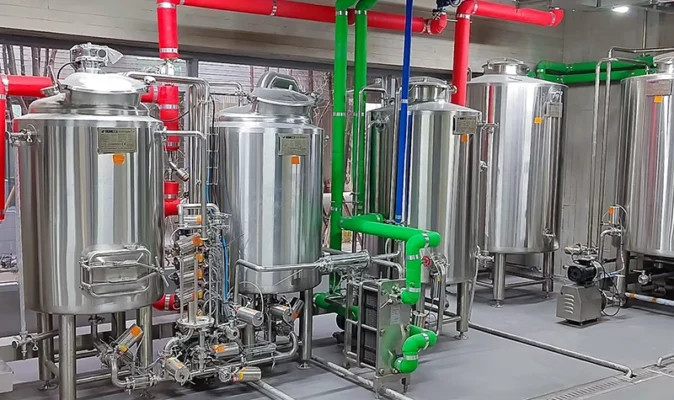
3) Popular Draft Beer Systems in China: An Overview
China’s draught beer opportunity is supported by market signals: Grand View Research notes consumer preference for “fresh, premium-tasting beverages,” and links growth to urbanization, nightlife culture, and the expansion of Western-style pubs and craft beer bars.[1]
In real projects, common configurations include:
A) Beer wall / cooler-wall systems (shorter draw)
- Many taps mounted directly on a walk-in cooler wall
- Shorter lines and simpler temperature management
- Great for taprooms or pubs that can place taps near cold storage
B) Remote cooler + trunkline to bar (long draw)
- Enables a central “show bar” while keeping kegs in a back-of-house cold room
- Requires stronger engineering:
- trunkline insulation
- cooling capacity
- pressure balance
- well-designed towers/shanks
C) Multi-zone tapping (main bar + VIP rooms + patios)
- Higher complexity, more potential temperature variation
- Requires careful zoning, labeling, and maintenance discipline
4) Technical Specifications That Matter for Pub Draft Beer Systems
Technical specs should serve one goal: consistent beer quality with minimal waste.
Spec 1: Line length, inner diameter (ID), and balancing strategy
Line geometry affects restriction and pressure drop. If restriction is wrong, pours become:
- Too fast and foamy
- Too slow and flat
- Inconsistent between taps
A professional design will match beer style, temperature, carbonation level, and distance to an appropriate balance.
Spec 2: Trunkline insulation and routing (for long-draw systems)
For remote systems, trunkline quality is crucial:
- Insulation quality reduces heat gain
- Proper routing avoids warm spots and mechanical stress
- Moisture control matters (condensation can degrade insulation and create hygiene risks)
Spec 3: Cooling capacity sizing
Undersized cooling leads to warm beer at the faucet, which increases foam and waste.
Sizing should consider:
- ambient temperature
- total line length
- number of taps
- duty cycle (busy vs slow hours)
- whether towers/shanks are actively cooled
Spec 4: Tower/shank thermal management
Warm metal at the faucet contributes to “first-pour foam.” Better thermal control helps maintain consistent quality even during slower traffic periods.
Spec 5: Materials and seals (food-grade + durability)
Good systems choose materials that are:
- corrosion-resistant
- compatible with cleaning chemicals
- designed for repeated disassembly without damage
5) Maintenance Tips for Keeping Draft Beer Systems in Top Shape
Tip A: Follow a documented cleaning frequency (and keep logs)
A commonly referenced best practice in professional training is a two-week cleaning cycle. In Brewers Association conference training materials, a “Two-week Cleaning Cycle” is explicitly stated as an expectation, along with process guidance such as caustic concentration and recommended cleaning method.[5]
Also, the Brewers Association provides a free PDF of the Draught Beer Quality Manual, which is intended to guide best practices across system cleaning, components, and sanitation.[3]
Practical suggestion:
- Create a line-cleaning log that records date, technician, lines cleaned, chemical used, contact time, and rinse confirmation.
Tip B: Don’t skip faucet and coupler cleaning
Lines may be cleaned, but if faucets/couplers are neglected, issues persist. Build a routine for:
- disassembly
- scrubbing
- replacing worn seals
Tip C: Monitor early warning signals
Train staff to report:
- sudden foam increase
- sour/buttery/musty notes
- fluctuating pour speed
- persistent “first pour” waste
These signs often point to temperature instability, contamination, or imbalance.
Tip D: Replace wear parts proactively
Budget and schedule replacements for:
- gaskets/seals
- beer tubing (based on condition and manufacturer guidance)
- coupler components
A small preventive maintenance budget often prevents a much larger “emergency fix + lost sales” cost.
6) Enhancing Customer Experience with Quality Draft Beer Systems
A pub’s draft program is part of its brand. Customers may not know what a trunkline is—but they notice the outcomes.
Experience driver 1: Taste consistency = trust
When the same beer tastes different every time, customers stop ordering it. Consistency is the foundation of repeat business.
Experience driver 2: Visual quality and foam control
A clean, balanced, temperature-stable system delivers:
- better head formation
- less waste
- fewer complaints
Experience driver 3: Menu confidence and premium pricing potential
If your system is reliable, you can expand into:
- more taps
- rotating guest beers
- premium craft kegs with higher expectations
This supports differentiation in competitive urban markets.
7) Comparative Analysis of Leading Draft Beer Brands in China
A practical comparison should focus less on “brand fame” and more on engineering, hygiene, reliability, and service.
Here’s a pub-operator-oriented framework for comparing leading draft beer brands in China (including both domestic and international offerings):
A) Product portfolio fit: keg formats, styles, and distribution
- Does the brand support the keg types commonly available in your region?
- Is supply consistent for your turnover needs?
- Are seasonal/limited releases stable enough for your tap lineup?
B) Quality requirements and system sensitivity
Some brands and styles are more sensitive to:
- temperature variation
- oxygen pickup
- dirty lines
- improper balance
If a brand is craft-forward or premium-positioned, your system must be more disciplined. Brands that invest in draft quality education tend to expect higher standards at retail.
C) Support ecosystem (training, POS materials, technical guidance)
Some beer brands provide:
- draft quality training
- cleaning SOPs
- troubleshooting guides
- marketing collateral
Those supports can help pubs maintain quality and sell more effectively.
D) Profitability and customer perception
Compare:
- price per keg vs expected sell-through
- customer brand recognition
- ability to justify premium pricing through “fresh draft” experience
FAQ (SEO-Optimized): Draft Beer Systems for Pubs
Q1: How often should draft beer lines be cleaned in a pub?
Many professional training materials reference a two-week cleaning cycle as an industry expectation for routine line cleaning, with defined process controls (chemical concentration, time, method).[5] For deeper guidance, the Brewers Association provides the Draught Beer Quality Manual.[3]
Q2: What are the biggest causes of foamy draft beer?
Common causes include:
- beer too warm at the faucet
- incorrect pressure/line balance
- dirty lines or contaminated faucets/couplers
- warm towers/shanks (especially causing “first pour foam”)
Q3: Is a glycol draft system worth it for pubs?
If your kegs are far from taps (long-draw), glycol systems are often chosen because they can maintain more stable temperatures from keg to faucet. For short-draw installations, simpler systems may be sufficient if designed correctly.
Q4: What specs matter most when choosing a pub draft beer system?
High-impact specs include:
- line length and inner diameter
- trunkline insulation quality (for long-draw)
- cooling capacity sizing
- tower/shank thermal management
- cleanability and hygiene-oriented design
Q5: What is the market outlook for draught beer in China?
Grand View Research estimates China’s draught beer market at USD 3.36B in 2024 and projects it could reach USD 6.38B by 2033 (7.5% CAGR).[1]
Q6: What is the global draught beer market size?
Grand View Research estimates the global draught beer market size at USD 41.45B in 2023 and provides growth projections through 2030.[2]
Q7: Are there recognized sanitation standards for beverage dispensing equipment?
Organizations such as NSF publish standards portfolios for food equipment; for example, NSF/ANSI 18 addresses sanitation requirements for manual food and beverage dispensing equipment and related components.[4]
Conclusion: Build Your Draft Beer System Like a Quality-Control Line
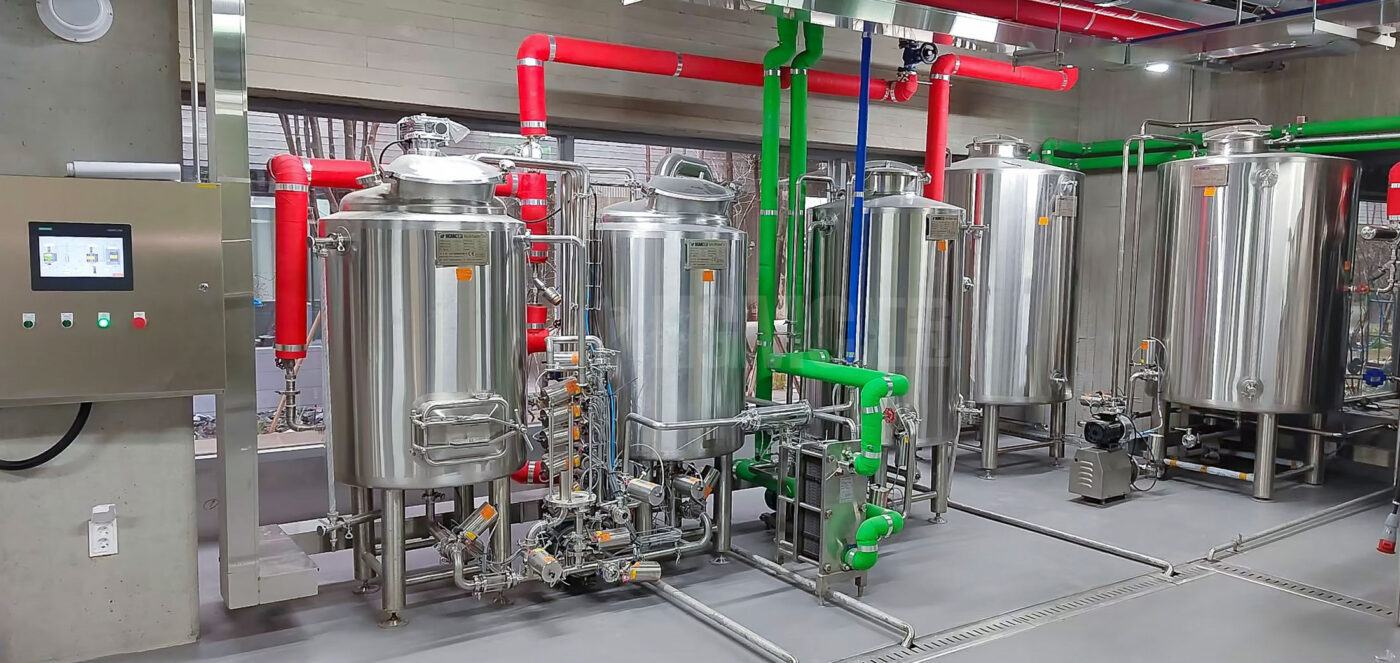
Draft beer systems are a “mini production line” inside the pub—handling temperature, pressure, flow, and hygiene. When built and maintained correctly, they deliver:
- better beer taste and consistency
- less foam waste
- higher customer satisfaction
- a stronger platform for premium draft programs—especially as China’s draught market continues to expand[1]
HGMC supports pubs, breweries, and beverage investors with equipment manufacturing strength, patented innovation, ISO9001:2015 quality management compliance, and global export experience to 120+ countries—covering individual equipment and full turnkey projects.
