
Choosing the right material for brewery equipment is more than a preference—it directly affects sanitation outcomes, corrosion resistance, long-term maintenance cost, and even how reliably you can hit the same beer flavor batch after batch. For both commercial breweries and serious homebrewers, the “best” material depends on where the equipment sits in the process (hot-side vs cold-side), the chemicals used in CIP (clean-in-place), and the lifetime you expect from your tanks, piping, and fittings.
In this guide, we’ll break down the three most common metals used in beer equipment—copper, aluminum, and stainless steel—so you can make a confident, technically sound decision.
Quick answer: what material is most brewery equipment made of?
Most modern brewery equipment—especially fermentation tanks, bright tanks, piping, valves, pumps, and CIP circuits—is made of stainless steel, typically AISI 304 or AISI 316/316L, because it balances hygiene, corrosion resistance, strength, and lifecycle value.[1][2]
Copper and aluminum still have real use cases—especially on the hot side—but they’re usually selected for specific reasons (heat transfer, budget, fabrication) rather than as the “default” across an entire brewhouse.
Why the material matters in brewery equipment (beyond durability)
1) Sanitation and hygiene performance
Beer is highly sensitive to microbial contamination, and the cold side (post-boil) is especially vulnerable. A material that tolerates effective cleaning chemistry—and can maintain a smooth, non-reactive surface—reduces risk and makes consistent sanitation easier.
2) Corrosion resistance vs. your real cleaning chemicals
Many breweries rely on alkaline cleaners, oxidizers, and acid rinses. Material selection needs to match the chemical reality of your CIP program and water chemistry (especially chloride levels).
3) Flavor neutrality and product quality
Reactive metals can contribute metallic pickup or cause unwanted reactions if misused. For cold-side contact, chemical inertness is usually a priority.
4) Total cost of ownership (TCO)
Initial equipment price is only part of the picture. Maintenance labor, passivation, repair frequency, and service life often dominate the long-term cost.
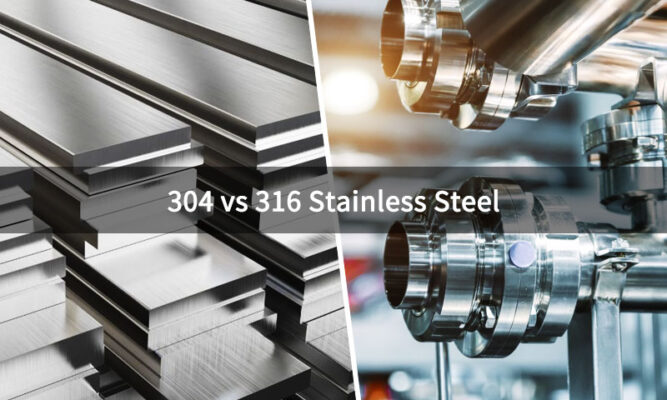
Stainless steel: the industry standard for beer equipment
Stainless steel is the dominant material in modern breweries because it performs well across nearly every brewery application: kettles, mash tuns, lauter tuns, fermenters, brite tanks, hot liquor tanks, cold liquor tanks, piping, and sanitary accessories.
Common reasons stainless steel is preferred:
- High corrosion resistance in typical brewery conditions
- Smooth surface that supports hygienic design and cleaning
- Excellent mechanical strength (important for pressure-rated vessels)
- Long service life and strong resale value
- Broad compatibility with sanitary fittings and modern fabrication standards
Industry market data also supports the continued global investment trend into brewing equipment (which heavily leans stainless for core vessels). For example, Grand View Research estimated the global brewery equipment market at USD 18.45B in 2024, projecting a 6.1% CAGR from 2025–2030.[3]
304 stainless steel (AISI 304): the most common choice
304 is widely used across food and beverage processing because it’s cost-effective and corrosion-resistant in most standard environments.[2]
Typical 304 use cases in a brewery:
- Fermenters and brite tanks (most inland breweries)
- Brewhouse vessels and hot-side tanks
- Piping, valves, manifolds, and pump housings
- Non-extreme CIP programs (normal caustic/acid cycles, correct concentrations, proper rinsing)
316 / 316L stainless steel: higher corrosion resistance (especially chlorides)
316 stainless includes molybdenum, which improves resistance to pitting and crevice corrosion—particularly in chloride-rich or more aggressive chemical environments.[2]
Typical 316/316L use cases:
- Coastal breweries (salt air exposure)
- High-chloride water sources
- More aggressive CIP regimes or acidic products
- Heat exchangers and demanding liquid-processing environments (varies by design)
In general food-grade guidance, 304 is often described as “good for most” and 316 as the upgrade for harsher conditions.[2]
Why most breweries standardize on stainless steel
If you run a commercial operation, stainless steel simplifies:
- Cleaning validation and repeatable sanitation
- Long-term maintenance planning
- Expansion and equipment integration (standard tri-clamp ecosystems)
- Export and compliance expectations in many markets
In short: stainless steel is the best “default” because it works across the whole process and supports professional hygiene.
Copper brewery equipment: excellent heat transfer, but use carefully
Copper has a long history in brewing—especially in kettles and mash tuns—primarily because of its excellent thermal conductivity and ease of fabrication. Many breweries still use copper as a visible, customer-facing design feature (think brewpub brewhouses).
Where copper still makes sense
- Brew kettles (hot-side contact, short exposure time)
- Decorative cladding or non-product-contact surfaces
- Specialty applications where heat transfer is the main driver
Copper oxide and safety: what you need to know
Copper naturally forms an oxide layer. However, a blue-green copper corrosion product (often referred to as verdigris in common language) is a signal you should clean and correct the issue before further use.
Food safety guidance is especially strict for copper in contact with acidic foods and beverages. A food-safety review referencing the FDA Model Food Code notes that copper as a food-contact surface for acidic alcoholic beverages is prohibited under the 2017 FDA Model Food Code framework.[4]
Practical takeaway:
- Copper can be used in brewing, but you should be cautious about prolonged contact with acidic liquids, poor maintenance, or corrosion buildup.
- If copper is used, cleaning and inspection discipline matters.
Aluminum brewing equipment: budget-friendly and effective on the hot side
Aluminum is popular among homebrewers and pilot setups because it’s lightweight, cost-effective, and has good thermal conductivity. For brewing temperatures and typical wort pH, aluminum can perform well—especially for kettles—when cared for correctly.
A well-known homebrewing technical resource explains that under normal brewing conditions (typical temperature and pH ranges), aluminum will not corrode and should not contribute metallic flavor, but it relies on a passive oxide film and should not be scrubbed back to shiny metal between uses.[5]
Where aluminum makes sense
- Boil kettles (especially budget builds)
- Hot-side vessels with short contact time
- Temporary/pilot setups where cost and weight matter
Aluminum cleaning limitations (important)
Aluminum is more sensitive to certain chemicals. The same technical brewing guidance warns against using bleach or caustic cleaners on aluminum because they can cause pitting, and instead recommends percarbonate-based cleaners or mild detergents.[6][5]
Practical takeaway:
- Aluminum can be a very good hot-side option.
- It is generally not the first choice for professional cold-side equipment, long-term storage, or aggressive CIP programs.
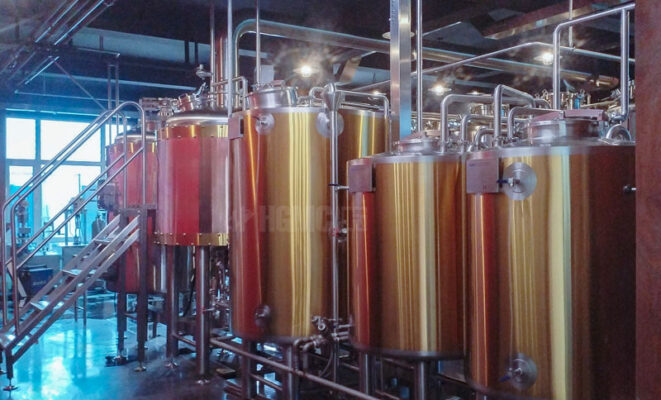
Stainless steel vs copper vs aluminum: how to choose by application
Hot-side equipment (mash tun, kettle, HLT)
- Stainless steel: best all-around; professional standard; easy to integrate and sanitize.
- Copper: excellent for kettles; strong heritage; needs corrosion monitoring and correct cleaning.
- Aluminum: cost-effective kettle option; avoid harsh caustic/bleach; protect oxide layer.
Cold-side equipment (fermenters, brite tanks, transfer piping)
- Stainless steel (304/316): overwhelmingly preferred due to hygiene, corrosion resistance, and durability.
Piping, valves, fittings, accessories
- Stainless steel is the standard because sanitary design components (tri-clamp, sanitary valves) are built around stainless ecosystems and cleaning expectations.
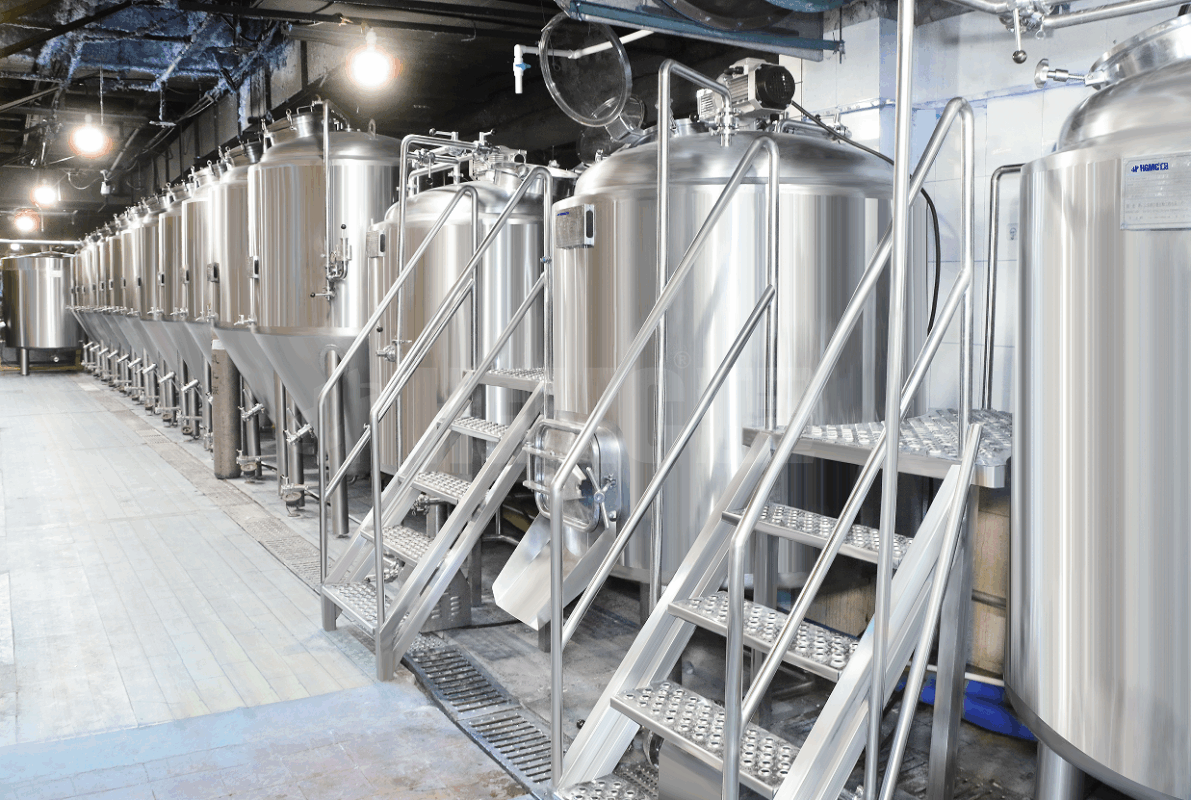
Best practices for material safety and longevity
- Match your metal to your CIP chemicals
Before finalizing equipment, confirm your cleaning program (alkaline/acid/oxidizer) and ensure the chosen metal is compatible—especially if you use stronger chemicals or have high-chloride water.
- Don’t compromise on stainless grade authenticity
Low-grade stainless or substitutes can pit, corrode, and potentially contribute metallic flavor if the passive layer is damaged and not properly maintained. For food-grade decision-making, 304 vs 316 differences are well documented, especially around chloride exposure.[2]
- Use the right cleaning approach for copper and aluminum
Copper and aluminum can work well, but they demand correct cleaning choices and consistent inspection. Aluminum in particular should avoid bleach and caustic cleaners to reduce pitting risk.[6]
- Think in lifecycle cost, not purchase price
If a stainless fermenter lasts decades with routine gasket replacement and proper maintenance, it usually wins on TCO versus cheaper materials that require more frequent replacement or extra labor.
FAQ (Q&A section)
Q1: What material is most commercial brewery equipment made of?
Most commercial brewery equipment—especially fermenters, brite tanks, piping, and valves—is made of stainless steel (commonly 304 or 316/316L) due to hygiene, corrosion resistance, and long service life.[1]
Q2: Is 304 or 316 stainless steel better for brewery equipment?
For most breweries, 304 is sufficient and cost-effective. 316/316L is typically chosen when chloride exposure or harsher cleaning environments increase the risk of pitting and crevice corrosion, because molybdenum improves corrosion resistance in those conditions.[2]
Q3: Why is stainless steel considered “food grade”?
“Food grade” generally refers to the material’s suitability for safe food contact and cleanability in food-processing environments. 304 and 316 stainless steels are widely used in food and beverage facilities because they resist corrosion and are easier to sanitize than many alternatives.[2]
Q4: Is copper safe for brewing equipment?
Copper has been used in brewing for a long time, particularly on the hot side. However, copper contact with acidic beverages raises food safety concerns, and guidance referencing the FDA Model Food Code framework indicates copper food-contact surfaces are prohibited for acidic alcoholic beverages in retail settings.[4]
In practice: copper can be used, but it must be well maintained, monitored for corrosion buildup, and applied appropriately.
Q5: What is verdigris on copper brewing equipment?
Verdigris is a common term for blue-green copper corrosion products. If you see blue-green buildup on copper equipment, it’s a sign the surface needs proper cleaning and the cause of corrosion should be addressed before further use.
Q6: Is aluminum safe for beer brewing kettles?
Aluminum can be a good hot-side choice. Brewing metallurgy guidance notes that under normal brewing temperature and pH conditions, aluminum (by itself) should not corrode or add metallic flavor, but you should preserve its passive oxide layer (don’t polish it shiny) and use appropriate cleaners.[5]
Q7: Can I use caustic or bleach to clean aluminum brewing equipment?
It’s not recommended. Homebrewing technical references warn against bleach or caustic cleaners for aluminum because they can cause pitting; percarbonate-based cleaners or mild detergents are commonly recommended instead.[6][5]
Q8: Does stainless steel ever corrode in a brewery?
Yes—stainless steel can still pit or corrode if exposed to unfavorable conditions (for example, chloride-rich environments, incorrect chemical concentrations, or poor rinsing). That’s one reason 316 is sometimes chosen over 304 in more aggressive environments.[2]
Conclusion: best material choice for brewery equipment in 2026
If you want the most universally reliable, commercially standard solution, stainless steel remains the best material for beer equipment—especially for cold-side tanks and all sanitary process components. For most breweries, 304 stainless is the cost-effective workhorse; 316/316L is the upgrade when corrosion risk is higher due to chlorides or harsher CIP realities.[2]
Copper and aluminum still have meaningful roles—mainly on the hot side—when you prioritize heat transfer, fabrication flexibility, or budget. The key is using each material where it performs best, and maintaining it with the right cleaning and inspection practices.
