
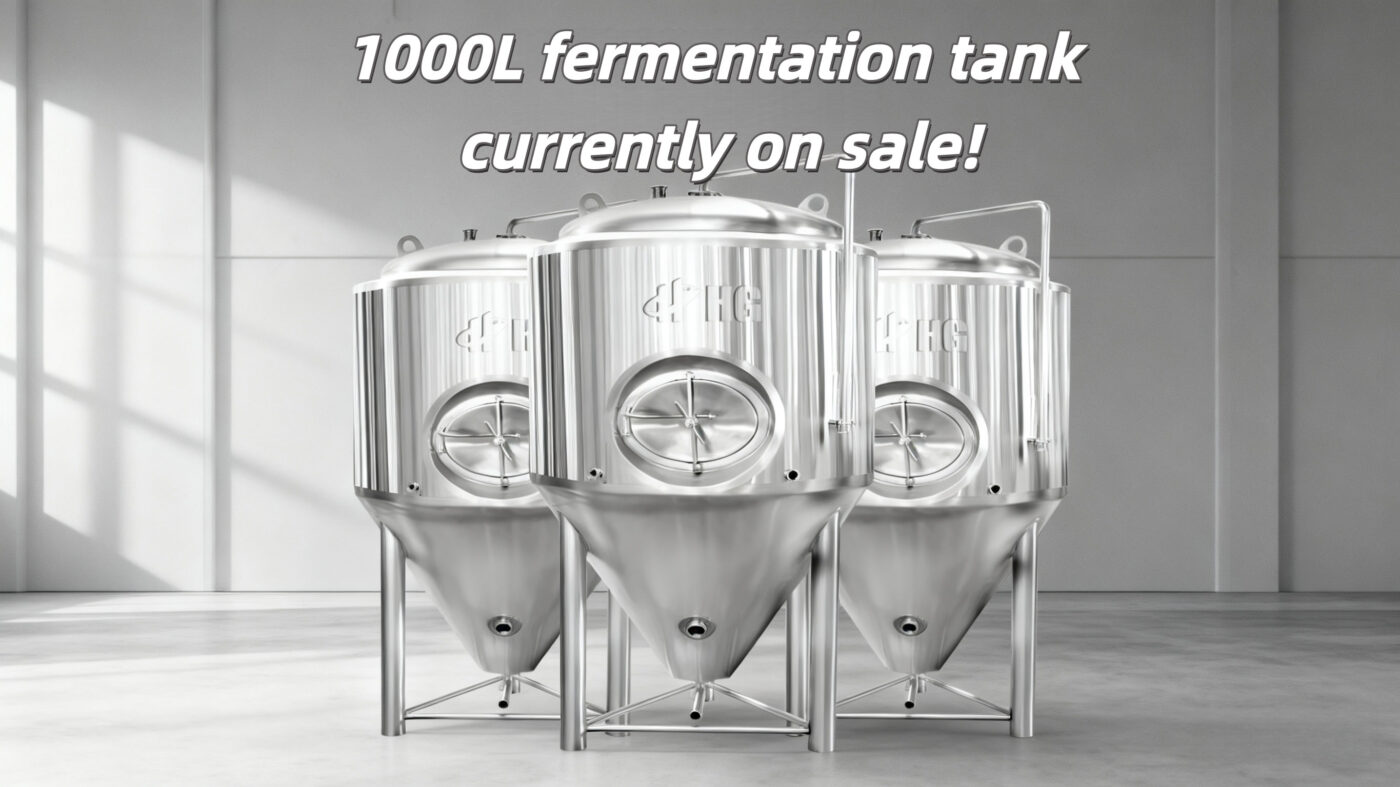
Beer brewery tanks—especially fermentation tanks—are where wort becomes beer. During fermentation, yeast converts sugars into alcohol and CO₂, creating beer’s alcohol content, aroma compounds, and carbonation base.
For breweries in China, tank decisions are increasingly strategic: the market has shifted from pure volume to premiumization, and efficient, hygienic tank design helps breweries control flavor, consistency, and operating costs.
A recent U.S. government industry report notes China produced 37.9 million kiloliters of beer in 2023, about 20% of the world’s total, and highlights premiumization and craft growth as major forces shaping brewery investments. Source: USDA Foreign Agricultural Service (FAS) report (2025).
Hgmc manufactures brewery equipment, beverage equipment, and canning/bottling lines, with ISO9001:2015 quality management compliance and global exports. This guide is designed for broad readers (from new brewery owners to experienced production teams) and is written in an SEO-friendly structure for Google.
1) Top 10 Beer Brewery Tanks in China: An Overview of the Market
Instead of ranking “brands” without verifiable public sales data, the most useful “Top 10” for buyers is typically the 10 tank categories/configurations most commonly specified for breweries in China (craft, regional, and industrial). These cover the majority of real-world brewery buildouts and expansions:
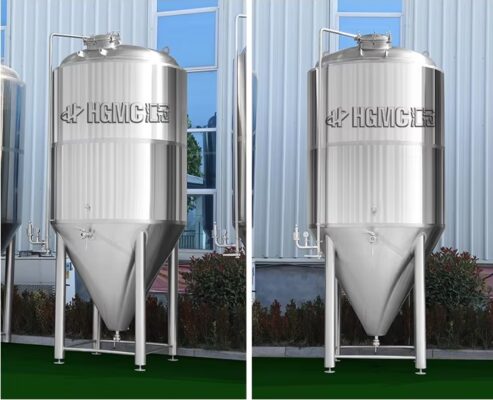
- Cylindroconical Fermentation Tanks (Unitanks/FVs)
- Bright Beer Tanks (BBTs / Serving Tanks)
- Brite/Storage Tanks for Conditioning
- Yeast Brink / Yeast Storage Tanks
- Hot Liquor Tanks (HLT)
- Cold Liquor Tanks (CLT)
- Glycol/Chilled Water Buffer Tanks (Utility Tanks)
- Mixing/Blending Tanks (for RTD, fruit beer, low-alcohol lines)
- CIP Tanks / Chemical Dosing Tanks (Cleaning System)
- Beer Filter/Inline Process Hold Tanks (process integration dependent)
Why China’s tank market is evolving
- China remains a global leader in production and consumption volume. (Context and production figures are summarized by multiple industry sources; for example, drinktec reports China produced ~35.21 billion liters of beer in 2024 and remained the largest producer/consumer.)
- Craft and premium segments are pushing demand for better temperature control, cleaner welds, smoother finishes, and automation-friendly tank designs.
- The USDA FAS report also highlights rapid growth in the number of craft brewers and craft-related businesses since 2021, reinforcing equipment demand tied to premium/craft expansion.
2) Key Features of Brewery Tanks and Their Relevance in Beer Production
When buyers compare beer brewery tanks, the best approach is to evaluate the engineering features that directly affect beer quality, safety, and cost of ownership.
(A) Material: 304 vs 316/316L stainless steel
Most breweries choose 304 for many beer applications, while 316/316L is selected when corrosion risk is higher (e.g., higher chlorides, more aggressive cleaning chemistry, coastal environments, or more acidic products).
A technical overview notes both 304 and 316 stainless steels are commonly considered food-grade and suitable for direct food contact under relevant regulatory frameworks, and emphasizes that finish/passivation and cleaning practices strongly influence hygienic performance.
Reference: https://www.azom.com/article.aspx?ArticleID=24472
Practical buyer tip: If your process uses stronger caustics/oxidizers, or you operate in harsher water/chemical conditions, specifying 316L for key product-contact areas can reduce long-term corrosion risk.
(B) Surface finish and weld quality
- Smooth internal surfaces reduce biofilm attachment and make CIP more reliable.
- High-quality welding (especially in jackets, ports, manways, and cone areas) reduces contamination points and maintenance.
(C) Temperature control (jackets + insulation)
- Fermentation performance depends on stable temperature.
- Larger vessels often need multi-zone jacketing to avoid hot/cold gradients.
(D) Pressure rating and safety
- Many modern tanks support spunding/pressure fermentation and closed transfers.
- Appropriate pressure rating, relief valves, and documentation are critical for safety and compliance.
(E) Hygiene design: CIP-ready by default
- Correct spray devices (spray balls/rotary jets), correct pump sizing, and verified flow rates are as important as tank geometry.
- A CIP guideline document emphasizes the importance of initial cleaning & passivation and a structured CIP program to prepare stainless equipment for sanitary operation.

3) Leading Brands in the Chinese Brewery Tank Industry
Buyers usually mean one of two things by “leading brands”:
A) Leading beer brands/breweries driving capacity and equipment demand
Large commercial groups and regional breweries influence tank demand through expansions and modernization (especially for premium packaging lines and quality upgrades). (Industry discussions and market analysis frequently reference major groups such as China Resources Snow, Tsingtao, Yanjing, etc.)
B) Leading tank/equipment manufacturers (OEMs)
For SEO and buyer value, it’s better to evaluate OEMs by verifiable capability rather than name-only lists:
What to check when selecting a brewery tank manufacturer in China
- ISO quality management and traceability (e.g., ISO9001 systems)
- Material certificates (stainless grade, thickness, heat number traceability)
- Weld standards and inspection process (visual, pressure tests, jacket tests)
- Hygienic design details: dead-leg control, port positioning, drainability
- Engineering documentation: drawings, manuals, CE/PED (if exporting), pressure vessel compliance where required
- After-sales: installation guidance, spare parts, remote troubleshooting
Hgmc positions itself as a full-range supplier (individual equipment + turnkey projects), with patented achievements, ISO9001:2015 compliance, and exports to 120+ countries (as provided in your brief).
4) Technological Innovations in Brewery Tank Design
Tank innovation is not just “new shapes”—it’s about more stable fermentation, less oxygen pickup, faster cleaning, and lower energy use.
Key innovation trends:
- Pressure-capable unitanks (ferment + condition in one vessel)
- Low-oxygen design (closed transfers, better seals, improved valves)
- Better jacket zoning for faster cooling and cleaner temperature ramps
- Automation integration (temp control, fermentation tracking, CIP recipes)
- Improved hygienic fittings (tri-clamp standards, sanitary sample valves)
- Surface finish upgrades (more consistent polishing and passivation practices)
These improvements align with premiumization: as China’s beer industry shifts toward higher-margin products, process control and repeatability become more valuable (USDA FAS describes premium offerings and higher margins as an industry pivot).
5) Comparative Analysis of Brewery Tank Capacities and Sizes
Choosing the right tank size depends on brewhouse size, beer portfolio, fermentation time, and packaging/serving model.
Common capacity ranges (typical real-world patterns)
- Brewpub / taproom: smaller tanks with higher variety (more SKUs)
- Regional craft: medium tanks balancing throughput and flexibility
- Industrial: large-volume tanks optimized for efficiency and consistency
How to size fermentation capacity (simple planning logic)
- Estimate average fermentation + conditioning days (varies by style).
- Determine weekly brews and batch size.
- Plan tank count so you’re not forced into rushed fermentation or warm storage.
Important detail: “Bigger is not always cheaper.” Oversized tanks can:
- reduce flexibility for seasonal products,
- increase cooling demand,
- and raise risk of quality loss if your sales pace doesn’t match.
Geometry considerations
- Cone angle affects yeast collection and trub removal.
- Headspace impacts blow-off management and pressure fermentation behavior.
- Port layout impacts CIP coverage and ease of maintenance.
6) Maintenance and Care Tips for Brewery Tanks
A well-made tank still requires correct care. Poor cleaning, incorrect chemical concentration, or skipped passivation can shorten tank life and create quality risks.
Daily/weekly best practices
- Rinse quickly after emptying: dried soils are harder to remove.
- Verify CIP temperature, flow, and contact time.
- Regularly inspect gaskets, sample valves, PRVs, and manway seals.
- Keep a cleaning log (especially for multi-site or certified operations).
Passivation and corrosion prevention
- Stainless relies on a protective oxide layer. Some cleaning processes can damage this layer if not managed correctly; many CIP procedures include steps and chemical choices that support long-term stainless performance.
Material selection matters for long-term maintenance
A food-grade stainless overview explains that 304 vs 316 choices affect corrosion resistance and that finish/passivation and cleaning strongly influence hygienic reliability over time.
Reference: https://www.azom.com/article.aspx?ArticleID=24472
7) Future Trends in Brewery Tank Manufacturing in China
Looking forward, demand is likely to concentrate in these directions:
- Premiumization-driven upgrades
More breweries investing in tanks that support consistent flavor and stable fermentation control (supported by industry observations and USDA FAS reporting on premium shifts).
- More pressure-capable and low-oxygen systems
Closed transfers and better DO control will become more “standard spec,” not premium-only.
- Export-oriented compliance packages
Manufacturers will increasingly provide complete documentation for overseas markets (CE/PED where applicable, pressure testing records, material certs, etc.).
- Efficiency and sustainability
Faster CIP cycles, lower water use, improved insulation, and smarter temperature control.
- More variety, smaller batch logic (for craft)
Craft growth means many breweries will prefer more tanks rather than bigger tanks—to maintain product variety and freshness.
Q&A: Beer Brewery Tanks (Quick Answers for Buyers)
Q1: What are beer brewery tanks used for?
Beer brewery tanks store, ferment, condition, carbonate, and sometimes serve beer. The most important category is fermentation tanks, where yeast converts sugars into alcohol and CO₂.
Q2: What is the difference between a fermentation tank and a bright beer tank?
- Fermentation tank (FV/unitank): where yeast fermentation happens; can also carbonate/condition in unitank setups.
- Bright beer tank (BBT): used after fermentation for clarification, carbonation stabilization, and packaging/serving preparation.
Q3: Which stainless steel is better for beer brewery tanks: 304 or 316L?
Both are widely used. 304 is common and cost-effective for many beer applications; 316/316L provides improved corrosion resistance in harsher conditions (e.g., more chlorides or aggressive cleaning). A food-grade stainless overview discusses 304 vs 316 use in hygienic food processing and highlights the importance of finish and passivation.
Reference: https://www.azom.com/article.aspx?ArticleID=24472
Q4: How do I choose the right tank capacity for my brewery?
Start with your weekly production plan, average fermentation days per beer style, and packaging schedule. A practical rule is to size tanks so you’re not forced to rush fermentation or hold beer warm due to limited cold-side capacity.
Q5: What tank features matter most for beer quality?
- Stable temperature control (jackets + insulation)
- Hygienic design (good drainage, proper ports, minimal dead legs)
- Smooth internal finish and strong weld quality
- Low-oxygen process capability (closed transfers, reliable seals)
Q6: How important is CIP for fermentation tanks?
Extremely important. A structured CIP program (correct chemicals, time, temperature, and flow) is necessary to keep tanks sanitary and prevent off-flavors or contamination.
Reference (CIP guideline PDF): https://cdn.homebrewtalk.com/data/attach/152/152378-Brewery-CIP-Procedures-Guideline.pdf
Q7: Is China still the world’s largest beer market?
Multiple industry sources describe China as the world’s largest beer producer/consumer by volume in recent years. For example, drinktec reports China maintained its leading position and provides recent production figures.
Reference: https://drinktec.com/en-US/industry-insights/beer-market-in-china-from-mass-market-to-premium-beers/
Summary
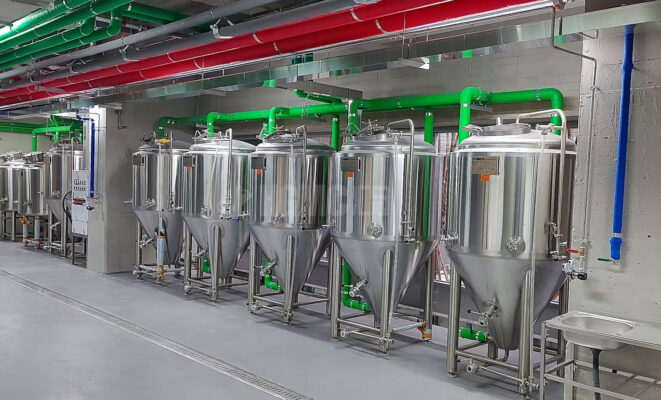
“Beer Brewery Tanks” are not just containers—they are the core of fermentation control, hygiene, and long-term brewery efficiency. In China’s shifting beer landscape (premiumization + craft growth), breweries increasingly prioritize process stability, cleaning efficiency, corrosion resistance, and export-ready documentation.
Hgmc can position its offering around exactly these buyer priorities: custom specifications, consistent manufacturing quality (ISO9001:2015), and turnkey service capability—aligned with what modern breweries need to grow safely and profitably.
