
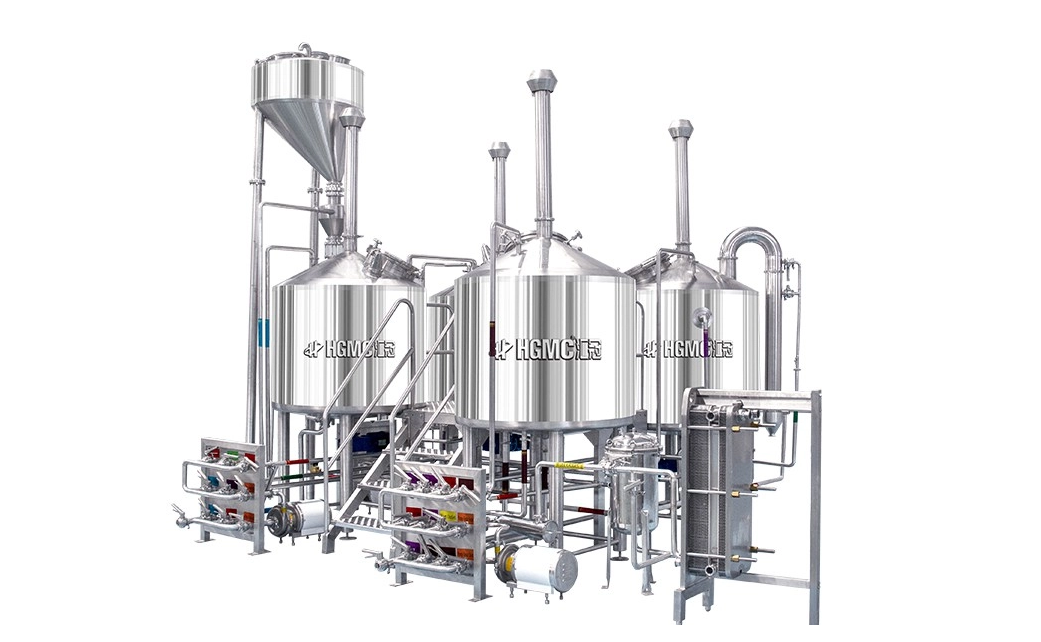
our first mash can feel messy: wrong temperature, stuck flow, weak beer. That stress grows on brew day. The fix is a well-designed mash tun with simple controls. Build it right, and the mash turns calm, steady, and predictable.
A mash tun is the vessel where crushed malt mixes with hot water so enzymes convert starch into sugar, creating sweet wort for beer. In plain terms, it’s a heated, insulated tub with a filter (false bottom/screen) and a valve to drain clear wort to the kettle.
This guide explains what a mash tun does, how mashing works, what design features matter most, and how to choose the right mash tun for homebrew or commercial brewing
What is a mash tun in beer brewing?
In the brewing process, the mash tun holds grist (crushed grain) and hot liquor (brewing water) at a controlled temperature so enzymes can break down starch into fermentable sugars. The mash tun is where wort quality begins: mash temperature stability, mixing efficiency, filtration, and sanitation all influence:
- Extract efficiency (how much sugar you pull from malt)
- Wort fermentability (dry vs full-bodied beer)
- Lauter speed and clarity (smooth runoff vs stuck mash)
- Repeatability across batches
Many systems combine mash + lauter in one vessel (common in modern craft breweries and most homebrew setups). Some large brewhouses use a separate lauter tun for runoff, but the engineering goals are the same: stable temperature, gentle flow, and consistent filtration.
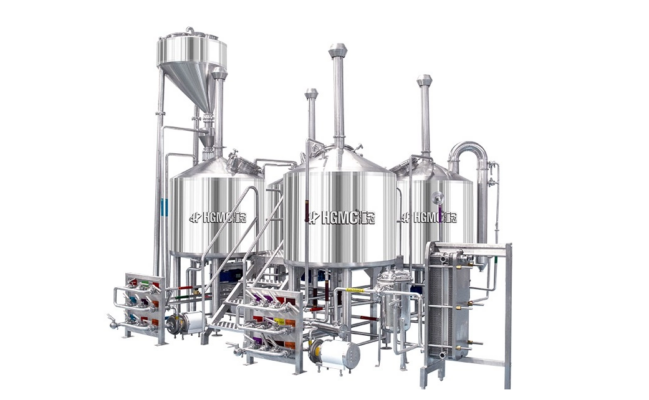
How does the mashing process work? (Simple explanation)
Mashing is controlled starch conversion:
- Heat strike water to the right temperature.
- Dough in: add grain to water (or water to grain) and mix thoroughly.
- Hold a mash rest (often 60 minutes for single infusion).
- Enzymes convert starch into sugars.
- Recirculate (vorlauf) until wort runs clear.
- Lauter and sparge (or batch sparge) to collect sweet wort for boiling.
Why temperature control is everything
Mash enzymes are temperature-sensitive. For example, the American Homebrewers Association explains that beta-amylase is most active in roughly 131–149°F (55–65°C) and plays a major role in producing fermentable sugars, while temperature also affects body, aroma, and flavor outcomes.[1]
If you overshoot and stay too hot, enzymes denature faster and you can shift the wort toward less fermentability (or reduce conversion efficiency).
Practical rule: a mash tun that can hold temperature steady (and distribute heat evenly) makes the entire brew day easier.
The important role of the mash tun (quality + efficiency + consistency)
A mash tun isn’t “just a container.” It’s a process control tool. A good mash tun improves:
1) Conversion and fermentability (beer flavor + body)
Mash temperature shapes the ratio of fermentable sugars (drier beer) to dextrins (fuller mouthfeel). Reliable temperature means predictable results batch after batch.[2]
2) Lautering speed (avoiding stuck mash)
Stuck mash usually comes from a combination of:
- Too fine crush
- Too much huskless adjunct (wheat, oats, rye)
- Poor false bottom design / insufficient open area
- Over-aggressive pumping (compacting the grain bed)
A mash tun with a well-designed false bottom (proper hole size, enough open area, correct stand-off height, and even pickup) helps prevent flow channeling and compaction.
3) Hygiene and repeatability (commercial reality)
Tri-clamp fittings, smooth welds, dead-leg reduction, and CIP-friendly geometry matter more as you scale. For commercial breweries, a mash tun that’s easy to clean is often a mash tun that performs consistently.
Mash tun types (cooler vs stainless vs electric): a practical comparison
Below is a straightforward comparison most buyers care about: control, repeatability, cleaning, and scalability.
| Type | Typical capacity | Heating method | Insulation | Filtration hardware | Best for | Trade-offs |
|---|---|---|---|---|---|---|
| Picnic cooler mash tun | 5–10 gal | Strike water only (no live heat) | Excellent passive | Mesh braid / manifold / small false bottom | Budget homebrew | Limited control; harder to scale repeatably |
| Stainless steel mash tun | 10–30 gal (home/pro small batch) | Direct fire, RIMS, HERMS, or jacket | Wrap or jacket | Perforated false bottom + pickup | Repeatable brewing, long service life | Higher cost; design quality matters a lot |
| Electric jacketed mash tun / mash kettle | 1–10 bbl (and up) | Electric elements + jacket heating | Built-in insulation | Laser-cut screen + grain bed filtration | Small breweries, pilot systems | Power requirements; needs good controls |
Manufacturer note (for your brand positioning): If you manufacture mash tuns, this is where you can clearly differentiate: “simple controls,” “temperature stability,” “flow protection,” “fast cleaning,” and “repeatable runoff.”
Capacity, diameter, and dimension: how to choose the right mash tun size
Sizing depends on batch volume, recipe gravity, and mash thickness. Here’s a practical approach that works for both homebrewers and commercial buyers.
Step 1: Estimate mash volume (grain + water)
A common homebrew mash thickness is ~1.25–1.5 qt/lb (2.6–3.1 L/kg). Grain also occupies space (grain absorption + displacement).
Rule of thumb: mash volume ≈ water volume + grain displacement
- Water volume (gal) = (qt/lb × grain lb) ÷ 4
- Grain displacement: roughly ~0.08–0.10 gal per lb of grain (varies with crush)
Step 2: Add headspace
You need headspace for stirring, preventing spills, and safe recirculation. Practical headspace targets:
- Homebrew: 20–30%
- Commercial: depends on rakes/geometry, but leave enough for mixing without overflow
Diameter vs bed depth (why it matters)
- Too shallow bed: can reduce filtration quality and cause channeling
- Too deep bed: can slow runoff and increase compaction risk
A balanced diameter-to-depth helps maintain steady flow and clear wort.
Inside the tun: screens, false bottoms, and wort flow
False bottom: where runoff success starts
A good false bottom should:
- Provide enough open area (so it doesn’t become the bottleneck)
- Maintain a consistent gap under the screen
- Pull evenly across the bed (avoid one-sided pickup)
- Be removable for cleaning
Valve and fittings: small parts, big difference
- Full-port valves reduce restriction and help prevent shear/compaction
- Tri-clamp connections reduce dead-legs and improve sanitation
- A short, smooth runoff path improves cleaning and reduces clogging risk
Energy and sustainability: why insulation and jacket design matter
Energy is a real operating cost in brewing, and it touches every stage. The Brewers Association’s sustainability/energy material notes how energy usage is profiled across brewery operations and emphasizes the importance of managing energy for long-term cost savings and competitive advantage.[3]
From a mash-tun perspective, the practical takeaway is simple:
- Better insulation and efficient heat transfer (jacket design, control logic, reduced heat loss) help you maintain mash temperature without constant re-heating.
- That improves consistency and can reduce wasted heat.
For marketing, don’t over-promise a universal percentage savings (every brewery differs). Instead:
- Show your own measured heat-loss tests
- Explain how insulation + jacket geometry supports stable process control
Buyer checklist: how to choose the best mash tun (homebrew → brewery)
Use this section as an SEO-friendly “decision aid” that converts readers.
For homebrewers
- Do you want simplicity (cooler) or precision (stainless + heat control)?
- Is your typical grain bill close to the tun limit? (If yes, size up.)
- Do you brew high-wheat/oat beers often? (If yes, prioritize filtration design.)
For pilot systems and small breweries
- Jacket/electric control quality (sensor placement, controller logic, heating uniformity)
- False bottom open area + pickup geometry
- CIP/cleaning workflow (time and steps)
- Build quality: weld finish, material grade, sanitary design
For commercial breweries
- Repeatable lautering under production pace
- Reduced downtime (fast cleaning + fewer stuck mashes)
- Documentation: drawings, QA standards, pressure ratings where applicable
- Serviceability: spare parts, screen removal, access ports
FAQ (Q&A) — Mash Tun Questions Brewers Search on Google
1) What does a mash tun do?
A mash tun holds crushed grain and hot water at controlled temperature so enzymes convert starch into sugar, producing sweet wort. It also supports filtration during recirculation and lautering.
2) What is the best mash temperature?
It depends on beer style and the fermentability you want. Lower mash temperatures generally favor more fermentable wort (drier beer), while higher temperatures typically produce fuller-bodied beer. Brewing references describe how temperature influences enzymatic activity and final beer character.[2][1]
3) Why do I get a stuck mash in my mash tun?
Common causes:
- Crush too fine
- Too much wheat/oats/rye without rice hulls
- Over-aggressive recirculation pump (compacting the bed)
- Undersized/poorly designed false bottom (low open area)
- Sticky mash (high beta-glucans) without step rests
A tun designed for even wort pickup and gentle flow is a major fix.
4) Do I need a separate lauter tun?
Not necessarily. Many systems combine mash and lauter in a single mash tun. A separate lauter tun can improve throughput in some brewhouses, but a well-designed combined vessel works extremely well for many breweries and most homebrewers.
5) What size mash tun do I need?
Choose based on:
- Batch size
- Maximum grain bill (high gravity recipes need more capacity)
- Mash thickness
- Desired headspace for stirring and recirculation
A safe approach is to size the tun so your biggest planned grain bill uses no more than ~70–80% of total volume.
6) Is an insulated mash tun worth it?
If you value repeatability, yes. Insulation helps reduce heat loss and makes it easier to hold steady mash temperature without constant heat input, which improves consistency.
7) What’s better: stainless mash tun or cooler?
- Cooler: cheap, great insulation, but limited live temperature control
- Stainless: durable, scalable, compatible with RIMS/HERMS/direct fire/jacket systems; better for repeatable process control (at higher cost)
8) What fittings should I look for on a commercial mash tun?
Tri-clamp sanitary fittings, full-port valves, a well-placed temperature probe, and a screen/false bottom that’s removable and easy to clean.
About HGMC (example authority positioning for your article)
HGMC is a brewing equipment manufacturing factory producing brewery equipment, beverage equipment, and canning/bottling lines. With patented designs and worldwide exports, the brand positioning that converts best on Google is usually:
- Engineering-led consistency (temperature stability, flow control)
- Sanitary design (easy cleaning, smooth welds, tri-clamp standards)
- Scalability (home → pilot → commercial)
- Proven global delivery and service
(Keep claims accurate and verifiable; if you mention patents/achievements, list the categories or provide a verifiable number on your website.)
Conclusion: a calmer brew day starts with the right mash tun
A mash tun is where beer quality begins. When the tun holds stable temperature, filters smoothly, and cleans quickly, everything downstream gets easier—lautering is predictable, wort is clearer, and your results repeat.
If your goal is fewer stuck mashes and tighter control over wort fermentability, focus on mash tun fundamentals: insulation + heat management, smart false-bottom design, gentle flow paths, and simple, reliable controls.
