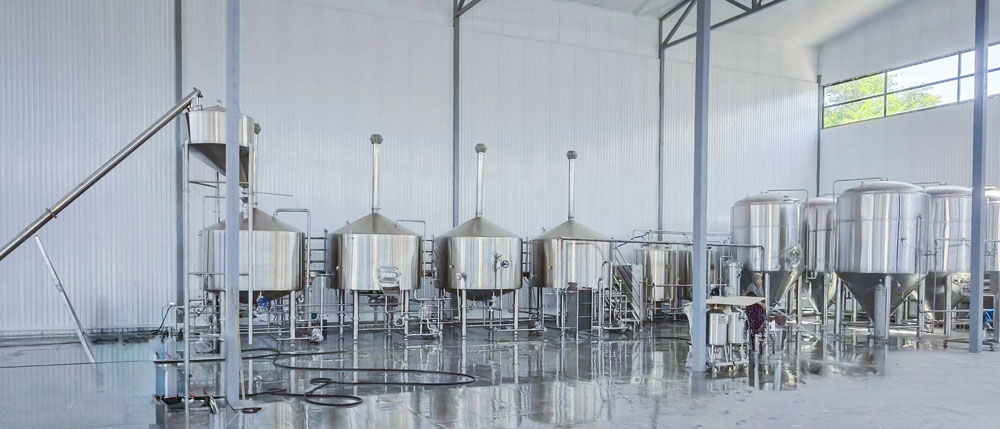
You want to brew great beer but face confusing choices, tight budgets, and time pressure. Delays cost revenue; poor layouts waste labor and energy. A practical turnkey brewing system brings design, build, and start-up together so you can brew sooner, safer, and smarter.
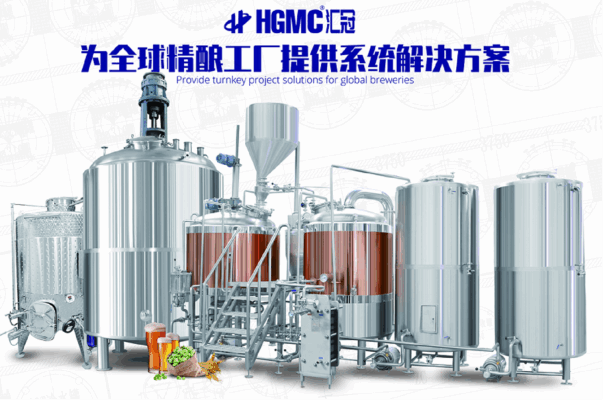
A turnkey brewery system bundles brewhouse, tanks, utilities, automation, packaging, and on-site commissioning into one coordinated project. You get layout design, installation, CIP and sanitation planning, controls, and training from one supplier, so the entire process—from mash to packaging—runs smoothly with fewer hand-offs and faster time-to-first-brew.
This guide is written for founders, brewpub owners, and production teams comparing nano, craft, and commercial systems—using clear engineering logic and industry-referenced data.
What does a turnkey brewing system include?
A true turnkey scope is more than “brewhouse + tanks.” It’s an integrated project plan with design responsibility, documentation, and commissioning. A complete turnkey brewing system usually includes:
1) Brewhouse (hot side)
Core vessels and components depend on the brew length and number of vessels:
- Mash tun / mash-lauter tun
- Lauter tun (optional if separate)
- Brew kettle / whirlpool (combined or separate)
- Hot liquor tank (HLT) and sometimes cold liquor tank (CLT)
- Pumps, heat exchanger, wort aeration, hop dosing, grant (optional)
- Platforms, piping, valves, instrumentation, flow paths
Why it matters: The brewhouse determines daily capacity and labor rhythm. A “7 bbl system” can behave like a slow system or a fast system depending on heat-up time, lauter performance, cleaning time, and automation.
2) Fermentation and brite tanks (cold side)
- Unitanks / fermenters
- Bright beer tanks (BBT) or serving tanks
- PRV/blowoff, carbonation stone options
- CIP spray balls, sample valves, manways
- Insulation/jackets sized for local ambient conditions
3) Utilities and process support (where projects often fail)
This is where many non-turnkey purchases run into delays:
- Glycol system: chiller, glycol reservoir, pumps, piping, insulation
- Steam / hot water system: boiler or hot water skid (if needed)
- Water system: filtration, softening, carbon, deaeration (if applicable)
- Compressed air for valves, packaging, and pneumatics
- Electrical distribution, panels, VFDs, safety interlocks
- Drainage planning (trench drains, slope, floor loads)
4) Automation and controls
- HMI/PLC control level (manual, semi-auto, fully automated)
- Recipe control, temperature loops, pump interlocks
- Data logging (optional), alarms, user permissions
- Safety: E-stops, over-temp, dry-fire protections
5) CIP and sanitation design (built-in, not bolted-on)
A turnkey project should define:
- CIP loops, chemical dosing, return routing
- Tank CIP coverage (spray devices), dead-leg control, drainability
- Chemical storage and safety (bunding/containment, signage, PPE process)
- Commissioning tests: conductivity checks, flow verification, leak tests
6) Packaging (matched to your business model)
- Kegging: keg washer/filler, keg inventory planning, CO₂ supply
- Canning line: filler/seamer, DO control options, depallet/accumulation
- Bottling line (less common for new craft installs)
- Labeling, date coding, rinse/sterile air (where required)
- CO₂/N₂ blending and carbonation plan
7) Project delivery + start-up
Turnkey means the supplier coordinates:
- Layout drawings + utility points
- Installation supervision or full install
- Commissioning + training
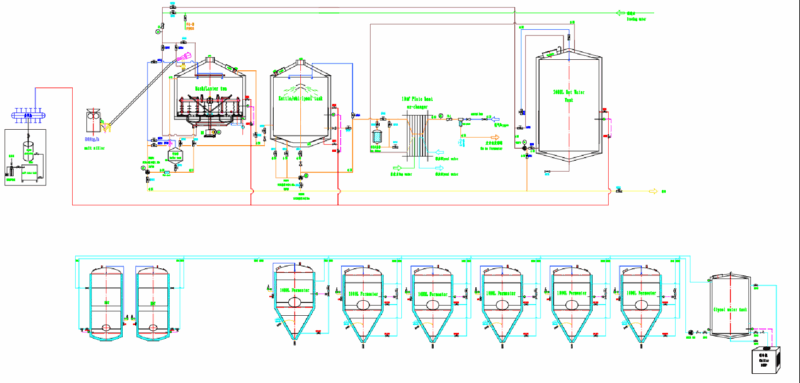
- Documentation: manuals, P&IDs, wiring diagrams, maintenance plan
- Spare parts list and recommended consumables
How do I size my brewhouse—nano to commercial brewing?
Sizing is not just “bbl/HL.” It’s beer sold per week and how many hours you can realistically brew and clean.
Step 1: Define the capacity target
Start with:
- Target packaged volume per week/month
- Taproom vs distribution split
- Tank residency time (fermentation + conditioning + turnaround)
Step 2: Determine brew length and number of brews per day
Two systems with the same nominal size can deliver very different output depending on cycle time.
Key drivers of cycle time:
- Lauter speed (bed compaction risk, false bottom design, pump logic)
- Heat-up and boil vigor
- Whirlpool time and knock-out speed
- CIP time and cleaning workflow
Practical sizing logic (simple):
- If you need flexibility (many SKUs), you often need more tanks relative to brewhouse size.
- If you need volume (fewer SKUs), you often scale brew length first, then tanks.
Step 3: Match fermenter count to sales reality
A common early-stage failure is under-buying fermenters. The brewhouse sits idle because there’s nowhere to put wort.
A safe planning approach:
- Start with enough FV capacity to hold 2–4 weeks of production (depending on style mix and distribution model)
- Add bright tank capacity if you are packaging frequently
- Budget for expansion ports/piping so you can add tanks later with minimal downtime
Craftsmanship and customization: making a brewery fit your space
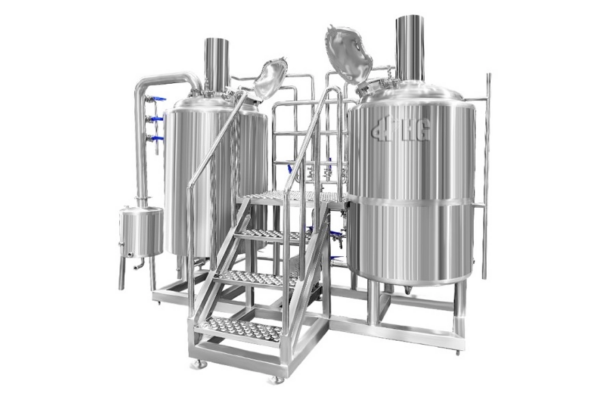
A turnkey system should be customized to the building, not the other way around.
What “good customization” looks like
- Vessel dimensions matched to ceiling height and door access
- Manway and platform ergonomics (safe access, no awkward lifts)
- Pipe routing that avoids trip hazards and creates cleanable zones
- Electrical panels placed away from washdown zones
- Glycol headers accessible for future tank additions
- Drain and slope plan designed before equipment arrives
Tip for Google conversion: include a simple “space fit checklist” in your landing page:
- Ceiling height
- Door width/height
- Floor load rating
- Drain locations + slope
- Utility availability (power, gas, water, venting)
- Local code constraints
From mash to fermenter: the brewing process in plain English
A turnkey system should make the process easier to explain and easier to train.
- Mash: crushed malt + hot water converts starch to sugar
- Lauter: recirculate and drain clear wort, sparge to rinse sugars
- Boil: sterilize wort, add hops, drive off unwanted volatiles
- Whirlpool: separate trub and hop matter
- Knockout: cool via heat exchanger and send to fermenter
- Ferment: yeast converts sugar to alcohol and CO₂
- Condition: stabilize flavor/clarity, carbonate
- Package: keg, can, or bottle
When buyers understand the process, they understand why “layout + cleaning + controls” are not optional.
Tanks, glycol, and chiller: controlling fermentation (where quality is protected)
Fermentation temperature control is a make-or-break quality variable. A turnkey plan should include:
- Jacket sizing and zoning (especially for larger tanks)
- Glycol line sizing and insulation
- Condensation management (drip control, insulation quality)
- Setpoint stability and alarm strategy
Energy and utilities matter too. Brewing industry sustainability guidance emphasizes that energy touches all areas of brewing operations, and profiling energy usage is a first step in managing and reducing energy costs.[1]
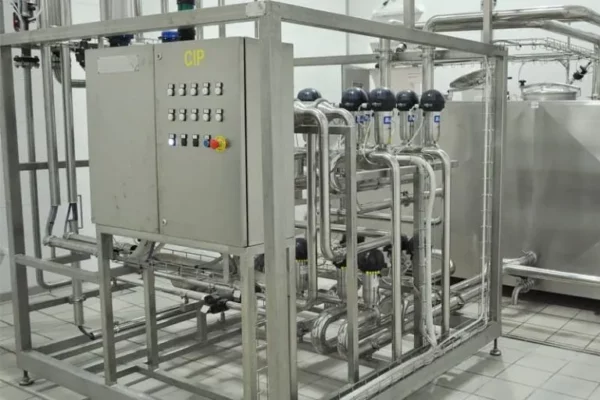
CIP, sanitation, and ease of use: build cleanliness in
CIP is not “cleaning later.” It’s a design requirement.
Turnkey CIP checklist
- Dedicated CIP pump with correct flow (not undersized)
- Chemical dosing method (manual, venturi, metering pump)
- Safe chemical storage + spill containment plan
- Return routing that prevents backflow and cross-contamination
- Instruments for repeatability: temperature, flow, conductivity (optional)
If your system is hard to clean, it’s hard to operate. That increases labor, increases downtime, and increases risk.
Automation vs fully manual: which control level is right?
There’s no “best” for everyone. There’s a best fit for your team and your budget.
Manual / basic
Best for:
- Very small teams with hands-on brewers
- Tight initial budgets
Trade-offs:
- Higher training burden
- More variability between shifts
Semi-automated (most common sweet spot)
Includes:
- Temperature loops, timed steps, pump interlocks, guided brew day
Benefits:
- Repeatability improves significantly
- Training becomes faster
- CIP becomes more consistent
Fully automated
Best for:
- Production-focused breweries scaling volume
- Teams with multiple operators/shift work
Trade-offs:
- Higher capex
- Requires good commissioning and documentation
Turnkey advantage: One supplier can coordinate vessels + piping + sensors + control logic, so automation is reliable rather than “patched together.”
Layout, utilities, and on-site install: building your turnkey plan
Turnkey means the supplier helps prevent “site surprises.”
Layout principles that reduce labor
- Keep grain handling close to mash
- Keep cellar workflows linear (FV → BBT → packaging)
- Keep chemical and CIP station near drains and away from office areas
- Separate dirty/wet zones from dry zones (electrical, packaging materials)
Utilities planning (common bottlenecks)
- Confirm power availability early (especially for electric brewhouses)
- Confirm water flow rate + pressure + temperature
- Confirm drainage capacity (and local discharge requirements)
- Confirm ventilation needs over kettle/steam sources
Packaging for brewpubs and beyond: keg, bottle, and can
Packaging choice should match sales channel:
Brewpub-heavy model
- Kegging and serving tanks may provide best ROI
- Small canning line can be added later for events/local retail
Distribution model
- Canning line often becomes necessary earlier
- DO control, seam checks, and carbonation consistency become critical
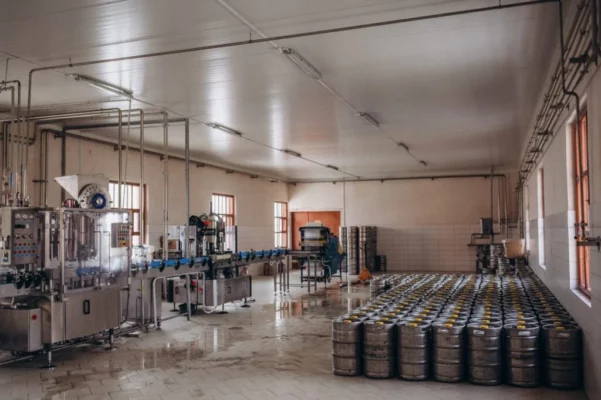
Your turnkey scope should include:
- CO₂ supply planning
- Compressed air requirements
- Floor space for accumulation and finished goods
- Cleaning workflow for packaging lines (often underestimated)
Cost, ROI, and scaling from 7 bbl to 30 bbl (and 20 hL)
Buyers want honest guidance: capex is important, but time-to-revenue and operational cost decide survival.
Where ROI really comes from
- Faster commissioning and fewer delays
- Less rework (wrong utilities, missing valves, undersized glycol, etc.)
- Lower labor per brew
- Lower downtime (cleaning time, stuck mash events, packaging stops)
- Energy management (insulation, heat recovery options, efficient cooling loops)
Industry energy guidance highlights that understanding energy use can enable long-term cost savings and improved competitive position.[1]
A reality-check market context (for credibility)
The Brewers Association’s national data notes that craft volume declined in 2024, while retail dollar sales increased (driven largely by pricing and on-premise mix), and gives a 2024 craft retail dollar figure of $28.8B along with market share context.[2]
For new breweries, this reinforces a key point: you need operational efficiency and consistency, not just a “cheap brewhouse.”
Mini case studies (illustrative examples)
Case A: 15 bbl craft brewery focused on distribution
Goal: consistent beer, reliable packaging, planned growth
Turnkey focus:
- Semi-automated brewhouse with consistent temperature control
- Enough FV capacity for SKU count and production schedule
- Bright tank sized for packaging cadence
- Canning line utilities planned from day one (even if purchased later)
- Documentation and training to support multiple operators
Outcome you can frame in marketing: reduced time-to-first-brew, smoother QA, fewer packaging disruptions, easier expansion.
Case B: Nano startup (brewpub + local sales)
Goal: open fast, brew weekly, minimal downtime
Turnkey focus:
- Compact layout and short piping
- Simplified CIP station
- Kegging-first packaging
- Expansion-ready glycol header and electrical planning
Outcome: earlier opening and predictable weekly brew rhythm.
(If you have real customer projects, these sections perform best when you add verified numbers and photos—without exaggeration.)
FAQ (Q&A) — Turnkey Brewing System Questions People Ask on Google
1) What is a turnkey brewing system?
A turnkey brewing system is a complete brewery project delivered by one supplier, typically covering brewhouse, tanks, utilities planning, controls, installation coordination, commissioning, and training—so the brewery can start production with fewer hand-offs.
2) What equipment is included in a turnkey brewery?
Often includes brewhouse vessels, fermenters, bright tanks, glycol/chiller system, CIP design, piping/valves/instrumentation, automation controls, and (optionally) packaging lines and on-site commissioning.
3) How do I choose between 7 bbl, 10 bbl, 15 bbl, 20 hL, and 30 bbl?
Choose based on:
- Target weekly/monthly sales volume
- How many brew days per week you can run
- Your beer mix (fermentation time varies)
- Your available floor space and utilities
A good supplier will model tank residency and recommend FV count and size—not just sell a brewhouse.
4) Is a turnkey brewery more expensive than buying equipment separately?
Upfront capex can be higher, but turnkey can reduce total project cost by cutting delays, rework, and missing-scope problems (utilities, controls integration, commissioning). For many startups, faster time-to-revenue is the biggest financial win.
5) What should I ask a turnkey brewery supplier before signing?
Ask for:
- Scope list (what’s included/excluded)
- Utility requirements sheet
- Layout drawings and workflow rationale
- Commissioning plan + training plan
- Documentation examples (P&IDs, wiring diagrams)
- Warranty and service response process
- Spare parts list and recommended inventory
6) How long does it take to build and install a turnkey brewing system?
It depends on system size, customization, and site readiness. Timelines typically include fabrication + shipping + installation + commissioning. The biggest delays usually come from site utilities and permitting—so good turnkey planning should start those early.
7) What data can prove a turnkey system is “better”?
Useful, honest metrics include:
- Time-to-first-brew (days from delivery)
- CIP cycle time and repeatability
- Temperature stability during mash/fermentation
- Packaging uptime and DO consistency (if measured)
- Labor hours per brew day and per packaging run
Conclusion: Turnkey brewing is about fewer surprises and faster, safer brewing
A turnkey brewing system is not just equipment—it’s a coordinated plan that connects process, layout, utilities, cleaning, and controls into a brewery that runs smoothly from mash to packaging. In a market where operational efficiency matters, the most practical investment is a system that helps you brew consistently, commission quickly, and scale without redesigning everything later.
