
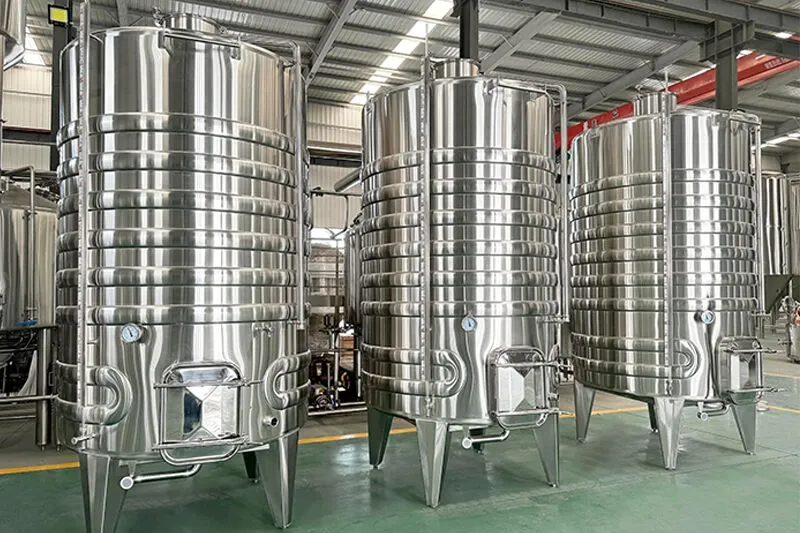
If you’re struggling with low juice yields, inconsistent flavor, or batches customers won’t buy twice, the root cause is often not the apples—it’s the equipment system (and how the system is operated). The right cider making equipment helps you extract more juice from the same fruit, reduce oxidation and contamination risks, improve consistency from batch to batch, and scale production without losing quality.
At the same time, cider is becoming more competitive. Multiple market research firms project steady growth for the global cider category through the early 2030s (with forecasts generally clustering around mid-single-digit or low-single-digit CAGR depending on definition and region). For example, Coherent Market Insights projects the cider market to rise from about USD 5.37B (2025) to about USD 6.75B (2032), with a projected CAGR around 3.3%.[1] Grand View Research estimates USD 5.15B (2024) and projects USD 6.86B by 2030 (their forecast window and assumptions differ).[2]
This guide explains what cider making equipment is, what to buy first, how to choose based on your production level, and how to avoid common mistakes—plus a Q&A section to support Google SEO and real buyer intent.
What Is Cider Making Equipment?
Cider making equipment is the set of machines and vessels used to transform apples (or pears/other permitted fruits, depending on your product and regulations) into finished cider. The core process is typically:
- Washing & sorting (remove dirt, leaves, damaged fruit)
- Milling/crushing (turn whole fruit into pomace)
- Pressing (separate juice from pomace)
- Juice handling (screening/clarifying, oxygen control, transfer)
- Fermentation (temperature control, monitoring, yeast management)
- Maturation/conditioning (optional aging, blending, carbonation strategy)
- Filtration/stabilization (as needed)
- Packaging (keg/can/bottle) + cleaning/sanitation (CIP/SIP)
A “good” equipment setup isn’t just a list of machines—it’s a sanitary, efficient, low-oxygen workflow that matches your volume, labor, and product style.
Why Your Cider Making Equipment Choices Matter
1) Juice yield directly impacts margin
In cider, fruit is usually one of the biggest cost drivers. If your extraction efficiency is poor, you buy more apples to make the same volume—and your cost per liter rises.
Key idea: Yield is influenced by fruit ripeness and varietals, but also strongly by mill design, press type, press cycle, and pomace handling.
2) Oxygen and contamination risk determine consistency
Cider is less forgiving than many people expect. Poor transfers, dead zones in tanks, hard-to-clean valves, and inconsistent temperature control can produce volatile acidity, off-aromas, or fermentation stalls.
This is why hygienic design matters. In broader food and beverage processing, 3-A Sanitary Standards are widely recognized as an important reference for hygienic equipment design principles (cleanable, inspectable, durable, and suitable for intended use).[3] (Exact certification requirements depend on your market and product category, but the design logic is universally useful.)
3) Scaling requires repeatability, not just bigger tanks
Going from “pilot batches” to “commercial” usually fails when producers scale volume without scaling:
- heat transfer capability (cooling jackets, glycol capacity)
- cleaning systems (CIP loops, spray balls, return pumps)
- process controls (temperature, gravity/Brix, DO, pressure)
- packaging consistency (fill height, CO₂ control, O₂ pickup)
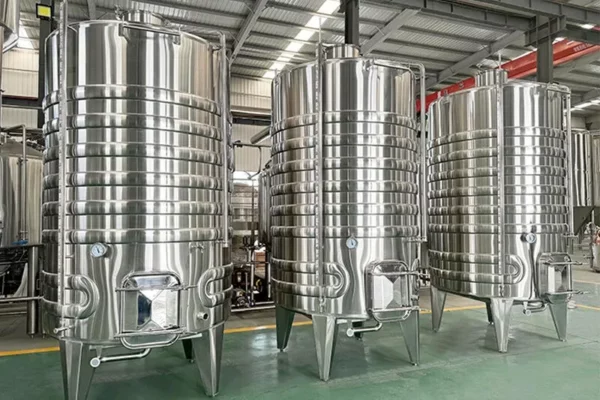
Core Cider Making Equipment (and How to Choose)
A) Fruit reception: washing, sorting, and handling
What you need
- receiving bins / fruit elevators / conveyors
- washer (spray + brush or soak + rinse, depending on your workflow)
- sorting table (manual or assisted)
What to look for
- stainless contact surfaces where possible
- easy access for cleaning
- gentle handling to reduce bruising (bruised fruit oxidizes faster)
Why it matters
Dirty fruit increases microbial load and can cause fermentation issues later. Washing and sorting is not glamorous—but it’s often the cheapest “quality upgrade” you can make.
B) Apple crusher / fruit mill (milling quality determines pressing efficiency)
Main options
- Hammer mill (high throughput, controllable particle size; can increase extraction but may increase shear)
- Knife mill / grater mill (common in cider; produces consistent pomace)
- Roller mill (less common; can be gentler but may be less effective depending on fruit)
Selection checklist
- throughput (kg/h)
- particle size consistency (affects pressing drainage and yield)
- ease of cleaning (quick open, minimal hidden surfaces)
- integration with press feeding (pumpable pomace vs gravity feed)
Operational tip
A mill that produces very fine pomace may increase yield in some setups but can also slow drainage and press cycles if your press media or press design isn’t optimized. The “best” grind is the one that matches your press method.
C) Pressing systems (your main yield and quality lever)
Common cider presses include:
1) Hydraulic press
Pros
- strong pressing force, often good extraction
- can be compact for small-to-mid operations
Cons
- batch process (labor/time)
- press cloth handling and cleaning workload can be significant
2) Rack-and-cloth press
Pros
- traditional method, excellent control
- can produce high-quality juice with proper operation
Cons
- labor-intensive
- sanitation depends heavily on cleaning discipline
3) Bladder press (pneumatic)
Pros
- gentle pressing, good juice quality
- often efficient for medium-to-large operations
- can reduce labor compared to rack-and-cloth
Cons
- higher capital cost
- requires compressed air and proper operation parameters
What to look for in any press
- cycle time and automation level
- press media / screens availability
- CIP-friendly design (or at least easy access cleaning)
- juice collection design that reduces oxygen pickup
D) Juice handling: pumps, piping, clarification
Essential equipment
- sanitary transfer pumps (centrifugal or positive displacement depending on solids)
- inline strainers / screens
- hoses/piping with sanitary fittings
- optional: flotation, centrifuge, or plate-and-frame filtration (depends on cider style)
Why this area decides consistency
A great press can be undermined by poor downstream handling. Minimize splashing, avoid long warm holds, and design a flow path that’s easy to clean.
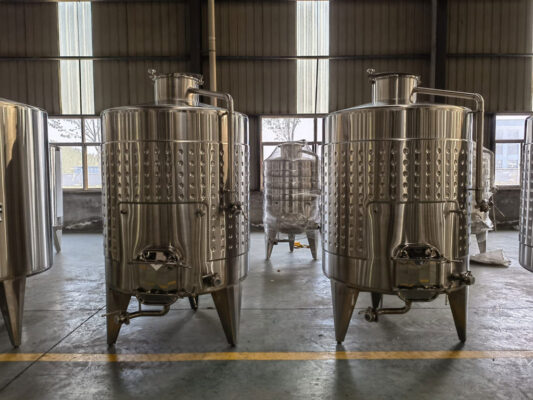
E) Fermentation tanks: stainless vs plastic (and why stainless wins long-term)
Most commercial cider makers prefer stainless steel tanks because they’re durable, cleanable, and compatible with temperature control systems. Plastic can work for small-scale, but it’s easier to scratch, harder to keep pristine over many cycles, and less compatible with professional CIP.
Good tank features
- cooling jacket + insulation (if you care about aroma and consistency)
- sanitary valves (butterfly valves, hygienic sampling valve)
- PRV / pressure rating if doing carbonation or pressure fermentation
- properly designed manway for access and cleaning
Sanitary design reference point
3-A standards emphasize equipment that is nontoxic, cleanable, and inspectable—helpful principles when evaluating tanks, valves, and weld quality even if you’re not in a 3-A regulated niche.[3]
F) Temperature control: glycol systems and why they pay back
If your fermentation temperature drifts, your flavor profile drifts. This is one of the main reasons “the same recipe tastes different every time.”
Typical components
- glycol chiller sized to peak load
- insulated glycol lines
- solenoid valves / controllers per tank
- temperature probes with calibration plan
Practical outcomes
- fewer stuck fermentations
- better aroma retention
- more repeatable production schedules
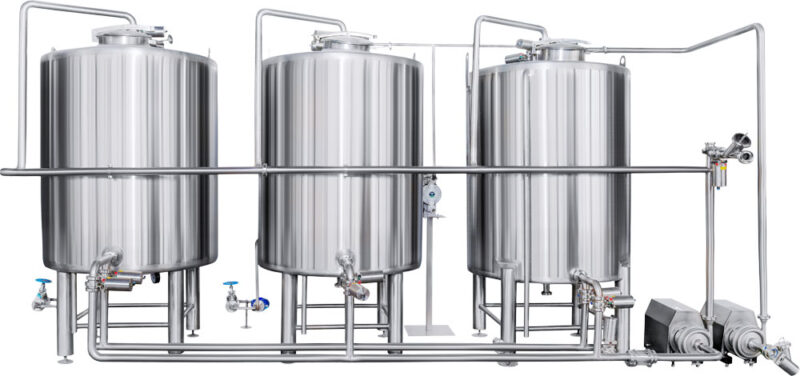
G) Cleaning & sanitation: CIP is a growth milestone
As volume grows, manual cleaning becomes a bottleneck and a risk.
CIP building blocks
- CIP cart or skid
- dedicated pump(s)
- spray ball(s) sized to tank geometry
- heat capability (hot water loop or heater)
- validated chemical program (alkaline wash + acid wash + sanitizer)
Why it matters
Cleaning is not just “hygiene.” It’s uptime, labor cost, and product stability.
“Latest Innovations” to Consider (Use Carefully)
You mentioned trends like AI-powered fermentation monitors and waste-to-compost pomace solutions. These can be useful, but buyers should be realistic:
1) Digital fermentation monitoring
Sensors can help track temperature, gravity, and fermentation progress. Where they add the most value is:
- multi-tank operations
- limited skilled labor
- strict repeatability requirements
Important caution: Claims like “reduce production errors by 40%” vary widely by vendor and baseline process maturity; treat them as marketing until validated in your operation.
2) Pomace utilization
Pomace is a major byproduct stream. Options include:
- animal feed partnerships
- composting systems
- distillation substrate (where legal and practical)
- value-added fiber ingredients (advanced)
Even simple, compliant disposal-cost reduction can be meaningful.
Capacity Planning: Match Equipment to Your Production Stage
Small batch / pilot (test recipes, local sales)
- washer + small mill
- small press (manual/hydraulic)
- a few stainless fermenters
- basic lab tools (hydrometer, pH meter)
- manual cleaning with strict SOPs
Growing craft cidery (repeatable quality, higher throughput)
- powered mill matched to press feed
- bladder press or efficient hydraulic setup
- jacketed stainless fermenters + glycol
- semi-CIP (spray balls + CIP cart)
- packaging upgrades (counter-pressure fillers, DO control)
Commercial production (scale + compliance + labor efficiency)
- automated fruit handling
- high-throughput milling + press system
- dedicated CIP skid + process piping
- filtration/stabilization strategy
- robust QC and data logging
Compliance Note (Especially for the U.S. Market)
If you sell in or export to the U.S., cider is regulated under specific rules, and classification can affect labeling and tax treatment. The U.S. Alcohol and Tobacco Tax and Trade Bureau (TTB) provides detailed guidance and FAQs. For example, TTB’s cider FAQs describe criteria for “hard cider” (including ABV limits and carbonation thresholds) under the relevant U.S. framework.[4] This matters because your process design (carbonation method, fruit composition, etc.) can influence compliance requirements.
(Always confirm requirements for your exact product, ABV, carbonation, and destination market.)
Buyer’s Checklist: What to Ask Before You Buy
- Throughput: kg/h fruit handling, L/h juice, tanks-in-fermentation capacity
- Yield targets: how the supplier defines “yield” and what assumptions are used
- Material & finish: stainless grade, weld quality, surface finish, gasket materials
- Cleaning strategy: manual vs CIP, cleaning time per cycle, chemical compatibility
- Oxygen control: design choices to reduce splashing, options for closed transfers
- Utilities: electrical load, water consumption, compressed air, glycol capacity
- Footprint & layout: can the line be installed without flow bottlenecks?
- After-sales support: commissioning, spare parts, manuals, training
- Safety: guarding, pressure relief, lockout/tagout readiness
- Documentation: drawings, certifications (as applicable), SOP templates
FAQ (Q&A): Cider Making Equipment
Q1: What equipment do I need to start making cider commercially?
At minimum: washer/sorting, mill, press, sanitary transfer setup, and fermentation tanks with temperature control. The most common upgrade path is improving temperature control and cleaning capability (CIP) as volume grows.
Q2: Which press type is best for juice yield?
Yield depends on the whole system (mill + press media + cycle + fruit). In many commercial settings, bladder presses are popular because they balance yield, quality, and labor efficiency. Rack-and-cloth can also achieve high yield but is more labor intensive.
Q3: Stainless steel tank or plastic fermenter—which is better?
For commercial consistency and long-term sanitation, stainless steel is typically the better investment due to durability and cleanability. Hygienic design principles (cleanable, inspectable, resistant to corrosion) are widely recognized as critical in food equipment selection.[3]
Q4: How do I reduce off-flavors and contamination in cider?
Focus on: (1) fruit washing and sorting, (2) reducing oxygen pickup during transfers, (3) stable fermentation temperature, and (4) a validated cleaning/sanitation program (preferably CIP as you scale).
Q5: How big is the cider market, and why does it matter for equipment decisions?
Market projections vary by source and methodology, but multiple reports show steady growth through the early 2030s. Coherent Market Insights estimates the cider market could reach about USD 6.75B by 2032.[1] Grand View Research projects USD 6.86B by 2030.[2]
For equipment buyers, growth matters because it increases competition—so consistency, cost control, and scalability become more important than ever.
Q6: What apples should I plan for if I’m sizing equipment capacity?
Apple supply is region-dependent, but global production is substantial. USDA FAS reports global apple production figures and major producing regions (useful for strategic sourcing and export planning).[5] Equipment capacity planning should be based on your contracted supply, harvest window, storage strategy, and peak-day processing goals.
Q7: Do I need special compliance considerations for exporting cider to the U.S.?
Yes. The TTB provides cider-specific regulatory guidance, including definitions and criteria that can influence labeling and tax classification.[4] Your production choices (fruit content, carbonation, ABV) can change regulatory requirements.
Final Takeaway
If you want higher juice yield, fewer rejected batches, and a scalable cider operation, design your cider line around three non-negotiables:
- Efficient extraction (mill + press matched as a system)
- Hygienic, low-oxygen handling (sanitary transfers + cleanable design)
- Controlled fermentation (temperature stability + repeatable monitoring)
That’s how cider makers move from “it sometimes tastes great” to “it tastes great every time”—and how equipment upgrades translate into profit, not just shiny hardware.
