
In today’s craft beer market, breweries face pressure from both sides: customers expect consistent, high-quality beer, while production teams need better efficiency, repeatability, and cost control. This is one reason many professional brewers—especially growing craft breweries—invest in brewhouse systems that provide tighter process control and faster turnarounds.
Market realities also show the industry is competitive and mature. In the United States alone, there were 9,796 operating craft breweries in 2024, according to the Brewers Association (BA). That scale of competition makes operational efficiency and beer consistency increasingly important for breweries that want to stand out. Source: Brewers Association, Brewers Association Reports 2024 U.S. Craft Brewing Industry Figures https://www.brewersassociation.org/association-news/brewers-association-reports-2024-u-s-craft-brewing-industry-figures/
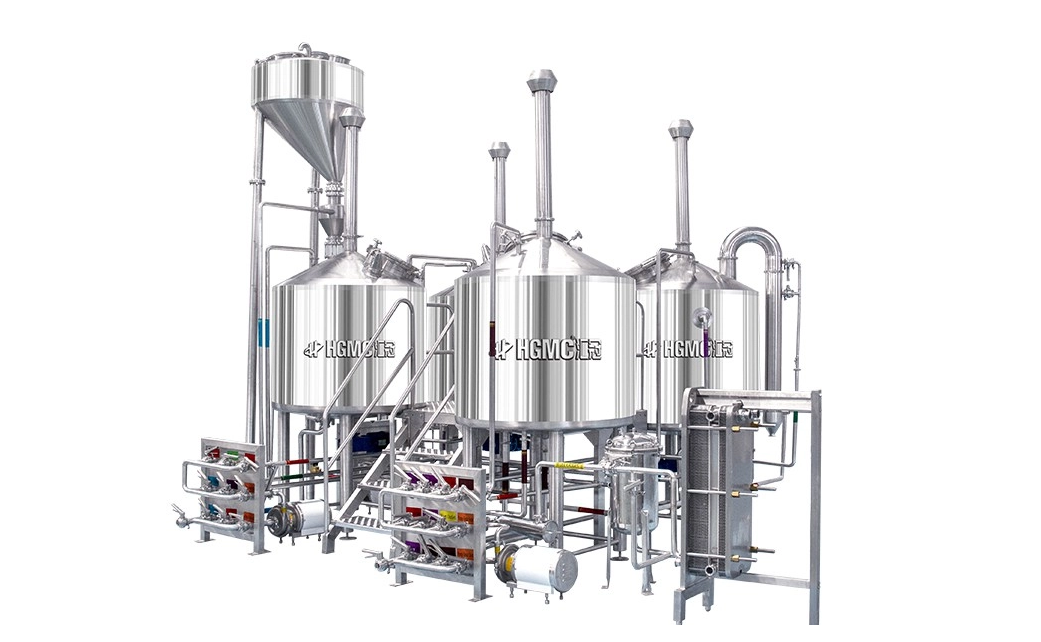
Within this context, the 3-vessel brewing system remains one of the most widely used and scalable brewhouse formats. It balances automation potential and quality control with a workflow that can be optimized for both small and mid-sized commercial production.
What is a 3-vessel beer brewing system?
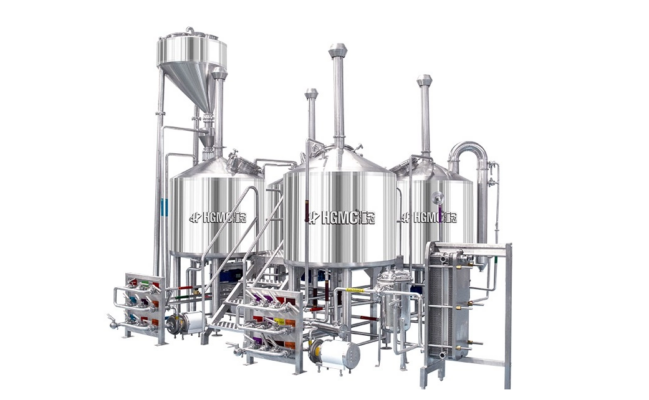
A 3-vessel brewing system is a professional brewhouse configuration built around three primary tanks, each dedicated to a specific function in wort production:
Hot Liquor Tank (HLT) – heats and stores brewing water used for mashing and sparging.
Mash/Lauter Tun (MLT) or separate Mash Tun + Lauter Tun – depending on design, the system may separate these functions or combine them.
Boil Kettle / Whirlpool – boils wort, adds hops, and often performs whirlpool separation.
In many commercial “three-vessel” descriptions, the three vessels are listed as Mash Tun, Lauter Tun, and Boil Kettle (with an HLT integrated or added as a utility vessel). In practical brewery engineering, the exact naming varies by manufacturer, regional convention, and whether whirlpool is integrated into the kettle. The key idea is the same: separating major operations into dedicated vessels enables parallel work, better control, and higher throughput.
Why 3-vessel systems are so popular in craft brewing
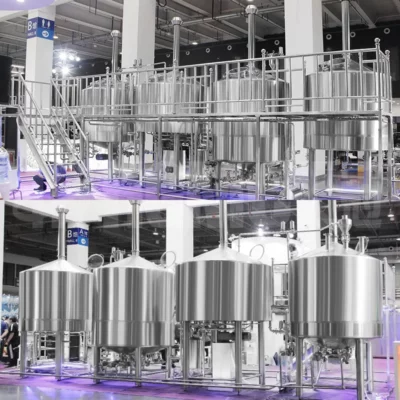
A three-vessel brewhouse is often chosen because it sits in the “sweet spot” between simplicity and performance.
1) Higher efficiency through parallel operations
With separate vessels, you can run tasks simultaneously—for example, heating sparge water while mashing, or preparing the next step while lautering. This reduces idle time and can significantly improve brewhouse throughput per shift.
2) Better temperature and process control
Mashing is chemistry. Enzymes (especially alpha-amylase and beta-amylase) work in different temperature ranges, affecting fermentability, body, and final beer profile. Homebrewing and professional brewing education sources consistently emphasize that mash temperature directly impacts enzyme activity and wort composition. For example, BeerSmith summarizes typical ranges such as beta-amylase around ~60–65°C and alpha-amylase around ~70°C. Source: BeerSmith, Enzymes in the Mash and Mash Temperatures for Beer Brewing https://beersmith.com/blog/2020/03/17/enzymes-in-the-mash-and-mash-temperatures-for-beer-brewing/
A 3-vessel setup supports more stable control and makes advanced mash schedules more practical—especially when paired with automation, variable-speed pumps, and accurate temperature sensors.
3) Cleaner wort and improved consistency
Dedicated lautering and proper separation reduce grain solids carryover. Cleaner wort can improve downstream performance (heat exchange, fermentation stability) and reduce off-flavor risk caused by excessive trub or scorching.
4) Scalability for growth
Many breweries start with lower batch counts and expand. A 3-vessel system is easier to scale by increasing vessel size, adding tanks, or improving heating and automation, while keeping the fundamental workflow familiar for the brewing team.
The main features of a 3-vessel brewing system (what to look for)
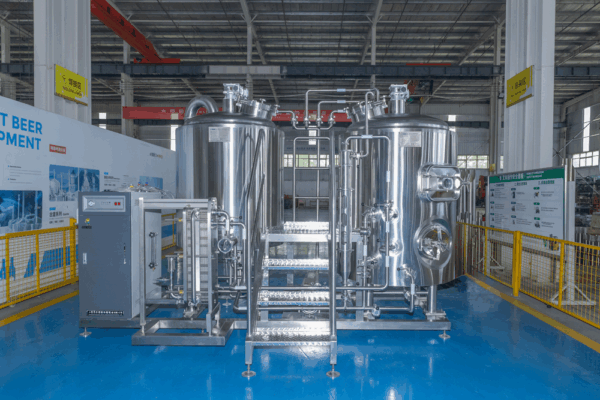
When evaluating systems for commercial use, these are the features that most directly influence quality, efficiency, and operating cost:
Heating method: steam jackets, electric elements, direct fire (less common in modern commercial plants).
Tank geometry and mixing: mash tun rakes (if applicable), agitation design, dead-space minimization.
Lauter design: false bottom/plates, wort collection, rake design, grain-out speed, anti-stuck-mash measures.
Pumping and piping: sanitary design, pump sizing, flow control, valves and automation level.
Whirlpool performance: trub cone formation, outlet placement, transfer clarity.
Instrumentation & controls: temperature probes, flow meters, level sensors, recipe automation (PLC/HMI).
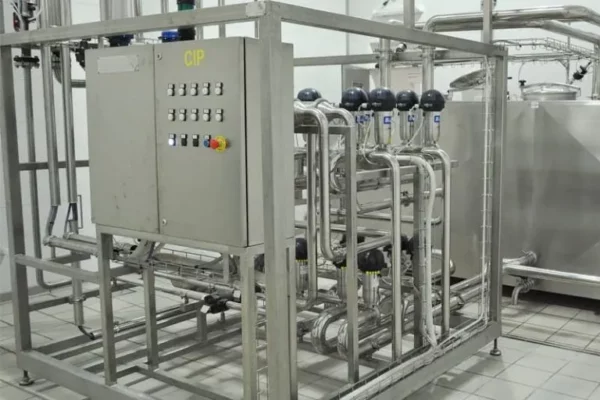
Clean-in-place (CIP): spray balls, CIP loops, chemical dosing options.
These details matter because they shape repeatability. In competitive markets where BA notes craft beer retail dollar value is large and still evolving, breweries must protect margins with reliable operations. (For broader market statistics, see BA national beer stats: https://www.brewersassociation.org/statistics-and-data/national-beer-stats/ )
Step-by-step: The brewing process in a 3-vessel system
Below is a clear, standard workflow used by many breweries. Exact temperatures and durations vary by recipe, malt bill, and target style.
Step 1: Heat brewing water (HLT)
Heat strike water and sparge water in the HLT.
Many breweries target sparge water temperatures commonly in the ~70–78°C range depending on process goals and lauter performance.
Step 2: Mashing (Mash Tun)
Crushed malt is mixed with strike water to create the mash.
A common saccharification range is roughly 60–70°C, where amylase enzymes convert starches into fermentable sugars. Enzyme behavior varies across this range; sources like BeerSmith provide practical enzyme temperature guidance used widely by brewers. Source: https://beersmith.com/blog/2020/03/17/enzymes-in-the-mash-and-mash-temperatures-for-beer-brewing/
Typical mash duration: 60–90 minutes (recipe dependent).
Step 3: Lautering and sparging (Lauter Tun)
Wort is separated from the grain bed.
Sparging rinses remaining sugars from grain, increasing extraction.
Key quality and efficiency factors here include flow rate control, grain bed stability, and lautering hardware design.
Step 4: Boiling + hop additions (Boil Kettle)
Wort is boiled, typically 60–90 minutes depending on recipe and brewhouse targets.
Hops are added at planned times to manage bitterness, flavor, and aroma.
One major purpose of boiling is wort sterilization and denaturing enzymes carried over from mashing. Brewing literature commonly explains boiling’s role in controlling microbes before fermentation. For example, Brew Your Own notes wort boiling sterilizes wort and denatures enzymes (and also highlights that many standard boil regimes exceed the minimum needed for sterilization). Source: Brew Your Own, Adjusting Boil Times and Ice Requirements for Wort Chilling https://byo.com/articles/adjusting-boil-times-and-ice-requirements-for-wort-chilling/
Step 5: Whirlpool (if separate or integrated)
Wort is spun to form a trub cone and improve clarity before cooling.
Step 6: Wort chilling (Heat Exchanger)
Rapid cooling to yeast-pitch temperature helps reduce contamination risk and supports consistent fermentation performance.
Step 7: Fermentation and conditioning
Transfer chilled wort to fermenters, pitch yeast, ferment, then condition/mature as required by style.
Step 8: Packaging
Filtration (if used), carbonation, and packaging into bottles/cans/kegs.
Advantages of a 3-vessel brewing system (business + brewing outcomes)
Advantage A: More batches per day (higher brewhouse utilization)
Because multiple steps can overlap, many breweries use 3-vessel designs to reduce total cycle time. When properly engineered, the system supports more efficient scheduling (especially when paired with cellar capacity planning).
Advantage B: Better recipe repeatability
Repeatability is crucial for taprooms and distribution brands. Consistent mash temperatures, controlled lautering, predictable boil vigor, and stable transfer conditions all reduce batch-to-batch variation.
Advantage C: Supports a wide range of beer styles
A 3-vessel setup can run:
single infusion mashes
step mashes (temperature rests)
styles that benefit from more precise wort management (e.g., clean lagers, hop-forward ales, stronger beers)
Advantage D: Easier scale-up path
Even as market dynamics change, breweries continue investing in operational improvements. The Brewers Association notes the craft segment is large and competitive, which encourages breweries to improve processes and hospitality models. Reliable, scalable brewhouse equipment helps breweries adapt. Source: https://www.brewersassociation.org/association-news/brewers-association-reports-2024-u-s-craft-brewing-industry-figures/
What are the types of three-tank (3-vessel) brewing systems?
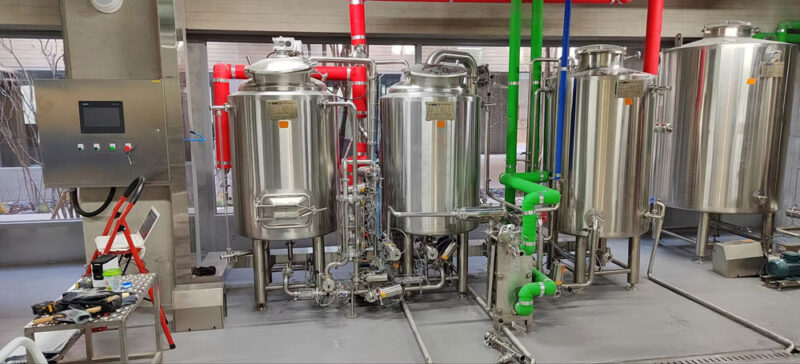
“3-vessel” can mean different layouts. Common commercial configurations include:
HLT + Mash/Lauter Tun + Kettle/Whirlpool
Popular in compact brewhouses.
Combines mash and lauter in one vessel; kettle often includes whirlpool.
Mash Tun + Lauter Tun + Kettle/Whirlpool (HLT as a 4th utility tank)
More “classic” separation for process optimization.
Often used when maximizing lauter performance and wort clarity is a priority.
Compact 3-vessel with integrated functions (space-optimized)
Uses shared heating loops, multi-purpose tanks, or combined whirlpool/boil designs.
Good for breweries with limited floor space but still needing professional process control.
The best type depends on throughput targets, automation level, space constraints, and utility availability (steam, electricity, water treatment).
How to choose a 3-vessel brewing system (practical checklist)
For SEO-friendly buyer intent, here are the evaluation factors most prospects care about:
1) Batch size and brews per day
Define target annual output and peak season demand.
Check whether the vendor’s cycle time assumptions match your staffing and utilities.
2) Heating method and energy cost
Steam can offer strong control and fast heating for larger systems.
Electric can be attractive where steam infrastructure is costly, but power requirements can be significant.
3) Automation and repeatability
Decide whether you need recipe automation (PLC), data logging, and remote troubleshooting.
Automation reduces reliance on “tribal knowledge,” improving consistency as teams grow.
4) Cleaning and sanitation design (CIP)
Poor CIP design increases chemical use, labor, and downtime.
Ask about spray coverage, drainability, and recommended SOPs.
5) Expandability
Confirm whether the system can be upgraded (additional vessels, larger kettle, extra pumps, stronger HX).
Q&A (FAQ) — for readers and SEO rich results
Q1: Is a 3-vessel brewing system good for small breweries?
Yes. Many small commercial breweries choose 3-vessel systems because they offer professional control and can scale with growth. They can also reduce total brew-day time by enabling overlapping tasks (heating, mashing, lautering, boiling).
Q2: What is the difference between a 2-vessel and a 3-vessel brewing system?
In general, a 3-vessel system separates key operations into dedicated vessels, improving parallel workflow and control. A 2-vessel system often combines more steps into fewer tanks, which can reduce cost and space but may increase brew-day duration or limit flexibility.
Q3: Why is mash temperature control so important?
Mash temperature influences enzyme activity and therefore wort fermentability, body, and final beer character. Brewing references commonly describe different activity ranges for alpha- and beta-amylase enzymes, showing why stable control matters. Source: BeerSmith enzyme temperature overview https://beersmith.com/blog/2020/03/17/enzymes-in-the-mash-and-mash-temperatures-for-beer-brewing/
Q4: Does wort boiling really sterilize the wort?
Boiling is widely used to sanitize/sterilize wort by killing unwanted microorganisms and also denaturing enzymes carried over from mashing. Brewing education sources describe sterilization as a key function of the boil step. Source: Brew Your Own (wort boiling sterilizes and denatures enzymes) https://byo.com/articles/adjusting-boil-times-and-ice-requirements-for-wort-chilling/
Q5: How many craft breweries are there in the U.S., and why does it matter for equipment choices?
The Brewers Association reported 9,796 operating U.S. craft breweries in 2024. In a crowded, competitive industry, consistent quality and efficient operations help breweries protect margins and differentiate—making reliable brewhouse equipment more valuable. Source: https://www.brewersassociation.org/association-news/brewers-association-reports-2024-u-s-craft-brewing-industry-figures/
Conclusion
A well-designed 3-vessel brewing system is a proven foundation for craft beer production because it balances throughput, control, and scalability. By separating brewing steps into dedicated vessels, breweries can reduce idle time, improve temperature management, achieve cleaner wort, and produce more consistent beer—benefits that matter in a competitive market.
If your goal is to expand capacity, shorten brew days, or improve batch consistency, evaluating a 3-vessel brewhouse with the right heating method, CIP design, automation level, and expansion path can be a high-impact investment.
References (for transparency and authority)
Brewers Association — Brewers Association Reports 2024 U.S. Craft Brewing Industry Figures https://www.brewersassociation.org/association-news/brewers-association-reports-2024-u-s-craft-brewing-industry-figures/
Brewers Association — National Beer Sales & Production Data https://www.brewersassociation.org/statistics-and-data/national-beer-stats/
BeerSmith — Enzymes in the Mash and Mash Temperatures for Beer Brewing https://beersmith.com/blog/2020/03/17/enzymes-in-the-mash-and-mash-temperatures-for-beer-brewing/
Brew Your Own — Adjusting Boil Times and Ice Requirements for Wort Chilling https://byo.com/articles/adjusting-boil-times-and-ice-requirements-for-wort-chilling/
