
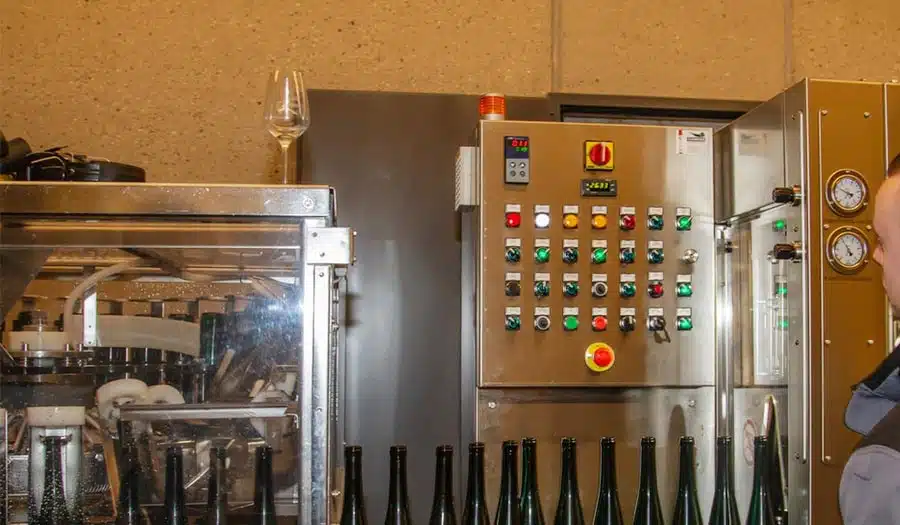
Brewery automation systems are no longer “nice-to-have” upgrades. They are increasingly central to how modern breweries keep quality consistent, meet food-safety expectations, control costs, and scale output. This matters because beer is produced at massive global volume—global production was 1.88 billion hectoliters in 2023 according to the BarthHaas Report 2023/2024 press release (a widely cited global hops-and-brewing industry source).
In parallel, the beer sector’s economic footprint is also significant. The World Brewing Alliance, citing an Oxford Economics study, reports the beer sector contributed $878 billion to global GDP in 2023.
What is a brewery automation system?
A brewery automation system is an integrated set of hardware + software that monitors and controls brewing operations—often in real time—across the full process from raw material handling to packaging and warehousing.
In practical terms, it typically includes:
Sensors and instruments (temperature, pressure, flow, level, pH, dissolved oxygen, turbidity, conductivity, CO₂, etc.)
Control hardware such as PLCs (Programmable Logic Controllers) and sometimes DCS (Distributed Control Systems) in larger plants
Supervisory software such as SCADA/HMI (Supervisory Control and Data Acquisition / Human-Machine Interface)
Data layers (historians, MES, reporting dashboards, alarms, recipes/batch records)
Networking + cybersecurity components connecting OT (operations technology) systems safely
Optional higher-level integration to ERP and business systems, often guided by standards like ISA-95
Why breweries automate: the business and quality case
1) Consistent product quality at scale
Beer flavor and stability are highly sensitive to process conditions—especially mash temperature rests, boil intensity, oxygen pickup, fermentation temperature control, and CIP effectiveness. Automation improves repeatability by:
Keeping setpoints stable
Enforcing recipe steps in sequence
Logging deviations (who/what/when)
Reducing manual “interpretation” differences between shifts
2) Higher throughput and fewer downtime events
Automation can reduce mistakes that cause stoppages (wrong valve routing, missed steps, overheating, incorrect setpoints). It can also improve OEE (overall equipment effectiveness) by reducing changeover time, improving cleaning cycles, and standardizing start-up/shutdown procedures.
3) Better energy and utility management
Breweries are energy- and water-intensive operations (steam, electricity, compressed air, glycol/chilled water, CO₂). Automation enables metering and controls such as:
Steam/heat recovery monitoring
Glycol loop optimization
Scheduling to avoid peak demand charges
Detecting abnormal consumption patterns (leaks, stuck valves, fouled heat exchangers)
4) Food safety, traceability, and compliance support
Food safety programs are built around systematic hazard control and strong recordkeeping. Automation doesn’t replace HACCP or quality programs—but it can strengthen them through:
Automatic monitoring of critical parameters
Electronic batch records
Time-stamped alarms and corrective actions
Faster investigations and targeted recalls
Core components of an automated brewery (end-to-end)
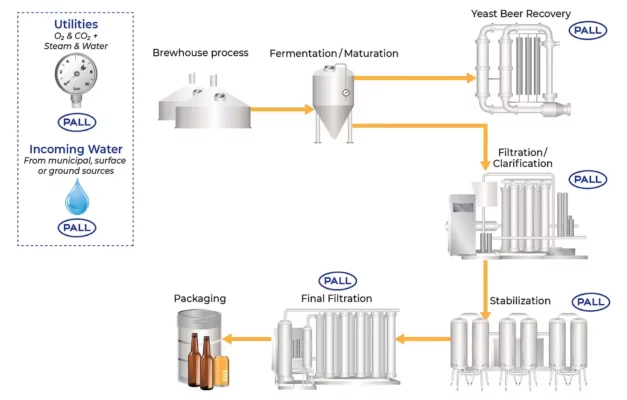
Below is a structured view of what an automation system often covers in a production brewery.
A) Raw material handling and utilities
Automated functions commonly include:
Malt intake and silo management (level sensors, conveying control, dust collection interlocks)
Milling control (gap setting verification, motor load monitoring, start/stop sequences)
Water treatment and blending (flow control, conductivity, pH, disinfectant dosing)
Utilities: steam boilers, compressed air, CO₂ distribution, glycol/chillers
Key sensors: level, load cells, flowmeters, conductivity, temperature, differential pressure.
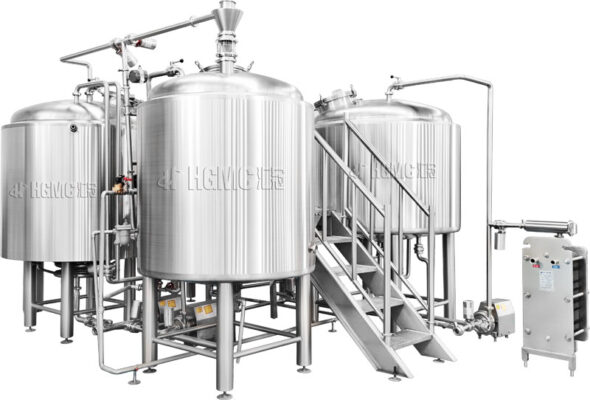
B) Brewhouse automation (mash, lauter, boil, whirlpool, cooling)
Common automation features:
Recipe-driven mash schedules (temperature ramps, rests, agitation profiles)
Lauter tun/filtration sequencing (rake control, runoff control, turbidity-based cutover)
Kettle boil control (time, power modulation, hop dosing timing)
Whirlpool rest and knockout automation
Heat exchanger temperature control and wort oxygenation management
Why it matters: brewhouse variability compounds downstream. If wort quality swings, fermentation control has less room to correct.
C) Fermentation and cellar automation
This is often the biggest quality lever in automation. Typical control loops include:
Fermenter temperature profiles (ramps/diacetyl rest/cold crash)
Pressure control (spunding)
CIP sequences with verified time/temperature/concentration
DO monitoring strategies (where applicable)
CO₂ monitoring and recovery interfaces (in larger plants)
Data focus: fermentation curves, cooling load, setpoint tracking, deviation handling.
D) Filtration, bright beer tanks, and carbonation
Automation can control:
Filter differential pressure and flow stabilization
Turbidity targets and cut-in/cut-out logic
Carbonation control (temperature, pressure, CO₂ dosing)
Transfer routing with valve matrices and interlocks
E) Packaging lines (canning/bottling/kegging)
Packaging automation typically includes:
Fill height/weight control feedback
Cap/seam inspection integration
Pasteurization monitoring (if used)
Labeling, date coding, case packing
Reject logic and line efficiency analytics
F) Warehouse and logistics automation (optional, increasing over time)
Examples: conveyor control, palletization, AGVs, inventory scanning, shipping dock scheduling.
PLC vs DCS vs SCADA: what each does in a brewery
PLC (Programmable Logic Controller)
Best for machine-level control: pumps, valves, motors, interlocks, sequencing. PLCs are rugged and real-time.
DCS (Distributed Control System)
More common in large continuous process industries, but can appear in large-scale brewing where extensive process control, redundancy, and complex loop management are required.
SCADA/HMI
SCADA systems provide supervisory control and visibility:
Operator screens (HMI)
Alarm management
Trending
Batch reporting
System-wide monitoring across multiple PLCs
Many breweries adopt a PLC + SCADA architecture, then add historians/MES on top.
Data architecture and the ISA-95 model (IT/OT integration)
If you want brewery automation to deliver long-term value, think beyond “control” and include “information.” A common approach aligns with ISA-95 (IEC 62264), which describes integration between enterprise systems (like ERP) and control systems by defining layers and interfaces.
In brewery terms, this often maps to:
Levels 1–2 (Control): sensors, PLCs, SCADA
Level 3 (Operations / MES): scheduling, batch records, quality checks, OEE
Level 4 (Business / ERP): purchasing, inventory valuation, order management, finance
Key benefits of brewery automation (with real-world framing)
Improve efficiency without sacrificing quality
Automation is not only about speed—it’s about stable processes. Stable processes produce predictable outputs, and predictable outputs reduce waste (dumped beer, rework, off-spec packaging, excessive CIP cycles).
Reduce human error and improve safety
Breweries contain hazards: hot liquids/steam, pressurized vessels, chemicals for CIP, CO₂ exposure risks. Automation adds interlocks (e.g., preventing incompatible valve states), warnings, and standardized procedures.
Better traceability and faster root-cause analysis
The Codex definition of traceability emphasizes the ability to follow movement through specified stages of production and distribution. Automation strengthens this by tying product lots to time-stamped process conditions and events.
Support HACCP-style monitoring and documentation
HACCP includes principles such as establishing monitoring procedures and record-keeping/documentation. Automation makes monitoring continuous and records automatic, which can reduce gaps and improve audit readiness.
Challenges and limitations (what automation does not solve by itself)
1) High upfront cost and engineering complexity
Automation requires design, commissioning, training, and maintenance. Poorly designed systems can create new downtime modes.
2) Skills gap
Operators and maintenance teams may need upskilling: instrumentation basics, controls logic, alarm response, calibration discipline.
3) Cybersecurity risk
Connectivity increases exposure. Segmentation, access control, backups, and patching policies matter.
4) Over-automation can reduce flexibility
Some craft and experimental operations value manual control for special processes. The best systems offer “guardrails” rather than forcing rigidity.
Types of automated brewing systems
1) Home brewing automation
Compact all-in-one systems
Automated heating schedules and step mashes
App-based monitoring
Limited sensors compared to industrial systems
2) Commercial (microbrewery / craft) automation
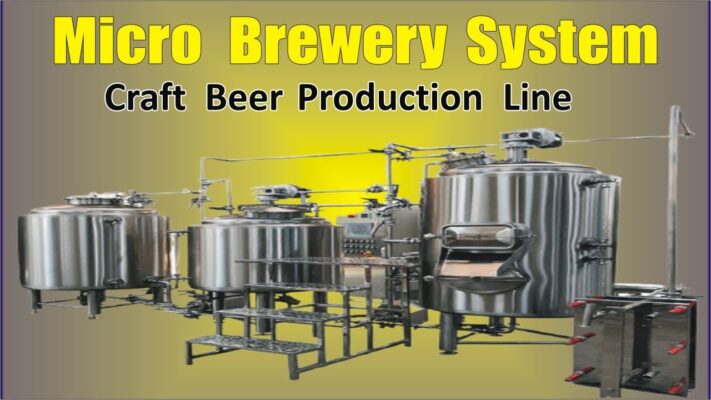
PLC-controlled brewhouse
SCADA/HMI for brewhouse + cellar
CIP automation
Optional historian and basic MES reporting
3) Industrial-grade automation (large breweries)
Multi-line integration (brewhouse, cellar, packaging, utilities, warehouses)
Strong data infrastructure (historian, MES, advanced analytics)
CO₂ recovery integration
Extensive redundancy and standardized global templates
Q&A: Brewery Automation Systems (FAQ)
Q1: What does a brewery automation system control, exactly?
It controls process variables (temperature, pressure, flow, level), sequences (valve routing, CIP steps), and equipment actions (pump starts, motor speeds), while monitoring alarms, trends, and batch records via SCADA/HMI.
Q2: Is automation only for big breweries?
No. Smaller breweries often get strong ROI from targeted automation—especially fermentation temperature control, CIP sequencing, and brewhouse step automation—because these directly impact quality consistency and labor efficiency.
Q3: How does automation improve food safety and traceability?
By continuously monitoring critical process parameters, recording them automatically, and linking those records to batches/lots. This supports traceability (Codex definition via FAO) and monitoring/recordkeeping principles used in HACCP programs (FDA).
Sources:
Q4: What’s the difference between SCADA and PLC?
A PLC executes real-time control logic. SCADA/HMI provides supervision: operator screens, alarms, trending, reporting, and centralized monitoring of multiple PLCs.
Q5: What standard is commonly used to connect factory control with business systems?
ISA-95 (IEC 62264) is widely referenced for enterprise-control system integration and structuring the interface between control layers and enterprise systems.
Q6: What’s a good first automation project for a brewery?
A common high-impact starting point is fermentation temperature and pressure automation with strong data logging, plus basic CIP automation. This typically improves consistency quickly and generates useful historical data for continuous improvement.
Conclusion
A brewery automation system is best understood as a connected, layered capability: sensors and instruments capture what is happening, PLCs execute control logic, SCADA/HMI makes the process visible and operable, and data systems turn operations into measurable performance.
As global beer production remains enormous (BarthHaas reports 1.88 billion hectoliters in 2023) and the beer sector continues to play a major economic role (WBA/Oxford Economics reports $878B GDP contribution in 2023), automation helps breweries compete on the fundamentals: consistent quality, efficient operations, strong safety controls, and trustworthy traceability.
