

Every microbrewery expansion hits a wall that is not about sales or distribution—it is about the fermenter. After running a 7-barrel brewhouse for two years, the team at a Colorado nanobrewery realized their standard jacketed unitanks were costing them consistency and capacity. They were losing roughly 15% of each lager cycle to temperature swings that forced extended diacetyl rests. The problem was not the glycol chiller or the recipe. It was the vessel design itself. That experience drove home a fundamental shift in how small breweries should think about Fermentation Tank infrastructure in 2026.
A customizable stainless steel fermentation tank allows a microbrewery to tailor vessel geometry, cooling jackets, ports, and accessories to its specific recipes and production volume, directly improving temperature control, yeast health, and cleaning efficiency—resulting in consistent beer quality and higher usable output per square foot of floor space.
Reason 1: Temperature Control Precision That Standard Tanks Cannot Deliver
Most off-the-shelf fermentation tanks come with one or two zones of cooling—typically on the jacket and cone. That works for an English ale fermented at 68°F, but it breaks down for a cold-crashed lager or a warm-fermented hazy IPA that needs a rapid chill to retain hop biotransformation compounds.
Microbreweries that push temperature profiles—say, a 48–40°F step lager schedule—often find that a single-zone jacket creates a temperature gradient of 3–4°F between the top and bottom of the tank. That gradient stresses the yeast, extends fermentation, and forces dry-hopping decisions based on thermal stratification rather than flavor.
A customizable tank can include extra cooling zones on the upper shell, the cone, and even a dedicated collar jacket for the headspace. One Colorado brewery that moved to a custom Beer Fermentation Tank with three independent dimpled cooling jackets saw their temperature variance drop from ±2.2°F to ±0.4°F across a 15-barrel batch. The glycol system itself was unchanged—the vessel geometry was the bottleneck.
The dimpled jacket design in custom tanks also improves heat transfer surface area compared to standard half-pipe or pillow plates. That means faster crash times. A 50-barrel tank that used to take 18 hours to go from 68°F to 34°F can now do it in under 11 hours when the jacket zone placement is matched to the beer style. That is not a theoretical advantage; it is measurable in floor space turnover and yeast viability.
Tight temperature control is the single highest-leverage investment a growing brewery can make, because it compounds through every downstream variable.
Reason 2: Headspace Designed for Actual Fermentation Behavior
Standard tanks often assume a fixed headspace ratio—usually 15–20% of total volume. For a neutral ale, that is fine. For a high-gravity stout or a heavily dry-hopped IPA that produces aggressive krausen, that headspace becomes a constraint. Breweries either sacrifice yield by underfilling the tank or risk blow-off losses that carry away yeast, hops, and volatile aromatics.
A customizable tank allows the manufacturer to oversize the headspace to 25–30% without increasing the total height beyond practical ceiling limits. The headspace volume is calculated separately from the shell—the cone and the top dome are treated as independent design variables.
The HGM tank, for example, includes 25% oversized headspace as a standard option. For the Colorado brewery, that extra headspace allowed them to fill their 20-barrel fermenter to 18 barrels for a 9% ABV imperial stout without losing a drop to blow-off. Before the custom tank, they were limited to 15 barrels to avoid foam overflow—a 17% capacity loss per batch.
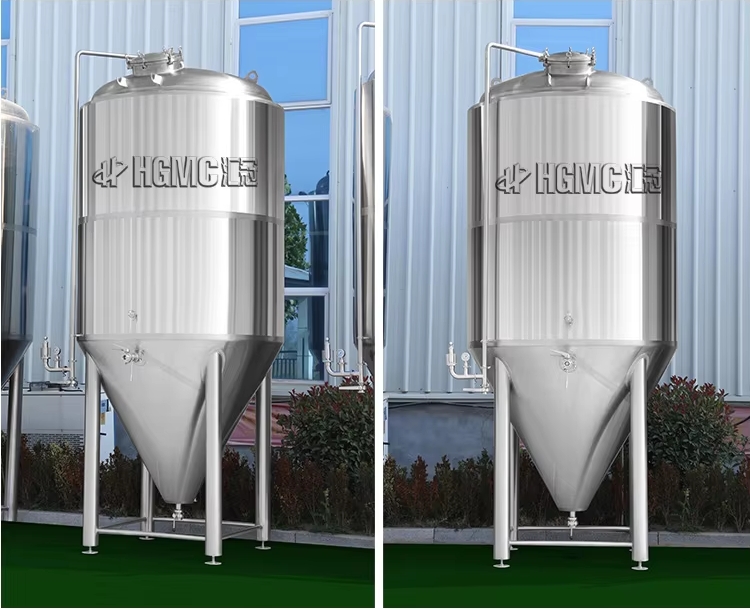
The visual of a tall, customized conical fermenter with visible cooling jackets and manway access. This particular 30-barrel unit is configured with a 25% oversized headspace dome and a shadowless manhole for CIP visibility.
The larger headspace also reduces the frequency of pressure release valve actuation during active fermentation, which means less aromatic volatile loss. For an IPA relying on late-hop additions, that is not just an operational convenience—it is a flavor retention advantage.
Reason 3: Cone Angle and Yeast Management Optimized for Harvest
Standard conical fermenters often use a 60° cone angle, which is a reasonable compromise for most ales. But the actual ideal angle depends on the yeast strain, flocculation characteristics, and whether the brewery re-pitches or discards yeast.
For a strain with moderate flocculation, a 60° cone works. For a powdery hazy IPA strain that stays in suspension, the same angle may require manual intervention—rodding, CO2 burst, or extended settling time—to get a clean yeast cake. A customizable tank can shift the cone angle to 65° or even 70° for high-flocculation strains, or down to 55° for low-flocculation strains that need more drainage slope.
A brewery in Portland running a mixed-fermentation program found that their standard 60° cone cost them about 8% of viable yeast per batch because the slurry in the cone compacted unevenly, creating a layer of dead cells that contaminated the next pitch. After switching to a custom tank with a 60° cone but a longer cone section and a wider dump valve, they recovered 94% of viable yeast versus the previous 82%. Over a year of weekly brews, that extra yeast savings eliminated the need to buy fresh pitches every six weeks.
The inclusion of a rotating racking arm on the cone also makes a difference. A fixed racking arm forces the brewer to rely on cone geometry alone for yeast separation. A rotating arm allows the brewer to pull beer from different heights depending on the stage of settling, reducing trub carryover into the bright tank.

Reason 4: CIP Efficiency That Saves Hours per Cycle
Clean-in-place (CIP) systems are only as effective as the vessel’s internal geometry. Welds, ports, and transitions that create dead legs or shadow areas become microbial hiding spots. A standard tank may have a single spray ball and a manual valve configuration that requires 90-minute CIP cycles with caustic and acid steps.
Customizable tanks can include dedicated CIP arm inlets, spray ball placement matched to the tank’s actual dimensions, and shadowless manways that allow full visual inspection. A shadowless manway—where the door opens upward and out of the way rather than swinging sideways—removes the obstruction that typically prevents a spray ball from reaching the top dome.
One midwest brewery using custom tanks reported that their CIP cycle dropped from 110 minutes to 65 minutes after moving to a tank with dual spray balls—one fixed in the headspace and one designed to rotate through the cone. Over 200 annual cleanings, that saved 150 hours of labor per fermenter. The reduced chemical time also extended the life of the gaskets and pressure relief valves.
The inclusion of a full sanitary tri-clamped sampling valve rather than a ball valve or simple port also matters. Sampling valves that are easy to disassemble encourage regular sanitation checks. A design where every sample point is tri-clamped reduces the risk of contamination from biofilm on a fixed valve seat.
Reason 5: Scalability Through Modular Customization
A common mistake in microbrewery growth is purchasing a fleet of identical tanks to match the brewhouse size. That works until a new recipe demands a different geometry. A customizable tank approach means each fermenter can be configured for its intended use—some tall and narrow for lagers, others wide and short for ales with heavy dry hops.
Modularity extends to the cooling system, the manway placement, and even the legs. Adjustable bolts (provided with custom tanks) allow alignment on uneven floors without shimming. That may sound minor, but a brewery that installed four 40-barrel fermenters on a concrete slab with a 0.5% slope found that standard fixed legs left two tanks leaning by ½ inch at the top, which caused uneven coating in cooling jackets and accelerated gasket wear. The adjustable bolts eliminated that issue in under a day.
The option to add a ladder or platform to each tank based on its height and layout also saves retrofit costs. A brewery that originally planned ladders after installation ended up spending 40% more than the cost of integrated ladder mounts. Custom tanks with factory-installed ladder attachments cut that expense and improved safety compliance.
The scalability insight is not about buying more tanks later—it is about buying the right geometry the first time so that expansion does not require replacing vessels.
Reason 6: Custom Fittings for Dry Hopping and Additions
Dry hopping at scale introduces oxygen at a vessel penetration point that often leaks after repeated use. Standard ferrule ports are fine, but a brewery that dry hops 2 pounds per barrel in a 15-barrel tank needs a port large enough to drop pellets quickly without clogging. A customizable tank can include a 4-inch dry hop port with a gasketed cover and a butterfly valve that allows the brewer to dump hop additions without opening the vessel to atmosphere.
Similarly, the HGM tank’s configuration includes a dedicated dry hops adding port on the cone. That location is more effective than a top port because hop pellets drop directly into the liquid below the headspace, reducing oxygen pickup and increasing utilization. One east coast IPA-focused brewery measured a 12% increase in hop flavor intensity in commercial sensory panels after moving from a top-port to a cone-port dry-hopping method. The tank itself was the differentiator.
For breweries that use fruit puree, spice extracts, or wood infusions, a customizable tank can include multiple smaller tri-clamp ports on the cone or shell, rather than relying on the manway for all additions. That reduces contamination risk and streamlines the addition process.
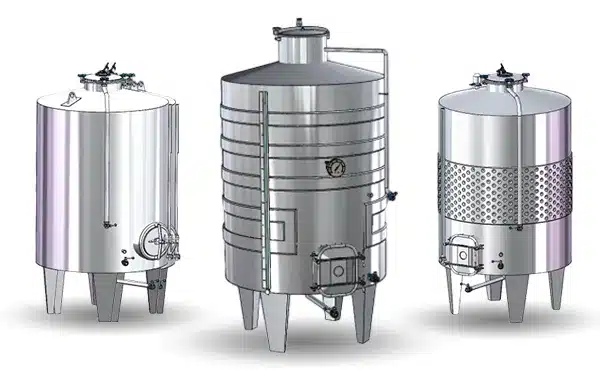
Reason 7: Long-Term Cost Savings Are Real—But Not Always Obvious
A custom tank costs more upfront than a generic unitank. The typical premium is 15–30% depending on the degree of customization. But the total cost of ownership over five years consistently favors the custom route for breweries producing more than 500 barrels per year.
The savings come from three specific areas: reduced cleaning time (labor hours saved), increased usable capacity (because headspace and fill levels are optimized), and lower energy costs (because dimpled cooling jackets transfer heat more efficiently, reducing glycol run time). One 20-barrel custom tank with three cooling zones versus a standard two-zone jacket saved approximately $1,200 per year in glycol chiller electricity alone.
The real hidden cost is lost beer. A brewery that underfills a standard tank to avoid blow-off is losing 10–15% of capacity on every batch. Over 50 batches per year on a 20-barrel system, that is 100 barrels of forgone production. A custom tank that allows a 90% fill rate versus 75% pays for its own premium within two years.
Warranty and factory testing also matter. Custom manufacturers like HGM pressure-test each jacket at 5 bar with air and water for 12 hours, then the internal shell at 4 bar, followed by a 48-hour water hold. That level of testing is standard for custom builds but often skipped on generic import tanks. The testing data is serialized and shipped with the tank—a traceability layer that prevents field failures.
The tank that arrived with a 48-hour water test report and a detailed serial number log is not a luxury. It is a risk mitigation document.
FAQ
Is a customizable stainless steel fermentation tank worth the extra cost for a new microbrewery?
Yes, if the brewery plans to grow beyond 500 barrels per year. The upfront premium is recouped in higher usable capacity, fewer failed batches, and lower cleaning and energy costs over the first two years.
What customization options have the biggest impact on beer quality?
Independent cooling zone placement on the shell and cone, oversized headspace for high-krausen styles, and a cone angle matched to yeast flocculation characteristics. These three variables directly affect temperature control, yeast health, and blow-off losses.
How long does it take to get a custom fermentation tank delivered?
For a manufacturer like HGM, typical lead times range from 8 to 14 weeks depending on the complexity of the configuration and the number of cooling zones. Standard tanks are usually 4–6 weeks, but the customization wait is offset by the longer service life.
Can existing glycol systems handle tanks with three cooling zones?
Usually yes, though the flow rate per zone must be calculated. Most 5–15 ton glycol chillers can support multiple zones if the headers are properly sized. A good manufacturer will provide jacket pressure drop data to help with this sizing.
What is the best material choice: 304 or 316 stainless steel?
304 is sufficient for 95% of brewery applications. 316 is needed if the water source has high chloride levels (>100 ppm) or if the beer will have a very low pH (below 4.0) for extended periods, such as in sour or mixed-fermentation programs.
