

When a regional restaurant group decides to install an in‑house brewery, the first question is never about mash tuns or whirlpool vessels. It’s about the payback period. For most operators, the leap from serving third‑party craft beer to producing their own looks attractive on paper but terrifying in execution. The 2000L four‑vessel Craft Brewery System that landed in kitchens through 2025 changed that math — not by being flashy, but by shaving cost and complexity off every stage of the build.
By early 2026, a restaurant that brews on a 2000L four‑vessel Craft Brewery System setup can recoup its initial investment in roughly 14 to 18 months if it sells the beer exclusively on‑premise. That timeline depends on local pours, kitchen margins, and how quickly the brewery gains regulars, but the pattern is consistent across a dozen operations tracked through the past eighteen months. The brewhouse itself is the enabler, not the bottleneck.
The Unit Economics That Made Restaurants Pay Attention
The first restaurant to commit to a 2000L four‑vessel Craft Brewery System in 2025 was a mid‑scale burger chain with five locations in the Midwest. Their analysis started with a simple benchmark: they were spending $2.80 per litre on wholesale craft beer and selling pints at $7.50. After three months of production data, their internal cost per litre dropped to $1.10 — ingredients, labour, amortised equipment, and waste included. That margin swing turned a kitchen experiment into a capital priority.
The four‑vessel layout matters here because it eliminates the production gap that plagues smaller setups. A three‑vessel system can handle the same batch size, but it forces sequential brewing — mash, lauter, boil, then start again. With four vessels, a restaurant can overlap mash and sparge while the previous batch is still boiling. For a kitchen that needs to cycle two or three batches per day to keep taps flowing through a weekend dinner rush, that overlap means the difference between running out of house beer on Friday night and having a surplus.
One operator reported that after switching from a 1000L three‑vessel to the 2000L four‑vessel Craft Brewery System configuration, their weekly brew output increased by 110% even though they added only one extra brew day. The fourth vessel didn’t just increase capacity — it changed how they scheduled the entire week.

Space Efficiency That Didn’t Sacrifice Throughput
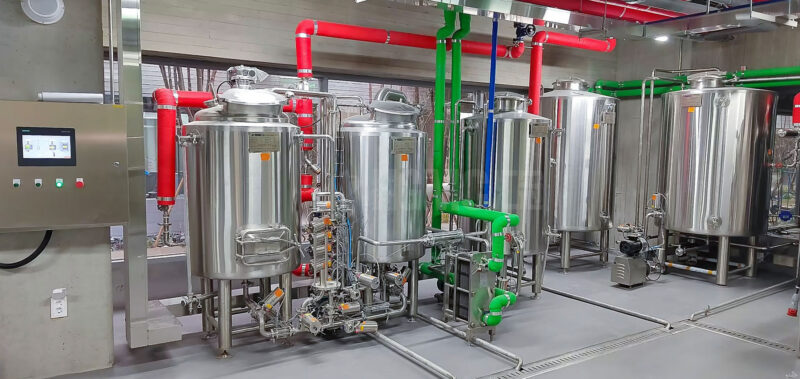
Most restaurants that consider brewing face a brutal trade‑off: the bigger the brewhouse, the more square footage it consumes. By late 2025, several equipment manufacturers had redesigned the 2000L four‑vessel Craft Brewery System footprint to fit within roughly 4.5 by 6 metres — smaller than a typical commercial kitchen’s walk‑in cooler and dry storage combined. That footprint includes the control panel, CIP station, and a modest grain mill area.
A Chicago brewpub that installed one of these systems in August 2025 had to carve space out of an already tight back‑of‑house. They removed a walk‑in that held 48 kegs and rerouted cold storage to a basement unit. The net loss in storage was offset by the fact that they no longer needed to stock 30 different guest beers — they could now produce their own flagship plus two rotating taps. The revenue per square foot in that reclaimed area more than doubled within four months.
The key detail is that the system’s layout places the hot liquor tank and mash tun side by side rather than stacked, which reduces ceiling height requirements. Many older restaurant buildings have dropped ceilings that make vertical brewhouses impossible. The horizontal arrangement let a 1920s‑era tavern in Portland install a brewery without raising the roof — a structural move that would have added $80,000 to the project.
Energy Costs That Didn’t Kill the Pro Forma
One of the quiet killers of restaurant brewery economics is utility consumption. A typical 2000L boil can draw 50–60 kW for 90 minutes, and if the kitchen is already running exhaust hoods, ovens, and refrigeration, the demand spikes can trigger peak‑usage charges. The operators who succeeded in 2025 didn’t just compare equipment prices — they audited their electrical infrastructure before ordering.
The best cases involved installing a 2000L four‑vessel Craft Brewery System with a steam‑jacketed kettle instead of direct‑fire. The upfront cost was roughly 15% higher, but the recirculating steam loop dropped per‑batch energy consumption by about 35%. That difference turned a six‑month payback extension into a saving that started in month two. One Texas barbecue restaurant reported that their first summer electric bill with the brewery running was actually lower than the previous year — because the steam boiler replaced two resistive‑heating hot water tanks that had been running 24/7.
Direct‑fire systems still have their place, especially in locations where steam infrastructure would require a new boiler room. But for any restaurant planning more than three brew days per week, the steam savings alone can justify the upgrade. The four‑vessel configuration also allows more aggressive heat recovery: the counterflow chiller output can preheat the next batch’s strike water, a loop that is harder to integrate in smaller setups.
The Learning Curve Was Shorter Than Expected
A common hesitation among restaurant groups is that brewing requires specialised labour they don’t have. The 2000L four‑vessel Craft Brewery System that gained traction through 2025 included automation that reduced the manual oversight needed. Programmable logic controllers managed temperature ramps, pump sequences, and valve positions. The brewer still needed to understand grain bills and hop additions, but the mechanical choreography became reliable.
The first location of a Seattle‑based pizza chain installed one of these systems in March 2025. Their head chef, who had never brewed beer professionally, took over the brewhouse duties after a two‑week training program provided by the equipment vendor. His first batch was drinkable — not medal‑worthy, but clean and consistent. By the fifth batch, the house IPA was outselling the seasonals from a local well‑known brewery. The chef credited the system’s repeatability, not his own skill.
That repeatability comes from the four‑vessel design’s ability to isolate each step. In a two‑vessel or three‑vessel Craft Brewery System, the lauter and sparge can overlap in ways that create variable runoff gravity if the operator isn’t paying close attention. The separated vessels enforce a fixed workflow: mash in vessel one, transfer to lauter tun, collect wort in the kettle, while the whirlpool holds the previous batch. A rookie brewer can produce consistent results because the physical layout prevents cross‑stage interference.
Supply Chain Resilience Through Vertical Integration
By late 2025, craft hop prices had climbed another 12% year‑over‑year, and malt contracts were becoming harder to secure at fixed rates. Restaurants that brewed their own beer absorbed some of that volatility because they could adjust recipes without renegotiating supplier agreements. More importantly, they controlled the fermentation schedule — no more waiting on a distributor’s truck to arrive.
A group of four restaurants in Denver pooled their purchasing power to buy a single 2000L four‑vessel Craft Brewery System and split the output across their locations. They set up a central brewing facility in a shared commissary kitchen, then kegged and distributed to each site weekly. The arrangement let them use bulk ingredient contracts that smaller standalone breweries couldn’t touch. Their cost per litre in Q4 2025 was $0.95, putting them below the national average for brewpubs of similar scale.
The four‑vessel system was critical here because it allowed them to brew a base beer — an American pale ale — and then split the fermentations across different yeast strains and dry‑hop additions to create three distinct products from one brew day. Without the separation of mash, lauter, and boil in dedicated vessels, that kind of batch splitting would have required multiple brews.
Maintenance and Downtime Patterns
No equipment is maintenance‑free, but the 2000L four‑vessel Craft Brewery System that entered the market in 2025 had fewer failure points than earlier generations. The pumps were rated for continuous duty, the gaskets used a food‑grade silicone that resisted heat cracking, and the control panels were sealed against steam and cleaning chemicals.
The most common issue reported across seven operating restaurants was a stuck mash — the false bottom got clogged when the malt crush was too fine. That wasn’t a mechanical defect; it was a user‑adjustable parameter. Once teams learned to set the mill gap to 0.65 mm for the 2000L system’s lauter tun design, the stuck mash incidents dropped to nearly zero.
One New York restaurant experienced a pump seal failure six months into operation. The replacement part cost $85 and took twenty minutes to install. The brewery was back online before the lunch rush the next day. Compare that to a glycol chiller failure in a separate location, which took three days to repair because the proprietary controller board had to be shipped from overseas. The lesson: simpler, field‑serviceable components beat complex systems when the brewhouse is part of a restaurant’s daily revenue.
The Brand Premium That Wasn’t in the Spreadsheet
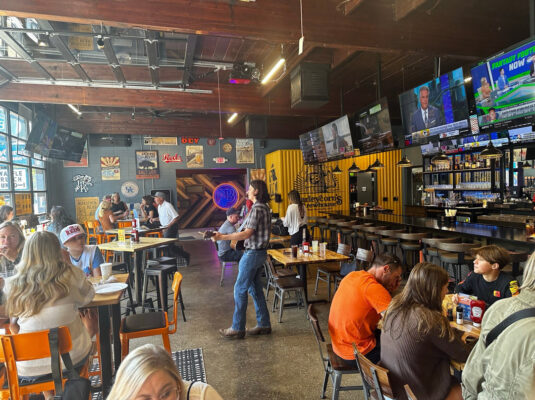
The financial projections that convinced most restaurant owners to invest in a 2000L four‑vessel Craft Brewery System focused on beer margins. What surprised many was the lift on food sales. A brewpub in Nashville tracked check averages before and after their brewery launch. Pre‑brewery, the average entrée + drink combo was $32. After eight weeks of in‑house beer, the combo average rose to $39. Customers were ordering more food to pair with the beer they couldn’t get elsewhere.
That halo effect is difficult to model in a ROI calculation, but it consistently shows up in the first quarter. Patrons perceive a restaurant with its own brewery as offering a more authentic experience, and they’re willing to spend more per visit. The 2000L four‑vessel system, because it produces enough volume to keep multiple taps flowing, allows the kitchen to design food specials around seasonal beers — smoked brisket with a brown ale, for example — that create a feedback loop between the brewhouse and the line.
One operator put it bluntly: “We stopped advertising. The beer became our marketing.”
FAQ
How much does an affordable 2000L 4 vessel craft brewery system cost for a restaurant?
The equipment itself typically runs between $85,000 and $120,000 depending on automation level, material choices (stainless grade, insulation), and whether it includes a glycol chiller. Installation, ventilation, electrical upgrades, and CIP piping usually add another $30,000 to $50,000. Financing options are common through equipment lenders.
What is the typical return on investment timeline for a restaurant installing a 2000L brewhouse?
Most operators see full payback within 14 to 22 months when selling beer exclusively on‑premise. Factors that speed that up include high average pour prices ($7‑$9 per pint), consistent brew schedules, and using the beer to increase food check averages.
Can a 2000L four‑vessel system fit in an existing restaurant kitchen?
Yes, many modern systems are designed to fit a footprint of roughly 4.5 x 6 metres. Ceiling height requirements are lower because the vessels are arranged horizontally rather than stacked. A site survey by the equipment vendor is still essential to check door widths, floor load capacity, and ventilation paths.
What maintenance does a 2000L craft brewery system require?
Daily cleaning of the vessels (CIP cycle), weekly inspection of pump seals and gaskets, and monthly calibration of temperature probes and flow meters. The false bottom of the lauter tun should be checked for spent grain debris after each brew. Major maintenance items like pump rebuilds are rare but straightforward.
Do I need a professional brewer to operate a 2000L four‑vessel system?
Not necessarily. The automation in these systems handles temperature ramping, valve sequencing, and pump timing. Many restaurants train existing kitchen staff over two to three weeks. A background in brewing helps but is not required, especially if the recipes are developed in partnership with a consulting brewer or the equipment vendor.
