Opening a small brewery system sounds straightforward on paper: pick a vessel size, order the tanks, install, brew. I’ve seen three different nano breweries open in my city over the past two years, and only one of them had a smooth first six months. The others were bleeding money on retrofits, lost production days, and equipment that didn’t fit the space they had leased. The difference wasn’t the quality of the steel—it was how well the system was designed around the specific constraints of their buildings and their brewing process.
Custom design isn’t a luxury. For small batch operators, it’s the difference between a system that pays for itself in year one and one that becomes a recurring cost center.
Why Off-the-Shelf Systems Hide Costs
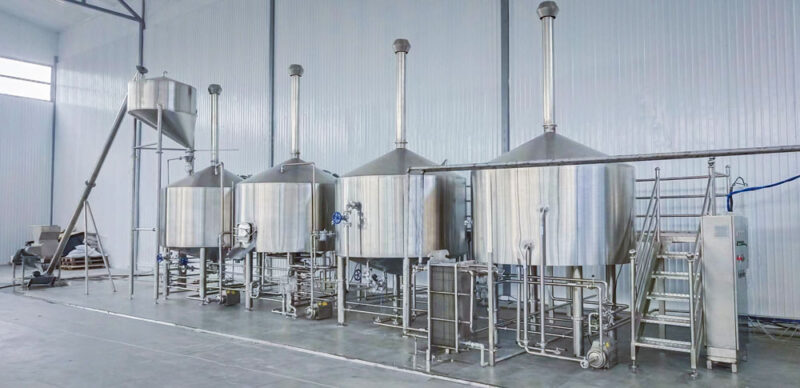
A standard 500L turnkey system looks like a bargain until you try to drop it into a 100-year-old building with 8-foot ceilings and a single-phase electrical panel. I’ve been on three site evaluations where the “plug and play” system needed $12,000 in electrical upgrades before the first brew. The same system in a newer space with 3-phase power and a 4-inch floor drain would have cost nothing extra.
The mistake most first-time brewery owners make is treating the equipment as a commodity. They compare prices per liter and lead times, ignoring infrastructure compatibility. That’s where the hidden costs live. Custom design forces you to address those variables before you sign the purchase order.
The Short Answer on Cost Savings
Custom design saves money by eliminating wasted space, matching power and drainage to existing infrastructure, optimizing workflow for small batches, and avoiding costly retrofits or replacement parts later. When the system is built to your building’s measurements and your electrical service, installation is fast and cheap.
Eight Ways Custom Design Keeps More Money in Your Account
Over three years of consulting on small brewery builds, I’ve watched the same patterns repeat. Here are the eight specific areas where a tailored system consistently outperforms generic equipment.
1. Ceiling Height and Vessel Layout
Most small batch systems assume a 10.5-foot ceiling. That’s the standard spec from manufacturers like the Small batch Brewery System. But many leased spaces, especially on ground floors of mixed-use buildings, have ceilings at 9 feet or less. A standard system with a 3-meter tall fermenter won’t fit, period.
I worked with a brewery in a former auto shop. Their ceiling was 8.5 feet. A standard 500L unit would have required cutting a hole in the roof or digging a pit. Instead, they ordered a custom system with shorter, wider fermenters and a lower brew deck. The modification added 8% to the tank cost but saved $20,000 in structural work. The system still produces 1,000 liters per brew day, just with a different aspect ratio.
2. Electrical Compatibility
Three-phase power at the right voltage is rare in small commercial spaces. Many small brewers get a shock when they realize their 220V single-phase building can’t run a standard 40kW heating element. A custom system can be specced with heating elements matched to available power, even if that means smaller elements and longer heat-up times.
One client in a strip mall had single-phase 100A service. The off-the-shelf 500L system required 80A three-phase. The electrical upgrade quote was $9,500. We ordered a custom unit with a 30kW electric element and a PID controller that staggered heating to stay within the 100A limit. The heat-up time increased by 12 minutes per batch. The upgrade cost was zero.
3. Floor Drain Placement
A 4-inch floor drain is the gold standard, but not every slab has one. Moving a drain costs anywhere from $2,000 to $7,000 depending on concrete cutting and plumbing runs. A custom system can be designed with a raised platform that channels runoff to a single drain point, or with an integrated sump pump system that doesn’t require floor modification at all.
I helped a brewery that had the perfect drain—but it was in the corner. Their generic system’s floor sink was centered in the brew house footprint. They would have needed to cut the slab and run new pipe. Instead, we designed a system with the drain outlets consolidated at one end of the brew deck. The supplier welded in a manifold that directed all waste to one 2-inch pipe. No concrete cutting, no extra plumbing.
4. Workflow and Footprint Efficiency
Standard layouts are designed for ideal rectangular rooms with nothing in the way. Real breweries have support columns, fire risers, and odd corners. A custom design fits around those obstacles rather than forcing you to build around the equipment.
One brewer had a support column exactly where the lauter tun was supposed to go. Rather than move the tank and add 4 feet of transfer hose (which harms mash efficiency and increases oxygen pickup), the custom design moved the hot liquor tank to a different spot and shortened the grain-out auger path. The loss of usable space was less than 3%, and the brew cycle time dropped by 15 minutes because the transfer distances were shorter.
5. Heating Method Selection
Electric, steam, direct fire—each comes with different installation and operating costs. A custom brewery system lets you pick the method that aligns with your utility rates and existing infrastructure. Many small batch operators default to electric because it’s clean and simple, but direct fire using propane can cut energy costs significantly in regions with high electricity prices.
I had a brewer in a rural area where electricity was $0.18/kWh. Electric heating would have cost $60 per batch. They switched to a direct-fire natural gas burner. The custom system included a flue and combustion air intake designed for their small room. The per-batch cost dropped to $8. The upfront cost of the burner and exhaust was recouped in four months of three-brew-per-week production.
6. Automation Level vs. Labor Cost
Small breweries often over-automate. A full PLC system with touchscreen controls costs $8,000–$15,000 more than a PID panel with manual valves. In a brewery doing one brew per day, that automation might save 30 minutes of labor. At $20/hour, the payback period is years.
Custom design allows you to automate only the steps that create bottlenecks. I’ve seen systems where the mash temperature control is automated (critical for consistency), but wort transfer to the boil kettle is still manually valved. That hybrid approach costs half of full automation and gives you control where it matters.
7. Vessel Combination vs. Separate Tanks
Combination tanks (like a mash mixer/lauter tun combo) save floor space and reduce the number of CIP cycles. But they also limit flexibility for certain styles. A custom design can use combos for the core lineup and add a dedicated separate tank for specialty batches.
A nanobrewery I worked with did mostly ales but wanted to experiment with lagers. Their standard 3-vessel system was efficient for ales but couldn’t handle the extended mash schedule for a doppelbock without skipping a day. We customized the system with a separate mash tun that could be swapped in for lager days. The extra tank cost $3,200 but allowed them to brew 10% more variety without losing production capacity.
8. Packaging Integration
Small batchbrewery system often start with keg only, then add canning or bottling later. A custom system can be designed with a dual-purpose bright tank that hooks up directly to a mobile canning line’s filler, saving space and eliminating a dedicated brite tank for packaging.
One brewery ordered their Small batch Brewery System with a modified bright tank that had a 1.5-inch triclamp outlet at the bottom instead of the standard 2-inch. That simple change let them connect to a manual bottle filler without an adapter. The cost difference was zero. The convenience of not having to buy or fabricate an adapter saved them $200 and a week of lead time.
When Custom Design Costs More Upfront
Let me be honest—custom design isn’t always cheaper on the invoice. A fully brewery system typically runs 10–20% higher than a stock unit from the same manufacturer. The savings come from avoided modifications, shorter installation timelines, and fewer future upgrades.
I’ve seen a brewery buy a standard 800Lbrewery system, then spend $14,000 on electrical, $2,000 on drain relocation, and $1,500 on a custom platform to raise the tanks 6 inches. Their total was $17,500 above the equipment price. A custom system designed around their 100A single-phase, existing drain, and 9-foot ceiling would have cost about $6,000 more upfront but saved them $11,500 overall.
A Real Case Study: The 300L Brewpub Fit
A brewpub in a converted retail space with 8.5-foot ceilings and only 220V single-phase wanted a 300L brewery system. A standard 300L turnkey unit required 12kW three-phase. We specced a custom system with dual 6kW elements (for redundancy), a 7-foot tall mash tun kettle combo, and a counter-flow chiller instead of a plate chiller (to reduce the need for a pump on the hot side). The brew deck height was lowered to 18 inches to accommodate the ceiling. The install took two days instead of the typical five. Total cost over the stock equivalent: $2,200 more upfront. Savings in electrical work and avoided ceiling modification: $4,800. They were profitable by month nine.
FAQ
How much space do I need for a small batch brewery system?
A 300L system with custom design can fit in as little as 35 square meters (about 375 square feet), including fermenters and cold storage. The height requirement can be as low as 7 feet if the vessels are custom-sized. Standard systems often need 10.5 feet.
Can I use single-phase power with a small batchbrewery system?
Yes. A custom system can be built with heating elements and controls that run on 110V or 220V single-phase. The trade-off is longer heat-up times or a lower maximum batch size. Most 200–500L systems can be configured for single-phase.
Is custom design worth it for a brewery doing only one brew per week?
It depends on your space and infrastructure. If your building is standard (10-foot ceilings, 3-phase power, existing 4-inch drain), a stock system is likely fine. If any of those are missing, custom design usually pays for itself in avoided modifications.
How long does it take to get a custom small batch brewery system?
Lead times typically add 2–4 weeks compared to stock systems, because the vessels are built to your specs. Total delivery is often 8–12 weeks. Some manufacturers offer expedited custom builds for an extra fee.
Can I add capacity later with a custom brewery system?
Yes. Many custom designs allow for additional fermenters or a second brew deck to be added later, because the infrastructure (electrical, drains, footprint) was planned for expansion. Stock systems often don’t have this scalability built in.
