

Scaling a craft brewery is rarely just “buy bigger tanks.” The moment demand pushes beyond what a small brewhouse can reliably produce, the constraints shift—from creativity and manual labor to throughput, repeatability, utilities (steam, glycol, electricity, water), and packaging quality. The right Craft Brewery Equipment choices can reduce cost per barrel, stabilize fermentation, and protect shelf life—while the wrong choices can lock a brewery into chronic bottlenecks and expensive rework.
Primary source: Gawlo’s article on scaling equipment for small breweries. (https://gawlo.net/post/what-craft-beer-equipment-do-small-breweries-need-to-scale-production/)
Why Craft Brewery Scaling Equipment Matters More Than Ever
The craft segment remains large and competitive. In the U.S. alone, the Brewers Association reported 9,796 operating craft breweries in 2024 (with microbreweries, brewpubs, taprooms, and regional breweries included), reflecting a crowded market where efficiency and consistency can be a key differentiator. (https://www.brewersassociation.org/association-news/brewers-association-reports-2024-u-s-craft-brewing-industry-figures/)
At the same time, the category faces margin pressure: ingredient costs, labor, distribution complexity, and rising energy prices. That’s why “scaling” increasingly means engineering a system—not only increasing batch size.
Gawlo frames scaling as a transition from manual, small-batch operations into integrated production where core investments (brewhouse, fermentation, utilities, packaging, and cleaning systems) work together to increase output and reduce unit costs. (https://gawlo.net/post/what-craft-beer-equipment-do-small-breweries-need-to-scale-production/)

The Core Principle: Fix Bottlenecks in the Right Order
A useful way to think about brewery expansion is that the brewery is a chain:
Brewhouse → Fermentation/Cellar → Cooling & Utilities → Clarification → Packaging → QA → Storage & Logistics
If any link can’t keep up, scaling one area simply creates waste or downtime elsewhere. For example:
A faster brewhouse without enough fermentation volume leads to “tank gridlock.”
More tanks without enough glycol capacity creates unstable fermentation and off-flavors.
More beer without modern packaging increases oxygen pickup, shrinking shelf life and increasing returns.
Gawlo emphasizes this “systems” view: upgrades must increase throughput and protect quality. (https://gawlo.net/post/what-craft-beer-equipment-do-small-breweries-need-to-scale-production/)
1) Brewhouse Upgrades: Move Toward a 3-Vessel (or 4-Vessel) System
What changes when you scale
Small breweries often start with 1–2 vessel systems (or combo vessels). As production grows, the brewhouse becomes a time bottleneck. A major theme in Gawlo’s article is that shifting to 3-vessel brewhouses (mash, lauter, kettle/whirlpool) enables staggered operations—mashing while boiling—so you can run more turns per day without expanding the building. (https://gawlo.net/post/what-craft-beer-equipment-do-small-breweries-need-to-scale-production/)
Why it matters
More turns/day: A brewhouse that can run 3–4 batches in a long shift can radically change weekly output.
Process consistency: Dedicated vessels make temperature rests, lauter flow, and whirlpool operations more repeatable.
Labor efficiency: Less waiting, fewer manual workarounds, and less “heroic” brewing.
Steam-jacketed vs. direct fire vs. electric
Gawlo highlights the move toward steam-jacketed heating for faster ramp times and tighter control versus direct fire. (https://gawlo.net/post/what-craft-beer-equipment-do-small-breweries-need-to-scale-production/)
From an energy perspective, scale also tends to improve efficiency. A classic DOE/OSTI report notes that larger breweries generally use less energy per unit output, and provides reference energy intensity ranges that are notably higher for small breweries than large ones. (https://www.osti.gov/servlets/purl/881595)
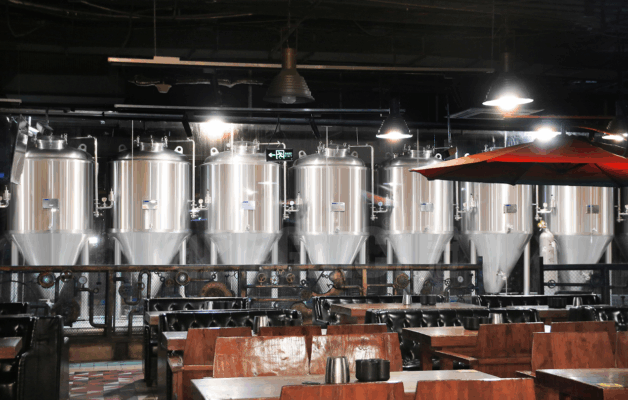
2) Fermentation & Cellar: Unitanks and the “Brew Length Multiplier”
The scaling rule of thumb: fermentation must outgrow the brewhouse
Many scaling plans fail because they upgrade the brewhouse first and underestimate fermentation volume requirements.
Gawlo specifically calls out scaling breweries investing in unitanks that are 2× to 4× brew length, enabling double-batching and improving tank utilization. (https://gawlo.net/post/what-craft-beer-equipment-do-small-breweries-need-to-scale-production/)
Why unitanks matter
Combine fermentation + conditioning, reducing transfers
Improve turnaround time
Simplify cleaning and reduce contamination risk
Support consistent carbonation and brite operations (depending on process)
Quality risk you’re trying to eliminate
A single unstable fermentation can mean a full tank of product loss—so equipment that improves temperature stability, oxygen control, and cleaning repeatability directly protects revenue.
3) Cold-Side Utilities: Glycol Chillers, Heat Exchangers, and Temperature Stability
Glycol capacity isn’t optional at higher volumes
As tank farms grow, cooling load grows nonlinearly—especially with crash cooling. Gawlo notes that scaling breweries often move into 15–30 HP glycol chiller territory (exact sizing depends on tank count, insulation, ambient conditions, crash schedules, etc.) and references the need to maintain tight fermentation stability (e.g., around ±0.5°C) to avoid yeast stress and off-flavors. (https://gawlo.net/post/what-craft-beer-equipment-do-small-breweries-need-to-scale-production/)
Heat exchangers: throughput + consistency
A proper wort heat exchanger is one of the highest-ROI upgrades because it directly affects:
Turn time (how fast you can get wort to pitching temperature)
Cold break formation and clarity outcomes
Yeast performance and flavor consistency
Energy efficiency: why it becomes a competitive advantage
Energy benchmarking literature shows meaningful differences by brewery size and technology. For example, the OSTI/DOE brewery efficiency report documents energy intensity variation and notes that small breweries can be substantially more energy intensive per unit of beer than large breweries. (https://www.osti.gov/servlets/purl/881595)
Practical takeaway: when scaling, utility design (steam, glycol, compressed air, hot liquor, heat recovery) isn’t “back-of-house”—it’s part of your cost structure.
4) Material Handling: Milling, Grain Conveying, and Spent Grain Removal
When manual handling becomes a bottleneck
As batch size and weekly turns increase, grain handling turns into:
A labor issue (hours per week spent moving bags)
A safety issue (lifting injuries, slips)
A throughput issue (slow load-in slows brewday)
Gawlo describes the shift from manual bags to silos and augers and highlights the time savings in spent grain removal when moving to more industrial methods (hoppers, rakes, improved manway designs). (https://gawlo.net/post/what-craft-beer-equipment-do-small-breweries-need-to-scale-production/)
Even if your brewery stays “small” by some definitions, grain-handling automation can be one of the most immediate labor-saving upgrades.
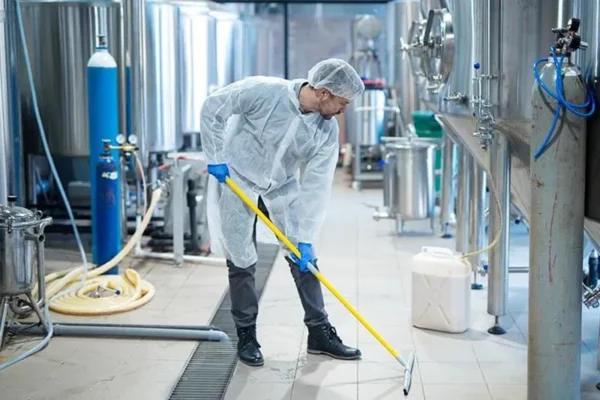
5) Cleaning & Sanitation: CIP Systems Are Scaling Equipment
CIP is not glamorous, but it drives uptime
If cleaning is slow, inconsistent, or overly manual, scaling amplifies the risk:
more tanks = more cleaning cycles
more turns/week = less time available for cleaning
inconsistency = infection risk and batch loss
Gawlo cites data suggesting that breweries using automated Clean-in-Place (CIP) systems can reduce water and chemical usage meaningfully (their example cites reductions in water and chemical usage). (https://gawlo.net/post/what-craft-beer-equipment-do-small-breweries-need-to-scale-production/)
From an “authoritative operations” perspective, it’s consistent with broader industrial energy/water-efficiency guidance that process controls and reuse/optimization reduce utilities over time. (https://www.energystar.gov/sites/default/files/buildings/tools/LBNL-50934.pdf)
6) Clarification & Yield: Filtration or Centrifugal Separation
Scaling introduces a new question: do you want more beer from the same wort?
At low volumes, many breweries accept higher losses as “the cost of craft.” At scale, small yield improvements become large revenue gains.
Gawlo notes that separators can recover additional sellable beer by reducing losses in yeast and trub, effectively increasing output without increasing raw materials. (https://gawlo.net/post/what-craft-beer-equipment-do-small-breweries-need-to-scale-production/)
The right choice (centrifuge vs. filtration vs. finings-only) depends on brand style goals, haze policies, distribution needs, and QA capability.
7) Packaging: The Scaling Moment Where Quality Can Collapse (or Improve)
Why packaging is often the real scaling line
Even breweries that can brew enough beer can get stuck at packaging—because manual or semi-manual packaging:
consumes disproportionate labor
introduces oxygen pickup
creates inconsistency (fill levels, carbonation loss, seams)
limits distribution readiness
Gawlo highlights the role of semi-automated canning lines and focuses on dissolved oxygen (DO) control and throughput (e.g., 25–60 cans per minute ranges depending on system). (https://gawlo.net/post/what-craft-beer-equipment-do-small-breweries-need-to-scale-production/)
Industry equipment suppliers and trade publications similarly frame packaging automation as a major step-change because it ties to shelf life and retailer acceptance. For example, Craft Beer & Brewing emphasizes evaluating throughput (cans/min) relative to projected volume and operational schedule. (https://www.beerandbrewing.com/a-guide-to-adding-or-expanding-a-canning-line)
What to prioritize in packaging equipment
Low oxygen pickup (protects hop aroma, prevents staling)
Seam quality + inspection (especially for cans)
Fill accuracy (reduces rejections and compliance risk)
Changeover time (SKUs multiply as you grow)
Labor model (operators required per shift)
If your business model includes wider distribution, packaging quality becomes brand protection.
8) Integration and Compliance: Skids, Controls, and Faster Commissioning
A key idea in Gawlo’s article is that scaling breweries benefit from pre-engineered, skid-mounted, or integrated systems—not only for operational consistency, but also for smoother installation and inspections. (https://gawlo.net/post/what-craft-beer-equipment-do-small-breweries-need-to-scale-production/)
This is one of the most overlooked truths in expansion projects: time to commissioning is expensive. Every week delayed is lost revenue and continued overhead burn.
A Practical Scaling Roadmap (From Small to Regional-Ready)
Here’s a pragmatic sequencing many breweries follow:
Phase 1: Remove immediate constraints (0–12 months)
Upgrade heat exchanger, pumps, basic cellar controls
Add fermentation volume (unitanks sized for double-batching)
Improve CIP repeatability
Confirm glycol capacity is sufficient for crash schedules
Phase 2: Increase daily throughput (12–24 months)
Move toward 3-vessel brewhouse
Add steam system (if appropriate) and utility upgrades
Add grain handling improvements (milling, auger, spent grain)
Phase 3: Become distribution-capable (18–36 months)
Packaging line investment (DO control, seam quality, labeling)
QA upgrades (DO meter, micro testing partnerships, sensory panel discipline)
Warehouse cold storage and logistics refinement
This mirrors the “system integration” mindset: scale is not one purchase—it’s alignment.
Frequently Asked Questions (FAQ)
1) What is the first piece of equipment a small brewery should upgrade to scale production?
Most breweries see early gains from fermentation capacity, cooling utilities (glycol), and packaging improvements—because these are common bottlenecks. Gawlo emphasizes that without enough fermentation volume and adequate thermal management, brewhouse speed gains don’t translate into sellable beer. (https://gawlo.net/post/what-craft-beer-equipment-do-small-breweries-need-to-scale-production/)
2) Is a 3-vessel brewhouse necessary to scale?
Not always, but it’s a common inflection point. A 3-vessel system can enable more turns per day through staggered operations, improving throughput without expanding floor space. (https://gawlo.net/post/what-craft-beer-equipment-do-small-breweries-need-to-scale-production/)
3) How much fermentation capacity do I need relative to my brewhouse?
A common scaling approach is to add unitanks that are 2× to 4× brew length, enabling double-batching and reducing tank downtime. Exact needs depend on your average fermentation time, style mix, and packaging schedule. (https://gawlo.net/post/what-craft-beer-equipment-do-small-breweries-need-to-scale-production/)
4) Why is dissolved oxygen (DO) control such a big deal in canning?
Oxygen exposure accelerates staling and can mute hop aroma, especially in hop-forward beers. Packaging automation and process discipline aim to reduce oxygen pickup and improve shelf stability. Gawlo highlights DO control as a major reason scaling breweries invest in modern canning lines. (https://gawlo.net/post/what-craft-beer-equipment-do-small-breweries-need-to-scale-production/)
5) Does scaling always reduce energy use per barrel?
Often yes, because larger and more efficient systems can reduce energy per unit output. A DOE/OSTI report notes that energy intensity varies by brewery size and that larger breweries typically use less energy per unit than smaller breweries. (https://www.osti.gov/servlets/purl/881595)
6) How do I justify expensive automation to investors or lenders?
A strong justification combines:
labor savings (hours per barrel decline)
higher throughput (more sellable beer per week)
quality protection (fewer dump batches, fewer returns)
utilities optimization (energy/water/chem reductions)
Gawlo frames scaling equipment as a path to better unit economics and operational consistency rather than just “bigger.” (https://gawlo.net/post/what-craft-beer-equipment-do-small-breweries-need-to-scale-production/)
Conclusion: Scaling Is Building a Factory That Still Makes Craft Beer
The best scaling investments don’t replace craftsmanship—they protect it. A larger brewhouse, more fermentation volume, reliable glycol capacity, automated CIP, yield-focused clarification, and oxygen-controlled packaging all serve the same goal: make more beer that tastes like your beer, every time.
In a market with thousands of competitors and tightening margins, the breweries that scale successfully tend to treat equipment not as isolated purchases, but as an integrated production system—one that increases throughput, reduces variability, and supports consistent quality from taproom to retail shelf.
Key references used in this guide:
Gawlo scaling equipment overview (primary analysis source): https://gawlo.net/post/what-craft-beer-equipment-do-small-breweries-need-to-scale-production/
Brewers Association 2024 craft brewing figures: https://www.brewersassociation.org/association-news/brewers-association-reports-2024-u-s-craft-brewing-industry-figures/
DOE/OSTI brewery energy efficiency report: https://www.osti.gov/servlets/purl/881595
ENERGY STAR / LBNL brewing efficiency document: https://www.energystar.gov/sites/default/files/buildings/tools/LBNL-50934.pdf
Craft Beer & Brewing canning line evaluation guide: https://www.beerandbrewing.com/a-guide-to-adding-or-expanding-a-canning-line
