
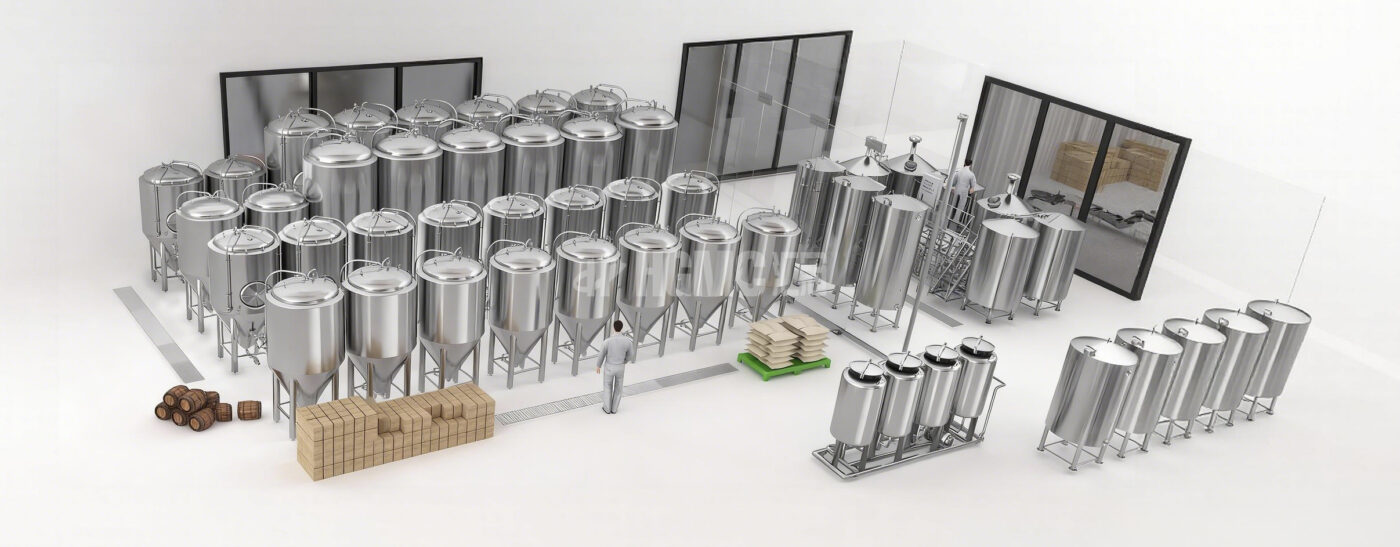
Hgmc specializes in providing high-performance, beer brewing equipment and beer fermentation tanks for brewdery worldwide. The craft beer boom has changed how people think about brewing. Home enthusiasts experiment with hop varieties in their kitchens, bar owners install small systems to serve fresh beer alongside food, and commercial breweries invest in multi-tank setups designed for consistent output at scale. Each scenario demands different equipment, yet the market often pushes generic solutions that fit none of them well. Choosing the right beer brewing equipment starts with understanding your production volume and the scale of your operation. Home brewers need compact, all-in-one systems, while commercial breweries require separate, scalable tanks for fermentation, cooling, and packaging. The wrong choice—buying too much capacity too early, or too little automation for a growing business—can stall a project before the first batch is ready.
Understanding Your Brewing Scenario and Volume
Before looking at stainless steel vessels or control panels, the first question is about scale. If you are brewing at home, your typical batch size falls between 5 and 10 gallons. That volume works well with all-in-one mash systems—a single kettle that handles mashing, lautering, and boiling. These units are compact, affordable, and easy to clean. You do not need separate tanks for each stage. Home brewing equipment usually comes as a single-vessel electric system or a simple propane-fired setup. The learning curve is low, and the investment rarely exceeds a few hundred dollars.
If you are running a bar or restaurant, the equation changes. A small draft beer program might require 1 to 3 barrels per batch. At that volume, all-in-one systems become impractical. The mash tun, lauter tun, and brew kettle need to operate independently so you can brew multiple batches in a day. Multi-tank configurations give you more control over temperature and timing. They also allow you to stagger production—mashing one batch while boiling another. The upfront cost is higher, but the ability to produce consistent beer week after week justifies the expense.
Commercial breweries operate at a different level entirely. A microbrewery often starts with 5 to 10 barrels per batch, and expansion plans can push that higher quickly. At this scale, automation becomes essential. Manual valves and analog thermostats give way to programmable logic controllers and automated temperature regulation. Fermentation tank sizes increase accordingly—from 5-gallon carboys to 10-barrel conical fermenters with cooling jackets. The equipment list expands to include plate heat exchangers, glycol chillers, and membrane filtration systems. The decision here is not just about capacity but about throughput: how many barrels can you produce in a week, and how much labor does each batch require.
Core Components of Brewing Equipment: What Each Does
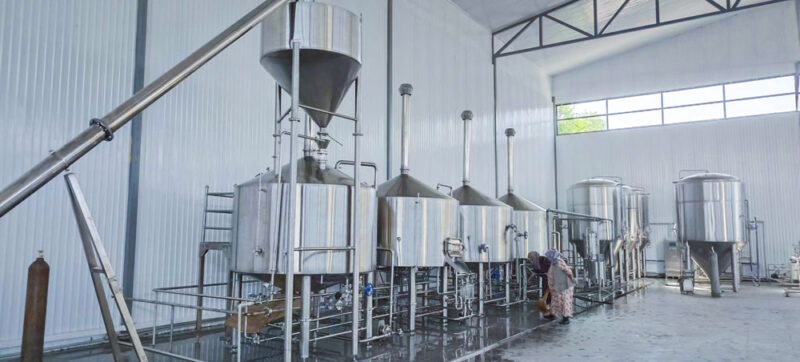
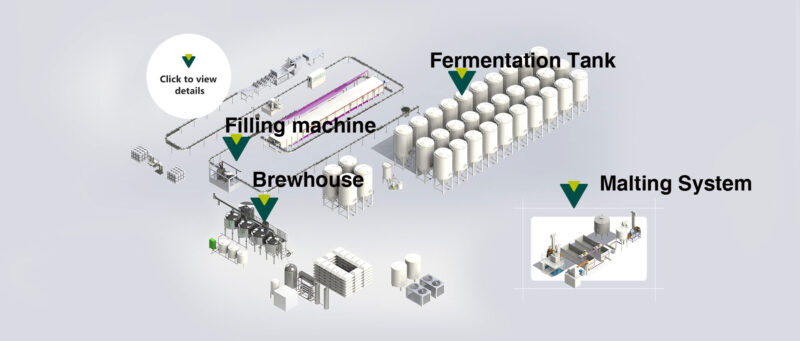
Brewing equipment breaks down into five subsystems, each with a specific role and a set of common equipment forms. Understanding what each subsystem does helps in evaluating whether a particular piece of equipment meets your needs.
The Five Subsystems
| System | Main Equipment | Function | Typical User Scale |
|---|---|---|---|
| Mashing | Mash tun, lauter tun, brew kettle, whirlpool | Converts malt starches into fermentable sugars, boils wort with hops | Home, bar, brewery |
| Fermentation | Fermentation tanks with cooling jackets, temperature control units, pressure regulators | Maintains conditions for yeast to convert sugars into alcohol and CO₂ | Home, bar, brewery |
| Cooling | Plate heat exchanger, chiller, insulated tanks | Rapidly cools wort after boiling, maintains fermentation temperature | Bar, brewery |
| Filtration | Plate filter, diatomaceous earth filter, membrane filter | Removes yeast residues and protein sediment, producing clear beer | Bar, brewery |
| Packaging | Filling machine, capping machine, labeling machine | Packages finished beer into bottles, cans, or kegs | Home, bar, brewery |
The mashing system is where the process begins. After malt is crushed, it mixes with hot water in the mash tun to convert starches into sugars. The wort then moves to the lauter tun, where solids are separated, and into the brew kettle for boiling with hops. A whirlpool at the end of boiling removes hop debris and protein sediment. For home brewers, a single vessel can handle all these steps. Bars and breweries typically use separate tanks, which increases flexibility and throughput.
Fermentation determines flavor and alcohol content more than any other stage. A good fermentation system maintains temperature within ±0.5°C for consistent yeast activity. Stainless steel conical fermenters dominate commercial settings because they allow easy sediment removal and pressurized transfers. Home brewers often use glass carboys or plastic buckets, which work fine for small batches but lack the durability and sanitation advantages of stainless steel.
Cooling is the subsystem most likely to be under-budgeted. After boiling, wort needs to drop from near 100°C to fermentation temperature in under 30 minutes to avoid contamination and excessive chill haze. Plate heat exchangers and immersion chillers are the standard tools. For small-scale setups, an ice bath works but struggles on warm days. Inadequate chilling causes more off-flavors than any other subsystem—a fact many brewers discover only after a batch smells like wet cardboard.
Filtration removes yeast and protein haze before packaging. Home brewers often skip this step or rely on cold crashing and siphoning. Bars and breweries use plate-and-frame filters or diatomaceous earth filters to achieve clarity. Membrane filtration is becoming more common in larger operations because it produces a longer shelf life without pasteurization.
Packaging ranges from manual bottle fillers for home brewers to automated canning lines for commercial breweries. The choice depends on how much volume you need to move and whether you are bottling, canning, or filling kegs. Draft systems in bars bypass packaging entirely and serve beer directly from kegs, which keeps oxygen exposure low.
Evaluating Quality and Budget Trade-Offs
Stainless steel conical fermenters can last 15 to 20 years with proper maintenance. Plastic buckets may need replacement every 2 to 3 years. That gap in lifespan illustrates the core trade-off in brewing equipment: upfront cost versus long-term reliability. For a home brewer experimenting with small batches, plastic buckets are perfectly adequate. They cost less than $50 and allow you to test recipes without a significant investment. But the material degrades over time. Scratches harbor bacteria, and plastic can absorb odors from previous batches. After a few cycles, cleaning becomes harder and contamination risk rises.
A small bar owner in a mid-sized city bought a cheap all-in-one brewing system without a cooling jacket. The system used a single plastic fermentation bucket and relied on ambient temperature for fermentation. For the first three months, the beer was drinkable—passable for a neighborhood bar. But as summer temperatures climbed, fermentation temperatures fluctuated wildly. The yeast produced esters and phenols that gave the beer a solvent-like aroma. Within eight months, regular customers started complaining. By month 12, the owner had replaced the entire system with a stainless steel conical fermenter equipped with a glycol cooling jacket. The cost of the replacement was three times the original investment, not counting the lost sales and wasted ingredients.
The lesson applies beyond fermentation. Automation features like digital temperature controls and automated valves add cost but reduce labor and improve consistency. Manual systems require constant attention during mashing and boiling. Automated systems let brewers focus on recipe development and quality control rather than turning valves every fifteen minutes.
Plate-and-frame filters offer a middle ground. They are more affordable than membrane filtration but still produce clear beer suitable for commercial sale. For a brewery producing under 500 barrels per year, a plate filter with reusable filter sheets is often the right choice. Above that volume, a diatomaceous earth filter or membrane system becomes more cost-effective over time because it handles higher throughput with less labor.
The material of fermentation vessels influences not just hygiene but also the ease of cleaning and sediment removal, which directly affects yield. Stainless steel conical fermenters have a sloped bottom that collects yeast and trub in a central dump port. Plastic buckets have flat bottoms that leave sediment spread across the surface, making it harder to harvest yeast for repitching and increasing the risk of autolysis. Brewers who start with plastic often abandon yeast harvesting entirely, which increases their ingredient costs over time.
Future-Proofing Your Brewery Investment
A brewery that grows from 3 barrels to 10 barrels can cost 40% less if the original equipment was designed for modular expansion. That number comes from comparing retrofit costs—adding tanks, upgrading the chiller, expanding the control system—against the cost of replacing everything from scratch. Brewers who plan for growth from the beginning save significant money and avoid production downtime.
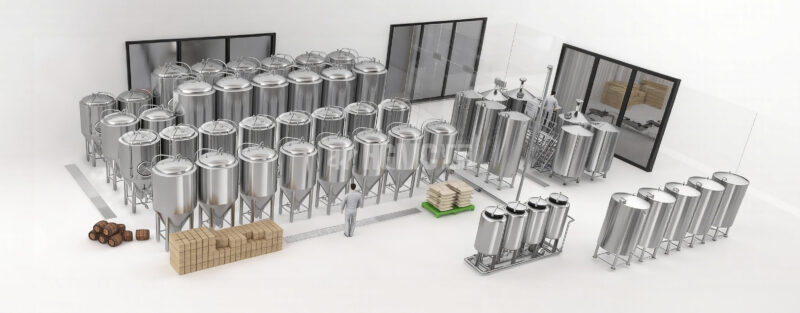
Modular brewhouse designs allow brewers to add new tanks without reconfiguring the entire setup. A 3-barrel system with a single fermentation tank can expand to three tanks by purchasing additional vessels and connecting them to the existing glycol loop and control system. The key is choosing equipment with standardized ports and fittings from the start. Non-standard tank connections force breweries to buy custom adapters or replace the entire plumbing.
Scalable cooling capacity is another consideration. A brewer who installed a 1-barrel system bought a small glycol chiller sized for two fermentation tanks. After six months, demand pushed production to four tanks. The chiller could not keep up. Fermentation temperatures rose, and the brewer had to pause production while a larger chiller was ordered and installed. The replacement cost was $4,000, and the brewery lost two weeks of production. Had the original chiller been sized with room for expansion, the upgrade would have been a simple addition rather than a full replacement.
Multi-tank configurations scale better than single-vessel systems. A two-tank setup allows one batch to mash while another boils, doubling daily output without doubling labor. As production grows, adding a third or fourth tank increases flexibility further. The brewhouse itself becomes a bottleneck only when the mash tun or brew kettle cannot keep up with demand. At that point, upgrading the brewhouse is unavoidable, but modular design delays that upgrade by years.
Control systems should also be chosen with growth in mind. A basic controller with manual valves works for a brewery running two tanks, but adding automation later requires rewiring and programming. Brewers who anticipate growth often invest in a programmable logic controller from the start, even if they only use a fraction of its capabilities initially. The extra cost upfront is small compared to the expense of retrofitting later.
FAQ
What is the minimum space needed for a home brewing setup?
A home brewing setup needs roughly 10 to 15 square feet of floor space for a 5-gallon system, plus additional countertop area for bottling and cleaning. A kitchen counter with a stove works for electric setups, but propane systems require outdoor ventilation.
Can I use home brewing equipment for a small commercial operation?
Home brewing equipment is rarely suitable for commercial use. Most local health regulations require stainless steel surfaces and separate tanks for mashing, boiling, and fermentation. A 5-gallon all-in-one system cannot produce enough volume to justify the licensing and inspection costs.
How often should I replace fermentation tanks?
Stainless steel conical fermenters last 15 to 20 years with proper cleaning and maintenance. Plastic buckets should be replaced every 2 to 3 years, or sooner if visible scratches or cloudiness appear. Glass carboys are durable but can break suddenly; inspect them for cracks before each use.
What is the most common mistake when buying brewing equipment?
Underestimating cooling capacity is the most common mistake. Many first-time brewers spend heavily on the mash and fermentation systems but buy a chiller that is too small. Inadequate cooling leads to temperature swings during fermentation, which produces off-flavors and reduces yield.
Do I need a filtration system for home brewing equipment?
Filtration is optional for home brewing . Cold crashing—cooling the beer to near freezing for 24 to 48 hours—causes most sediment to settle naturally. Siphoning the clear beer off the sediment produces acceptable clarity for most home brewers. Plate filters are only necessary if you are aiming for commercial-grade clarity or entering competitions.
