
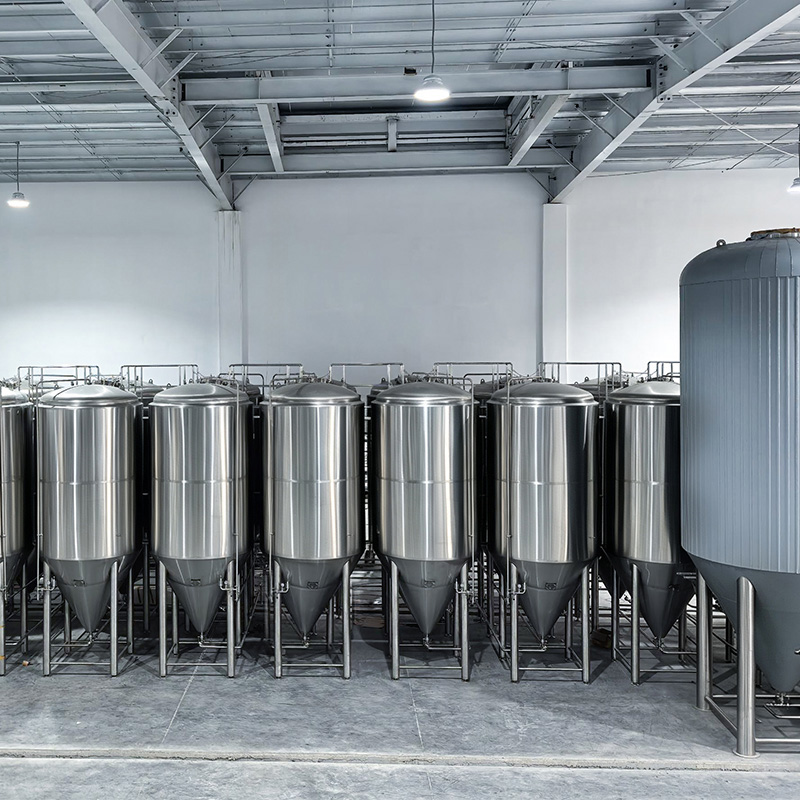
When a brewery grows from brewing a few barrels per week to several hundred, the manual habits that worked at small scale start to break down. Temperature drifts, timing errors, and inconsistent valve sequencing become regular headaches, and every batch feels like a gamble. The real value of automatic control isn’t a shiny touchscreen—it’s giving the brewer reliable tools to maintain quality across increasing volume without doubling the labor cost.
A brewery that attempted to scale without automation faced repeated stuck mashes, inconsistent bitterness in IPAs, and a 20% increase in cleaning downtime. After retrofitting with basic automatic valve sequencing and temperature control, batch variation dropped and brew-day length shortened by two hours. That kind of outcome doesn’t come from replacing the brewer’s judgment—it comes from giving that judgment better tools to execute on.
Why Automatic Control Becomes Essential as Production Grows
Imagine running a brewhouse where every mash temperature check depends on walking to the vessel, reading a dial, and adjusting a steam valve by hand. At five barrels per week, that’s manageable. At fifty barrels, the same process creates a constant interruption loop that pulls you away from other critical work.
The limits of manual brewing at higher output become visible quickly. Small mistakes compound: a 2°C overshoot during mashing alters enzyme activity, which changes fermentability, which shifts final gravity and attenuation. That chain reaction is hard to catch early when you’re juggling multiple vessels. Breweries that adopt automatic control often reduce batch-to-batch variation in original gravity to within 0.2°P—a level of consistency that manual methods struggle to maintain across a full production week.
| Stage | Manual Approach | Automatic Approach | Key Benefit |
|---|---|---|---|
| Mashing | Constant stirring and temp checks | RTD sensors + PID control | Stable enzyme activity |
| Lautering | Manual valve tweaks | Automated flow regulation | Fewer stuck mashes |
| Boiling | Timer and watch | Programmed hop addition sequence | Precise bitterness |
| Fermentation | Visual temp gauge | Automated glycol valve control | Consistent yeast performance |
| Cleaning | Manual pump and valve operation | Sequence-controlled CIP cycles | Reduced downtime |
Automatic control is a tool for the brewer, not a replacement. The decision-making—recipe design, ingredient selection, troubleshooting—remains the brewer’s domain. What automation handles is the repetitive execution that becomes error-prone under volume pressure.
What Automatic Control Actually Covers in a Brewery
When people hear automatic control, they often think only of a control cabinet with a touchscreen. But the ecosystem is broader. The physical components include temperature sensors and probes, control panels with recipe storage, valve actuation systems, pump controllers, level transmitters, and data recording hardware.
Temperature sensing relies on RTD probes rather than thermocouples in most brewhouse applications. RTDs offer better accuracy over the temperature range relevant to brewing—typically 0–100°C—and drift less over time. These feed into PID controllers that modulate heating or cooling outputs to maintain setpoints within fractions of a degree.
The control panels themselves vary by manufacturer. Allen-Bradley and Siemens PLCs are common in larger installations, while smaller systems may use purpose-built brewery controllers. The HMI touchscreen is where the brewer interacts with recipes, monitors live process data, and adjusts parameters. Recipe storage lets the system recall temperature ramps, hold times, and valve sequences for different beer styles without reprogramming.
Valve control systems typically use pneumatically actuated butterfly valves for main process lines and solenoid valves for smaller branches. Pneumatic actuation is preferred in wet environments because it avoids electrical components near wash-down areas. Electric actuation is quieter and simpler to install in dry zones but costs more per valve station.
A typical automated brewhouse uses 12–20 sensors and 6–10 actuated valves per process line. That covers mashing, lautering, boiling, whirlpool, and transfer to fermentation. The same infrastructure extends to cleaning logic—automatic control includes CIP sequences that route caustic, acid, and rinse water through vessels without manual hose connections.
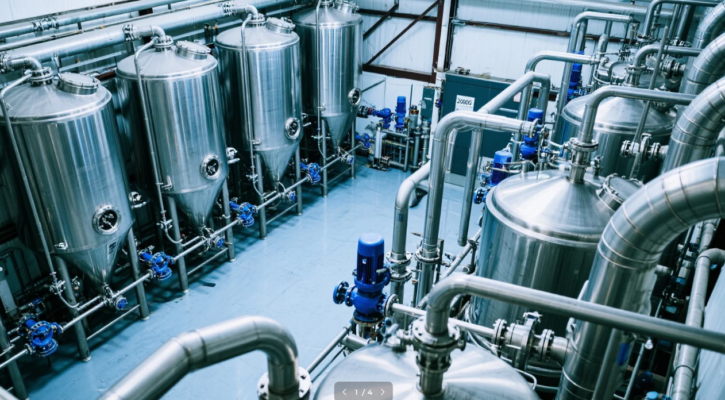
How Automatic Control Improves the Brewhouse
The brewhouse is where control makes the biggest first impression. This is the area breweries want to upgrade first because temperature and timing here determine the foundation of every batch.
Mash performance improves immediately. Automatic control can hold mash temperature within ±0.5°C of target for the full rest period. That stability matters for protein rest, saccharification, and mash-out. You’ll see fewer underpitching events caused by inconsistent wort composition, and the brewhouse becomes more predictable from one brew day to the next.
Lauter consistency benefits from automated flow regulation. Instead of manually tweaking a valve and watching the lauter tun sight glass, the control system ramps the run-off rate gradually. This prevents grain bed compaction and reduces the frequency of stuck mashes—a direct time saver during a busy production day.
Boil management becomes more precise. The system tracks kettle temperature and manages boil intensity through steam valve modulation. Hop additions are triggered at programmed times, eliminating the risk of forgetting a 60-minute addition while you’re troubleshooting a pump issue. Boil-off rate stays consistent, which helps maintain target original gravity.
Cooling and transfer sequence from whirlpool through the plate heat exchanger to the fermenter. The control system coordinates valve positions and pump speeds so that wort reaches the fermenter at the correct pitching temperature without manual intervention at each step. That reduces the chance of cold-side oxidation and inconsistent yeast health.
Why Cellar Control Matters Just as Much
Many breweries focus on the brewhouse, but the cellar is where beer becomes stable and saleable. The most immediate quality improvement from automation often comes from the cellar, not the brewhouse, because fermentation temperature swings are the leading cause of off-flavors.
Temperature stability in fermentation is critical. When a fermenter deviates by more than 1–2°C from target, yeast metabolism shifts. Higher temperatures produce more esters and fusel alcohols; lower temperatures slow attenuation and risk stuck fermentations. Automatic glycol valve control responds to real-time temperature readings, modulating cooling flow to hold the setpoint throughout the active fermentation period—often 4–7 days depending on style and yeast strain.
Tank monitoring at multiple levels gives operators visibility across the cellar. A brewery with ten or more tanks needs to know which are active, which are cooling, and which are ready for transfer or packaging. Automatic level indicators and temperature displays reduce the time spent walking the cellar with a clipboard. In a 10-tank cellar, automatic monitoring can cut tank idle time by 15–20% through better scheduling visibility.
Scheduling and tank turnover improves when fermentation and conditioning times are tracked automatically. The control system logs when each tank was filled, when active fermentation ended, and when crash cooling began. That data helps the production planner allocate tank capacity more efficiently, reducing bottlenecks during peak packaging periods.
Bright beer conditioning and carbonation control rounds out the cellar system. Pressure and temperature management during carbonation determines dissolved CO₂ levels and foam stability. Automatic control maintains those parameters across multiple tanks, so the bright beer leaving the cellar is consistent batch after batch.
Cellar automation often delivers the biggest workflow improvements after brewhouse. Brewers who implement it report fewer late-night emergency calls about runaway fermentation temperatures and more confidence in tank turnover planning.
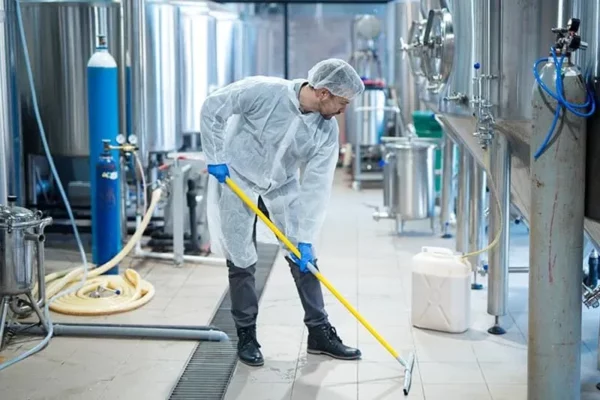
Cleaning Systems and the Quickest ROI of Automation
Cleaning is one area where automation shows the fastest payback, because it converts a labor-intensive, error-prone task into a repeatable night shift operation. In many breweries, cleaning consumes as much attention as brewing itself. A typical brew day ends with several hours of manual pump and valve operation to circulate cleaning chemicals through vessels.
Automatic pump and valve sequencing for CIP cycles changes that. The control system routes caustic solution at the correct temperature and contact time through each vessel, followed by acid and rinse cycles. Conductivity sensors verify chemical concentration and trigger diverter valves to return solution to holding tanks instead of sending it to drain prematurely.
The reduction in cleaning time is significant. Breweries often cut cleaning time by 30–40% after implementing automated CIP sequences. Instead of standing at a valve station for two hours at the end of the day, the brewer starts the cycle, walks away, and returns to a clean vessel ready for the next batch.
Automated cleaning frees up brewers for value-added tasks. That time can go toward recipe development, quality testing, or production planning—work that directly improves the brewery’s output and consistency.
But there is a tradeoff. Poorly designed CIP automation can recirculate soil if sensors fail or if the spray ball pattern is blocked by debris. A conductivity sensor that drifts out of calibration might end a caustic cycle early, leaving organic residue on surfaces. Manual oversight is still needed—visual inspection of vessels before the next brew, periodic sensor calibration, and occasional manual cleaning of spray balls. The system is reliable, but it is not watch-and-forget.
FAQ
Will automatic control make the brewer’s job obsolete?
No. Automatic control handles repetitive execution tasks, not the decisions that require experience and judgment. The brewer still designs recipes, selects ingredients, troubleshoots off-flavors, and manages the production schedule. Automation makes those decisions more effective by executing them consistently.
What is the typical investment range for adding automation to an existing brewery?
For a small brewery retrofitting valve actuation and temperature control on a 10-barrel brewhouse, costs typically start around $15,000–$25,000 for a basic system. A full cellar and CIP upgrade on a 30-barrel facility with multiple tanks can reach $80,000–$120,000. The payback period often falls between 12 and 24 months, driven by labor savings and reduced batch variation.
Can I automate only part of my brewery, like the CIP system, first?
Yes. CIP automation is one of the most common entry points because it offers fast ROI and can function independently. You can add brewhouse or cellar control later, and most control platforms support modular expansion without replacing the existing hardware.
How long does it take to train staff on an automatic control system?
Most operators become comfortable with basic operation—starting recipes, monitoring parameters, responding to alarms—within one to two days of training. Adjusting recipes and troubleshooting system behavior usually takes one to two weeks of hands-on experience. Manufacturers typically provide on-site training during commissioning and remote support afterward.
Does automation work for all beer styles, or can it limit flexibility?
Well-designed automatic control supports any beer style by storing multiple recipes with distinct temperature profiles, hop schedules, and fermentation curves. The brewer switches between recipes at the touchscreen. Flexibility is limited only if the system is designed without variable parameters—which is a design flaw, not a limitation of automation itself. Choose a platform that allows parameter adjustment rather than fixed programs.
