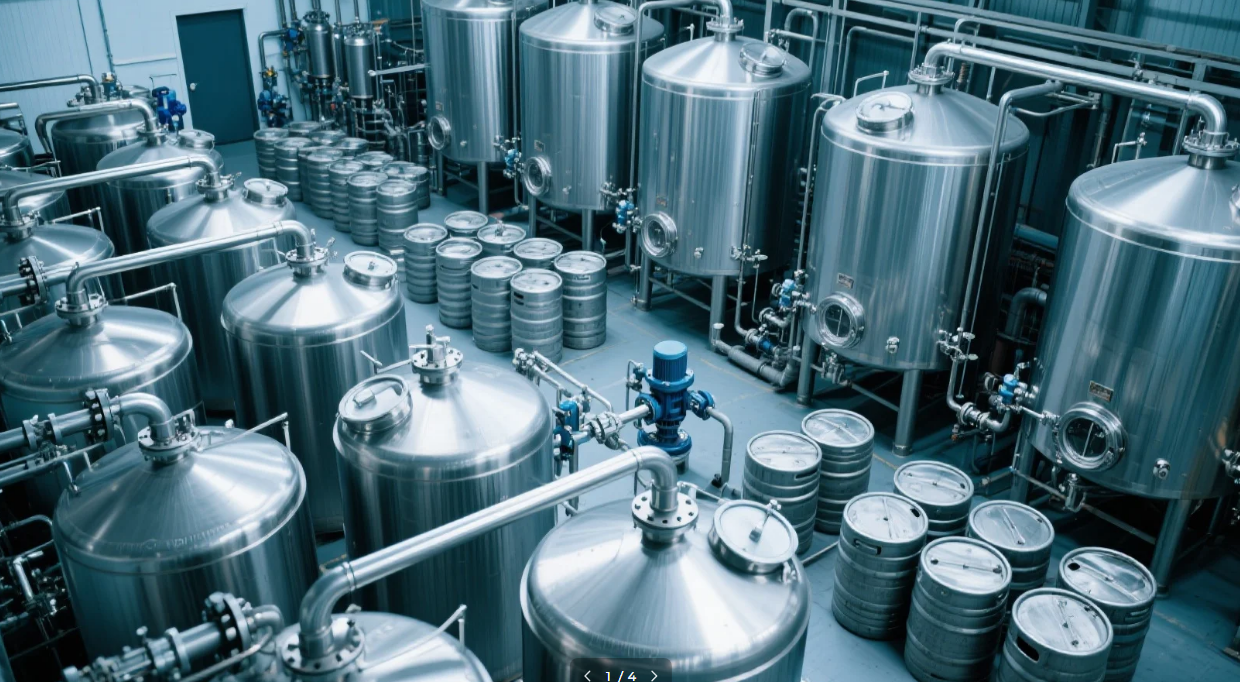
Many brewery projects start with the most visible equipment: a brewhouse and a group of fermentation tanks. The problems usually appear later. The glycol system is too small, the CIP system cannot reach every line, the packaging machine cannot keep up, or the building cannot accommodate the planned pipe runs and drainage. The equipment has already been purchased, but the production schedule was never workable.
A complete brewery system should be planned as one connected process from malt handling through packaged beer. The brewhouse, cellar, cooling, cleaning, utilities, controls, packaging, layout, and commissioning all need to support the same batch size and production rhythm. The capacity that matters is not only the amount of wort produced in a day, but how much saleable beer can move through the entire system without creating a queue at fermentation, cleaning, or packaging.
Define the Brewery System Before Selecting Equipment
A complete brewery system includes more than production vessels. It includes the brewhouse, fermentation tanks, bright beer tanks, CIP system, glycol cooling system, process pumps, valves, pipelines, instrumentation, PLC controls, utilities, layout, installation, commissioning, and operator training.
The system also includes the spaces and connections that allow those components to work together. A tank with the correct nominal volume is not useful if its outlet cannot drain properly, its temperature probe is positioned badly, or the glycol circuit cannot remove heat during the planned fermentation schedule. A pump may be correctly sized on paper but still cause problems if the pipeline layout creates excessive pressure loss or makes cleaning difficult.
The planning sequence should begin with the production model. A project team normally needs to define:
- Target beer volume, batch size, beer styles, brewing frequency, packaging format, available space, and expansion plans.
These decisions affect almost every equipment choice. A restaurant brewery producing several small batches for on-site service may value flexibility, compact dimensions, and quick recipe changes. A regional producer supplying kegs and cans may need longer production runs, more predictable transfer timing, larger utility capacity, and room for additional tanks.
A commercial brewhouse may use a 2-vessel, 3-vessel, or 4-vessel arrangement. That description alone does not define production capacity. It describes how mash, lauter, kettle, and whirlpool operations are divided and sequenced. Two systems with the same vessel count can behave very differently because of heating power, vessel volume, transfer timing, automation, and the number of people available to operate them.
An integrated system is different from disconnected purchases. With disconnected equipment, each machine may meet its own specification while the overall process contains gaps. The mill may not deliver grist quickly enough. The heat exchanger may be sized for a single batch but not for consecutive brews. The CIP skid may clean tanks but not the packaging lines. The packaging area may require utilities that were never included in the original building plan.
The process should be mapped from malt handling to wort production, fermentation, cleaning, cooling, packaging, and technical support before quotes are compared. This reveals the interfaces where projects usually become expensive: sanitary pipe connections, drain locations, control signals, glycol headers, steam distribution, compressed air, and access for maintenance.
A capacity plan should also show what happens after expansion. If the initial glycol chiller, electrical panel, or control cabinet has no spare capacity, adding fermentation tanks later may require shutting down the brewery for a major retrofit. Future expansion does not mean buying every component oversized. It means identifying which parts are difficult to replace after installation and reserving space, connection points, and utility capacity for them.
Match Malt Handling and Brewhouse Capacity to the Brewing Schedule
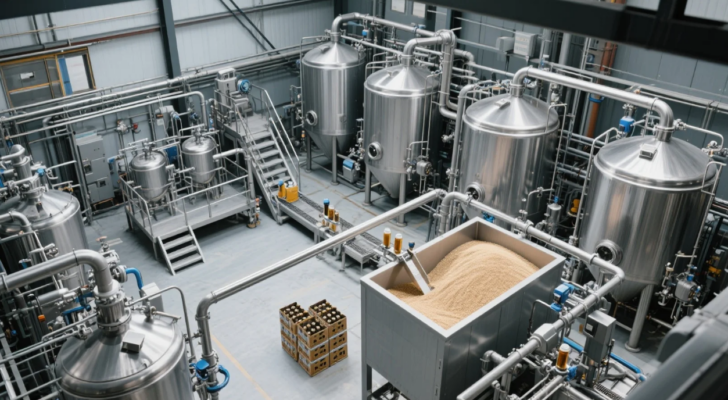
Malt handling is often treated as a small front-end purchase, but it can determine whether the intended brew schedule is physically possible. Milling affects grist particle size, husk integrity, extraction, lautering, and the clarity of wort moving toward fermentation.
A dry mill may be suitable for a conventional grist preparation workflow, while a wet mill may be selected for process-specific reasons involving mash conditions and husk handling. Either option may require grain conveying, weighing, storage, dust management, and a reliable grist delivery route to the mash tun. The mill must produce the required amount of grist within the time available before mashing, not merely match the nominal batch size.
A coarse grind can reduce extraction. An overly fine grind can slow lautering, compact the grain bed, and extend the hot-side schedule. That delay may seem minor on one batch, but it becomes a recurring constraint when the brewery is expected to run multiple brews per day. The mill and brewhouse therefore belong in the same scheduling calculation.
The brewhouse usually contains several functional stages. The mash tun provides the vessel for converting malt starches into fermentable sugars. The lauter tun separates sweet wort from spent grain. The kettle handles boiling and hop additions, while the whirlpool separates trub and hop solids after boiling. These stages are supported by hot liquor tanks, cold liquor tanks, wort pumps, heat exchangers, process piping, valves, platforms, and a heating system.
The vessel arrangement changes how these operations overlap. A compact 2-vessel system can reduce footprint and may suit a small-batch brewery that needs flexibility more than maximum throughput. It can also require more careful scheduling because some functions share equipment or cannot proceed simultaneously. A 3-vessel or 4-vessel system can separate more operations and support a more continuous workflow, but it usually demands additional floor space, piping, controls, and capital.
The choice between steam heating and electric heating is similarly tied to the site rather than preference alone. Steam heating may require a boiler, fuel supply, water treatment, ventilation, and compliance measures. Electric heating can simplify some installations but may require substantial electrical service and affect peak-load planning. The heating method also influences control response, installation work, and operating cost.
Wort can be produced by the brewhouse in a matter of hours, while fermentation and later stages require substantially longer residence time. That creates a common planning error: the hot side is sized around the desired daily brew count, but the rest of the brewery is sized around the equipment purchase budget.
Public brewery benchmarking, including the annual production measures used in Brewers Association reporting, tends to describe output as yearly beer volume rather than by vessel count. That distinction matters. A stated annual volume does not show whether the brewery reaches it through one brew per day, several brews on selected days, longer fermentation, or a large packaging operation. The schedule behind the volume is what determines the required mill throughput, hot liquor storage, brewhouse arrangement, and labor pattern.
A practical capacity model should track the time required for grist preparation, mash-in, lautering, boiling, whirlpool, cooling, cleanup, and changeover. If the brewhouse can finish wort faster than the cellar can receive, cool, and ferment it, additional hot-side capacity will not improve finished beer output. It may only create more waiting time and more cleaning pressure.
Size Fermentation, Cooling, and Cleaning Around Real Production Time
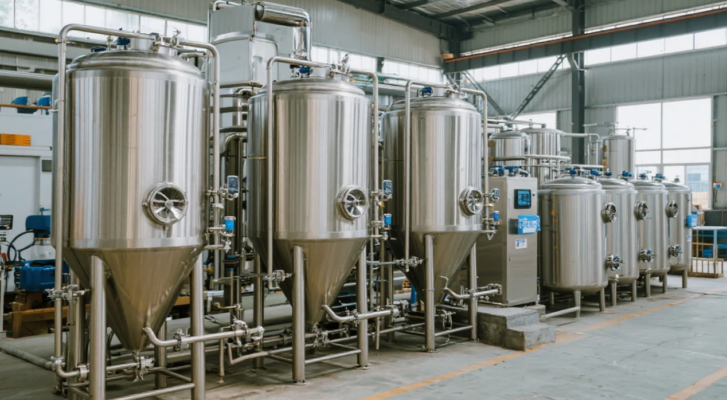
The cellar often becomes the limiting area even when the brewhouse has sufficient output. Wort production takes hours; beer then needs time to ferment, mature, clarify, carbonate, and prepare for packaging. Fermentation tanks and bright beer tanks must be sized around that residence time, not around the length of a brewhouse shift.
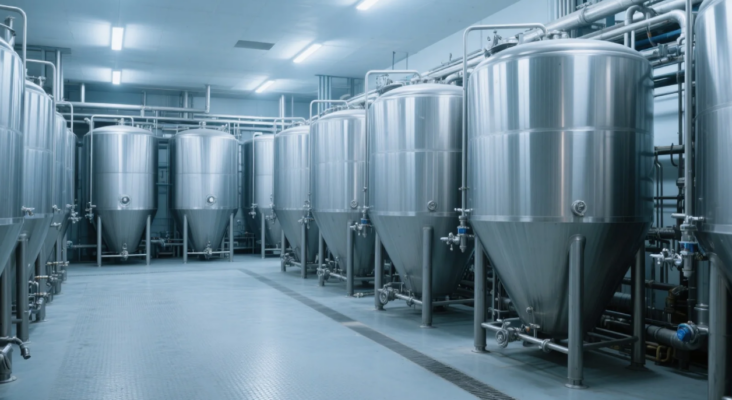
Fermentation tanks provide controlled temperature and pressure conditions for yeast activity. Their quantity and volume depend on brewhouse batch size, the number of brews per week, fermentation and maturation time, beer styles, and the desired continuity of production. A brewery making slow-maturing beers needs a different tank plan from one producing fast-turnaround beers. A mixed portfolio can be more difficult than a single-style operation because tanks may remain occupied for different durations.
Bright beer tanks create another capacity requirement. They may be used for clarification, carbonation, blending, holding, and packaging preparation. If every fermentation tank must remain occupied until packaging is available, the cellar needs more working volume. If bright beer tanks are added without enough packaging capacity, they become storage buffers rather than production-enabling vessels.
One brewery purchased its main brewhouse and fermentation tanks first, expecting to begin regular production within a few months. During commissioning, the glycol cooling system could not remove heat at the planned fermentation load, and the CIP coverage did not reach several process lines without manual hose work. The project team then found that the packaging area had insufficient drainage and that the available electrical service could not support the planned combination of heating and cooling equipment.
The consequence appeared about six months after the equipment order, when the brewery began trying to maintain its intended schedule. Wort production continued, but tanks had to be held at reduced loading, cleaning took longer than planned, and packaged beer was delayed behind the cellar. The brewhouse was not the bottleneck. The brewery had committed to hot-side capacity without committing to a complete operating path.
Cooling capacity needs to be evaluated in terms of heat load, temperature targets, tank turnover, ambient conditions, and simultaneous operations. Glycol cooling must support fermentation tanks, bright beer tanks where applicable, and any other cold-side users connected to the system. Temperature control is not simply a matter of installing a chiller with a nominal refrigeration rating. The distribution header, pump, insulation, sensors, valves, and control logic all affect whether tanks hold their setpoints.
An under-sized glycol system can create a subtle production regression. The brewery may complete fermentation on one tank while several others warm slowly during a busy period. The dashboard still shows equipment running, but fermentation timing drifts, yeast behavior changes, and packaging dates move. Operators may respond by reducing batch frequency, which hides the cooling problem while lowering actual output.
CIP cleaning system coverage should be mapped against every tank, line, pump, heat exchanger, filler, and transfer path. Cleaning access depends on spray devices, flow velocity, chemical concentration, temperature, return routing, and the ability to drain completely. A tank CIP cycle does not automatically clean the downstream pipeline that carried beer from that tank to a bright beer tank.
The cleaning schedule also competes with production. If a brewhouse is expected to run again shortly after a transfer, the CIP system must provide adequate flow and recovery time without forcing operators to choose between cleaning one area and preparing another. Manual cleaning can be workable at small scale, but the labor requirement may become the unrecorded limit as tank count and packaging frequency grow.
Connect Utilities, Packaging, Controls, and Project Support
Utilities should be planned with the process equipment, not after the equipment list is finalized. Water supply affects brewing, cleaning, steam generation, and product quality. Heating may require steam or electric service. Refrigeration, compressed air, drainage, ventilation, and electrical distribution must be coordinated with the actual operating sequence.
Drainage is particularly easy to underestimate. A brewery can have adequate water and heating capacity but still lose time because floor drains are too small, badly positioned, or unable to handle hot cleaning discharge. Packaging areas generate their own washdown and wastewater patterns. Tank foundations, pipe slopes, access routes, and hose management also affect whether the floor can be cleaned safely between production runs.
Pumps, valves, pipelines, fittings, and instrumentation form the connections between process stages. Their arrangement affects transfer time, product loss, oxygen pickup, cleaning performance, and maintenance access. A short pipeline is not automatically better if it cannot drain or if operators must disconnect sanitary fittings repeatedly to change the flow path.
Controls are usually selected at three broad levels: manual, semi-automatic, or PLC-based. Manual controls may suit a small operation with experienced operators who need direct process visibility. Semi-automatic controls can reduce repetitive valve and pump actions while retaining operator decisions. PLC-based controls can coordinate recipes, temperatures, pump sequences, alarms, and records, but they also introduce configuration, sensor calibration, software maintenance, and training requirements.
Automation can create its own failure mode. During one commissioning period, a temperature probe was reading correctly at the vessel but was mapped to the wrong input in the control logic. The operator followed the displayed value, while a separate handheld check showed that the tank was several degrees away from the intended condition. The issue was corrected, but the incident delayed commissioning because the team had initially treated the control screen as proof that the process was operating correctly.
Packaging should be matched to cellar output and sales channels. Keg filling may fit a draft-focused business, while bottle filling or can filling adds requirements for rinsing, filling, seaming or crowning, labeling, coding, inspection, and finished-goods handling. A fast can filler does not improve brewery output if bright beer tanks are occupied or the packaging room cannot accept the discharge rate.
The layout should show raw material movement, hot-side traffic, tank access, cleaning routes, packaging flow, finished beer storage, and maintenance clearance. Installation drawings need to account for equipment delivery, lifting, foundations, utility drops, sanitary connections, and future tank positions. Commissioning should include water trials, leak checks, pump direction checks, sensor verification, control sequence tests, cleaning validation, and product trials.
Operator training is part of the system because production reliability depends on how people use it. Training should cover normal operation, recipe changes, alarms, CIP cycles, emergency shutdown, sampling, transfer procedures, and basic troubleshooting. Technical support is most useful when drawings, tag numbers, control descriptions, spare-parts lists, and commissioning records are available rather than relying on informal explanations after a fault occurs.
Optional systems should be added according to the process. Filtration may be useful for a specific clarity target or packaging requirement. Centrifugation can reduce solids load in some workflows. Yeast propagation may support a larger or more frequent fermentation schedule. CO₂ recovery may become practical where gas use and production volume justify the additional equipment. None of these systems should be treated as universal requirements before the beer styles, output, utilities, and operating costs are understood.
A system can be expanded more cleanly when the original design reserves floor space, glycol connections, control capacity, and pipeline routes. Expansion planning is less about predicting the exact future and more about avoiding irreversible choices that make a second phase disruptive.
FAQ
What equipment is normally included in a complete brewery system?
A complete system normally includes malt handling, a brewhouse, hot and cold liquor storage, wort cooling, fermentation tanks, glycol cooling, CIP cleaning, pumps, valves, pipelines, controls, packaging equipment, and site utilities. It may also include bright beer tanks, filtration, centrifugation, yeast propagation, or CO₂ recovery when the process requires them. The full scope should also cover layout, installation, commissioning, and operator training.
How should a brewery choose between a 2-vessel, 3-vessel, and 4-vessel brewhouse?
The choice should follow batch size, brewing frequency, available space, recipe requirements, labor, and the amount of overlap required between mash, lauter, boil, and whirlpool operations. A 2-vessel system can suit compact small-batch production, while 3-vessel and 4-vessel arrangements may support more separated and repeatable workflows. The vessel count should be evaluated with mill throughput, heating, liquor storage, and cleaning time.
Why can fermentation tank capacity limit production?
Fermentation tanks remain occupied for much longer than the brewhouse takes to produce wort. If fermentation, maturation, or clarification takes several days or longer, the cellar can fill while the brewhouse is still available. Production then slows at the tank stage, even though the hot side could make another batch.
What utilities must be planned before brewery equipment is installed?
The project should plan water supply, steam or electric heating, refrigeration, glycol cooling, compressed air, drainage, electrical service, ventilation, and wastewater handling. Utility loads should be calculated for simultaneous operations such as brewing, CIP cleaning, fermentation cooling, and packaging. Drain locations, pipe routes, access, and future connection points should be included in the installation drawings.
When are bright beer tanks, filtration, or CO₂ recovery systems needed?
Bright beer tanks are useful when beer needs separate time for carbonation, clarification, blending, holding, or packaging preparation. Filtration is process-dependent and should match the desired beer appearance and stability requirements. CO₂ recovery becomes more relevant when production volume and gas consumption justify the added collection, purification, storage, and safety equipment.
