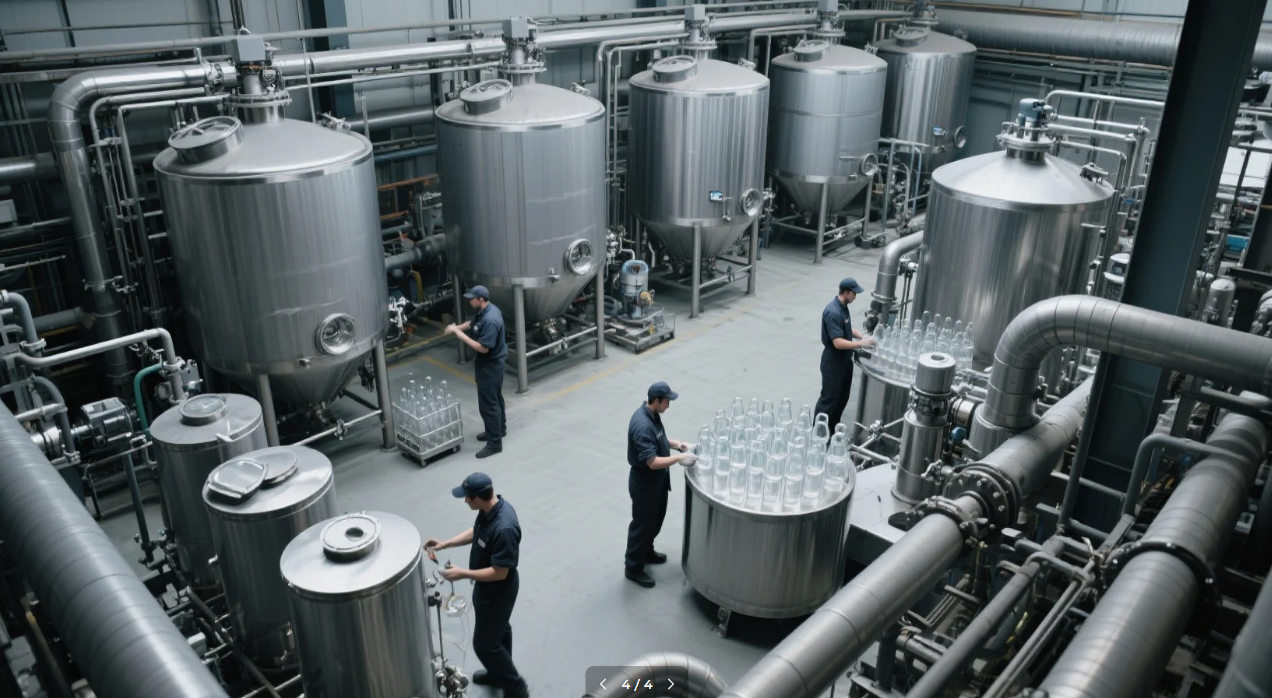
A growing brewery can lose hours without any single task looking large. Staff check tank temperatures, adjust valves, coordinate wort transfers, start and stop pumps, verify cleaning cycles, and move between the brewhouse and packaging area to resolve small interruptions. As tank count and packaging volume increase, those checks begin competing with recipe work, quality control, maintenance, and production planning.
An automatic beer factory solution changes the economics only when it connects the work that is creating the bottleneck. It is not mainly a headcount-reduction project. It can reduce repetitive intervention, process variation, water use, cleaning effort, and avoidable production losses, but the result depends on system design, operator training, maintenance capability, and the brewery’s existing equipment.
An automatic beer factory solution lowers operating pressure by linking brewhouse production, fermentation and cellar management, cleaning, and packaging into one monitored workflow. It can sequence pumps and valves, hold temperature targets, record process data, and trigger alarms while trained staff retain control over recipes, quality decisions, and exceptions. The largest gains usually come from removing repeated manual checks rather than removing experienced brewery employees.
What an Automatic Beer Factory Solution Actually Connects
An automatic beer factory solution is an integrated production system, not a single automated machine placed beside a manual brewery. It connects controls, sensors, pumps, valves, tanks, utilities, and packaging equipment so that information and process commands move between production stages.
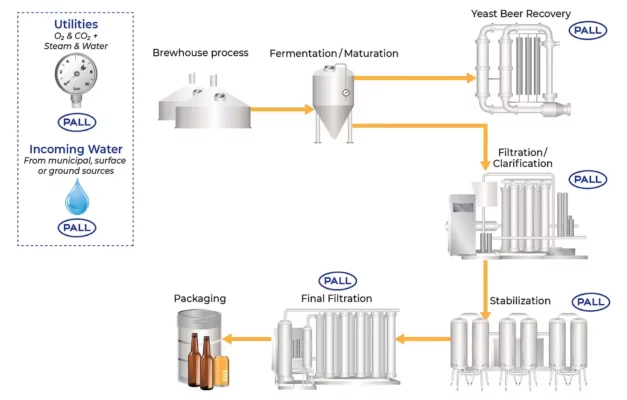
The connected flow may begin with malt handling and grain transfer, continue through the brewhouse, and extend into fermentation tanks, the CIP system, and the packaging line. Depending on the project, it can include bottle filling, can filling, or keg filling, along with the utilities required to keep those areas operating. A brewery may automate only part of this chain, but the design should account for how each stage affects the next one.
At least four core operating areas need to be considered together:
- Brewhouse production
- Fermentation and cellar management
- Cleaning and CIP
- Filling and packaging
In the brewhouse, a PLC control system can receive temperature and level signals, operate pumps, sequence valves, and move a recipe through programmed steps. A touchscreen interface gives the operator a live view of temperatures, tank levels, pump status, valve positions, and active alarms. The control panel does not decide whether a recipe is good; it executes the defined process more consistently.
Recipe management becomes useful when the brewery has repeatable production targets. Mash temperature steps, water volumes, transfer paths, boil timing, and cooling targets can be stored and adjusted by authorized operators. Process data logging then creates a record of what happened rather than relying on handwritten notes made during a busy brew day.
The same principle applies in the cellar. Fermentation tanks can report temperature and pressure conditions, while glycol cooling responds to defined setpoints. The hot water system can be coordinated with brewhouse demand and cleaning requirements rather than operated as an entirely separate utility. Alarms can identify a failed pump, abnormal temperature, or tank condition before the operator discovers the problem during a physical walk-through.
Packaging is where disconnected automation often becomes obvious. A brewhouse may have accurate controls, but if the packaging line still depends on manual transfers, uncertain tank availability, and last-minute coordination between operators, the brewery has not created a connected production flow. Bottle filling, can filling, and keg filling each have different speed, pressure, changeover, and quality requirements. The control system needs to reflect those differences instead of treating packaging as an afterthought.
A PLC can read inputs in scan cycles measured in milliseconds, but that does not mean the beer process responds instantly. Glycol cooling, fermentation, CIP circulation, and tank pressure all have physical lag. Operators still need sensible alarm delays and escalation rules; otherwise, the touchscreen fills with alarms that are technically correct but operationally useless.
The distinction matters because a collection of isolated automated machines can increase operator work. Staff may end up switching between several interfaces, confirming the same status in different places, and manually reconciling production records. Connected control should reduce that friction while preserving brewer control over recipes and quality targets.
Where Automation Reduces Brewery Labor
The clearest labor opportunity is not a fixed percentage reduction in staffing. It is the removal of repeated interventions that prevent skilled people from using their time well. Three recurring work zones usually provide the clearest starting point: the brewhouse, the cellar, and cleaning.
During mash-in, a semi-automated setup may still require an operator to open valves, start pumps, verify water volumes, and watch each temperature step. A PLC-based brewhouse can manage water dosing, mash temperature steps, pump operation, valve sequencing, wort transfer, boil timing, and process alarms. The operator remains responsible for checking the process and responding to exceptions, but does not need to stand beside the brewhouse for every programmed transition.
That difference is important on a long brew day. A brewer can review the mash profile, inspect the wort, prepare the next recipe, or resolve a quality issue while the control system handles a known sequence. If a transfer stalls because a valve fails to open, an alarm should bring the operator back into the process. Automation is doing the routine work, not removing the need for judgment.
The cellar often creates a larger hidden workload. With a few fermentation tanks, an operator can walk from vessel to vessel and record temperatures manually. With several dozen tanks, those checks become a recurring shift obligation, and temperature changes may be discovered after the ideal response window has passed.
Centralized monitoring allows an operator to review fermentation temperature control across multiple vessels from one interface. Individual setpoints can be managed through glycol cooling, while pressure management and carbonation control can be handled within defined operating limits. The system can also flag a tank that is cooling unusually slowly, losing pressure, or approaching a condition that requires inspection.
That does not replace cellar experience. A process alarm cannot identify every flavor problem, yeast behavior issue, or contamination risk. It can, however, reduce the time spent walking to confirm conditions that have not changed. The saved time can be redirected toward sampling, sensory evaluation, yeast management, quality assurance, and production planning.
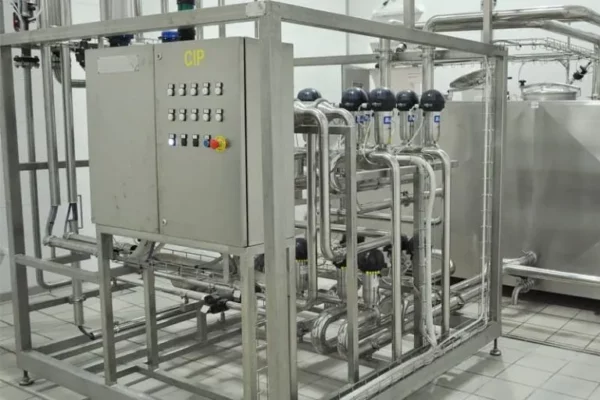
CIP circulation is another practical target. Manual cleaning often involves repeated valve adjustments, timing checks, temperature verification, chemical handling, and decisions about when a cycle is complete. An automated CIP sequence can control circulation time, pump operation, cleaning steps, and temperature targets. It can also make the procedure more consistent between tanks and between shifts.
The non-obvious effect is that CIP automation changes several jobs at once. It affects cleaning labor, product quality, chemical exposure, water consumption, and production turnaround. A shorter or more repeatable cycle may allow a tank to return to service earlier, but only if the cleaning result is verified. A poorly designed sequence can create the appearance of speed while leaving dead legs, shadowed surfaces, or insufficient contact time.
Experienced operators remain necessary for startup, changeovers, troubleshooting, maintenance, and quality decisions. Maintenance staff also become more important because sensors, actuators, network connections, and control panels now influence the production schedule. A brewery that automates routine operations but does not have spare parts, calibration procedures, or trained support may simply trade manual labor for technical downtime.
Which Operating Costs Change Beyond Payroll
Labor is one of five cost areas that should be reviewed together:
- Labor
- Product and process losses
- Water
- Cleaning chemicals
- Utility use
Process control can reduce avoidable variation in mash temperatures, wort transfers, fermentation conditions, and cleaning procedures. That may reduce rework, off-specification product, overfilled packages, or beer lost during transfers. The result is not guaranteed, and it is often difficult to isolate because recipe changes, raw material variation, and packaging performance affect the same numbers.
CIP automation deserves separate measurement. A brewery should record water volume per cycle, chemical dosage, cycle duration, rinse time, operator hours, and the number of failed or repeated cleanings. In some facilities, the largest gain is not lower chemical consumption. It is the reduction in production delays caused by inconsistent cleaning or by waiting for an operator to complete a manual sequence.
Water and chemical savings also depend on how the system is programmed. A fixed-duration rinse may run longer than necessary for one vessel and not long enough for another. Conductivity, temperature, flow, and return conditions can help operators make better decisions, but additional sensors and control logic increase commissioning and maintenance requirements. More instrumentation is not automatically better if nobody checks its calibration.
Utility coordination creates another operating tradeoff. Glycol cooling, hot water, pumps, steam or electric heating, compressed air, and packaging equipment may all compete for capacity. A control system can coordinate demand and record process data, but it cannot compensate for an undersized chiller or a hot water system that cannot recover between batches.
Production scheduling becomes more predictable when temperature, transfer, and cleaning procedures are repeatable. A cellar manager can estimate when a tank will be ready for packaging with more confidence, while the packaging team can plan changeovers around actual tank status rather than informal messages. Still, the schedule should retain room for fermentation variability, maintenance, and quality holds. A rigid automated schedule can make a late tank more disruptive, not less.
The financial benefit may therefore appear as capacity gain rather than a direct reduction in the monthly payroll. If one operator can supervise more tanks or more simultaneous process steps, the brewery may increase annual output without increasing labor at the same rate. That only works when the additional capacity does not create a queue at filling, cold storage, quality testing, or dispatch.
Automation can also increase total cost. Oversized equipment, proprietary controls, unused software functions, poor integration, and weak maintenance planning can erase recurring savings. A brewery may spend less time opening valves but more time waiting for a specialist to troubleshoot a communication fault. Process alarms that are not prioritized can cause operators to ignore the one alarm that matters.
In practice, the useful comparison is between measured friction before and after commissioning: operator hours per brew, manual interventions per CIP cycle, water per cleaned vessel, chemical use, unplanned downtime, product loss, and batches completed per shift. A dashboard that reports dozens of tags is not evidence of savings unless those tags support decisions.
How to Select the Right Automation Level Before Expansion
Automation should be selected against the brewery’s production plan, not against a catalogue of functions. Before choosing equipment, six planning inputs should be documented: brew length, annual output, staffing plan, packaging format, available utilities, and expansion goals.
Brew length and annual output determine whether the brewery needs repeatable brewhouse sequencing, faster cellar monitoring, or simply better records. The staffing plan determines whether operators will supervise multiple processes or remain assigned to individual stations. Packaging format affects pressure control, filling speed, changeover time, and the amount of coordination required between bright beer tanks and the packaging line.
Facility utilities need the same level of attention. Glycol cooling capacity, hot water recovery, electrical supply, compressed air, drainage, and wastewater handling can limit the benefit of automation. If these systems are not included in the early design, the control panel may accurately report that a process cannot proceed without being able to fix the underlying constraint.
A semi-automatic control panel may be appropriate when the brewery has a small production team, limited batch repetition, or operators who need direct control over each step. It can provide pump and valve controls, basic temperature displays, and selected interlocks without requiring a large programming and training effort.
PLC-based touchscreen control becomes more useful when recipes repeat, tank count is increasing, and operators need centralized monitoring. It can manage alarms, process data logging, and recipe management across a defined portion of the brewery. The brewery still needs to decide which actions remain manual and which should be interlocked.
An integrated brewery and packaging automation system makes sense when production flow, cellar capacity, CIP, and packaging volume are all creating coordination problems. It has more potential to reduce repeated work, but it also has more points of failure, more commissioning work, and more dependence on accurate equipment documentation.
| Automation level | Typical functions | Best fit | Main operational tradeoff |
|---|---|---|---|
| Semi-automatic panel | Pump, valve, and temperature controls | Smaller or flexible breweries | Lower complexity, more operator intervention |
| PLC-based brewhouse control | Recipes, sequencing, alarms, data logging | Repetitive brewing with growing cellar capacity | Training and maintenance become more important |
| Integrated brewery and packaging automation | Brewhouse, cellar, CIP, utilities, and packaging coordination | Larger or expansion-focused operations | Higher commissioning effort and integration cost |
The sequence of planning matters. In one brewery expansion, equipment and utility decisions were fixed first, and automation was added afterward. During the first weeks of commissioning, the controls did not match the actual transfer routes, tank monitoring expectations, or packaging handoffs. Operators had to confirm steps in multiple places, some programmed sequences required extra manual intervention, and production staff spent more time supervising the new system than they had expected.
The problem lasted through the early production period and pushed several scheduled runs back while the integrator revised logic and alarm settings. The brewery eventually kept parts of the system and abandoned other automated sequences because the additional complexity was not justified by the workload they removed. The consequence was not a dramatic machine failure; it was a slow increase in operator effort and upfront cost caused by choosing controls after the workflow had already been decided.
Commissioning should therefore be treated as part of the production design. Operators need to test normal runs, empty-tank conditions, interrupted transfers, utility shortages, sensor failures, recipe changes, and emergency stops. Maintenance staff should review access to valves, sensors, pumps, control cabinets, and replacement parts. Training should cover not only touchscreen operation but also what the operator should do when a sequence pauses halfway through.
A brewery considering expansion should map the process from malt handling to packaging before selecting individual functions. That map should show where operators walk, where information is duplicated, where tanks wait, and where a failed step creates a production delay. Automation can then be assigned to actual bottlenecks rather than purchased as a collection of impressive but lightly used features.
FAQ
Does brewery automation eliminate the need for experienced brewers?
No, it removes repetitive process intervention rather than brewing judgment. Experienced brewers still manage recipes, sensory evaluation, quality decisions, exceptions, and production planning; during commissioning, they may spend several weeks validating sequences and alarm behavior.
Which brewery tasks are usually the first candidates for automation?
Brewhouse sequencing, centralized fermentation monitoring, and CIP circulation are usually early candidates. These three work zones contain repeated temperature checks, valve operations, pump actions, and timing decisions that occur across every brew day or cleaning cycle.
Can automation reduce cleaning time and water use?
Yes, but only when the CIP sequence is designed and verified for the actual tanks and piping. The brewery should compare water volume, chemical dosage, cycle duration, and failed cleanings over at least several weeks rather than assuming that a shorter programmed cycle is a cleaner one.
Is a fully automated brewery always more cost-effective than a semi-automatic system?
No, a fully automated system can cost more overall when the brewery has low batch repetition, limited technical support, or utilities that cannot support the intended output. A semi-automatic system may deliver better operating results when direct operator control is still useful and the expansion plan is uncertain.
What should a brewery assess before choosing an automation level?
It should document brew length, annual output, staffing, packaging format, utilities, and expansion goals before selecting controls. It should also estimate commissioning time, operator training, maintenance coverage, spare parts, and the effect of a control failure on the production schedule.
