
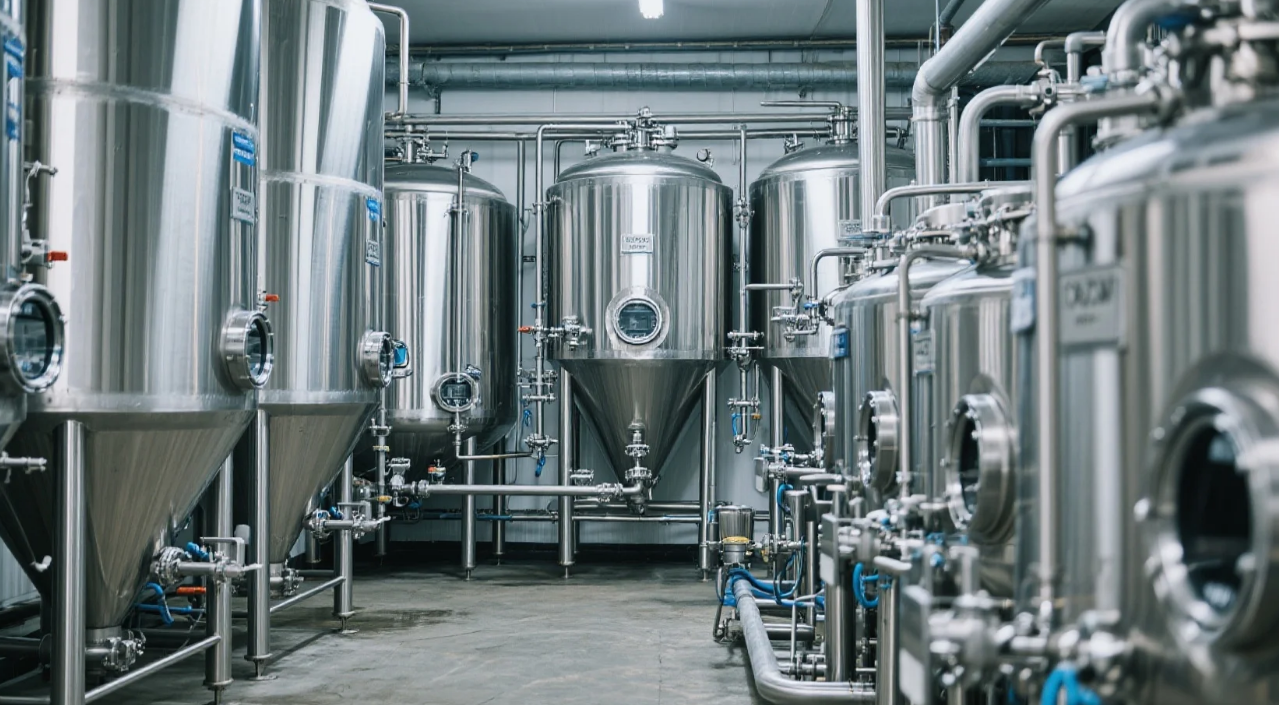
A flagship beer can drift even when the recipe sheet has not changed. One shift may mash in two degrees too hot, another may open the lautering valve faster, and a third may cool wort to a slightly different temperature before sending it to the fermentation tanks. None of those errors looks dramatic on its own. After several batches, however, customers may notice a different flavor profile, weaker alcohol level, altered carbonation, or a shorter shelf life.
Automatic brewery equipment helps by turning an approved brewing process into a repeatable sequence of measured actions. It does not replace brewing judgment or solve unstable malt, inconsistent yeast, or poor cleaning. Its practical value is that it gives operators a process baseline, records what happened, and makes deviations easier to find before an entire production run is packaged.
For commercial breweries, consistency is not identical beer by accident. It is the ability to hold defined targets across the brewhouse, fermentation, cleaning, and packaging while still allowing a brewer to intervene when raw materials or product conditions require a change.
Why Batch Consistency Breaks Down in Commercial Brewing
Batch consistency is usually discussed as though it were one measurement. In production, it is a group of targets. Six core consistency targets should be tracked: original gravity, flavor, alcohol, carbonation, clarity, and packaging quality. A beer can hit its original gravity and still fail because oxygen entered during filling, fermentation finished too warm, or carbonation was inconsistent across the package run.
Variation often develops across several stages rather than from one obvious fault. During mash-in, a small change in water volume or liquor-to-grist ratio changes the concentration of the mash. A mash temperature that starts one or two degrees away from the approved profile can affect enzyme activity, fermentability, body, and extract performance. If the rest time is shortened because the next vessel is waiting, the effect may not become obvious until the beer reaches fermentation.
Lautering adds another layer. A faster runoff can pull wort differently from a slower runoff, particularly when the grain bed is not behaving the same way. The operator may compensate by adjusting a valve manually, but that adjustment is rarely recorded with enough detail to explain a later change in original gravity. A transfer that starts ten minutes late can also alter the timing of boiling, hop additions, and wort cooling.
Wort cooling creates a similar problem. If the wort enters a fermentation tank at a different temperature, the yeast sees a different starting condition even when the yeast pitch rate is unchanged. Fermentation temperature and pressure then determine how quickly the beer attenuates and which flavor compounds remain. The finished alcohol level, clarity, and flavor profile may all move together, making it difficult to identify which stage first departed from the process.
Cleaning and filling operations are often treated as separate from brewing consistency, but they affect what the customer receives. Inconsistent cleaning procedures can leave residues, create microbiological risk, or change the condition of hoses and lines between batches. At the filling line, unstable pressure, variable package temperature, or poor timing between upstream production and packaging operations can increase dissolved oxygen and foaming. The beer may have been brewed correctly and still leave the brewery with inconsistent packaging quality.
One documented failure pattern involves a six-batch run in which the recipe, malt lot, and yeast generation stayed unchanged. During the first two batches, mash-in temperature was recorded manually. On the third and fourth batches, the transfer began later because an operator was completing a cleaning step on another vessel. The wort reached fermentation tanks approximately 12 minutes later and at a slightly different temperature. By the sixth batch, the quality-control team found a measurable difference in original gravity and a softer flavor profile. The consequence was not only rework; the team had to review handwritten logs, repeat laboratory checks, and delay packaging while trying to separate process variation from yeast performance.
That kind of investigation consumes more than laboratory time. It affects customer confidence when a regular beer tastes different, complicates production scheduling when a tank cannot be released on time, and raises product costs through reblending, disposal, extra testing, or delayed filling. Automation does not remove the risks created by raw materials, recipe changes, yeast health, or poor procedures. It reduces the number of repeatable process differences that have to be investigated.
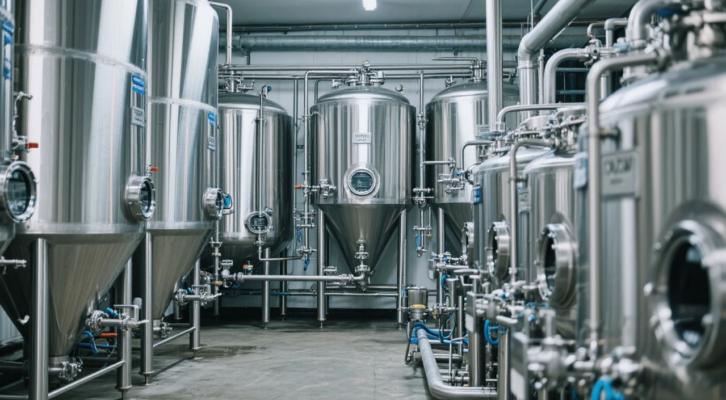
How Automated Brewhouse Controls Improve Repeatability
The brewhouse turns a recipe into a measurable production result. A brewer can approve the mash schedule and hop timing, but the production system still has to deliver the intended water volume, temperature, flow path, rest duration, boil, and wort cooling sequence. This is where integrated sensors, pumps, valves, and control logic become useful.
Commercial brewhouses commonly use two-, three-, or four-vessel configurations with either semi-automatic controls or PLC-based controls. The vessel count changes how material moves through the system, but it does not change the need to define what should happen and when. A semi-automatic system may require the operator to confirm each major step, while a PLC can execute programmed conditions after the operator has checked the recipe and equipment status.
That distinction matters during a busy brew day. In a fully manual workflow, the operator remembers the next valve position, watches a temperature display, checks the clock, and decides when to start a pump. In a programmed sequence, the operator supervises the process, confirms abnormal conditions, and intervenes when the material is not behaving as expected. The brewer still makes decisions, but fewer decisions depend on memory under pressure.
Automated water dosing is one of the more practical controls. The system can deliver the programmed mash-in volume and bring brewing liquor to the target temperature before it enters the mash tun. This reduces measurement differences between operators and makes recipes easier to compare. It also provides a useful record when extract performance changes: the brewery can confirm whether the process delivered the intended water quantity before investigating malt, milling, or laboratory measurement.
Programmable mash profiles manage heating stages and rest periods according to the brewer’s approved process. A temperature probe, often based on a PT100 sensor or a similar industrial instrument, feeds data to the control system. The PLC can then regulate heating and hold the rest for a defined duration. That does not guarantee identical enzyme activity, because grist condition and mixing still matter, but it prevents an operator from ending a rest early simply because another task is waiting.
Pump and valve sequences help with mashing, lautering, wort transfer, and cleaning. A correctly designed sequence can prevent a pump from starting before a valve is open, keep wort away from an incorrect flow path, and reduce variation in transfer timing. Flow meters, pressure sensors, and variable frequency drives can add information about what the system actually did rather than what the operator expected it to do.
The hidden benefit is diagnostic. A brewery may first install automation to repeat a transfer, then discover that the process data shows a recurring pressure rise during lautering. Manual operation had concealed that issue because operators compensated differently on each shift. The automated record does not fix the grain bed, but it gives the quality-control team a narrower question to investigate.
Boiling and hop additions also benefit from programmed timing. Boil duration, heating intensity, and the moment of each addition influence bitterness, aroma, color, and evaporation. An automated sequence can keep the schedule consistent and record when the addition occurred. Wort cooling can then be tied to a target temperature and transfer condition instead of relying on a quick visual check at the end of the heat exchanger.
An automated brewhouse still has failure modes. A drifting temperature sensor can make the PLC hold the wrong temperature with impressive consistency. A valve that reports as open while physically sticking can create a clean-looking batch record and an incorrect wort path. For that reason, calibration, alarm testing, manual verification, and routine maintenance have to remain part of the operating procedure. Automation improves repeatability only when the instruments and the process around them are trustworthy.
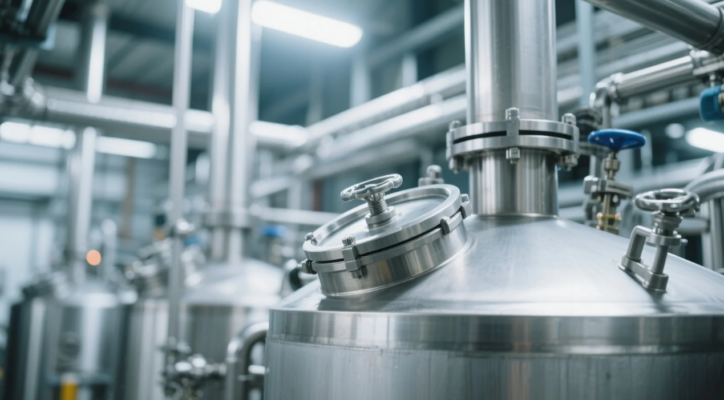
Extending Control Through Fermentation, Cleaning, and Packaging
Brewhouse repeatability cannot compensate for uncontrolled fermentation. If wort enters the fermentation tanks at different temperatures, the yeast receives different starting conditions. Fermentation temperature and fermentation pressure then affect attenuation, ester formation, sulfur removal, carbonation development, and the time required before the beer can move to packaging.
Process data allows operators to compare actual performance with the intended recipe or procedure. A fermentation record may include starting temperature, pressure changes, cooling output, gravity readings, and transfer timing. When a beer finishes differently, those records help separate equipment operation from raw-material variation, a recipe change, or yeast performance. Without them, the team may blame the brewhouse because it is the most visible part of the production system.
Three downstream control areas should remain aligned: fermentation conditions, cleaning execution, and packaging synchronization. These areas interact more than many equipment specifications suggest. A filling line waiting for beer can create scheduling pressure upstream, while a fermentation tank held longer than planned may alter the production sequence for the next brew.
Fermentation control normally requires more than a cooling jacket. Temperature sensors need to be placed and maintained correctly, pressure relief devices must function, and the control logic must match the tank’s operating limits. If a sensor is located where it reads jacket influence rather than the beer’s representative temperature, the control system may appear stable while the tank is not. That is an instrumentation problem, not a recipe problem.
Cleaning is another place where automation can preserve process knowledge. A clean-in-place sequence can standardize caustic concentration, rinse duration, flow direction, temperature, and return conditions. It cannot compensate for a blocked spray device, an incorrectly connected hose, or a chemical tank that was not replenished. ATP swab results, chemical checks, and visual inspection still matter, especially when multiple operators and shifts are involved.
The operational tradeoff is that automated cleaning can become less transparent if staff only watch a cycle complete. A failed conductivity reading or low return flow may be treated as an alarm to acknowledge rather than a condition to investigate. Standardized cleaning procedures need clear operator confirmation points so that the system does not turn an incomplete cleaning cycle into an apparently successful one.
Packaging synchronization reduces a different type of variation. The filling line needs beer at a suitable temperature, pressure, and flow rate, while the upstream tanks need a reliable release schedule. If packaging starts and stops repeatedly, foam control becomes harder and dissolved oxygen exposure may rise. If the filling line is ready before the beer is conditioned, the schedule becomes a source of pressure on the production team.
This is where supervisory systems such as SCADA can be useful, but only if the brewery decides which data matters. Recording every available signal does not automatically improve quality. A smaller set of verified temperatures, pressures, flow conditions, cleaning results, and fill checks is often more useful than an enormous database that no one reviews until a complaint arrives.
As a brewery adds operators, shifts, beer styles, or production volume, standardized sequences preserve process knowledge that might otherwise remain with two experienced employees. That does not make the new operator equally skilled in every brewing decision. It does make the routine parts of pump, valve, temperature, and timing control less dependent on who happens to be standing at the panel.
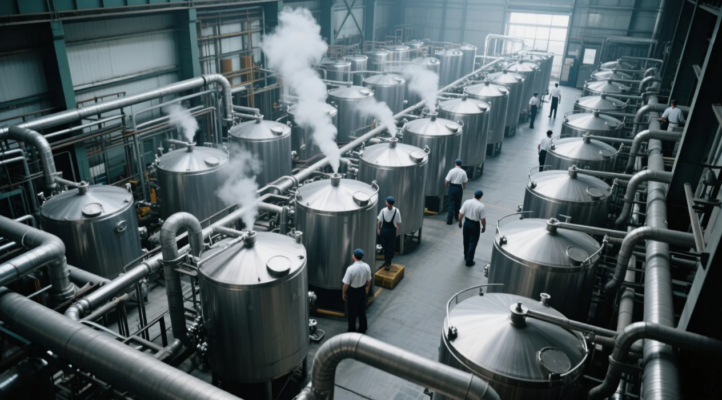
Evaluating an Automatic Brewery Equipment Workflow Before Implementation
Automation should begin with the brewery’s approved recipe and standard operating procedures, not with a list of hardware features. The team first has to identify which variables must remain fixed and which variables the brewer intentionally changes between beer styles. Mash-in volume, temperature, rest time, transfer path, boil duration, cooling target, and fermentation conditions may all require different levels of control.
A useful review follows one production sequence from raw materials to packaged beer:
- Establish the approved process baseline, map every manual intervention, and mark where timing, measurement, or sequencing varies.
- Assign the appropriate control method to each point: sensors for measurement, PLC logic for sequences, pumps and valves for movement, or operator confirmation where judgment is required.
- Compare process data with original gravity, flavor checks, fermentation results, cleaning records, and packaging measurements before changing the equipment or recipe.
The first step should produce one documented process baseline against which later batches can be compared. It should include the recipe version, raw-material lot, target temperatures, timing windows, tank conditions, cleaning method, and quality checks. A baseline that only contains setpoints is incomplete; it also needs the actual values and the permitted deviation.
Manual interventions should be mapped without assuming that all of them need to be automated. Some actions are deliberate quality gates. An operator may need to confirm that the grain bed has settled, inspect wort clarity, verify a chemical concentration, or approve a transfer after a laboratory result. Replacing those decisions with an automatic timer may reduce labor at one point and create a quality problem at another.
The brewery can then determine where sensors, programmable controls, automated pumps, valves, and operator confirmation provide the most useful control. A sensor is worthwhile only when it measures a variable that affects a decision. A pump sequence is worthwhile when the flow path and timing are sufficiently repeatable to define. A PLC is useful when the sequence has been tested, documented, and protected against unsafe states.
Data design deserves attention before installation. The brewery should be able to distinguish equipment variation from raw-material variation, recipe changes, or yeast-related causes. That usually means associating batch records with malt and hop lots, water treatment, yeast generation, calibration status, operator confirmation, fermentation data, and packaging results. If those records are stored separately, the investigation will still depend on manual reconstruction.
Staff training and standard operating procedures are part of implementation rather than post-installation administration. Operators need to know what the automatic sequence is doing, which alarms require a stop, when a manual override is permitted, and how an interrupted batch is resumed. A system that is easy to start but difficult to recover after a power interruption can create more variation than the manual process it replaced.
Cleaning requirements must also be tested with the installed pipework, valves, heat exchanger, tanks, and dead legs. The control recipe may be correct while the physical system still fails to achieve adequate flow in one branch. Verification should include commissioning runs, calibration checks, alarm tests, and comparison of several batches rather than approval after one successful brew.
Capacity planning should be considered without assuming a guaranteed production increase. Additional tanks, a larger filling line, or a second shift can expose bottlenecks that were hidden at the original scale. Automation may preserve a stable process as capacity changes, but it does not remove constraints in heating, cooling, water supply, cleaning, labor, or packaging.
The brewery also needs a rollback plan. If a new automated sequence produces an unexpected gravity or transfer problem, the team should know whether it can pause, isolate the affected stage, return to a validated manual procedure, and retain the batch record. During commissioning, operators often rerun a crawl through the logic and compare the displayed sequence with the physical valve positions. That work is slower than a sales demonstration, but it is where dangerous assumptions usually surface.
FAQ
What does automatic brewery equipment control?
Automatic brewery equipment controls repeatable process variables such as water dosing, mash temperature, rest time, pump sequencing, valve positions, boiling duration, and wort cooling. The exact scope depends on the system, but a commercial installation may also connect fermentation temperature, tank pressure, cleaning cycles, and filling operations. Operators still need to review alarms and compare batch results against the documented baseline.
Can brewery automation improve consistency across different operators and shifts?
Yes, it can reduce variation caused by manual timing, measurement, and sequencing across operators and shifts. A programmed mash profile can hold a rest for the same duration, while recorded pump and valve states show whether a transfer followed the intended path. The brewery still needs training, calibration, and procedure checks; otherwise, different shifts may respond differently to alarms or overrides within the same automated workflow.
Does an automated brewhouse replace the brewer’s expertise?
No, it standardizes approved actions while leaving recipe approval, raw-material assessment, sensory evaluation, and exception handling to brewing staff. A PLC can repeat a temperature profile, but it cannot decide whether unusual malt behavior requires a process adjustment or whether a yeast culture is suitable for the next batch. The brewer’s expertise becomes more focused on decisions that should not be reduced to a timer.
Which brewing stages benefit most from programmable controls?
Mash-in, mash rests, lautering, wort transfer, boiling, and wort cooling usually benefit first because they contain many measurable timing, temperature, and flow steps. Fermentation temperature and pressure control, cleaning procedures, and filling synchronization are also important when variation continues downstream. A brewery should compare quality records across at least several batches rather than judging improvement from one successful run.
What should a brewery define before selecting an automation solution?
It should define the approved recipe, fixed process variables, permitted deviations, manual intervention points, required sensors, operator confirmations, data records, cleaning procedures, and capacity constraints. The brewery should also document how it will separate equipment faults from raw-material, recipe, and yeast causes. That baseline gives the project a practical test: whether the installed workflow makes deviations easier to detect and correct, not merely whether the equipment can run automatically.
