
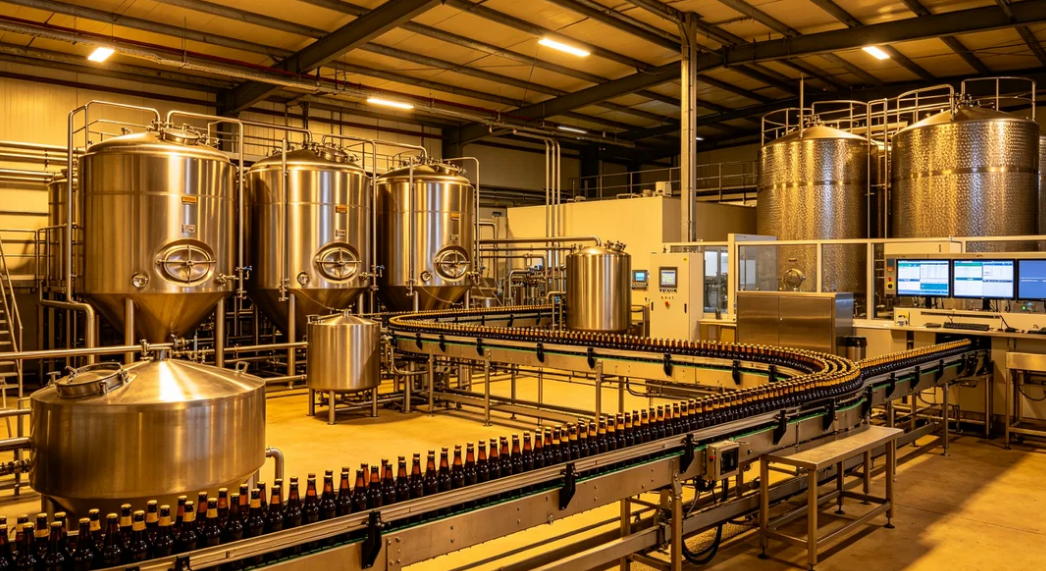
Choosing the right beer manufacturing plant is one of the most important decisions for investors, brewery owners, and production managers. A well-designed beer manufacturing plant can improve brewing efficiency, reduce operating costs, ensure stable beer quality, and support future expansion. Buyers should evaluate production capacity, equipment configuration, automation level, energy consumption, and supplier experience before investing in a complete brewing system. A professional brewery equipment manufacturer can provide customized solutions that match different production goals, from small craft breweries to large commercial beer factories.
Table of Contents
ToggleWhat Is a Beer Manufacturing Plant and Why Is It Important?
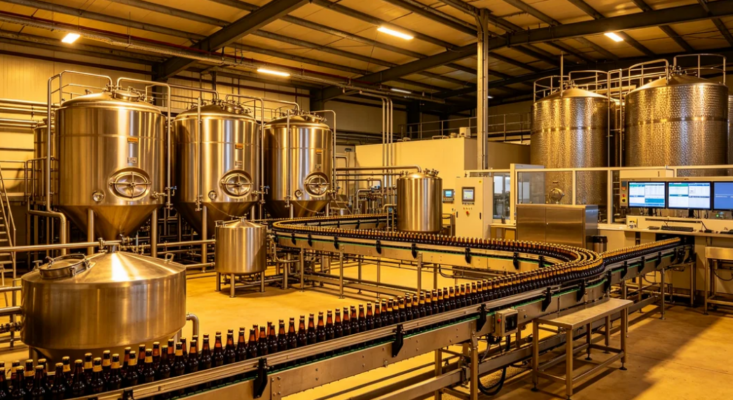
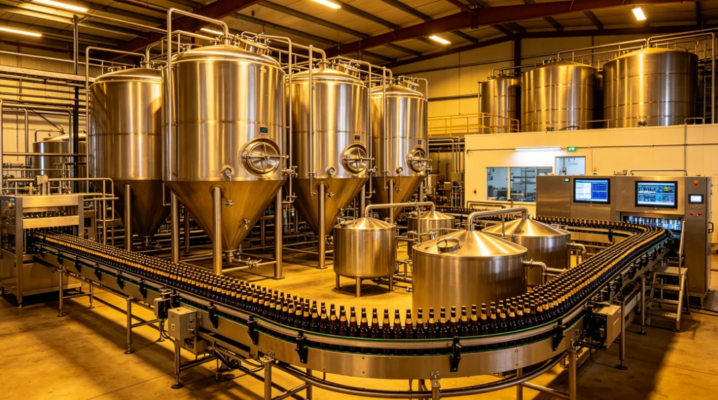
A complete beer manufacturing plant is an integrated production facility that includes brewing, fermentation, cooling, cleaning, storage, packaging, and control systems. It combines multiple types of brewery equipment to transform raw materials such as malt, hops, yeast, and water into finished beer products.
The main value of a professional beer manufacturing plant is production consistency. Compared with traditional manual brewing methods, modern plants use advanced stainless steel equipment, precise temperature control systems, and automated management systems to maintain stable beer flavor and improve production efficiency.
For commercial breweries, the plant design directly affects production capacity, product quality, labor costs, and long-term profitability. Therefore, buyers should not only focus on equipment prices but also consider the complete production solution.
How Does a Complete Beer Manufacturing Plant Work?
A complete beer manufacturing plant usually includes several key production stages.
1. Raw Material Handling System
The raw material system is the first step in beer production. It includes malt handling equipment, milling machines, and material transportation systems.
A properly designed material handling system helps breweries reduce waste and improve production efficiency. The milling process must achieve suitable particle size distribution because it directly affects mash efficiency and final beer extraction rates.
2. Brewhouse System
The brewhouse is the core section of a beer manufacturing plant because it completes mashing, lautering, boiling, and whirlpool processes.
A high-efficiency brewhouse system can improve energy utilization and shorten brewing cycles. Modern breweries commonly use 2-vessel, 3-vessel, or 4-vessel brewhouse configurations depending on production requirements.
For example:
- Small craft breweries usually select compact brewhouse systems.
- Medium breweries often require flexible multi-vessel systems.
- Large beer factories need high-capacity automated brewing systems.
3. Fermentation and Maturation System
The fermentation system determines beer flavor, alcohol content, and product stability.
Stainless steel fermentation tanks are widely used because they provide excellent corrosion resistance, easy cleaning, and precise temperature control. Conical fermentation tanks allow yeast collection and improve production flexibility.
The number and size of fermentation tanks should be planned according to:
- Daily production capacity
- Fermentation cycle
- Beer types
- Expansion requirements
4. Cooling, CIP Cleaning, and Control Systems
A modern beer manufacturing plant requires reliable supporting systems.
The cooling system maintains fermentation temperature and ensures yeast activity. The CIP (Clean-In-Place) system reduces manual cleaning labor and improves hygiene standards.
An automatic control system allows operators to monitor:
- Temperature
- Pressure
- Flow rate
- Production status
- Cleaning processes
Automation improves repeatability and reduces human operation errors.
What Equipment Is Included in a Complete Beer Manufacturing Plant?
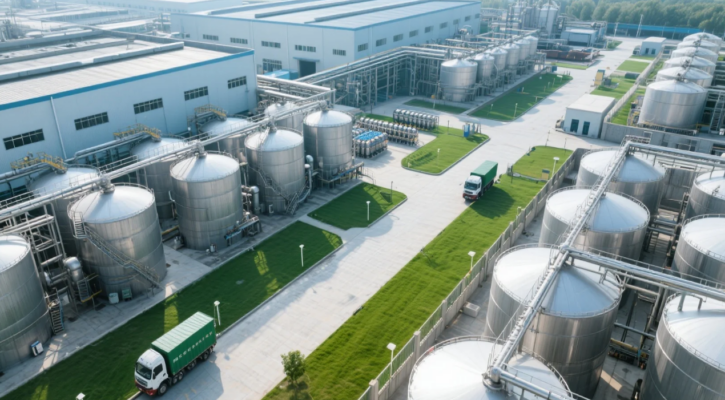
A complete beer manufacturing plant normally includes the following equipment:
| Equipment Section | Main Equipment | Typical Capacity Range | Main Function |
|---|---|---|---|
| Brewhouse System | Mash Tun, Lauter Tun, Brew Kettle, Whirlpool | 500L-10000L+ | Wort production |
| Fermentation System | Fermentation Tanks, Unitanks | 500L-30000L+ | Alcohol fermentation |
| Bright Beer System | Bright Tanks | 500L-50000L | Beer storage and carbonation |
| Cooling System | Chillers, Glycol Tanks | Customized | Temperature control |
| CIP System | Cleaning Tanks, Pumps | Customized | Automatic cleaning |
| Packaging System | Bottling Line, Canning Line, Keg Filling | Customized | Finished product packaging |
| Control System | PLC Automation System | Customized | Production monitoring |
The equipment configuration should be customized according to the brewery’s business model rather than selecting a standard package without considering actual production needs.
How Should Buyers Select the Capacity of a Beer Manufacturing Plant?
Capacity selection is one of the most important purchasing factors.
Small Beer Manufacturing Plant (500L-2000L)
Small plants are suitable for:
- Craft breweries
- Brewpubs
- Restaurants
- Pilot production
Advantages include lower investment costs, easier operation, and flexible product development.
Medium Beer Manufacturing Plant (3000L-10000L)
Medium-scale plants are suitable for commercial breweries that require stable market supply.
They provide:
- Higher production efficiency
- Better automation
- Lower production cost per liter
This capacity range is commonly selected by growing breweries.
Large Beer Manufacturing Plant (10000L+)
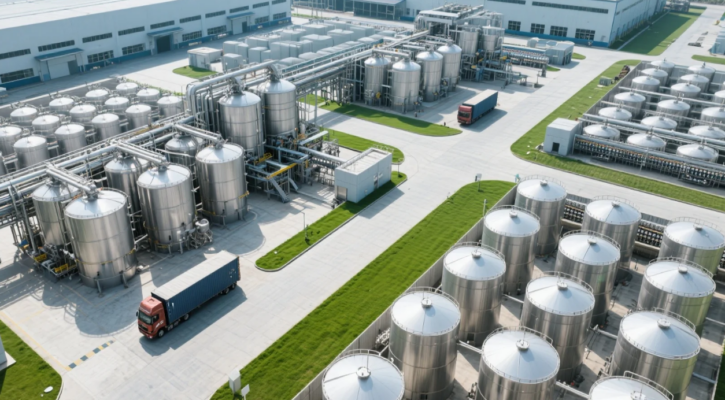
Large plants are designed for industrial beer production.
They usually include:
- Automated brewing systems
- Large fermentation tanks
- Advanced packaging equipment
- Energy-saving solutions
Large production facilities require professional engineering design to optimize factory layout and workflow.
What Factors Should Buyers Consider Before Purchasing a Beer Manufacturing Plant?
Production Capacity Requirements
The first consideration is expected output. Buyers should estimate current demand and future expansion plans.
Selecting equipment that is too small may limit growth, while oversized equipment can increase unnecessary investment and operating costs.
Equipment Material Quality
High-quality stainless steel is essential for brewery equipment.
Most professional beer manufacturing plants use food-grade stainless steel such as SUS304 or SUS316 because these materials provide:
- Strong corrosion resistance
- Long service life
- Easy cleaning
- Better hygiene performance
Automation Level
Automation directly affects production efficiency.
Modern control systems help breweries achieve:
- Accurate temperature management
- Stable brewing processes
- Reduced labor requirements
- Better production records
For commercial breweries, automation is becoming an important investment factor.
Manufacturer Experience and Technical Support
Choosing an experienced brewery equipment manufacturer can reduce project risks.
A reliable supplier should provide:
- Brewery design
- Equipment manufacturing
- Installation guidance
- Technical training
- After-sales service
A complete solution provider can help buyers build a brewery that matches their production goals.
Why Is Customization Important for a Beer Manufacturing Plant?
Every brewery has different requirements, so customization is essential.
A customized beer manufacturing plant can be designed according to:
- Available factory space
- Production capacity
- Beer recipes
- Budget requirements
- Future expansion plans
For example, a craft brewery may need flexible fermentation tanks for different beer styles, while an industrial brewery may prioritize automation and high-speed production.
Professional manufacturers design equipment layouts that improve workflow and maximize production efficiency.
How Can a High-Quality Beer Manufacturing Plant Reduce Operating Costs?
A properly designed plant can reduce costs through several methods.
First, energy-efficient brewing equipment lowers steam and electricity consumption. Second, automated systems reduce labor expenses. Third, efficient CIP systems decrease water and cleaning chemical usage.
In addition, stable production processes reduce beer losses and improve overall profitability.
For long-term operation, the initial equipment investment should be evaluated together with maintenance costs and production efficiency.
Conclusion: How Can Buyers Make the Best Beer Manufacturing Plant Investment?
Selecting the right beer manufacturing plant requires careful evaluation of capacity, equipment quality, automation, customization options, and supplier capability. A professional brewery system should not only meet current production requirements but also provide flexibility for future growth.
By choosing a reliable manufacturer and a properly designed production solution, brewery owners can achieve higher efficiency, consistent beer quality, and sustainable business development.
Frequently Asked Questions About Beer Manufacturing Plant
1. How much does a beer manufacturing plant cost?
The cost depends on production capacity, equipment configuration, automation level, and customization requirements. Small craft brewery plants usually require lower investment, while large industrial beer factories need significantly higher budgets.
2. How long does it take to install a complete beer manufacturing plant?
The installation period depends on project size and complexity. Small systems may require several weeks, while large commercial brewery projects may take several months including equipment production, transportation, installation, and commissioning.
3. Can a beer manufacturing plant be customized according to my brewery requirements?
Yes. Professional manufacturers can customize brewhouse systems, fermentation tanks, cooling systems, automation solutions, and packaging lines according to production capacity, factory layout, and business plans.
4. What materials are commonly used for beer manufacturing plants?
Most modern brewery equipment uses food-grade stainless steel, especially SUS304 stainless steel, because it provides durability, corrosion resistance, and easy cleaning performance for long-term beer production.
