
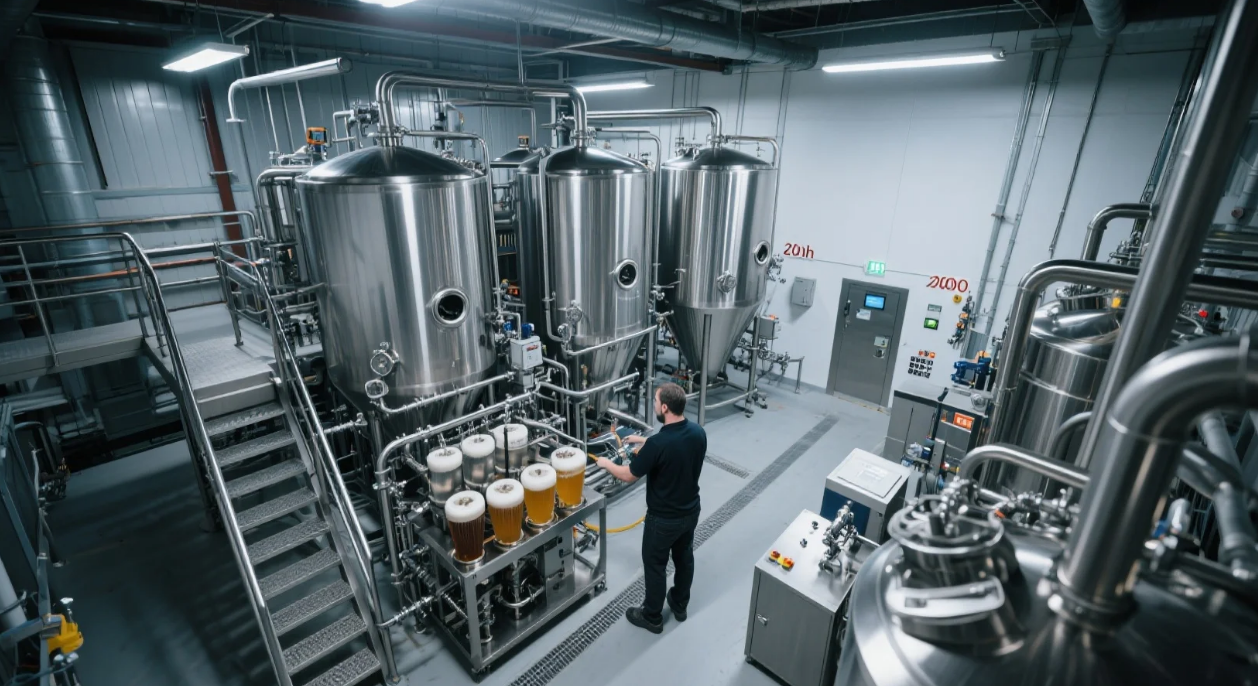
5000L Brewing Equipment is an ideal solution for medium and large commercial breweries that need higher production capacity, consistent beer quality, and flexible expansion possibilities. A well-designed 5000L brewing system integrates brewhouse, fermentation tanks, cooling, CIP cleaning, and automation controls to improve production efficiency while reducing operating costs. Buyers should evaluate equipment configuration, material quality, automation level, energy consumption, and future scalability before investing in a 5000L brewery system.
Why Should Buyers Invest in 5000L Brewing Equipment?
A 5000L brewing system provides the production capacity required for growing breweries that have moved beyond small craft operations. Compared with smaller brewing systems, 5000L Brewing Equipment allows breweries to produce larger batches while maintaining process stability and reducing labor requirements.
For regional breweries, contract breweries, and established craft beer brands, production efficiency becomes a key factor affecting profitability. A 5000L system can support larger market demand while providing enough flexibility for producing different beer styles, including lager, IPA, stout, wheat beer, and seasonal specialty products.
A complete 5000L brewing solution usually includes a brewhouse system, fermentation tanks, bright beer tanks, glycol cooling system, CIP system, pumps, pipelines, and an automatic control system. The entire production line is designed to work together rather than operate as separate machines.
What Components Are Included in a Complete 5000L Brewing Equipment System?
A complete 5000L brewery requires multiple integrated systems to ensure stable beer production from raw materials to finished products. Choosing only a large brewhouse without matching fermentation, cooling, and cleaning capacity can create production bottlenecks.
1. 5000L Brewhouse System
The brewhouse is the core production unit that determines brewing efficiency and wort quality. A typical 5000L brewhouse includes mash tun, lauter tun, brew kettle, and whirlpool functions.
The brewhouse performs several important processes:
- Grain mashing to convert starch into fermentable sugar
- Lautering to separate wort from grain
- Boiling to extract bitterness and sterilize wort
- Whirlpool separation to remove trub particles
For commercial breweries, stainless steel SUS304 construction is commonly selected because it provides corrosion resistance, durability, and easy cleaning.
2. 5000L Fermentation Tanks
Fermentation capacity must match the output of the brewhouse to maintain continuous production. A 5000L fermentation tank allows breweries to ferment and condition large batches while maintaining temperature and pressure control.
High-quality fermentation tanks usually include:
- SUS304 stainless steel construction
- Cooling jacket system
- Pressure control valves
- Sampling valves
- CIP spray balls
- Temperature sensors
For example, a typical 5000L fermentation tank may have a useful capacity of 5000L and a gross capacity of approximately 6250L, providing operational space for fermentation activity.
3. Cooling and CIP Systems
Efficient cooling and cleaning systems are essential for maintaining consistent beer quality.
The glycol cooling system controls fermentation temperatures, while the CIP system improves sanitation efficiency by cleaning tanks and pipelines without manual disassembly.
For commercial breweries, automated cleaning and temperature management reduce labor costs and help prevent contamination risks.
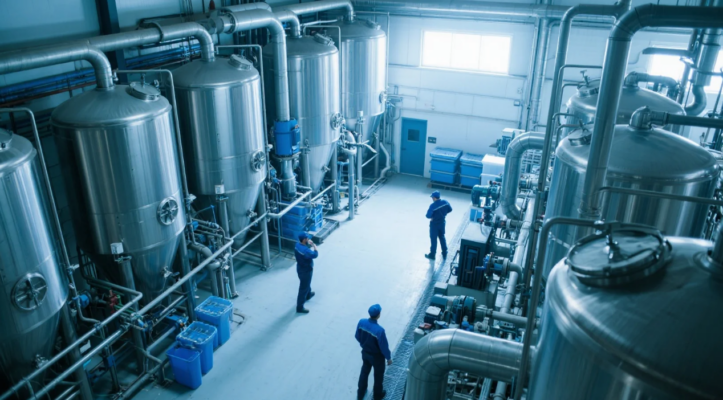
How Does 5000L Brewing Equipment Improve Brewery Efficiency?
5000L Brewing Equipment improves efficiency by increasing batch output, optimizing workflow, and reducing unnecessary production interruptions.
A larger brewing system allows breweries to produce more beer with fewer brewing cycles. Compared with multiple small systems, one 5000L production line requires fewer manual operations and occupies less production space per liter of beer produced.
Automation is another important advantage. Modern systems can integrate PLC control panels, temperature monitoring, automatic valves, and digital process management. These features help brewers maintain consistent recipes and reduce human errors.
A properly configured 5000L brewery system can also support future expansion. Breweries can increase fermentation tanks, add packaging equipment, or upgrade automation without completely replacing the original production line.
What Specifications Should Buyers Check Before Purchasing 5000L Brewing Equipment?
Buyers should compare technical specifications carefully because equipment design directly affects production performance and long-term operating costs.
Important factors include:
- Production capacity per batch
- Brewhouse configuration
- Stainless steel grade
- Heating method
- Automation level
- Energy consumption
- Installation requirements
- After-sales support
The following table shows a typical comparison of 5000L brewing equipment configurations:
| Equipment Item | Standard Configuration | Advanced Configuration | Fully Automatic Configuration |
|---|---|---|---|
| Brewhouse Capacity | 5000L/batch | 5000L/batch | 5000L/batch |
| Brewhouse Type | 2 Vessel System | 3 Vessel System | 4-5 Vessel System |
| Material | SUS304 Stainless Steel | SUS304 Stainless Steel | SUS304 Stainless Steel |
| Heating Method | Steam Heating | Steam Heating | Steam Heating |
| Control System | Manual/Semi Automatic | PLC Control | Fully Automatic PLC + Touch Screen |
| Fermentation Tanks | 4-6 Units | 6-10 Units | 10+ Units |
| Suitable Brewery Type | Growing Craft Brewery | Commercial Brewery | Large Regional Brewery |
| Expansion Ability | Medium | High | Very High |
A standard 5000L brewing system commonly uses SUS304 material, steam heating, and semi-automatic or fully automatic control options depending on customer requirements.
How Much Space Does a 5000L Brewing System Need?
A brewery layout should be planned before purchasing equipment because space requirements influence installation efficiency and future expansion.
A complete 5000L brewing system requires space for:
- Brewhouse area
- Fermentation cellar
- Cooling equipment
- CIP cleaning area
- Packaging area
- Raw material storage
The exact footprint depends on the number of fermentation tanks, automation level, and packaging configuration. A compact system may require significantly less space than a fully expanded commercial brewery line.
Professional manufacturers usually provide layout design services to help customers optimize workflow and maximize available factory space.
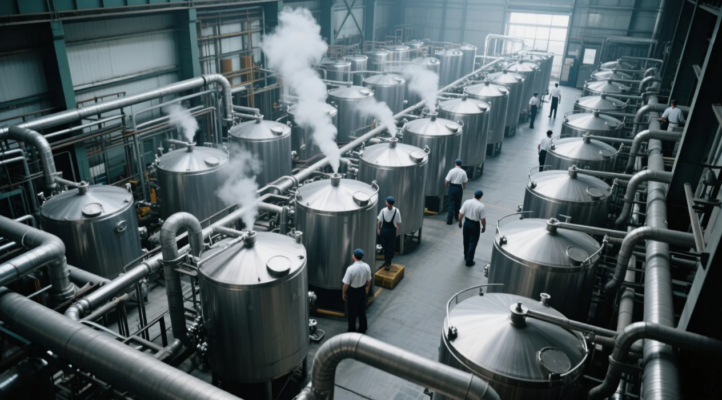
How Should Buyers Select a Reliable 5000L Brewing Equipment Manufacturer?
Choosing the right manufacturer is as important as choosing the equipment capacity because manufacturing quality affects brewery performance for many years.
Buyers should evaluate:
Manufacturing Experience
A reliable supplier should have experience producing complete brewery systems rather than only individual tanks.
Customization Capability
Every brewery has different requirements regarding:
- Beer styles
- Production targets
- Factory space
- Energy conditions
- Automation preferences
A professional manufacturer should provide customized solutions instead of standard equipment only.
Installation and Technical Support
After-sales service directly affects the success of brewery commissioning.
Important services include:
- Equipment installation guidance
- Brewing process support
- Spare parts supply
- Remote technical assistance
- Operator training
What Are the Advantages of Steam Heating for 5000L Brewing Equipment?
Steam heating provides stable temperature control and is widely used in commercial brewing systems.
Compared with direct heating methods, steam heating offers:
- More uniform heat distribution
- Better temperature accuracy
- Reduced risk of wort overheating
- Easier automation control
For breweries producing large quantities of beer, stable heating performance helps maintain consistent flavor profiles between batches.
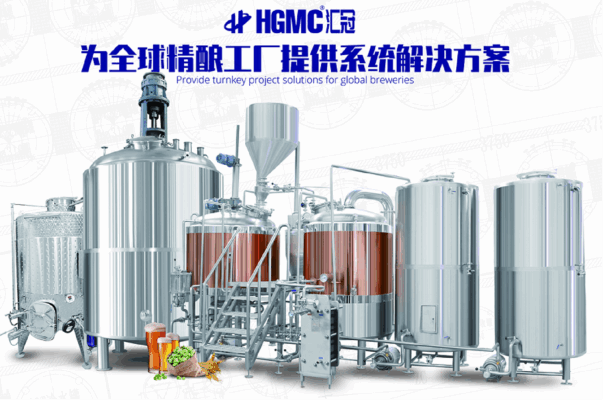
Conclusion: Is 5000L Brewing Equipment Suitable for Your Brewery Project?
5000L Brewing Equipment is a practical choice for breweries that require commercial production capacity with flexibility for future growth.
The right system should not only match the desired output but also include suitable fermentation capacity, efficient cooling, reliable automation, and professional technical support.
Before purchasing, buyers should analyze production goals, available space, energy conditions, and future expansion plans. A properly designed 5000L brewing system can provide a strong foundation for building a profitable and scalable brewery business.
Frequently Asked Questions About 5000L Brewing Equipment
1. How much beer can a 5000L brewing system produce?
A 5000L brewing system can produce approximately 5000 liters of wort per brewing batch. Actual annual production depends on brewing frequency, fermentation time, tank quantity, and packaging efficiency.
2. What tanks are needed with 5000L Brewing Equipment?
A complete system usually requires fermentation tanks, bright beer tanks, glycol cooling equipment, CIP systems, and storage equipment in addition to the brewhouse.
3. Is 5000L Brewing Equipment suitable for craft breweries?
Yes. A 5000L system is commonly used by expanding craft breweries and commercial beer producers that need higher output while maintaining recipe flexibility.
4. How long does it take to install a 5000L brewery system?
Installation time depends on equipment complexity, factory preparation, shipping conditions, and technical support requirements. A professional manufacturer can provide installation planning and commissioning guidance before delivery.
