
China is both the world’s largest beer producer and one of the most competitive beer markets—where margins increasingly depend on premiumization, consistency, and operational efficiency.[1] At the same time, global demand for advanced brewery equipment continues to rise: Grand View Research estimates the global brewery equipment market at USD 18.45 billion in 2024, with an expected 6.1% CAGR from 2025 to 2030.[2]
For breweries in China—whether large producers modernizing legacy plants or fast-growing craft operations—the right beer brewing system is no longer just stainless steel and tanks. It’s an integrated platform combining process engineering, automation, sanitation design, energy recovery, and data-driven control.
This article explains what defines leading beer brewing systems in China today, what technologies are changing modern breweries, and how to evaluate systems for efficiency, quality, and sustainability—backed by credible, citable sources.
1) Features of China’s Leading Beer Brewing Systems
Modern beer brewing systems are typically evaluated on performance outcomes (throughput, repeatability, yield, utility use), not only on component lists. That said, leading systems in China generally share these core features:
1.1 Integrated brewhouse engineering (not “standalone tanks”)
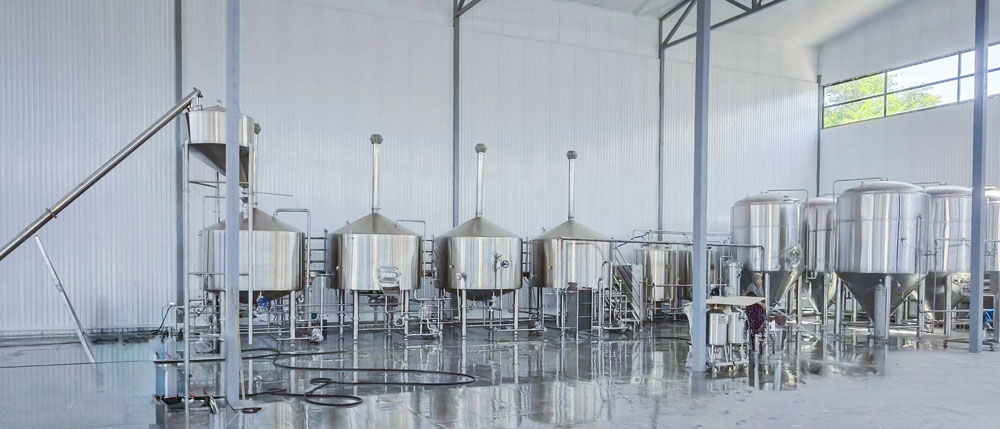
Top systems are designed as an end-to-end process line—from milling and mashing through lautering, boiling/whirlpool, wort cooling, fermentation, and packaging interfaces. Integration matters because inefficiencies often happen at “handoff” points: wort transfer losses, temperature drift, oxygen pickup, inconsistent CIP coverage, or mismatched pump/pipe sizing.
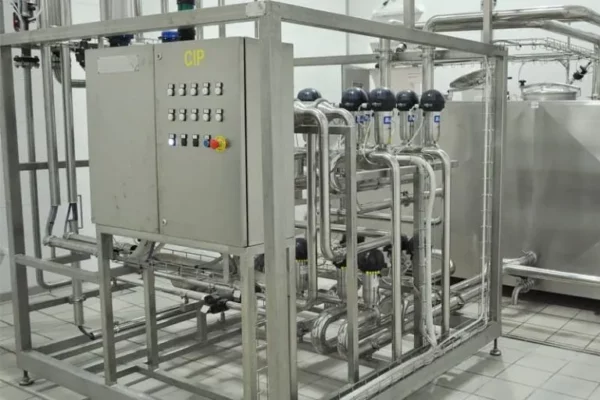
1.2 Hygiene-first design and CIP readiness
Food-grade brewing requires equipment that supports repeatable cleaning and low contamination risk. Competitive systems typically include:
- Dedicated CIP circuits and return lines
- Spray balls / rotary spray devices properly sized for tank geometry
- Sanitary valves, tri-clamp fittings, hygienic welds, and drainability (no dead legs)
Cleanability becomes even more important as breweries diversify into more styles and faster turnaround production.
1.3 Automation-ready architecture
Even if a brewery starts semi-automatic, leading brewing system designs in China are increasingly built to upgrade into:
- PLC-based process control
- Recipe management
- Alarm management & traceability logs
- Sensor expansion (flow, temperature, pressure, DO, pH, turbidity, etc.)
This aligns with the broader global shift toward automated and smart brewing systems described in market analyses, where technology advancement and automation are repeatedly cited as key drivers.[2]
1.4 Scalability and modular expansion
Market conditions can change quickly. Systems that allow additional fermentation capacity, a second brewhouse vessel, extra bright tanks, or utility upgrades without rebuilding the whole plant reduce long-term capital risk.
2) Innovative Technologies in Modern Beer Brewing
Brewing innovation is happening across controls, sensors, utilities, and process optimization—not just “new gadgets.”
2.1 Advanced automation + process analytics
Automation is evolving beyond basic “start/stop” sequencing. Increasingly, breweries use analytics to identify efficiency opportunities, reduce waste, and stabilize fermentation performance. Rockwell Automation notes that analytics can reveal trends such as shortening fermentation time while maintaining the same target outcomes—creating major downstream capacity gains.[3]
Practical examples include:
- Trending fermentation curves to reduce variability
- Measuring CIP time/temperature/flow to cut water and heat consumption without compromising hygiene[3]
2.2 Energy-efficient brewhouse systems and heat recovery
Leading systems increasingly include:
- Wort cooling heat recovery (pre-heating brewing liquor)
- Steam condensate recovery
- High-efficiency boilers / hot water systems
- Variable frequency drives (VFDs) for pumps and fans
This matters because breweries face rising utility and compliance pressure. Industry writing on sustainability highlights energy optimization and recovery technologies as key levers, while noting implementation complexity and cost trade-offs.[4]
2.3 Digital documentation and traceability
As breweries scale distribution and quality requirements, digital batch records (temperatures, times, alarms, CIP logs) support:
- Root cause analysis when deviations occur
- Audits and internal quality reviews
- Training acceleration for new operators
3) Key Benefits of Utilizing Advanced Brewing Equipment
Upgrading to advanced brewing equipment is usually justified by a combined ROI across yield, labor, downtime, and brand quality. The most common benefits:
3.1 More consistent beer quality at scale
Consistency is the foundation for growth. Automated control reduces human variability in:
- Mash rests and heating rates
- Lauter flow control
- Boil vigor and hop timing
- Fermentation temperature ramps
For breweries selling premium products, consistent sensory output protects brand trust.
3.2 Higher throughput without proportionally higher labor
Automation and smart design reduce manual interventions and monitoring, allowing teams to run more batches with the same headcount—especially important in competitive markets.
3.3 Reduced losses (product, CO₂, and utilities)
Advanced systems reduce:
- Wort losses in transfers
- Overuse of water and energy during CIP
- Rework caused by unstable process control
4) Efficiency and Quality: The Core Advantages of Top Brewing Systems
China’s beer industry is shifting from pure volume growth toward quality and premiumization.[1] In that environment, top brewing systems win by delivering repeatable performance with lower resource intensity.
4.1 Operational efficiency: capacity utilization and predictability
When systems are instrumented and integrated, brewers can manage production like a manufacturing line—reducing unplanned downtime and stabilizing scheduling.
4.2 Quality control: process stability reduces defects
Small deviations—especially in fermentation—can create major flavor differences. Better measurement and control reduce off-flavor risk, stabilize attenuation, and protect shelf-life.
4.3 Equipment investment aligns with market direction
The equipment market’s growth is driven by increased demand for craft and premium beer, plus technology improvement and automation.[2] In other words: breweries that modernize are aligning with the same forces shaping the global equipment market.
5) Sustainability Practices in China’s Beer Brewing Industry
Sustainability is becoming an operational requirement (cost, brand, compliance), not just a marketing topic. Industry organizations have expanded sustainability guidance and benchmarking efforts—for example, the Brewers Association maintains sustainability manuals and encourages measurable improvements in water and energy use.[5]
5.1 Water stewardship and wastewater reduction
Common engineering practices include:
- Optimized CIP (time/temperature/flow) to cut rinse cycles
- Recovery of final rinse water for pre-rinse steps
- Segregating high-strength wastewater streams for targeted treatment
Benchmarking and measurement programs are increasingly common across the beverage sector (including brewing), emphasizing normalized ratios (water and energy use per volume produced).[6]
5.2 Energy management and heat integration
Heat recovery and insulation upgrades can materially reduce brewhouse energy demand. Sustainability-focused brewing literature highlights energy recovery solutions (e.g., heat exchangers, vapor condensation) as meaningful options, while noting the need to balance sustainability goals with feasibility.[4]
5.3 Why sustainability is especially relevant in China
China remains the world’s largest beer producer and consumer, with production around 35.21 billion litres in 2024 (slightly down from 2023), underscoring the massive scale where even small efficiency gains have large absolute impact.[1]
6) Comparison of Traditional vs. Modern Brewing Systems
Below is a practical comparison that many breweries use during upgrade planning:
Traditional systems (common constraints)
- More manual valve/pump operations and operator-dependent timing
- Limited sensor feedback (harder to detect drift early)
- Higher variability between shifts (repeatability challenges)
- Higher chance of “hidden inefficiencies” (CIP overuse, heat losses, suboptimal transfers)
Modern systems (typical advantages)
- PLC + recipe control improves repeatability
- More in-line measurement enables early correction
- Analytics identify waste and improve cycle time[3]
- Heat recovery and better utility integration reduce operating cost
- Data logs support QA and continuous improvement
Modernization doesn’t always mean “fully automated everything.” Many breweries succeed with a phased roadmap:
- sanitation + measurement upgrades
- semi-automation and stable recipes
- advanced analytics + expansion
7) The Future of Beer Brewing Technology in China
Based on market and industry trends, the future direction is clear:
7.1 More smart brewing (automation + analytics)
As competitive pressure rises, breweries will increasingly treat brewing as a data-driven process industry. Tools that reduce batch variability and shrink cycle time will have outsized ROI.[3]
7.2 Premiumization drives higher equipment standards
China’s market is increasingly shaped by premium beer demand rather than pure volume.[1] Premium products typically require tighter process windows, better oxygen control, and stronger hygiene design—driving demand for advanced systems.
7.3 Global equipment market growth supports ongoing upgrades
With the global brewery equipment market projected to keep growing (Grand View Research estimates 6.1% CAGR from 2025–2030), manufacturers and suppliers will continue investing in improved automation, efficiency, and modular designs.[2]
FAQ (Questions & Answers)
Q1: What should I prioritize first when upgrading a beer brewing system?
A: Start with what most directly impacts quality risk and operating cost: sanitation/CIP capability, measurement (flow/temperature/pressure), and process stability. From there, automation and analytics become much easier to implement effectively.[3]
Q2: Is full automation necessary for breweries in China?
A: Not always. Many breweries succeed with semi-automation plus strong sensors and SOPs. However, the global trend is toward automation because it improves consistency and reduces operational variability—one reason the equipment market highlights automation as a driver.[2]
Q3: How can modern systems improve sustainability in real terms (not just slogans)?
A: Modern systems reduce resource intensity through optimized CIP, better heat integration, and better utility monitoring. Sustainability guidance and benchmarking initiatives in the brewing industry consistently emphasize measurable reductions in water and energy use.[5][6]
Q4: What trends are shaping brewing technology in China specifically?
A: China’s beer market has shifted from rapid volume growth to a phase where premiumization is increasingly important.[1] That shift favors equipment that can deliver consistent quality, traceability, and efficient production.
Q5: What market data can I cite when explaining why breweries invest in new systems?
A: A widely cited source is Grand View Research’s estimate that the global brewery equipment market was USD 18.45B in 2024, projected to grow at 6.1% CAGR (2025–2030), driven by craft demand and technological advancements like automation.[2]
References (Citable Sources Used)
- Grand View Research — Brewery Equipment Market Size, Industry Report, 2030.[2]
- drinktec — Beer market in China: From mass market to premium beers (includes China production volume figures and market context).[1]
- Brewers Association — Sustainability Manuals (industry sustainability guidance).[5]
- Beverage Industry Environmental Roundtable (BIER) — Benchmarking in the beverage industry.[6]
- Rockwell Automation — Beyond Automation: Gain Brewhouse Efficiency with Process Analytics (process analytics and efficiency insights, CIP and utilities).[3]
- Taylor & Francis Online — Brewing for the Future: Balancing Tradition and Sustainability (energy optimization and recovery discussion).[4]
