A brewery investor in the Middle East once described the moment he realized his project was in trouble. He had ordered a brewhouse from one supplier, fermentation tanks from a second, and a packaging line from a third. None of them had coordinated delivery schedules. When the first shipment arrived, the foundation hadn’t been poured for the tanks. When the tanks arrived, the piping flanges didn’t match the brewhouse outlets. The project ran five months over schedule, and by the time production finally started, his capital reserves were nearly depleted. That scenario repeats itself more often than most first-time buyers expect.
Choosing a brewery equipment supplier is not a simple vendor selection exercise. It is a procurement decision that determines whether a facility launches on budget, clears customs without surprises, and produces consistent beer from day one. Most procurement efforts focus on price and lead time. But long-term operational success depends on four dimensions that rarely appear on a quote sheet: supply-chain breadth, cross-border delivery experience, certification coverage, and manufacturing rigor. Any supplier who cannot demonstrate strength across all four will introduce hidden risk into the project.
Why a Full-Chain Supplier Matters More Than You Think
The majority of brewery equipment manufacturers produce only single-link equipment — a brewhouse here, a fermentation tank there, a bottling line if you are lucky. That fragmented model forces the buyer to act as project manager across multiple vendors. The buyer coordinates delivery windows, checks compatibility between components from different factories, and absorbs the cost when one vendor’s delay cascades across the entire timeline.
The hidden cost goes beyond delays. Equipment from different suppliers may use different pipe thread standards, control protocols, or stainless steel grades. A fermentation tank from one factory might not interface cleanly with a glycol chiller from another. These mismatches are rarely caught during procurement because no single party owns the integration risk.
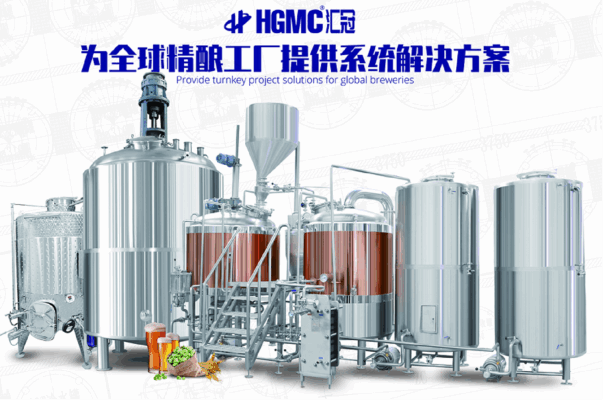
A full-chain supplier offers what the industry calls a turnkey brewery service — the ability to supply malting equipment, the brewhouse, fermentation vessels, bright beer tanks, and the packaging line from a single production system. That unified offering eliminates the integration problem because one engineering team designs the entire line for compatibility. The buyer signs one contract, deals with one logistics coordinator, and holds one party accountable when something goes wrong.
There is a tradeoff. A full-chain quote will almost always carry a higher upfront price than piecing together equipment from multiple low-cost vendors. But the premium buys a single point of responsibility. When a valve leaks on packaging day, the supplier cannot blame someone else’s piping. That accountability shortens troubleshooting time and avoids the finger-pointing cycle that stalls fragmented projects for weeks.
For a brewery investor who has never built a production facility before, the value of that single point of responsibility is difficult to overstate. Coordinating three vendors across three time zones with three separate shipping schedules is a full-time operational burden that most new owners underestimate.

Global Experience Is the Shortcut to Reliable Delivery
Cross-border brewery projects fail on logistics and compliance far more often than on equipment quality. A brewhouse built to European pressure vessel standards may be perfectly safe but will not clear customs in a country that requires ASME certification. A packaging line designed for 50 Hz electrical systems will not run correctly in a 60 Hz region without expensive modifications.
A supplier with genuine global export experience has already navigated these barriers across multiple regulatory environments. The supplier knows that customs authorities in Southeast Asia may demand separate certificates for pressure vessels versus atmospheric tanks. The supplier understands that Middle Eastern markets often require halal-compliant material handling documentation and that African port authorities frequently inspect brewing equipment against a local standard that differs from the manufacturer’s home-country specification.
Suppliers who serve a wide geographic range — North America, Europe, Southeast Asia, the Middle East, Africa, and Oceania — accumulate a library of regional compliance knowledge that a domestic-only manufacturer cannot replicate quickly. They know which ports have the longest inspection backlogs, which countries require notarized certificates of origin, and which regional brewing traditions demand specific vessel configurations.
A microbrewery investor in Lagos does not want to be the first customer a supplier has ever shipped to West Africa. The supplier who has already delivered a brewhouse to Lagos understands that the local customs broker needs a product classification code that matches the specific tank volume and pressure rating. Getting that code wrong can hold equipment in port for six to eight weeks while the classification is appealed.
The operational lesson is direct: you need a supplier who has already navigated the customs hurdles in your region, not one who is learning them on your project timeline.
Certifications That Are Non-Negotiable for Market Access
Certifications are the single most undervalued factor in brewery equipment procurement. Buyers treat them as paperwork. Customs authorities treat them as a gate.
Uncertified equipment faces a real and quantifiable risk of being rejected at the border. A brewhouse without CE marking cannot be legally installed anywhere in the European Economic Area. A pressure vessel without ASME certification will not pass inspection in most of North America. Equipment destined for Russia requires GOST certification. These are not optional upgrades — they are legal requirements for market access.
The problem is that not all suppliers hold all certifications. Some manufacturers carry CE but not ASME. Others hold ASME for certain vessel sizes but not for larger tanks. A buyer who assumes a supplier is certified for every component in their order is taking a risk that becomes visible only when a shipping container is sitting in customs with a hold order.
A professional global supplier maintains a complete certification portfolio covering the major regulatory regimes: CE for Europe, ASME for North America, PED for pressure equipment directives, and the relevant local certifications for Russia, Southeast Asia, and the Middle East. Every piece of equipment undergoes standardized quality inspection and certification verification before leaving the factory.
For the buyer, the verification step is straightforward but often skipped. Ask for the certification documents by serial number. Match them to the specific tank or vessel on the order. Do not accept a generic company certificate that says the supplier is certified — that is an ISO certification, not product-specific market access. The distinction matters when a customs inspector wants to see the exact ASME stamp on the exact vessel in the container.
One brewery owner in Eastern Europe had a brewhouse held in customs for three months because the supplier had provided a CE certificate for a different model of the same tank series. The serial numbers did not match. The supplier had to ship replacement documentation, which took six weeks to reissue. The three-month delay cost the owner the summer launch window. That is the real-world cost of treating certifications as paperwork.
Manufacturing Strength and Intelligent Control as a Competitive Edge
Equipment precision determines long-term production consistency. Brewing vessels must maintain tight temperature tolerances across large volumes. Fermentation tanks must hold pressure within narrow bands. Piping must meet sanitary standards that prevent bacterial harborage. These requirements demand manufacturing processes that a low-cost fabricator may not have invested in.
Advanced manufacturing technology — automated welding with weld seam tracking, precision plate rolling, and surface finishing that meets dairy-grade sanitary standards — directly affects how a vessel performs over a decade of operation. A poorly welded seam is a contamination risk. Inconsistent plate thickness creates hot spots during heating. These are not theoretical concerns; they are the most common root causes of quality inconsistencies that brewers chase for months after commissioning.
Intelligent control systems add another layer of operational reliability. A multi-language central control system that automates the brewing process reduces dependence on individual operator skill. The system’s ability to perform automated monitoring, precise parameter control, and intelligent operation of the entire brewing cycle means that beer quality stays stable even when shift operators have different experience levels.
That is the non-obvious value of automation. It is not just convenience — it is consistency across personnel turnover. A brewery that loses its head brewer can keep producing at the same quality level because the control system enforces the same temperature ramps, hold times, and addition schedules that the original brewer programmed. Without that system, a new operator may need six months of trial-and-error to match the previous brewer’s results.
Manufacturing strength also determines maintenance frequency. A precisely manufactured vessel with consistent wall thickness and smooth internal welds requires less frequent cleaning and inspection. The reduction in downtime — even one fewer cleaning cycle per week — compounds into meaningful annual production capacity increases. Over a three-year period, that hidden efficiency margin can exceed the initial price difference between a premium supplier and a budget option.
FAQ
What is the typical lead time for a full brewery equipment order from a global supplier?
A full turnkey order typically requires 8 to 16 weeks from contract signing to factory completion, depending on line complexity and whether tanks need custom sizing. Add 4 to 8 weeks for ocean freight and customs clearance. Total timeline from order to production readiness usually falls between 12 and 24 weeks for most standard configurations.
How do I verify that a brewery equipment supplier’s certifications are valid for my country?
Request certification copies that list the specific serial numbers of the equipment you are ordering. Cross-reference the issuing body against your country’s recognized accreditation agencies. For CE, check that the Notified Body number on the certificate matches a valid EU-recognized organization. For ASME, verify that the certificate includes the correct pressure range and vessel class.
Can a supplier provide customized equipment for specialty brewing processes?
Reputable full-chain suppliers will modify vessel geometry, heating methods, and control logic for specialty processes such as sour brewing, high-gravity fermentation, or continuous hopping. The customization typically adds 4 to 6 weeks to the manufacturing timeline and requires a detailed process specification before fabrication starts.
What after-sales support should I expect from a turnkey supplier?
A comprehensive turnkey supplier should provide remote commissioning support, spare parts inventory recommendations, and documentation packages including P&ID diagrams and electrical schematics. On-site commissioning is available for most projects and usually lasts 2 to 4 weeks depending on line complexity.
What are the minimum order quantities for commercial brewery equipment?
Minimum order quantities vary by vessel type and supplier. Most global suppliers will not quote below a 500-liter brewhouse due to factory efficiency constraints. For industrial-scale equipment, minimums typically start at 2,000 liters for brewhouses and 5,000 liters for fermentation tanks. Custom fabrication runs for smaller volumes are possible but carry significantly higher per-unit costs.
