
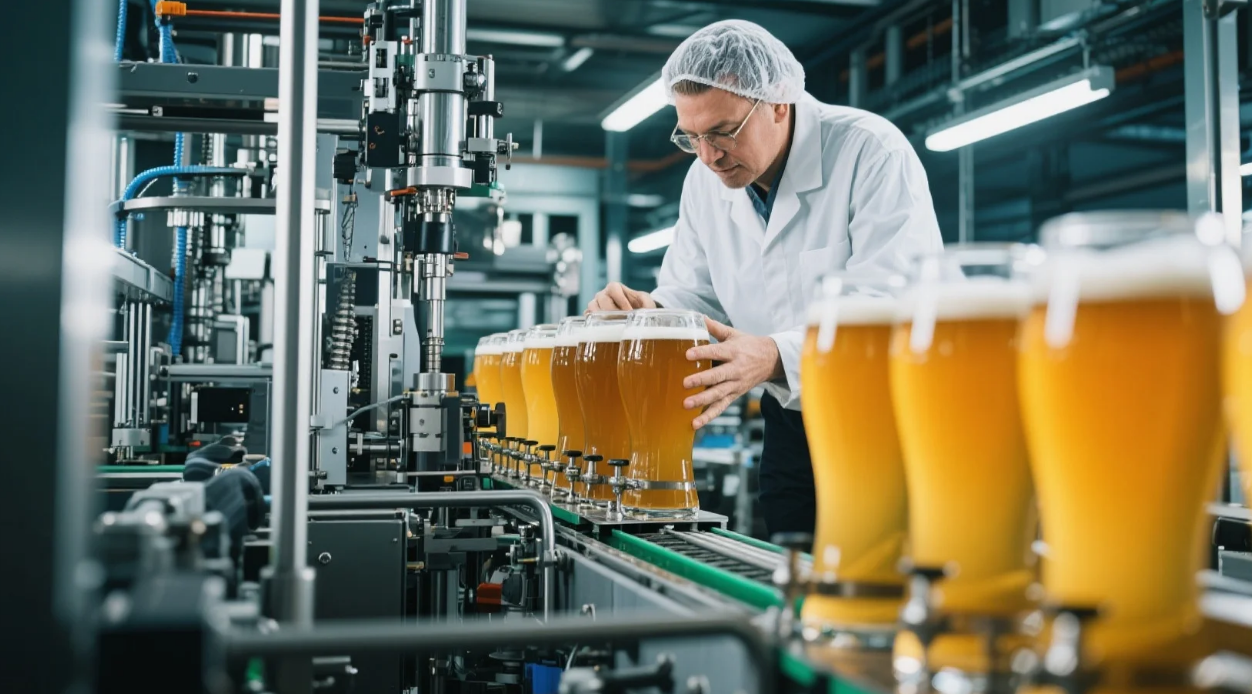
A small commercial brewery usually feels the need for automation before it has the budget or floor space for a fully automated plant. Batch frequency increases, but staff still check mash temperatures by hand, move valves during transfers, watch tank pressure, record readings, and run cleaning cycles from memory. The equipment may be capable of higher output, while the operating method remains dependent on whoever is standing beside the vessel.
A new brewery should usually automate fermentation control, cleaning procedures, brewhouse temperature and flow, and process monitoring first. Those areas affect beer quality, sanitation, safety, and schedule reliability directly. Full brewhouse automation can come later if production volume justifies it. Automation should repeat defined decisions and alert operators to abnormal conditions; it should not replace recipe judgment, sensory checks, yeast management, maintenance, or troubleshooting.
The practical question is not whether every brewery task can be automated. It is which manual variations are already causing rework, inconsistent beer, missed production windows, or unnecessary exposure to hot liquids and cleaning chemicals.
What Automatic Brewery Equipment Actually Controls
Automatic brewery equipment is a coordinated system of programmable controls, sensors, pumps, valves, and digital monitoring tools. It manages process conditions that can be defined in advance, such as a target temperature, a measured water volume, a transfer route, a flow rate, or a cleaning sequence.
In a manual brewhouse, an operator may open a valve, start a pump, check a gauge, adjust heat, and write down the result. An automated system can connect those actions through a control panel or programmable logic controller. The system may open and close valves in a defined order, regulate heating, monitor a sensor, and issue an alarm when the measured condition moves outside its allowed range.
The reference material identifies 9 major process or monitoring functions that automatic equipment can support:
- Water measurement and flow control
- Mash temperature programs
- Wort recirculation and transfer control
- Boil timing and process reminders
- Cooling and heat-exchange monitoring
- Fermentation temperature control
- Tank pressure and level monitoring
- CIP cleaning programs
- Batch data collection and production records
These functions do not all require the same level of automation. A brewery might begin with temperature probes and pump controls, then add automatic valve sequencing, recipe-based process programs, or a more complete batch-record system. A heat exchanger can be monitored without every upstream and downstream valve being controlled automatically.
Fermentation tanks are a good example of the distinction. A control system can read tank temperature, operate cooling, monitor pressure, and send an alarm when a condition changes. It cannot decide whether a fermentation aroma is acceptable, whether yeast should be harvested, or whether a batch should be held for sensory review. Those decisions remain with the brewing team.
The same applies to a CIP system. Automated cleaning can follow defined caustic, rinse, acid, temperature, flow, and contact-time steps. It does not prove that every spray ball is functioning or that a blocked line has been cleaned. Operators still need to verify chemical concentration, equipment condition, connections, and the result of the cleaning process.
A skilled brewer therefore remains responsible for recipes, raw materials, yeast management, sensory evaluation, quality control, troubleshooting, maintenance, and production planning. Automatic controls make repeatable work easier to execute and document. They do not make brewing autonomous.
That distinction matters during a fault. If a temperature sensor drifts or a valve fails in the wrong position, the programmed sequence may continue while the physical process has already departed from the intended recipe. A digital record can show what the system was told to do, not necessarily what the wort or beer actually experienced.
Why Commercial Breweries Choose Automation
Commercial breweries generally face 3 recurring pressures when production expands: consistency, labor workload, and safer operations. These pressures overlap, but they are not interchangeable. A system that saves a few manual checks may do little for fermentation stability, while a well-controlled fermentation system may not solve a scheduling problem caused by slow transfers.
Consistency becomes more difficult when a brewery repeats a core brand across taprooms, restaurants, distributors, retail channels, or multiple locations. Water volume, mash temperature, flow, pressure, boil time, cooling conditions, and cleaning cycles can all vary between operators. A small difference may not be obvious during one brew day, but repeated variation can gradually change attenuation, bitterness, color, yield, or flavor.
Automation provides a defined sequence for those repeatable conditions. A programmed mash temperature step can reduce the number of manual adjustments. Flow control can make transfers more predictable. Temperature controls can reduce the chance that a fermentation tank spends several hours warmer or cooler than planned because a manual check was delayed.
The less obvious benefit is that automation matters most where the same process is repeated across a brewery’s core brands and sales channels. The most technically impressive control system is not necessarily the most valuable first investment. A basic alarm that prevents a fermentation tank from drifting unnoticed may protect more product than an advanced interface installed on a low-frequency specialty brew.
Labor pressure is also more specific than “fewer people.” Manual temperature checks, valve management, data recording, and defined cleaning cycles consume attention throughout the day. When brewing frequency increases, that attention becomes fragmented. Staff may be moving between the brewhouse, cellar, packaging area, and warehouse while still being expected to notice a pressure change or record a process value at the correct time.
Automation can reduce that repetitive workload, but it does not remove the need for trained operators. The team still has to confirm recipes, inspect equipment, handle yeast, evaluate beer, respond to alarms, clean sensors, maintain pumps, and perform preventive maintenance. In some breweries, automation changes the labor profile rather than reducing headcount: fewer minutes are spent turning valves, but more time is needed for troubleshooting, calibration, documentation, and production planning.
Safety is another reason to automate selected conditions. Commercial brewing involves hot wort, steam or electric heating, pressurized vessels, pumps, moving equipment, process piping, and cleaning chemicals. Temperature alarms, pressure monitoring, level signals, and controlled pump or valve sequences can help operators identify abnormal conditions earlier.
An alarm is only useful if someone responds to it. An unattended alarm, an incorrectly configured limit, or a failed sensor can create a false sense of security. Operating procedures, staff training, lockout practices, chemical handling rules, and facility safeguards remain necessary. Automation is a control layer, not a replacement for responsible brewery management.
One production failure illustrates the tradeoff. A small brewery increased brewing frequency over several months but kept manual valve sequences and handwritten transfer records. During a busy week, a transfer started later than planned, a fermentation tank was not checked at the expected interval, and the next brew was pushed into the following shift. The beer was not lost, but the tank temperature was outside the preferred operating range for part of the day, the packaging schedule moved, and staff spent the next two days reconciling records and adjusting deliveries.
The problem was not simply a lack of equipment. It was the combination of higher volume, repeated manual decisions, and a schedule that assumed every step would happen on time. Automation would have reduced some of that burden, but poorly maintained controls or weak procedures could have caused a different failure. A brewery that increases output without standardizing repetitive controls often increases variation and workload at the same time.
Which Brewery Processes Should Be Automated First
A practical starting rule is to automate the process steps that most directly affect beer quality, sanitation, safety, and production reliability. That usually produces a first-priority sequence of 4 control areas:
- Fermentation
- Cleaning and CIP
- Brewhouse temperature and flow
- Monitoring and alarms
This is a staging method, not a universal equipment specification. A brewery with unstable cellar temperatures should not copy the automation plan of a brewery whose largest problem is transfer scheduling. The starting point should come from observed failures, not from the number of features available on a control panel.
| Process area | Operational reason to prioritize | Typical automated controls | What the brewer still oversees |
|---|---|---|---|
| Fermentation | Protects a major quality variable after wort production | Temperature control, tank pressure and level monitoring, alarms | Yeast management, sensory checks, fermentation decisions |
| CIP | Makes defined cleaning procedures more repeatable | Chemical dosing, temperature, flow, contact time, rinse sequences | Connections, chemical verification, equipment inspection |
| Brewhouse temperature and flow | Reduces variation during repeatable production steps | Mash programs, pump control, valve sequences, cooling and transfer monitoring | Raw materials, recipe changes, visual checks, troubleshooting |
| Monitoring and alarms | Improves visibility before a small deviation becomes a schedule or quality problem | Sensor readings, pressure alerts, level alarms, batch records | Alarm response, calibration, maintenance, judgment |
Fermentation deserves early attention
A well-run brewhouse can still produce inconsistent beer if fermentation conditions vary. Fermentation temperature control, tank pressure monitoring, and level signals provide visibility during a stage that may continue for days after the brewhouse crew has finished.
The control system can hold a set temperature or alert staff when a tank behaves unexpectedly. It cannot determine whether the yeast is healthy, whether the beer is ready for a transfer, or whether a flavor requires investigation. Those decisions require samples, sensory evaluation, laboratory checks where available, and knowledge of the specific strain and recipe.
One counterintuitive pattern appears in small operations: a brewery may spend heavily on mash automation while leaving fermentation alarms weak or inconsistent. That creates a polished brew day but limited visibility over the longer stage where flavor and schedule are still being decided. Fermentation automation is often less visually impressive, yet it can prevent a late discovery that affects an entire packaging run.
CIP is a process-control problem
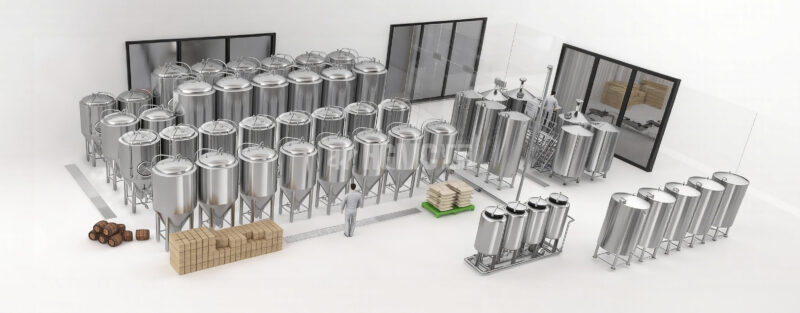
CIP automation can standardize defined cleaning cycles across tanks, pipework, heat exchangers, and other process equipment. It can help control rinse order, chemical circulation, temperature, flow, and contact time. That reduces dependence on memory and makes it easier to compare a completed cycle with the brewery’s standard operating procedure.
CIP automation does not eliminate verification. A poorly connected hose, blocked spray device, incorrect chemical concentration, or dead sensor can produce a completed-looking cycle without a clean surface. Staff still need to inspect connections, verify chemicals, maintain pumps and valves, and investigate any result that does not fit the normal pattern.
Cleaning is also where production pressure can expose weak procedures. When a brewery adds batches but treats CIP as time that can be shortened informally, sanitation discipline becomes dependent on the most rushed shift. A controlled cycle can protect the schedule only if the brewery has decided what cannot be shortened.
Brewhouse temperature and flow come next
Mash programs, wort recirculation, wort transfer, cooling, and boil timers are usually suitable for staged control because their intended conditions can be described clearly. Sensors can measure temperature and flow, pumps can be started or stopped according to a sequence, and valves can route wort through the intended path.
Manual observation still has a place. A pump may cavitate, a screen may clog, a line may contain air, or a sensor may show a plausible but incorrect value. The operator has to recognize the mismatch between the screen and the physical process. That is why an automated sequence should include accessible stop controls, clear alarm messages, and procedures for switching to manual operation.
A brewery does not have to automate every valve at once. It may gain more from consistent temperature measurement and reliable flow indication than from a complex sequence that staff do not understand or maintain. Automation that cannot be diagnosed during a late-night deployment or an awkward changeover often becomes an expensive manual system with extra failure points.
Monitoring and alarms may be the best first purchase
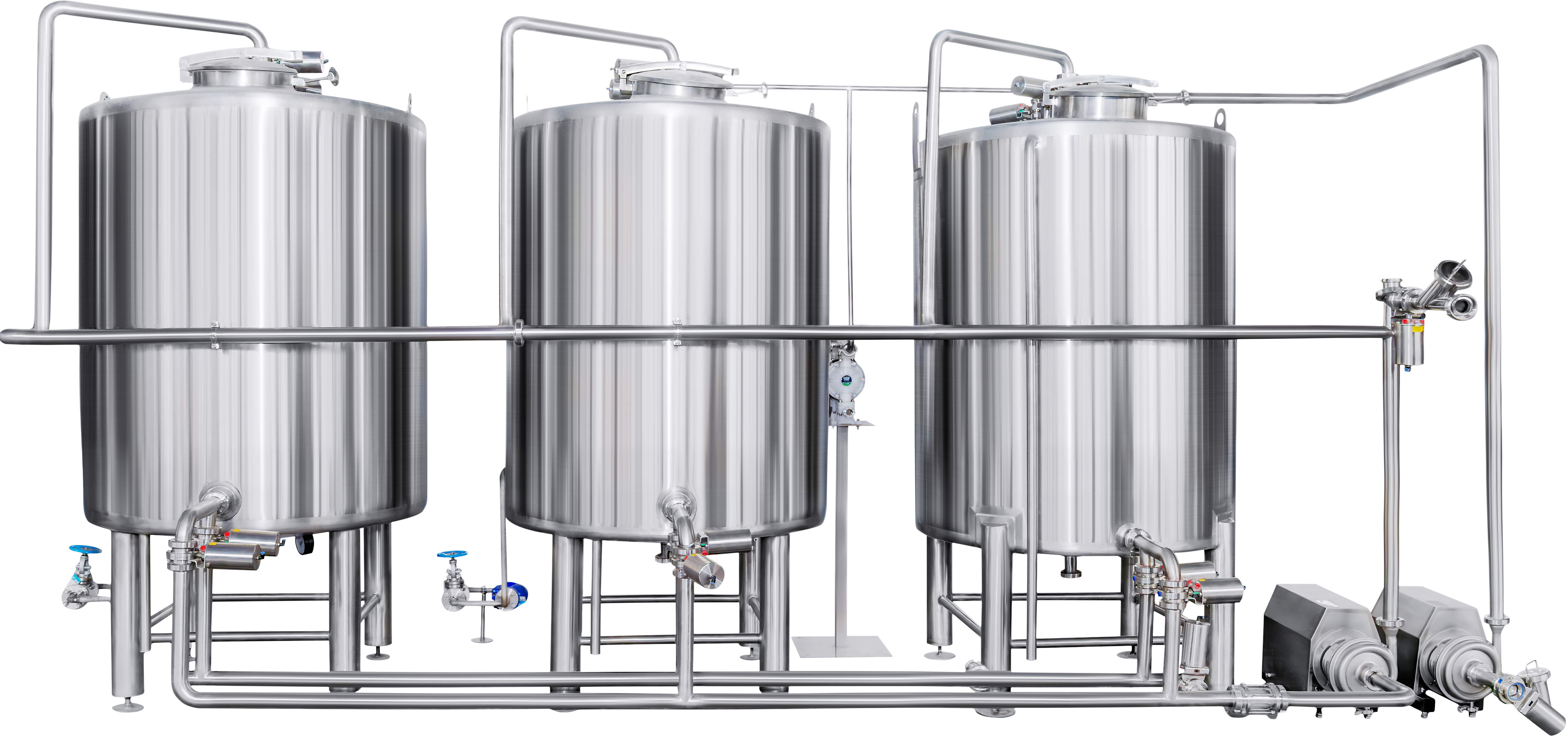
The first automation investment does not always need to operate equipment. Monitoring tank pressure, temperature, level, cooling status, and critical cleaning conditions can expose problems earlier. Digital batch records can also reduce the time spent reconstructing what happened after a deviation.
This approach is particularly useful for a new brewery with limited staff. The team can see whether a fermentation tank is drifting, whether a transfer has completed, or whether a cooling step has stalled without repeatedly walking to every vessel. The gain comes from visibility and repeatability rather than from removing people from the process.
The limitation is alarm fatigue. If every minor deviation generates the same urgent notification, operators eventually stop treating alarms as meaningful. Alarm limits should reflect the process, messages should identify the likely action, and staff should periodically review alarms that occur repeatedly. Otherwise, the brewery may collect more data while responding less effectively.
How to Scope a Phased Automation Plan
A new commercial brewery should not treat automation as an all-or-nothing investment. The suitable level depends on 5 planning inputs: planned output, beer portfolio, staffing, budget, and expansion goals.
Planned output determines how often equipment will operate and how costly manual delays become. A brewery producing occasional small batches may not need the same valve sequencing or data infrastructure as one running multiple brews per week. Beer portfolio also matters. A narrow core range may benefit from repeatable programs, while frequent recipe changes may require flexible operator controls rather than rigid automation.
Staffing affects the design in less obvious ways. A small team may need alarms and remote visibility, but it may also lack the time to maintain a complicated system. A larger team may tolerate more manual steps if responsibilities are clearly assigned. Budget should include installation, calibration, spare parts, training, software support where applicable, and downtime during commissioning—not just the equipment purchase.
Expansion goals should be specific. If a brewery expects to add fermentation tanks, a filling line, packaging equipment, or auxiliary systems, the control architecture and utility layout should not make that expansion unnecessarily difficult. Coordinated planning across the brewhouse and fermentation system can prevent a situation where one area is automated but later equipment cannot exchange useful status information.
The production schedule should be reviewed before selecting controls. If the schedule regularly fails because cooling takes too long, fermentation capacity is insufficient, or cleaning overlaps with the next brew, automation alone may not solve the constraint. Batch data can show where time is actually being lost. Without that review, a brewery may automate the most visible task rather than the most expensive bottleneck.
A phased plan often begins with reliable sensors, basic monitoring, fermentation temperature control, defined CIP sequences, and alarms. More advanced brewhouse programs, integrated batch records, packaging coordination, or automatic material handling can be added as sales volume and brewing frequency justify them.
Preventive maintenance must be part of the plan from the beginning. Sensors need calibration, pumps need inspection, valves need service, and control panels need protection from the brewery environment. Operators should know how to pause a sequence, isolate equipment, operate manually when appropriate, and document a fault. A system that works only when its original installer is available is not operationally mature.
Some equipment manufacturers report supplying projects to more than 120 countries and working under ISO 9001:2015 quality-management requirements. Those figures may describe manufacturing reach and process documentation, but they do not determine whether a particular automation plan fits a brewery. The brewery still has to match controls to its output, products, staff, building, utilities, and maintenance capacity.
The appropriate question during planning is therefore not “How automated should the brewery be?” It is “Which repeated decision currently creates the greatest quality, sanitation, safety, or scheduling exposure?” That answer may point to fermentation monitoring, a CIP sequence, a transfer pump, or an alarm system before it points to full brewhouse integration.
FAQ
Does automatic brewery equipment replace a skilled brewer?
No, it does not. Automation can repeat temperature, flow, timing, pressure, and cleaning instructions, while the brewer still manages recipes, raw materials, yeast, sensory evaluation, quality decisions, maintenance, and faults throughout each batch.
What should a new commercial brewery automate first?
It should usually start with fermentation control, CIP, brewhouse temperature and flow, and monitoring or alarms. These areas cover the first four practical priorities and can reduce variation before the brewery commits to broader integration.
Can automation improve beer consistency?
Yes, when the process variables are defined correctly and the equipment is maintained. Repeating water volumes, mash programs, transfer conditions, cooling targets, fermentation temperatures, and cleaning cycles can reduce batch variation, but automation cannot correct a flawed recipe or an inaccurate sensor.
Does brewery automation reduce labor requirements?
It reduces repetitive manual workload more reliably than it reduces total staffing. Staff may spend less time checking temperatures or moving valves, but they still need time for yeast handling, sensory checks, alarm response, cleaning verification, preventive maintenance, and production planning.
How does automation support brewery safety and sanitation?
It can monitor temperature, pressure, level, flow, chemical circulation, and cleaning sequences, while alarms can identify abnormal conditions earlier. Safe operation still depends on trained staff, written procedures, equipment inspection, chemical controls, and a clear response when an automated system fails.
