
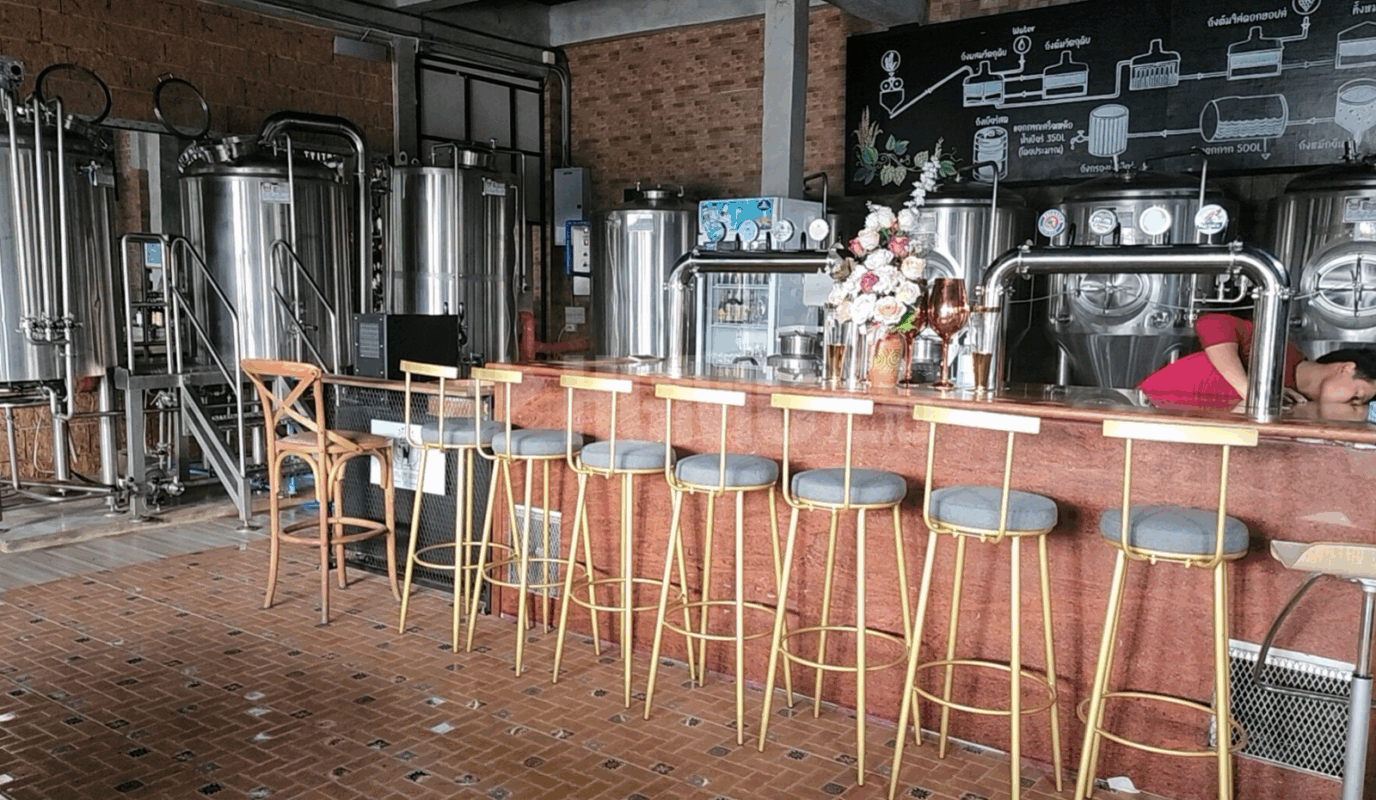
Scaling up to a 2000L batch size means you have passed the test-batch phase and are ready to produce beer in volumes that can actually stock taps, fill kegs for distribution, and keep a cooler consistently rotating. The equipment decisions at this scale are not obvious. A 2000L brewing system can sit in roughly the same floor space as a 1000L brewing system, but the supporting tank farm, cooling load, and CIP workflow scale differently. Brewers often ask whether a 2-vessel brewing system is fast enough to meet demand, how many fermenters they really need, and what drives the final price tag when proposals arrive from different manufacturers.
The answer is never a single configuration. A brewery producing two brews per day with a limited portfolio faces completely different constraints from one running four brews and packaging into kegs, bottles, and cans simultaneously. This article walks through each component, the trade-offs between brewhouse configurations, tank planning at scale, and the factors that determine whether your budget covers only the brewhouse or the entire cellar as well.
Let me walk through each piece of the plan so you can build a realistic specification before you start requesting quotes.
Core Components of a 2000L Brewing System
A complete 2000L brewing system is more than just the brewhouse vessels. The equipment list spans the hot side, the cold side, and the utility infrastructure that ties them together. Missing any one of these during planning leads to delays during installation or bottlenecks once production ramps up.
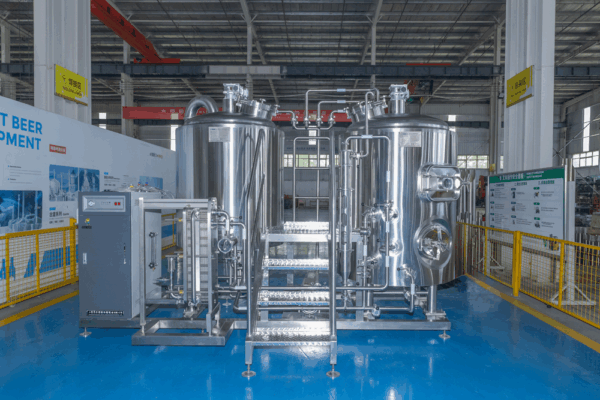
Brewhouse vessels. The hot side handles mashing, lautering, boiling, and wort clarification. In a 2000L brewing system, these vessels are sized to handle roughly 2400–2600L of pre-boil volume to yield 2000L of wort post-boil, accounting for evaporation and trub loss. Typical vessel configurations include a mash tun, lauter tun, kettle, and whirlpool — though some designs combine functions to reduce vessel count.
Fermentation and bright beer tanks. The cold side is where the volume really multiplies. A typical 2000L brewing system includes a brewhouse, 4–8 fermenters, and 2–4 bright beer tanks depending on beer rotation and conditioning schedule. Fermenters must hold at least one full batch volume, and many breweries opt for tanks at 2000L or 4000L to handle single or double-batch fills. Bright beer tanks are sized to match packaging runs and carbonation requirements.
Cooling systems, pumps, piping, and controls. A glycol chiller sized for the peak cooling load of all tanks simultaneously is essential — not just for fermentation temperature control but also for crash cooling before packaging. Pumps, heat exchangers, and sanitary piping connect every vessel. Controls range from basic manual valves to full PLC automation that manages temperature ramps and CIP cycles.
CIP solutions. Cleaning in place is not optional at 2000L. Manual cleaning of 2000L fermenters is physically demanding and inconsistent. A dedicated CIP system with a pump, heater, and spray balls mounted in each vessel allows you to clean between batches without disassembling piping. Most manufacturers include CIP capability as a standard part of the proposal, but the level of automation varies significantly.
In a typical workflow, grain moves into the mash tun, the lauter tun separates the wort, the kettle handles the boil and hop additions, and the whirlpool settles out trub before the wort passes through a heat exchanger into fermenters. After fermentation, the beer transfers to bright beer tanks for conditioning and carbonation before packaging. Each step depends on the step before it, so sizing any component too small creates a bottleneck downstream.
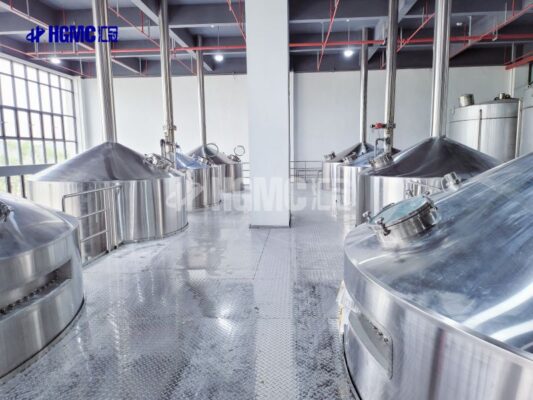
Brewhouse Configurations: 2-Vessel vs. 3-Vessel vs. 4-Vessel
The vessel count in a brewhouse is the single biggest driver of throughput and cost. Choosing the right configuration depends on how many brews you need to run per day, the space you have available, and whether you plan to staff a single shift or two.
A 2-vessel brewhouse combines the mash and lauter functions into one vessel — typically called a mash-lauter tun — and combines the kettle and whirlpool functions into another. This saves floor space and reduces the equipment price, but it limits workflow parallelism. While one batch is lautering, you cannot start mashing the next batch because the same vessel is occupied.
A 3-vessel configuration keeps the mash tun and lauter tun separate but still combines the kettle and whirlpool. This allows overlapping operations: you can lauter in the lauter tun while mashing in the mash tun, and sometimes you can start boiling while the previous whirlpool is settling. Throughput improves noticeably.
A 4-vessel configuration uses separate vessels for mash, lauter, kettle, and whirlpool. Every stage can run in parallel across multiple batches. Breweries that need four or more brews per day typically choose this layout.
Here is how the three configurations compare:
| Configuration | Vessels | Max Brews/Day | Space Footprint | Relative Cost |
|---|---|---|---|---|
| 2-vessel | Mash-lauter tun + kettle-whirlpool | 1–2 | Compact (≈40% less floor space) | Baseline |
| 3-vessel | Mash tun, lauter tun, kettle-whirlpool | 2–3 | Moderate | 15–25% higher than 2-vessel |
| 4-vessel | Mash tun, lauter tun, kettle, whirlpool | 4+ | Large | 30–45% higher than 2-vessel |
A 2-vessel brewhouse is roughly 15–25% cheaper than a 3-vessel but may limit daily brews to 2. However, that limit is not absolute. If you run two shifts — one starting at 6 AM and another at 2 PM — you can push a 2-vessel brewhouse to three brews per day consistently. The configuration determines the ceiling, but staffing and shift structure determine whether you actually hit it.
For a brewery producing two to three beer styles and serving a local taproom plus limited distribution, a 2-vessel system with two daily brews is often enough for the first two years. The savings can be redirected toward additional fermenters, which are where most breweries find themselves under-invested.
Fermentation and Bright Beer Tank Planning at 2000L Scale
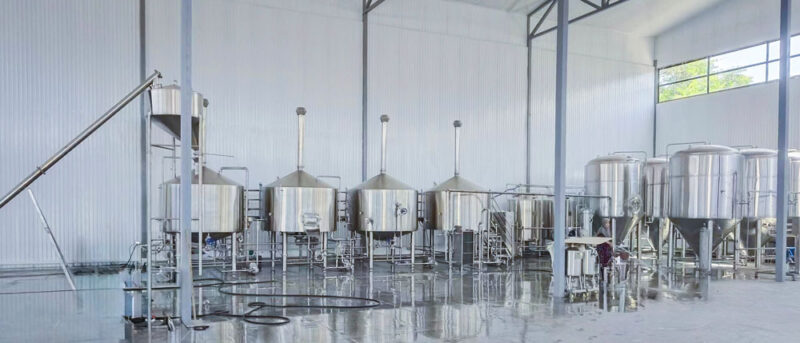
The most common mistake I see when breweries scale to 2000L is buying too few fermenters. The brewhouse gets all the attention — shiny vessels, nice controls, impressive throughput. The tank farm feels like it can grow later. But within three months of commissioning, the brewery runs out of empty fermenters and has to dump beer earlier than planned to free up space, compromising quality.
Tank count is not driven by batch volume alone. It is driven by your beer portfolio, conditioning times, and schedule.
Here is a realistic example. A brewery producing 4 brews per week with 14-day fermentation and 7-day conditioning needs at least 8 fermenters and 4 bright beer tanks. Why? Each fermenter holds one batch. If you brew four times per week and each batch needs 14 days in the fermenter, you need 8 fermenters just to hold two weeks of production — and that assumes no double-batching, no extended lagering, and no seasonal beers occupying tanks for longer.
If you add a lager that conditions for 21 days, you need even more tanks or you need to accept that you will not brew that lager while standard ales are running.
Bright beer tank sizing is often underestimated as well. A bright beer tank needs to hold an entire packaging run — typically two to four batches blended together to achieve consistent carbonation and flavor. If you keg, you can package over multiple days, so a smaller bright beer tank works. If you bottle or can, you may need a larger tank to feed a filler continuously.
The glycol chiller must be sized for the worst-case cooling load: all fermenters in active fermentation simultaneously, plus crash cooling on one or two tanks. Many breweries buy a chiller that covers average load and then find they cannot crash a tank in under 48 hours during peak season.
CIP design at this scale matters more than many realize. If you have 8 fermenters and every batch needs a caustic rinse between fills, you need a CIP system that can reach every tank without long hose runs or manual valve switching. A dedicated CIP station with a pump and heater sized for 2000L vessels saves hours per week.
Here is a hard truth about tank count: you should calculate the number of fermenters based on your target production volume in year two, not year one. Year one demand is almost always lower than projections. By year two, you will need the capacity. Installing additional tanks later costs more — the glycol piping, electrical runs, and floor layout must accommodate expansion from the start, or you pay for rework.
Key Price Drivers for 2000L Equipment
The price of a 2000L brewing system varies more than most breweries expect before they start collecting quotes. The range can be significant even for the same nominal batch size. Understanding what drives the cost helps you decide where to spend and where to hold back.
Brewhouse configuration. A 2-vessel brewhouse is the most economical starting point. Moving to 3-vessel adds 15–25%, and moving to 4-vessel adds 30–45% over the 2-vessel baseline. The price increase comes from additional vessels, more piping, larger platforms, and more valves and instruments.
Total tank volume and material specs. This is where cost compounds. Every additional fermenter adds to the total steel weight. Thicker stainless steel (4 mm vs. 3 mm for the walls, 6 mm vs. 4 mm for the bottom) increases durability and longevity but adds material cost. Polished interiors, dimple jackets for cooling, and sanitary fittings all add to the price.
Cooling and utility system sizing. A glycol chiller sized for 8 fermenters at 2000L costs more than one sized for 4 fermenters, but the incremental cost is smaller than adding tanks later because the chiller is a single purchase. Piping, insulation, and pumps scale with the number of tanks.
Automation level: manual vs. semi-automatic vs. full PLC. This is where many breweries over-spend early. Manual controls — basic valves, sight glasses, temperature gauges — are perfectly usable for the first year of operation. Semi-automatic controls add temperature control loops and automated CIP sequences. Full PLC automation manages the entire brewhouse from a touchscreen, logs every batch, and can integrate with cellar controls. Full automation can add 20–40% to equipment cost compared to semi-automatic.
Customizations and accessories. Extra ports for dry hopping, CIP return lines on every fermenter, variable-speed pumps, inline carbonation stones, and custom control panels all accumulate. These add value for specific brewing processes but should be added only when they solve a real production problem.
The practical approach for most breweries is to spend on the brewhouse configuration that supports target throughput, invest in enough fermenters to handle year-two demand, and choose semi-automatic controls rather than full PLC automation. The money saved on automation can fund two additional fermenters, which has a bigger impact on production capacity than touchscreen control of the mash tun.
Step-by-Step Buying Guide for Your 2000L Brewing System
The process from initial planning to placing an order for a 2000L brewing system typically takes 3–6 months. Rushing the planning stage leads to expensive mistakes or delays during installation. Here is a sequence that works.
Step 1: Define capacity and product mix. Estimate your annual output in hectoliters. A 2000L brewhouse running 3 brews per day, 5 days per week, produces roughly 12,000–15,000 hL per year depending on efficiency and downtime. Outline which beers you will produce regularly and which are seasonal. Lager-heavy portfolios need more fermentation tank days because of longer conditioning.
Step 2: Assess building constraints. Measure floor space, ceiling height, and access routes. A 2000L brewhouse with a ceiling-mounted platform needs at least 4.5–5 meters of clear height. Door widths must accommodate tank delivery — 2000L fermenters with legs are roughly 1.6–1.8 meters in diameter and 2.5–3 meters tall. Consider where drains, power, glycol lines, and steam or electric connections enter the space.
Step 3: Choose brewhouse configuration. Reference the comparison table earlier in this article. Match configuration to your target number of brews per day, not to your aspirational number. A 2-vessel brewhouse with two shifts can match the throughput of a 3-vessel on a single shift for less upfront cost.
Step 4: Plan the tank farm. Calculate fermenters based on 14-day cycle for ales, 21-day for lagers, and add one or two extra for seasonal beers and scheduling buffers. Bright beer tanks should hold 1.5–2 times a single packaging run volume to allow blending and consistent carbonation.
Step 5: Decide on automation level. Start with semi-automatic controls for the brewhouse and manual or semi-automatic controls for the cellar. Add full PLC automation only if you have staff who can program and maintain it, or if your packaging line requires integrated batch tracking.
Step 6: Request detailed proposals. Provide the same specification to at least two or three manufacturers — batch size, vessel configuration, tank count, automation level, utility requirements. A detailed proposal includes vessel drawings, piping and instrumentation diagrams, utility connection requirements, and a timeline for manufacturing and installation.
By the time you receive proposals, you will have enough context to evaluate whether a manufacturer understands your production needs or is simply quoting a standard package.
FAQ
What is the difference between a 2-vessel and a 3-vessel brewhouse for 2000L brewing system?
A 2-vessel brewhouse combines mash and lauter functions into one vessel and kettle and whirlpool into another. A 3-vessel separates the mash tun and lauter tun but still combines kettle and whirlpool. The 3-vessel allows overlapping brews — you can lauter one batch while mashing the next — which increases daily capacity from 1–2 brews to 2–3 brews without adding staff.
How many fermenters do I need for a 2000L brewing system setup?
For a brewery producing 4 brews per week with 14-day ale fermentation cycles, you need at least 8 fermenters to hold two weeks of production without interruption. If you brew lagers or plan seasonal beers, add 2–4 more. Most breweries find they need more fermenters than they originally estimated within six months of operation.
What is a realistic budget for a 2000L brewing system?
A complete system including brewhouse, 6–8 fermenters, 2–4 bright beer tanks, glycol chiller, CIP system, and controls typically ranges from approximately $150,000 to $350,000 depending on configuration, automation level, and material specifications. A 2-vessel manual system on the low end and a 4-vessel system with full PLC automation on the high end represent the extremes.
How long does it take to install and commission 2000L brewing equipment?
Manufacturing typically takes 8–14 weeks for a standard system. Installation on site takes 2–4 weeks depending on site preparation and utility connections. Commissioning — leak testing, CIP validation, and first brews — adds another 1–2 weeks. From order placement to first commercial batch, plan for roughly 4–5 months total.
