
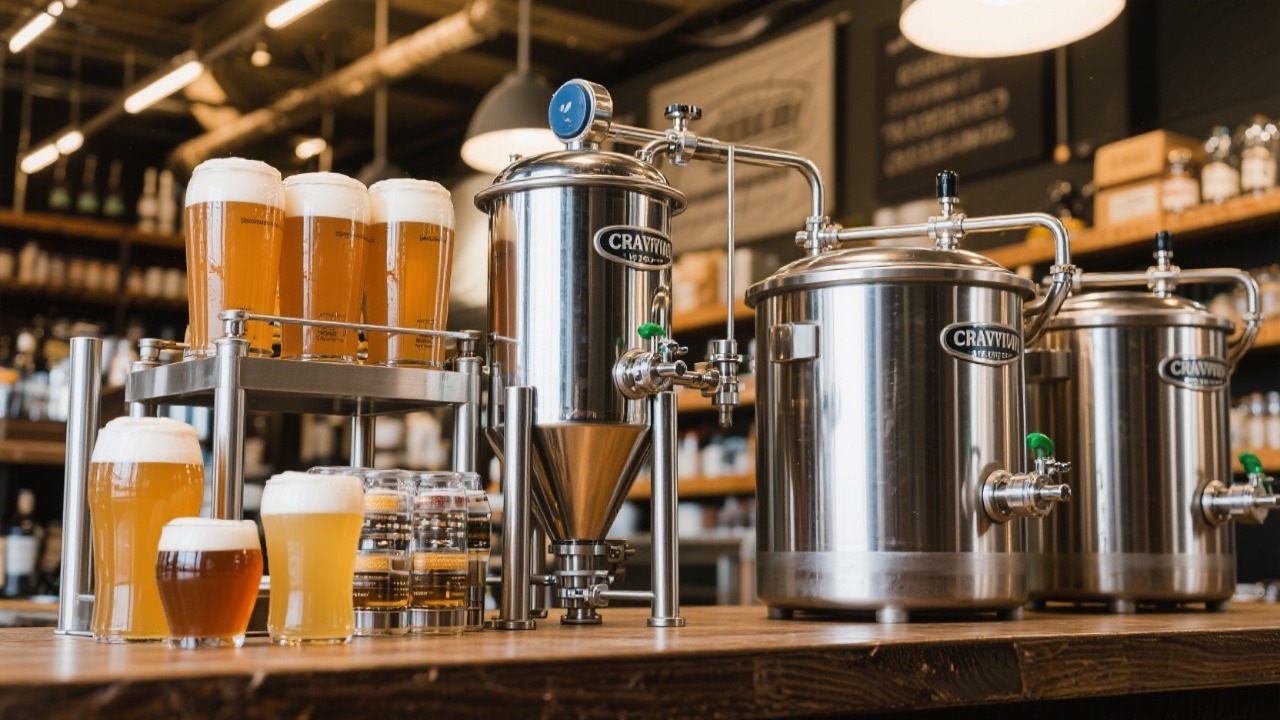
Every brewery starts with a recipe that defines its identity, but translating that recipe into a consistent, repeatable product requires equipment that works as hard as the brewers. Too many new breweries invest in hardware that limits experimentation or fails under the pressure of growth, leading to costly retrofits or, worse, compromised batches. This article cuts through the spec sheets to focus on the craft brewing supplies that directly affect flexibility, hygiene, and long-term scalability — the three pillars that separate a brewery that survives from one that thrives.
The equipment decisions made in the first year determine whether a brewery can double output without replacing half its hardware. A typical starting brewhouse volume for craft breweries is around 2000 liters, and the vessels, fittings, and cleaning infrastructure chosen at that stage create either a foundation for growth or a ceiling that forces an expensive rebuild eighteen months later. The difference comes down to understanding which supplies matter operationally and which are just marketing features on a spec sheet.
Craft Brewing Supplies for Flexible Recipe Development
Craft breweries rarely survive on a single flagship beer. The brewhouse must handle everything from a thick oatmeal stout mash to a highly modified pilsner malt bill, and the equipment choices made at the start determine whether that range is achievable or frustrating.
Versatile mash-lauter tuns with properly designed rakes and false bottoms are the first differentiator. A false bottom with narrow slots works well for fine grists but clogs on adjunct-heavy mashes with flaked oats or wheat. Some breweries compromise with a mid-slot design that handles neither extreme well. A tun with adjustable rakes and a dual-purpose false bottom lets brewers switch between styles without disassembling the vessel between batches. Cleaning a mash tun that was designed only for thin mashes becomes a full-shift job after a thick, sticky mash sits in the dead zones under the rakes.
Kettle heating systems also carry tradeoffs that show up during recipe development. Steam-jacketed kettles provide even heat distribution and support both gentle simmering for delicate hop additions and vigorous rolling boils for isomerization. Direct-fire kettles cost less upfront but create hot spots that scorch dark worts and make gentle boils nearly impossible to maintain. Breweries that plan to experiment with hop-forward styles or delicate lagers should factor in whether the heating system can hold a steady temperature gradient across the full surface of the kettle floor.
Whirlpool vessels are often treated as optional in smaller brewhouses, but skipping one creates a bottleneck. Without proper hot trub separation, the kettle acts as both boiling and settling vessel, which means the trub bed gets disturbed during knockout. A dedicated whirlpool vessel improves clarity entering the heat exchanger and reduces the risk of off-flavors from degraded trub carried into fermentation. The vessel geometry matters — a flat-bottom whirlpool with a tangential inlet produces a better cone than a cone-bottom tank repurposed for the job.
Heat exchangers and oxygen-safe piping complete the brewhouse circuit. Plate-and-frame heat exchangers are standard for most craft volumes, but the piping that carries wort from the kettle to the fermenter must be rated for oxygen avoidance. Many breweries discover in the first year that standard stainless tubing with rubber gaskets introduces micro-oxygen at every junction, dulling the hop character in pale ales within weeks of packaging.
Fermentation Supplies for Precise Control Across Styles
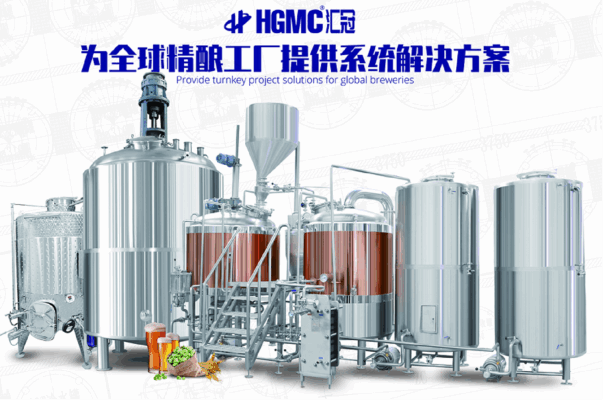
The fermentation cellar is where recipes either express their full character or drift into inconsistency. Many craft breweries operate with a mix of one or two large flagship tanks and several smaller tanks for experimentation, often in the 10–30 hectoliter range. Standardizing on a reliable tank design simplifies cleaning and inventory management across the entire cellar.
Cylindroconical tanks with multiple cooling zones are the single most impactful investment for temperature-sensitive yeast strains. A single-zone jacket works for ales fermented at a steady 18–22°C, but lagers that require a staged temperature ramp from 10°C down to 2°C need independent control of the cone and body zones. Without separate cooling zones, the yeast bed in the cone stays warmer than the rest of the tank during cold crash, leading to autolysis and sulfur notes that take weeks of lagering to scrub out.
Tank sizing is a second decision that compounds over time. A brewery that buys all large tanks to chase production volume loses the ability to run small-batch seasonals and experimental releases. The brewers end up committing an entire 30-hectoliter tank to a test batch that might not sell, or skipping the experiment entirely. A more practical layout pairs two or three flagship-sized tanks with a row of half-size tanks that can be dedicated to limited runs, barrel-aged split batches, or pilot recipes.
Dry hop ports are no longer optional for breweries competing in the IPA-heavy segment. A 15-centimeter tri-clamp port on the tank top lets brewers add hops without opening the manway, reducing oxygen ingress. Some tanks include a bottom dry hop port with a recirculation arm that pushes hop material back into suspension. Without these ports, brewers resort to dumping hops through the manway, which exposes the entire batch to atmospheric oxygen and introduces a measurable drop in hop intensity over the shelf life.
Sanitary sampling valves and pressure-rated fittings seem like details until they fail mid-fermentation. A standard ball valve on a sample port traps beer and sediment in the cavity, creating a biofilm that contaminates every subsequent sample. Butterfly valves with full-port design and removable seats solve this, but they require a different fitting standard than the rest of the cellar. Breweries that standardize on one brand of fittings and valves across the entire operation reduce downtime by making spare parts interchangeable and training simpler. A single leaking valve during a critical fermentation hold can delay dry hopping by an entire day, pushing the schedule and stressing the yeast.
Cleaning and Hygiene – The Backbone of Beer Quality
Poor hygiene is the most common reason a brewery loses its edge. No matter how creative a recipe is, a contaminated batch will taste the same — sour, buttery, or phenolic — and customers will not care which yeast strain was responsible. A single contaminated batch can cost a craft brewery thousands of dollars in lost product and brand damage, making hygiene investments pay for themselves the first time they prevent an infection.
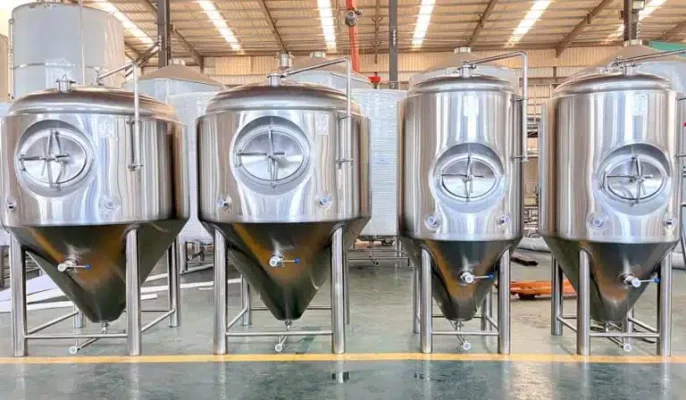
CIP spray balls must be installed in every tank for effective internal cleaning. A fixed spray ball with the correct flow rate covers the entire internal surface, but many breweries install undersized balls or omit them from tanks purchased secondhand. Without a spray ball, operators must manually scrub every tank, which introduces variability — one brewer leaves a biofilm in the cone while another scrubs it clean. The result is inconsistent beer that changes character between batches brewed by different shifts.
Setting up a CIP station or manifold to circulate cleaning solutions through tanks, hoses, and heat exchangers is the infrastructure investment that separates professional breweries from hobby operations. A properly designed manifold allows a single pump to sequence caustic, acid, and sanitizer through multiple vessels with minimal labor. The design must account for line lengths, elevation changes, and solution temperatures. A brewery that neglects CIP system design early on will spend months fighting inconsistent beer quality and higher cleaning costs, eventually requiring a costly retrofit within the first 18 months.
Properly rated hoses, gaskets, and seals are consumables that breweries often underinvest in until a failure occurs. A gasket that degrades over time creates a micro-crevice where bacteria hide. Silicone gaskets rated for repeated CIP cycles last longer than EPDM but cost more upfront. The brewery that buys cheap gaskets replaces them every three months and still finds pinhole leaks during pressure tests. The brewery that invests in sanitary-grade hardware from the start runs consistent cleaning cycles and rarely pulls a tank offline for resealing.
Verification tools like sight glasses in strategic locations let operators confirm that cleaning solutions reached every surface. A sight glass on the CIP return line shows when the effluent runs clear, but it does not prove the tank is clean — only that the rinse water looks clean. Some breweries supplement sight glasses with ATP swab testing on a rotating schedule, checking a different tank each cleaning cycle. Without verification, a brewery can run a perfect CIP procedure and still miss a soiled surface in the upper dome where the spray ball coverage is weakest.
| CIP component | Function | Common failure point |
|---|---|---|
| Spray ball | Distributes cleaning solution across tank surface | Undersized ball or incorrect flow rate leaves unwashed areas |
| CIP manifold | Routes cleaning solutions through multiple vessels | Line lengths or elevation changes reduce flow to distant tanks |
| Sanitary gasket | Seals tank and pipe connections | Degraded gasket creates micro-crevices for bacterial growth |
| Sight glass | Visual confirmation of rinse clarity | Cannot detect biofilm or soil on upper tank surfaces |
Scalable Equipment for Growth Without Replacement
Breweries that plan for expansion from the start can often double capacity within two years without replacing major equipment, saving 40–60% of the cost of a complete rebuild. The equipment choices that enable this kind of scaling are not always obvious at the point of purchase.
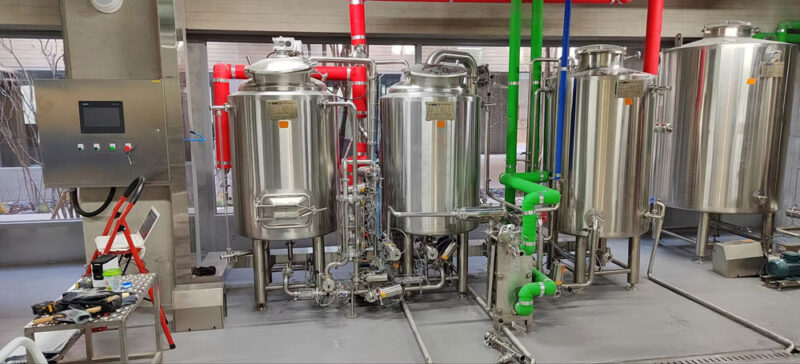
Modular brewhouse designs that allow adding vessels or upgrading automation later cost slightly more upfront but save money over three years because they avoid replacing a turnkey system that cannot handle new recipes. A two-vessel brewhouse handles the basics — mash, lauter, boil — but adding a third vessel for sparge water heating or a dedicated whirlpool tank requires the original system to accept integration. Some manufacturers build modular frames with pre-drilled mounting points and spare pump ports that make additions straightforward. Others seal the system in a welded frame that requires cutting and welding to modify.
Planning tank farms with spare glycol capacity and room for extra tanks is another scaling decision that pays off on a two-year horizon. A glycol system sized for the initial tank count will hit capacity the day the sixth tank is installed. Breweries that oversize the chiller by 30–40% at the start can add tanks incrementally without replacing the primary cooling loop. The piping header should include capped ports for future tank connections, so adding a fermenter takes a day instead of a week of cutting and welding.
Standardized fittings and valve types across the entire brewery simplify spare parts management to a single shelf of tri-clamp gaskets, butterfly valves, and sample ports. A brewery that uses one brand of fittings for the brewhouse, another for the cellar, and a third for the packaging line carries three sets of spare parts and trains every new hire on three different coupling styles. The downtime cost of searching for the correct gasket during a CIP changeover adds up across the year.

Control systems that can accommodate more tanks and additional sensors over time prevent the brewery from outgrowing its automation. A PLC-based system with spare I/O channels and a modular bus architecture accepts new tank controllers without replacing the main panel. Breweries that buy fixed-capacity controllers with no expansion slots face a rip-and-replace decision when they add their third or fourth fermenter.
Working with an equipment partner who maps a multiyear plan prevents premature obsolescence. A supplier that asks about planned capacity three years out, not just the initial order, can recommend vessel sizes, glycol loads, and automation tiers that scale incrementally. The brewery that buys only for the present often finds that the next expansion requires replacing equipment that still has years of useful life, because the original system was not designed to grow.
FAQ
What is the most important piece of equipment for a starting craft brewery?
A well-designed mash-lauter tun with an effective false bottom and rakes is the most consequential piece of equipment. It determines how many styles the brewery can produce, how consistently they come out, and how much time the brewer spends cleaning between batches. A flexible mash tun costs more upfront but enables year-round recipe development without equipment limitations.
How do I choose between a two-vessel and three-vessel brewhouse?
A two-vessel system combines mash and lauter in one tank, which saves floor space and capital cost but slows down high-gravity brewing and limits parallel work. A three-vessel system dedicates separate vessels to mash, lauter, and kettle, allowing the brewer to sparge and boil simultaneously. Breweries planning to produce more than 2000 liters per batch or multiple styles per day should start with three vessels.
Can I add more fermentation tanks later without replacing my glycol system?
Yes, if the glycol system was oversized at installation. Adding 30–40% spare cooling capacity at the start and installing a piping header with capped ports allows new tanks to be connected without replacing the chiller or repiping the main loop. Breweries that size the glycol system exactly to the initial tank count will need to replace the chiller when adding even one more fermenter.
How often should I replace gaskets and seals in my brewing equipment?
Sanitary gaskets should be inspected monthly and replaced every three to six months depending on CIP frequency and chemical exposure. Silicone gaskets rated for repeated hot caustic cycles last longer than EPDM gaskets but should still be replaced on a scheduled basis. A gasket that feels hard, shows cracks, or leaves residue on the sealing surface has already compromised the sanitary boundary and should be replaced immediately.
