
The moment arrives in every growing craft brewery: twenty-liter pilot batches are running constantly, but the taproom is selling out by Thursday, and distributors are circling your core IPA. You look at 10,000-liter vessels and feel the weight of a single bad batch. You look at your current 500-liter system and know you will spend the next year in a constant state of tank conflicts. The 3000L scale sits exactly in this gap — large enough to supply a solid local distribution footprint, small enough that a batch of experimental gose gone wrong does not bleed you dry. This is where flexibility becomes more valuable than raw capacity, and the equipment decisions you make now will either enable that flexibility or lock you into a rigid production schedule that kills your seasonal program before it starts.
Why 3000L Hits the Sweet Spot for Growing Craft Breweries
The breweries that start looking at 3000L brewery systems usually share a common pattern. They have outgrown a 500L or 1000L pilot system, yet their portfolio still demands rotation. A single flagship IPA might account for 40 percent of sales, but the rest comes from seasonals, collabs, and the occasional taproom-only sour series. At 3000L brewery, a brewery can run two to three core beers on a predictable fermenter cycle — say, a ten-day turnaround for ales, sixteen days for lagers — while carving out tank space for two seasonal batches per month without throwing the entire schedule into chaos.
Most breweries at this scale run 2–3 core beers plus seasonal and taproom specials, keeping each batch at 3000L. That number is not arbitrary. Below it, the math on local distribution does not work well — you spend too much time cleaning and less time selling. Above it, the batch risk grows proportionally. A 10,000L batch of a new recipe that misses the mark ties up production capacity and raw materials for weeks. At 3000L, the exposure is contained. You can afford to experiment.
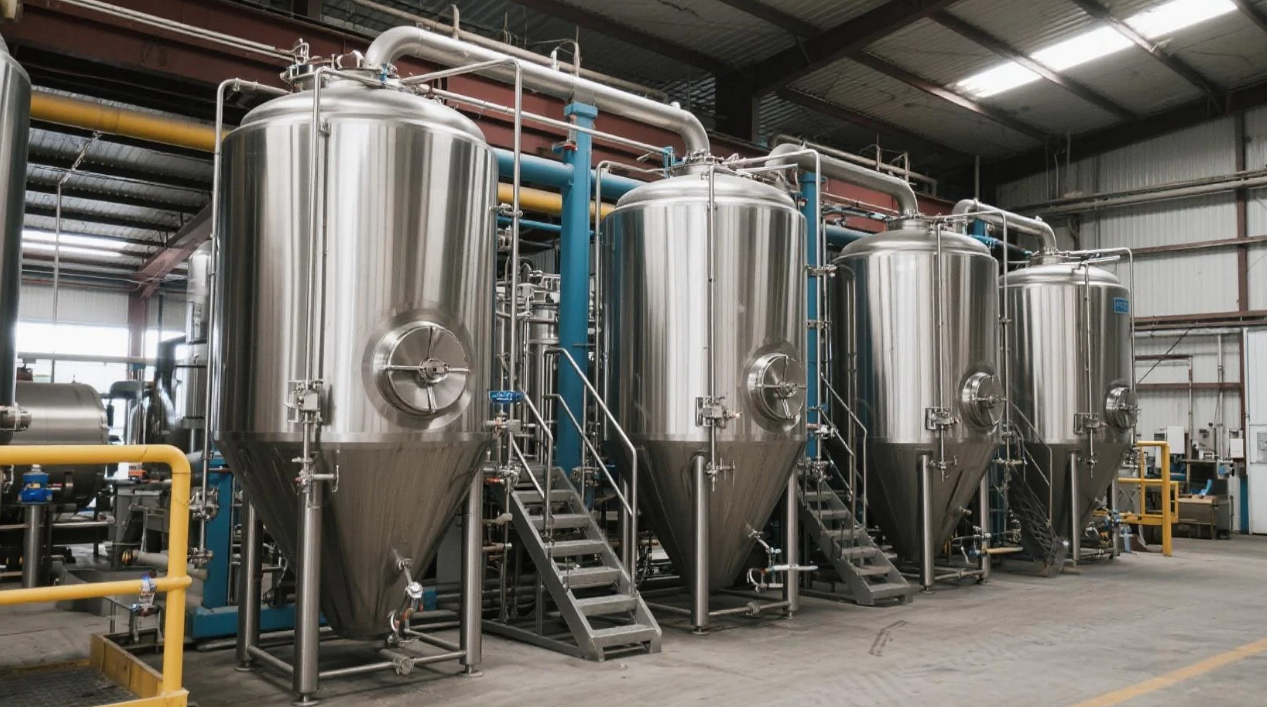
The real bottleneck at 3000L is often not the brewhouse but the fermentation cellar. Brewers planning their first system at this scale tend to fixate on the hot side — how fast can I mash out, how efficient is the lauter tun — while underestimating how many fermenters they actually need to support a rotating lineup. A single 3000L brewhouse can easily push out more wort per week than the cold side can handle if the tank count is wrong. The rule of thumb I have seen work is one fermenter per core beer, plus one or two extras for seasonals, plus a bright beer tank sized for your packaging run. That comes to four to six fermenters and at least two bright beer tanks for most operations at this capacity.
Key Components of a Complete 3000L Brewery Package
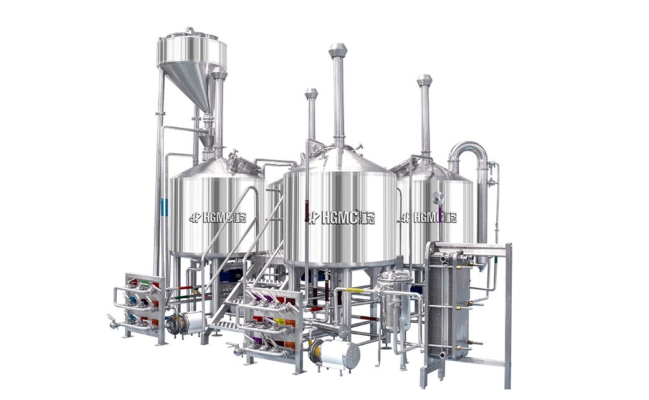
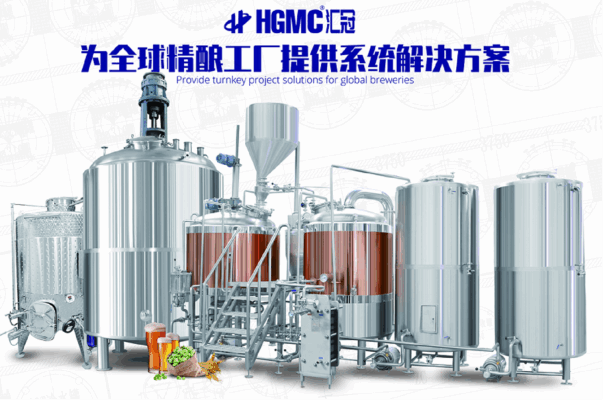
A complete 3000L brewery package breaks down into three functional blocks, and each block must be matched not just to the batch volume but to the brewery’s actual production rhythm. Over-speccing one area while under-investing in another is the most common mistake at this scale.
| Component | Function | Typical Specification |
|---|---|---|
| Mash/Lauter Tun | Mashing and wort separation | 3000L, combined or separate vessels |
| Kettle/Whirlpool | Boiling and trub removal | 3000L, combined or separate |
| Heat Exchanger | Cool wort to pitching temperature | Sized for 3000L batch |
| Fermenter (CCT) | Primary fermentation | 3000L, with cooling jackets |
| Bright Beer Tank | Maturation and carbonation | Sized per packaging run |
| Support Systems | Glycol chilling, CIP, controls | Matched to total tank volume |
The brewhouse itself typically includes a mash-lauter tun and a kettle-whirlpool, each at 3000L capacity. Some configurations combine mash and lauter into one vessel; others split them. A combined vessel saves floor space and capital but extends the brew day slightly because you cannot sparge while the next mash is starting. The heat exchanger must be sized to bring a full 3000L batch down to pitching temperature in a single pass without straining the glycol system.
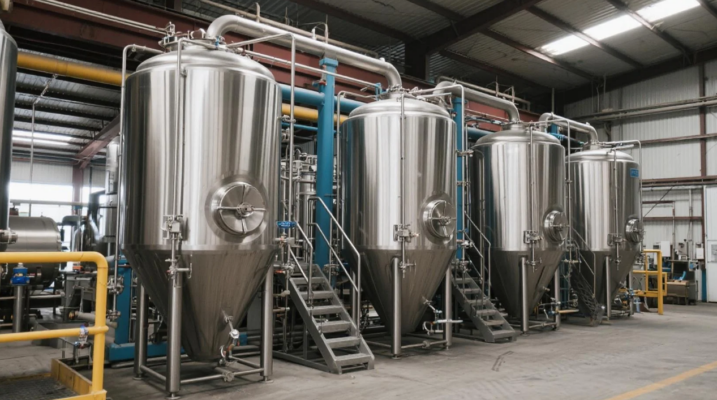
On the cold side, several 3000L cylindroconical fermenters form the backbone of the cellar. Each fermenter needs independent temperature control zones — not just a single jacket, because a 3000L column of beer behaves differently at the top and bottom during active fermentation. Bright beer tanks should be sized to match the largest single packaging run you anticipate. If you keg predominantly, a 3000L bright tank will fill roughly 150 standard kegs per cycle.
Support systems are where many breweries quietly hemorrhage budget. The glycol chiller must be sized for the total peak load — all fermenters crashing simultaneously, plus the heat exchanger demand during brew days. The CIP station needs enough reach to clean every vessel without dragging hoses across the brewhouse floor. A glycol piping circuit that is undersized by even one diameter increment will cause temperature stratification in the fermenters, and chasing that problem after installation costs far more than getting it right in the design phase. HGMC, as a supplier example, typically connects these blocks through a layout that respects the building shape and planned workflow — from malt receipt to finished beer leaving the cellar — rather than forcing a generic floor plan onto an existing space.
Designing Your 3000L System for Multi‑Style Brewing
The central promise of a 3000L brewery is the ability to switch between styles without constant equipment reconfiguration or scheduling breakdowns. This design goal influences tank layout, vessel geometry, and even the control system configuration.
A well-planned 3000L brewhouse allows a brewery to produce three core beers and two seasonals per month without constant scheduling conflicts. Achieving that requires deliberate scheduling discipline. Core beers — the ones that move steadily through the taproom and distribution — should anchor the fermentation schedule. They are predictable: same yeast strain, similar gravity, consistent turnaround time. The IPA gets brewed every Tuesday, the lager every Thursday, the wheat beer every Saturday. Those three brews cycle through three dedicated fermenters on a fixed rotation, and the schedule becomes muscle memory for the team.
Seasonals slot into the remaining fermenter capacity. A darker stout for winter, a fruited sour for summer, a fresh-hop ale for the fall — these beers tie up fermenter space for longer, sometimes three to four weeks, and the tank planning must account for that. The mistake is to treat seasonals as an afterthought, assuming they can squeeze into whatever tank is free. They cannot. A 3000L fermenter that holds a core IPA for ten days cannot be used for a eighteen-day lager without breaking the core schedule.
Specialty projects — collab beers, barrel-aged variants, dry-hop experiments — can usually be handled on the same 3000L brewhouse with minor process changes rather than requiring separate equipment. A different mash profile for a high-adjunct stout, a longer boil for a barleywine, a whirlpool hop addition that takes thirty extra minutes — these adjustments are feasible on a well-designed system. The brewhouse must have enough flexibility in temperature control and pump speed to accommodate the range, but most 3000L systems from established suppliers handle this without issue.
Many breweries underestimate the cost and complexity of support systems during the design phase. The glycol piping network is a common culprit. A brewery designing for a single core beer might run a simple loop with one zone per tank. A brewery designing for variety needs independent temperature control per tank, sometimes per jacket, and the glycol pipe runs must account for heat gain across the cellar. The CIP manifold must reach vessels in different configurations — a vessel holding a dry-hopped IPA needs different cleaning protocol than one that held a kettle-soured gose. These details are not expensive to include in the initial build, but they are expensive to retrofit.
Rightsizing Your Investment: Cost and Layout Considerations at 3000L
The investment for a 3000L system is roughly three to five times higher than a 500L–1000L system, but it still falls well below the cost of heavy industrial plants. The conversation around budget at this scale should center on tradeoffs, not upgrades. Every dollar spent on automation is a dollar not spent on fermenter capacity, and the wrong choice here is permanent.
Compared with very small systems (500L–1000L), the investment for a 3000L system is roughly 3–5x higher, but still far below heavy industrial plants. A brewery that jumps to full automation — automated mash-in, automated sparge, automated valve sequencing — on a system that only runs two brews per week is paying for capability it will never use. I know of a brewery that invested in a fully automated 3000L brewhouse with three fermenters, only to discover that their actual brewing schedule of two brews per week did not require the extra control capacity. They had a brewhouse that could run itself, but they were constantly waiting on fermenter space because they skipped buying a fourth tank. The automation sat idle most of the time, while the fermenter bottleneck cost them a seasonal release every quarter. They later regretted not putting that budget into a fourth fermenter instead.
The layout of support systems — glycol piping routes, CIP manifolds, drain slopes — is often the most underestimated part of the design. A straight-line layout works for a single-core brewery. A brewery making varied styles needs the ability to isolate tanks, run CIP cycles to different vessels simultaneously, and drain the cellar floor without pooling. Drains that are too shallow or pipes that take long routes to the glycol chiller cause real operational friction. Every extra minute spent routing a CIP hose or waiting for a drain to clear is a minute lost from the brew day, and at a three-hour brew cycle, those minutes compound across the week.
The brewhouse configuration itself presents a tradeoff between simplicity and flexibility. A two-vessel system (mash-lauter combined with a kettle-whirlpool) costs less and takes up less floor space, but the brew day is longer because you cannot mash and lauter simultaneously. A three-vessel system (separate mash, lauter, and kettle) allows overlapping steps and shorter brew days, but it requires more floor space and a larger capital outlay. For a brewery planning two brews per day, a three-vessel system makes sense. For a brewery brewing every other day, the simpler two-vessel configuration saves money without hurting throughput.
FAQ
How many fermenters do I need for a 3000L brewery?
A minimum of four 3000L cylindroconical fermenters and two bright beer tanks is typical for a brewery running three core beers plus seasonals. Each core beer needs a dedicated fermenter to maintain the production rhythm, and the extra capacity allows for seasonal rotation without disrupting the core schedule.
What is the typical lead time for a 3000L brewery system?
Lead times range from twelve to twenty weeks for standard configurations from established manufacturers. Custom layouts or unusual vessel geometries can push this to twenty-four weeks or longer. Planning six months ahead of your target startup date is prudent.
Can I brew different beer styles back‑to‑back with the same 3000L brewery system?
Yes, with minor adjustments. Changing between an ale and a lager requires different mash temperatures and fermentation profiles, but the brewhouse handles both without modification. Switching between heavily hopped IPAs and clean lagers requires a thorough CIP between runs to avoid hop carryover.
How much space does a 3000L brewery require?
A complete 3000L brewery — brewhouse, four fermenters, two bright tanks, glycol system, and CIP station — typically occupies 2,500 to 3,500 square feet of heated, climate-controlled space. Fermenter height often dictates ceiling clearance; 3000L tanks are typically 10 to 12 feet tall with room for headspace and manway access.
What are the common mistakes when scaling up to 3000L?
Under-investing in fermenter capacity while over-investing in brewhouse automation is the most frequent mistake. Other common errors include undersizing the glycol system for peak heat load, neglecting CIP manifold design, and planning tank layouts without considering drain slopes and cleaning access. A brewery that rushes the layout phase often spends twice as much on retrofits within the first year.
