
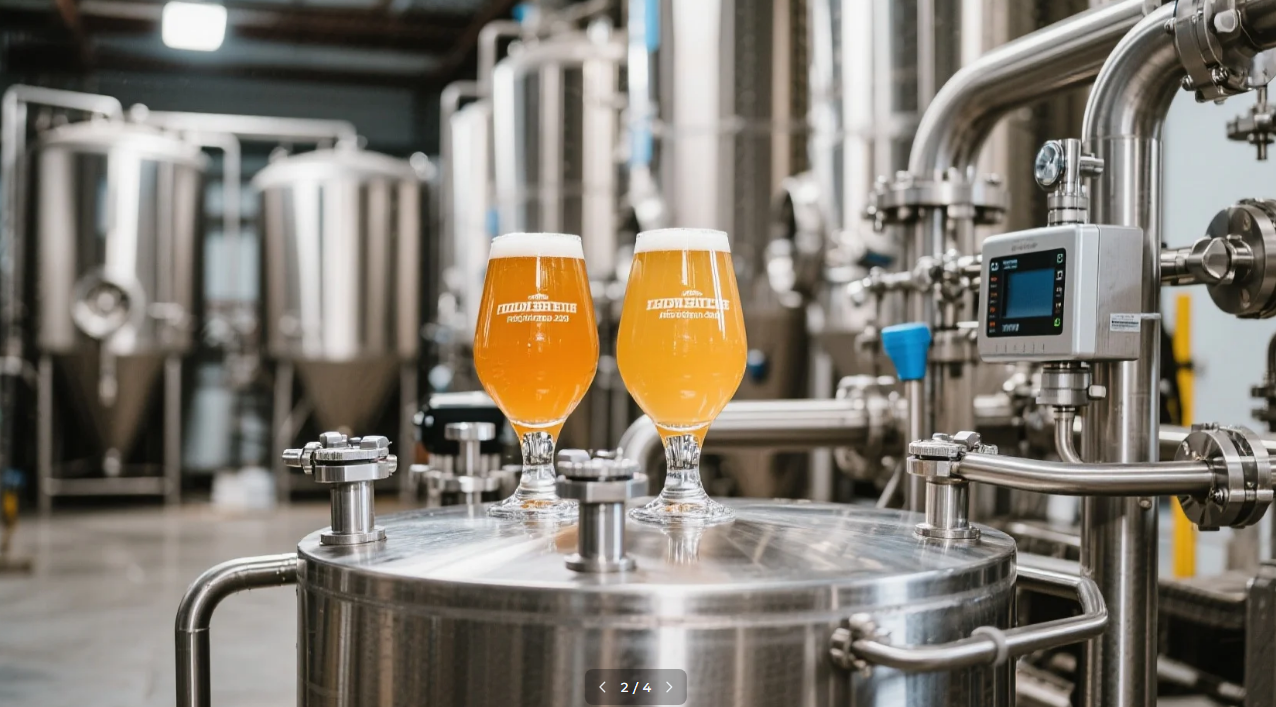
A mid-sized brewery in the Pacific Northwest expanded from 10-barrel to 30-barrel system two years ago. They chose equipment based on vessel volume alone. The new mash tun looked impressive on paper, but by the third month the brewers were dealing with stuck mashes every other batch. Lautering stretched past two hours. The oversized kettle demanded more steam than the boiler could supply consistently. Cleaning took an extra hour per day because the CIP connections were placed on opposite sides of the brewhouse. This pattern repeats across breweries that chase capacity without evaluating how equipment performs under real operating conditions. High-efficiency brewing equipment addresses these failures directly, not by adding complexity but through targeted mechanical design decisions that compound into measurable operational gains.
Brewhouse Features That Lift Efficiency Batch After Batch
The brewhouse is where most efficiency gains either materialize or get lost. A well-designed mash tun and lauter tun combination does more than hold grain and water—it determines how predictable your brew day becomes. Properly sized agitators in the mash tun ensure consistent temperature distribution across the grain bed, which directly affects enzyme activity and sugar conversion. Welded rakes with the correct blade spacing prevent channeling during sparge. The false bottom in the lauter tun needs slot widths matched to the typical grist composition; too narrow and flow slows down, too wide and grain passes through.
A well-designed lauter system can shorten lautering time by up to 25% compared to generic designs. This reduction accumulates over hundreds of batches, freeing up brewhouse capacity without adding vessel volume. The lautering phase often becomes the bottleneck in mid-sized breweries, and fixing it usually requires replacing the entire lauter tun or retrofitting the false bottom and rake assembly.
Kettle and whirlpool geometry matters more than most brewery owners assume. Kettles with an aspect ratio that supports natural convective circulation during boiling produce consistent evaporation rates and better hop utilization. A flat-bottomed whirlpool with a tangential inlet at the correct velocity creates a stable cone of trub rather than a diffuse cloud that carries solids into the heat exchanger. Breweries that upgrade from generic kettles to proportioned designs frequently report clearer wort and fewer clogged plate heat exchangers.
Pump sizing is another area where “high efficiency” is misunderstood. Oversized pumps operating at partial speed create shear forces that damage yeast cells and emulsify lipids. Undersized pumps struggle to transfer thick mash or hot wort. Correctly sized centrifugal pumps paired with variable frequency drives give the operator control over flow rates while preventing cavitation and excessive shear. Piping routes that minimize dead legs and 90-degree elbows reduce both transfer time and cleaning effort.
Plate heat exchangers sized for the batch volume and cooling water temperature provide consistent knockout rates. A brewer running 15-barrel batches through an exchanger rated for 20 barrels will see longer cooling times and increased risk of cold-side contamination during slow cooling periods. Matching the heat exchanger to actual production volume rather than theoretical maximum throughput is one of the most overlooked design decisions in brewhouse procurement.
Fermentation and Conditioning – Precision That Saves Time and Product
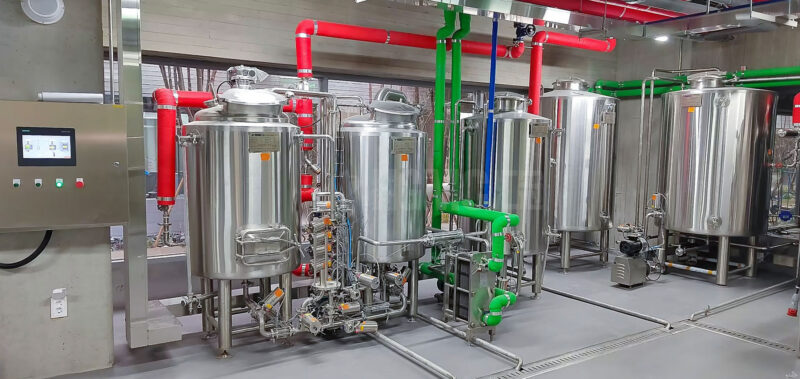
The cellar often hides the most persistent efficiency losses. High-efficiency fermentation equipment focuses on temperature control and product retention rather than cycle speed, because rushing fermentation usually produces inconsistent beer.
Multizone cooling jackets allow individual control over different temperature zones within the same tank. During active fermentation, the lower zone maintains the target fermentation temperature while the upper zone prevents excessive temperature rise from the exothermic yeast activity. Without zoned control, cold spots develop at the tank bottom while the core runs warm, creating diacetyl or sulfur compounds that require extended conditioning to resolve. Breweries that switch from single-zone to multizone tanks typically report shorter conditioning times and fewer off-spec batches.
Proper insulation is the most passive efficiency feature in the cellar. Properly insulated vessels can reduce cooling energy by 15–20%, but the real benefit is temperature stability. A 40-barrel tank with minimal insulation will fluctuate 2–3°C during a day in a warm cellar, which stresses yeast and can stall or accelerate fermentation unpredictably. High-density polyurethane insulation at the correct thickness holds temperature within 0.5°C regardless of ambient conditions.
Tank layout is rarely discussed in equipment brochures but directly impacts daily operations. Rows of tanks placed with narrow access corridors force operators to carry hoses long distances, disconnect and reconnect during transfers, and work in awkward positions. A rational layout with central access aisles and grouped connections reduces transfer time and, more importantly, reduces operator fatigue. Fatigued operators make mistakes—incorrect valve sequences, poor cleaning compliance, missed temperature checks.
Outlet design and internal geometry affect yield. Conical bottoms with a steep slope and correctly sized outlet valves allow yeast to drain fully and minimize beer left behind after transfers. Smooth internal surfaces with minimal weld seams reduce places where beer can pool or get trapped. Some breweries lose 2–3% of total volume per batch to poorly designed tank outlets. Over a year that adds up to hundreds of barrels of lost saleable beer.
Cleaning Systems That Turn Downtime Into Production Time
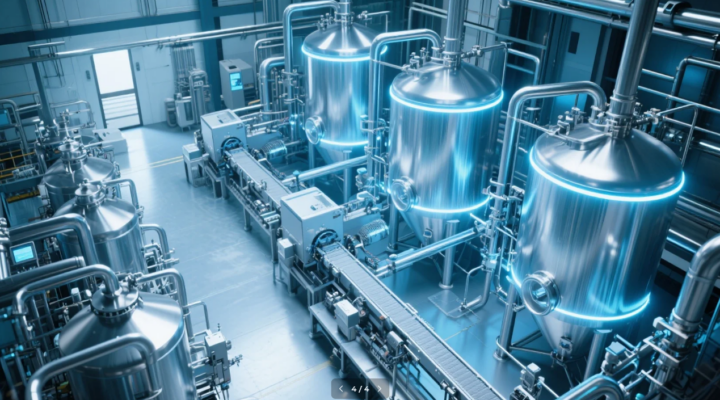
Cleaning system is the most underestimated source of operational drag in most breweries. Brewers track brew day length, fermentation duration, and conditioning time, but they rarely measure total cleaning time across the facility. When they do, the numbers are often surprising.
Integrated spray balls installed in every vessel and tank eliminate the need for manual scrubbing. Fixed spray balls operating at the correct pressure and flow rate cover all internal surfaces with cleaning solution. Rotary spray heads work better for larger vessels where fixed spray patterns leave dead zones. The choice between fixed and rotary depends on vessel geometry, not brand preference.
Central CIP stations with manifold connections allow cleaning solutions to be prepared once and circulated through multiple paths without constant hose reconnections. A well-planned CIP system can cut cleaning time by 30–40% and reduce water and chemical usage by similar margins. The savings come from eliminating the setup and teardown between each vessel. Instead of connecting hoses, running caustic, rinsing, running acid, rinsing, then repeating for the next tank, a manifold system lets the operator select the vessel and start the program with a single valve change.
Clean piping design means planning the pipe routes to minimize pockets where product or cleaning solution might collect. Dead legs—piping sections that are rarely used or only partially flushed—become microbial growth points. Every unnecessary bend, T-junction, or dead leg adds cleaning time and chemical consumption. Breweries that redesign their piping layout often reduce CIP cycle length by 10–15 minutes per loop.
One brewery in Colorado tracked their cleaning time over three months and discovered that poor CIP routing added 2.5 hours per day. That time was invisible because it was spread across multiple operators and shift changes. Once they moved to a central manifold system with short, straight pipe runs to each tank, daily cleaning dropped by 90 minutes. Those 90 minutes became available for production or maintenance, which directly improved output without adding vessel capacity.
Energy and Operational Efficiency – The Overlooked Savings
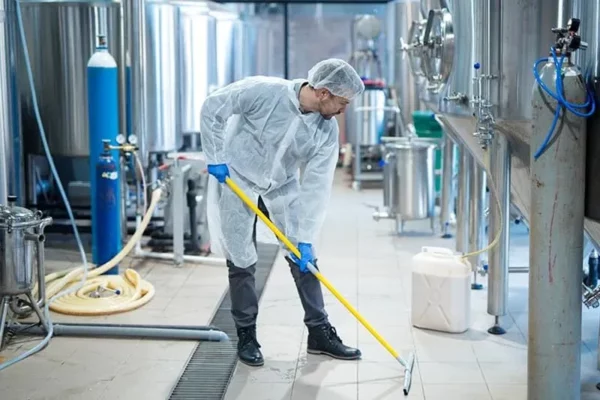
Energy costs typically account for 10–15% of a brewery’s operating budget. Efficiency measures in well-designed equipment can reduce that figure by up to 20%. These savings come from multiple small improvements rather than one dramatic change.
Brewhouse energy efficiency starts with kettle design. Internal steam coils or external calandrias with the correct surface area-to-volume ratio transfer heat efficiently without localized burning. Kettles with domed lids reduce steam loss during the boil. Proper insulation on the kettle and hot liquor tank prevents heat radiating into the brewhouse, which in turn reduces cooling load on the cellar.
Heat recovery systems capture energy from hot wort leaving the heat exchanger and use it to preheat incoming brewing water. A simple counterflow system can recover 60–70% of the heat energy. Over a full production year, that translates to significant reductions in steam or electricity consumption.
Water savings come primarily from CIP reuse. Rather than dumping caustic and acid solutions after each cycle, recirculating systems filter and reheat the cleaning solutions for multiple uses. Breweries that implement CIP reuse report 30–50% reductions in water consumption. Combined with automated rinse cycles that stop when water reaches a target conductivity, the water savings become substantial.
Equipment layout affects operational efficiency in ways that cost accounting rarely captures. A brewhouse where the mill sits directly above the mash tun eliminates the need to move grist manually. Tanks arranged so that transfer hoses follow short, straight paths reduce walking distance. Control panels positioned near valves and sight glasses allow one operator to manage multiple steps without crossing the brewhouse. These layout decisions are expensive to change later but cost almost nothing if planned during equipment specification.
The tradeoff is straightforward: high-efficiency equipment costs more upfront. A brewhouse with correctly sized pumps, multizone tanks, central CIP, and smart layout might run 15–25% higher than a bare-bones system with the same nominal capacity. The payback period typically falls between 3 and 7 years depending on production volume and local utility rates. For breweries running 1000–2000 barrels per year, the payback skews longer. For facilities above 10,000 barrels, the payback often comes within 2–3 years.
One uncomfortable truth is that many breweries never realize these savings because they choose equipment based on initial price rather than total cost of ownership. The cheapest system today costs more in energy, water, and labor over 5 years than a premium system would have cost at purchase. That gap widens with scale.
FAQ
What is the most important factor in brewing equipment efficiency?
The lauter tun design has the biggest single impact on brewhouse efficiency. A properly engineered false bottom, rake system, and sparge distribution determine how quickly and completely sugars are extracted. Most stuck mashes and extended lautering times trace back to lauter tun geometry rather than mash composition.
How much energy can high-efficiency brewing equipment actually save?
Energy savings typically range from 15–20% of total brewery energy costs, with heat recovery and insulation contributing the largest share. For a brewery spending $50,000 annually on energy, that represents $7,500–10,000 in yearly savings. Combined water and chemical savings often match or exceed the energy savings.
Does high-efficiency equipment require more maintenance?
No. High-efficiency equipment often requires less maintenance because components are correctly sized and operate within their design parameters. Oversized pumps fail faster from cavitation. Poorly designed CIP systems leave residue that damages surfaces over time. Properly selected equipment components tend to have longer service intervals.
Can older breweries retrofit for better efficiency, or must they buy new brewing equipment?
Retrofitting is possible for many systems. Adding insulation, replacing pumps with correctly sized variable-speed units, installing central CIP manifolds, and improving piping layout can deliver meaningful gains without replacing vessels. The brewhouse and fermentation tanks themselves are harder to upgrade because geometry is fixed during fabrication.
How long does it typically take to see a return on investment for high-efficiency upgrades?
Payback periods range from 3 to 7 years for most upgrades, depending on production volume and local utility rates. CIP improvements and pump replacements tend to pay back fastest, often within 1–2 years. Full brewhouse or tank replacement has a longer payback but delivers compounding savings over the equipment’s 15–20 year lifespan.
