
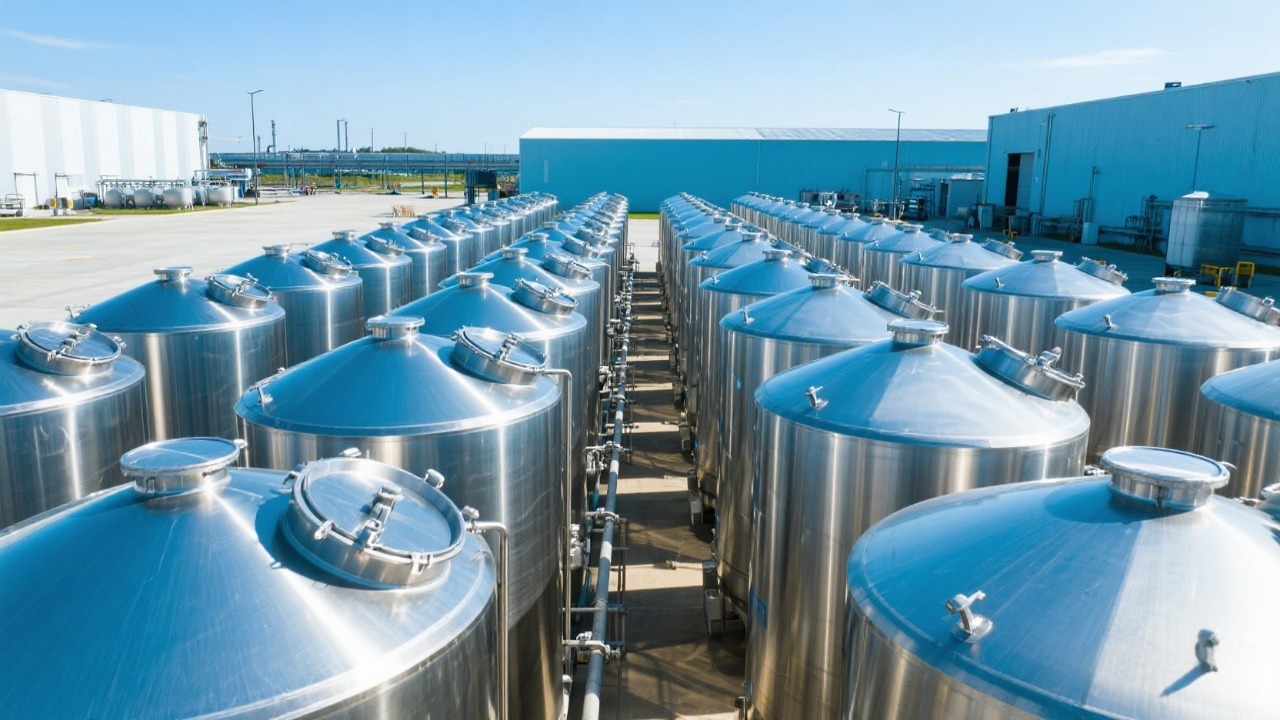
The moment arrives around the third seasonal run. A 2000L tank sits half-empty for weeks while the beer conditions, and a 500L tank needs three batches to fill a single bright tank. The numbers do not work. The brewer starts searching for something in between, and that is where 1000L fermentation tanks enter the conversation. They occupy a practical middle ground—large enough to justify the cellar space, small enough to keep recipe rotation feasible. But the difference between a tank that delivers consistent beer and one that introduces variability comes down to design details that are easy to overlook during the purchase process.
A 1000L fermentation tank is sized to give breweries genuine flexibility. It supports roughly 8,000 liters of monthly production when running four fermenters on a two-week ale cycle, yet it does not lock a brewer into a single beer style for weeks at a time. The geometry, cooling capability, and cleaning design determine whether that flexibility translates into saleable beer or into batches that get dumped.
What Makes a 1000L Fermentation Tank Professional-Grade
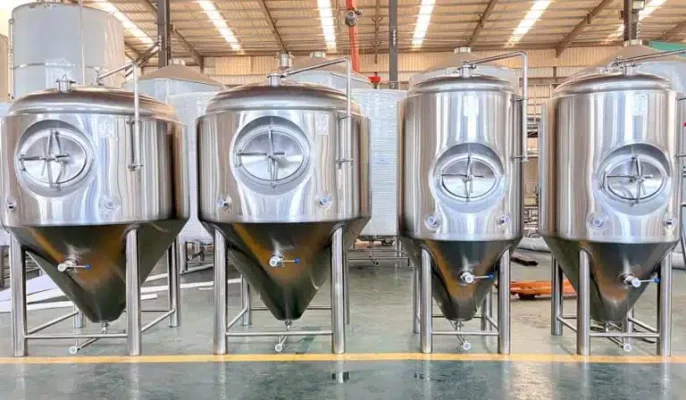
Professional-grade 1000L fermentation tanks share a common architecture because the underlying biology does not change. The cylindrical-conical shape exists for a reason—it allows yeast to settle into the cone for efficient removal before transfer, reducing the load on downstream filtration or centrifugation. A flat-bottom tank cannot do this. You need a cone angle between 60 and 90 degrees to let yeast compact without trapping it in a geometry that encourages autolysis.
Multi-zone cooling jackets separate the tank body into independently controlled sections. On a 1000L tank, two or three zones allow the brewer to maintain temperature within ±0.5°C across the vessel. This matters more than most first-time buyers realize. During active fermentation, the core of the tank can run several degrees warmer than the outer jacket, and without zone control the temperature gradient produces uneven yeast metabolism. Off-flavors follow.
Insulation and cladding are not optional additions. A bare stainless tank exposed to ambient cellar temperatures will fight the cooling system constantly. The compressor cycles more often, energy costs climb, and the temperature inside the vessel drifts during the critical late-fermentation phase. Professional 1000L tanks come with thick polyurethane or PIR insulation and a durable cladding layer that protects against physical damage and condensation.
The pressure rating determines what you can do inside the tank. A 1.5-bar rated tank supports natural carbonation during conditioning and allows closed-pressure transfers. For breweries packaging into kegs or bottles, a pressure-rated tank eliminates the need for a separate carbonation stone in most cases. Manways and sample valves provide access points, but their placement matters. A manway positioned too low makes dry-hopping difficult. A sample valve without a sanitary port introduces a contamination risk every time you pull a sample.
CIP spray devices are the last piece of the hygiene puzzle. A fixed spray ball or a rotating jet cleaner must reach every internal surface, including the underside of the manway lid and the cone walls. Tanks designed without proper spray coverage create dead zones where beer stone and organic residue accumulate. HGMC Beer Equipment designs 1000L tanks with these features integrated rather than added as afterthoughts, which makes a difference during the first CIP cycle.
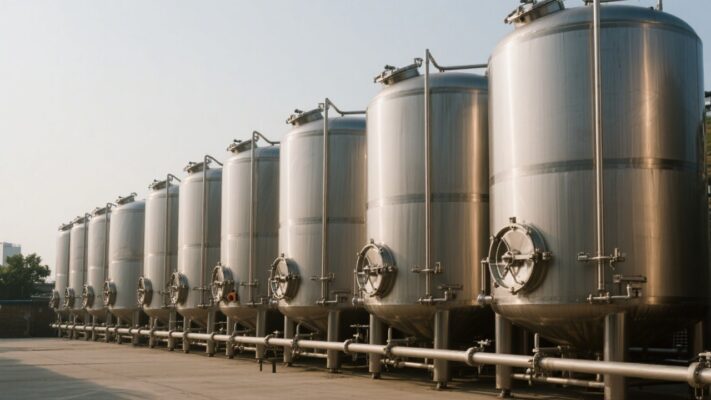
How 1000L Fermentation Tanks Fit Into Your Cellar Layout
The number of 1000L tanks you need depends entirely on your brewhouse rhythm and your beer range. Three common arrangements exist, and each comes with specific tradeoffs.
Single-batch tanks are straightforward. One 1000L fermenter holds one brew. If you run five different recipes in a week, you need five tanks. This arrangement gives maximum flexibility because no tank ever needs to be emptied before the next batch arrives. The downside is capital cost—each tank carries its own cooling jacket, insulation, and instrumentation.
Multi-batch pairing works when a 1000L brewhouse feeds a mix of tank sizes. Core beers like a pale ale or a lager go into 2000L or 3000L tanks, while seasonal and specialty batches fill the 1000L vessels. This arrangement lets a brewery maximize production of high-volume beers without tying up capacity for experiments. The scheduling risk is real—if the seasonal batch runs long, it delays the next brew in that tank, and the brewhouse sits idle.
Mixed tank farms combine several sizes across the cellar. A typical configuration might include two 2000L tanks for the flagship beer, four 1000L tanks for seasonal rotation, and several 500L tanks for pilot batches. This layout requires more complex piping and transfer scheduling, but it gives the head brewer control over inventory without overproducing any single SKU.
| Arrangement Type | Primary Use | Typical Tank Count per Batch | Flexibility | Best For |
|---|---|---|---|---|
| Single-batch | One recipe per tank | 1 | High | Diverse recipe rotation |
| Multi-batch | Core beers in large tanks, specialties in 1000L | 1-2 | Medium | Scale with seasonal demand |
| Mixed | Full production range across multiple sizes | 1-3 | Very high | Established breweries with multiple SKUs |
A brewery running four 1000L fermenters with a 2-week ale fermentation cycle can produce roughly 8,000 liters per month, assuming standard packaging schedules and minimal downtime between batches. That volume supports a local distribution radius without forcing a brewery into single-recipe production for months at a time.
Temperature Control and Fermentation Management in 1000L Tanks
Temperature control on a 1000L tank is more precise than on larger vessels because of the surface-area-to-volume ratio. A 1000L cylinder has proportionally more surface area per liter than a 3000L tank, which means cooling jackets transfer heat more efficiently and respond faster to setpoint changes. This is an advantage most of the time. It becomes a liability when the controller is poorly tuned or the sensor is mounted in a location that reads the jacket temperature instead of the beer temperature.
A 1000L tank with properly designed jackets can cool wort from 95°C to 20°C in under 4 hours, assuming the cooling water temperature stays below 10°C. That sounds good on paper, but in practice the cooling rate depends on the jacket design—dimpled jackets move glycol faster than channel jackets, and the diameter of the glycol supply lines matters at this scale.
For ale fermentation, you typically set the controller to maintain 18–22°C depending on the strain. The 1000L size holds that temperature evenly when the zone controllers are active. For lagers, the profile drops to 10–12°C during primary fermentation, then ramps down slowly to 2–4°C for conditioning. The ramp rate matters. Dropping temperature too fast stresses the yeast, causing it to flocculate prematurely and leave diacetyl reduction incomplete.
Automatic controllers remove the human error factor, but they introduce their own failure modes. A temperature probe that loses contact with the tank wall reads ambient air instead of beer temperature, and the controller responds by cycling glycol through the jackets unnecessarily. The result is a beer that experiences temperature swings at the sensor location but not in the bulk liquid. Checking probe placement during installation prevents this, yet many breweries discover the problem only after tasting the first batch.
The one non-obvious point about temperature management at this scale is that the 1000L tank responds quickly to cooling changes, which is both an advantage and a risk if the control system is sloppy. A poorly tuned PID controller will overshoot the setpoint repeatedly, cycling the beer temperature through a range that stresses the yeast. A well-tuned system produces consistent beer batch after batch.
Cleaning and Hygiene for 1000L Fermentation Tanks
CIP (Clean-in-Place) is the standard cleaning method for 1000L tanks, but the effectiveness depends entirely on the tank’s internal geometry. A properly designed CIP cycle for a 1000L tank typically requires 30 to 45 minutes, including caustic wash, intermediate rinse, acid cycle, and sanitizer. That assumes the spray device reaches every surface and the drain removes all liquid between phases.
Smooth internal welds are not a cosmetic preference. Any surface irregularity creates a trap where organic material survives the CIP cycle. Over several batches, that residue builds up into beer stone, which harbors microorganisms and alters the flavor profile of subsequent batches. Breweries that skip the weld inspection during tank installation often discover shadowed areas after a few months of production, when a routine plate count shows contamination.
The drain and outlet design determines whether cleaning solutions pool or drain completely. A sloped bottom with a center drain outlet is standard, but not all manufacturers achieve the same slope angle. A flat or poorly sloped bottom leaves standing liquid after the CIP cycle, diluting the sanitizer in the next phase and reducing its effectiveness.
External CIP connections should be standardized across the tank farm. If each 1000L tank uses a different fitting type or hose diameter, the cleaning team wastes time swapping adapters between cycles. Standardization also reduces the risk of cross-contamination between tanks.
One common failure occurs when a brewery installs 1000L tanks with inadequate insulation to save on upfront cost. A midwestern brewery purchased three uninsulated tanks for a lager program. During the warm months, the cellar temperature fluctuated by 6°C between day and night cycles. The tanks could not maintain stable lagering temperatures. The resulting beers developed sulfur notes and astringency that made them unsellable. The brewery eventually shut down that production line, retrofitted all three tanks with insulation jackets at a cost nearly equal to what they would have paid for insulated tanks from the start, and lost four months of seasonal production.
Pricing Factors and Buying Guide for 1000L Fermentation Tanks
A standard 1000L fermentation tank with cylindrical-conical shape, insulated cladding, and basic glycol cooling typically ranges from $8,000 to $15,000 depending on specification. Several factors push the price higher.
Material thickness and grade are the largest cost drivers. A tank built from 304 stainless steel at 2mm thickness costs less than one built from 316L at 3mm, but the thinner tank may show fatigue after years of pressure cycling. The finishing level also adds cost—a 400-grit interior polish costs more than a 2B mill finish but reduces surface roughness that traps bacteria.
Additional fittings such as extra ports for dry-hopping, temperature probes, pressure relief valves, and sampling points increase the price by $200 to $800 per fitting depending on complexity. Pressure rating and certification add another layer. A tank rated for 2 bar requires thicker walls, certified welds, and sometimes third-party inspection, all of which add to the final number.
Integration with control systems matters if you plan to connect the tank to a brewery-wide automation platform. A tank with pre-wired sensor ports and a compatible controller interface costs more upfront but saves installation labor later.
The buying process should follow a structured sequence. Define your production requirements first—how many hectoliters per month, how many beer styles, what fermentation profiles. Then assess your cellar space, including ceiling height for cone clearance and floor loading for the filled weight of roughly 1,200 kg. Decide on pressure and temperature requirements based on your beer styles. Clarify which tanks need automation and which can run on manual controllers. Finally, request proposals from manufacturers and compare not just the base price but the total delivered cost including freight, installation, and the cost of any accessories that are not included in the base specification.
Working directly with a manufacturer such as HGMC Beer Equipment allows you to match features to investment without paying for unnecessary extras. A brewery that never carbonates in the tank can skip the higher pressure rating. A brewery that uses only dry yeast may not need extensive automation. The trick is knowing which features solve actual problems and which ones add cost without benefit.
FAQ
What is the typical fermentation time for a 1000L batch of ale?
Most ales finish primary fermentation in 5 to 8 days at 18–22°C, depending on yeast strain and starting gravity. Conditioning then takes another 5 to 14 days in the same tank. Total turnaround is typically 10 to 21 days per batch.
Can I use a 1000L fermentation tank for lagers as well as ales?
Yes, but you need a tank with multi-zone cooling jackets and adequate insulation. Lagers ferment at 10–12°C and require stable temperature control for 10 to 14 days, followed by 3 to 6 weeks of cold conditioning. A tank that holds temperature within ±0.5°C works for both.
How many 1000L fermenters do I need for a 1000L brewhouse?
With a 2-week fermentation cycle, you need at least three to four fermenters to keep the brewhouse running continuously. One tank fills while another conditions and a third packages. More tanks give you buffer for recipe rotation and scheduling delays.
What is the recommended material thickness for a 1000L tank?
For a 1000L cylindrical-conical tank, 2.5mm to 3mm wall thickness in 304 stainless steel is standard for most breweries. Thinner walls reduce cost but increase the risk of denting during handling and may not support higher pressure ratings.
How do I clean a 1000L fermentation tank without removing it?
CIP (Clean-in-Place) is the standard method. The tank stays in place while a pump circulates caustic solution, rinse water, acid, and sanitizer through the spray device and drain. The full cycle takes 30 to 45 minutes and does not require disassembly.
