
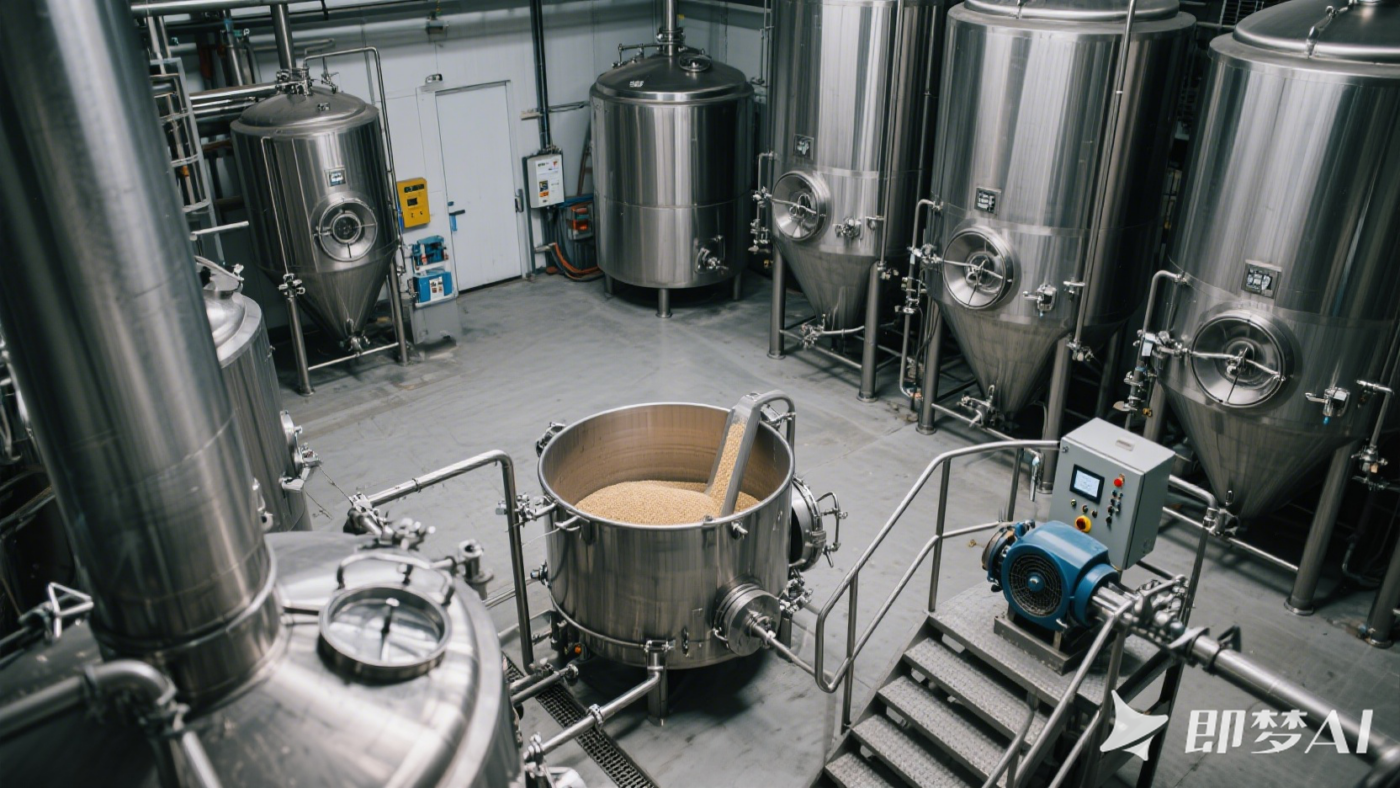
Expanding from a nano or pilot brewery into a 5000L system is not a straightforward equipment upgrade. At roughly 50 hl per batch, this scale represents a fundamental shift in how a brewery operates — from ingredient procurement through packaging logistics. The brewhouse itself is only one piece of a much larger puzzle that includes fermentation scheduling, cellar layout, utility infrastructure, and a team that can sustain the pace.
Many brewers approach this transition by ordering a larger kettle and assuming the rest will fall into place. That assumption has derailed more than a few expansions within the first year. A 5000L brewery system demands that you plan the entire production line — vessels, piping, cooling, cleaning, controls — as an integrated project, not as standalone tanks. The decisions made during the planning phase determine whether the brewery runs smoothly or becomes a constant source of operational friction.
What a 5000L Brewery System Actually Includes
A complete 5000L brewery system covers the entire process from grain-in to bright beer ready for packaging. The brewhouse itself typically includes a mash tun, lauter tun, kettle, and whirlpool, arranged in a configuration that matches your intended brew count per day. Beyond these vessels, you will need a fermentation cellar with multiple cylindroconical fermenters, bright beer tanks for conditioning and carbonation, a glycol chiller sized to handle peak cooling load, a clean-in-place (CIP) system, sanitary pumps and valves, and a control system for managing temperatures and process timing.
The temptation is to start with the brewhouse and worry about the rest later. That approach creates problems. The piping runs between vessels, the slope for drainage, the placement of control panels, and the routing of glycol lines all need to be mapped to your building layout before equipment arrives. If the brewhouse footprint forces the cellar into an awkward corner, you end up with long transfer lines that increase cleaning time and product loss.
Each component in a 5000L brewery system affects daily production flow. The mash tun and lauter tun determine how quickly you move through grain bills. The kettle boil rate and whirlpool residence time influence hop utilization and trub separation. The fermenter design — particularly the cone angle and cooling jacket zones — affects yeast health and fermentation consistency. None of these components operates in isolation. A fast brewhouse paired with an undersized fermentation cellar creates a bottleneck that no amount of brew-day speed can fix.
The false bottom and lauter tun design at this scale is disproportionately impactful on brew-day length. A poorly designed false bottom with uneven slot distribution forces the runoff to slow down as the grain bed compacts, turning what should be a six-hour brew day into a fourteen-hour slog. At 5000L, the bed depth is significantly greater than at smaller scales, and gravity works against you if the geometry is not optimized for the specific grist composition you run most often.
Brewhouse Design Options – 3-Vessel vs. 4-Vessel at 5000L Scale
The choice between a 3-vessel and 4-vessel brewhouse configuration is one of the first major decisions you will face, and it directly affects how many brews you can complete in a day.
A 3-vessel system combines the kettle and whirlpool into a single vessel. This layout works well for breweries targeting a moderate number of brews per day — typically two to three batches. The combined vessel simplifies the piping and reduces the overall footprint, which helps when floor space is constrained. It also lowers the upfront equipment cost compared to a 4-vessel setup. The trade-off is that you cannot boil the next batch while the previous one finishes its whirlpool rest, which limits throughput.
A 4-vessel system separates the kettle and whirlpool into independent vessels. This allows true parallel operation: while one batch is boiling, the previous batch can complete its whirlpool stand, and the lautering of a third batch can begin. At 5000L, this configuration supports three to four brews per day reliably, which becomes important if you are filling distribution contracts or managing a taproom with high draft volume. The separation also improves trub separation because the whirlpool can be designed specifically for sediment settling without compromising kettle geometry.
The lautering efficiency difference between the two configurations often surprises brewers who have only worked at smaller scales. At 5000L, the false bottom in the lauter tun needs to support a significantly taller grain bed. The sparge arm design and lauter tun geometry must ensure uniform water distribution across the entire bed surface. In a 3-vessel system where the kettle handles double duty, the whirlpool geometry may be compromised by the need to also function as a boil vessel, potentially reducing trub separation efficiency.
The decision ultimately comes down to your brew count target and your budget. If you plan to run two brews per day and have a clear ceiling on production, a 3-vessel system is adequate. If you anticipate needing three or more brews per day to meet demand, the 4-vessel configuration is worth the additional investment. Retrofitting a combined vessel into separate vessels later is expensive and often requires replacing the entire brewhouse floor layout.
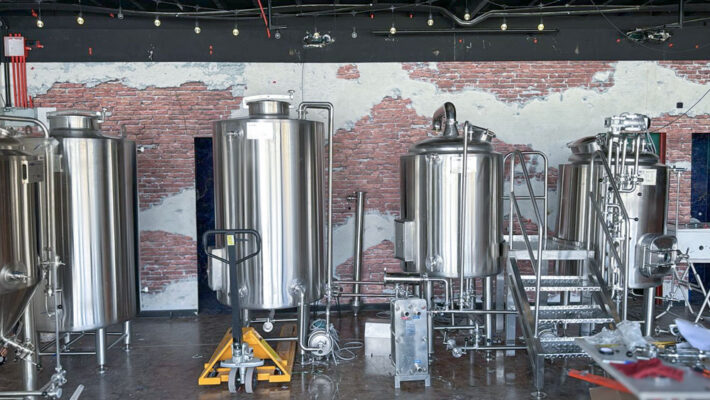
Sizing the Fermentation Cellar and Bright Beer Tanks
The most common mistake in 5000L brewery planning is underestimating fermentation capacity relative to brewhouse output. A brewhouse that can produce multiple batches per day needs enough fermenters to hold those batches at various stages of fermentation. If you run two brews per day and each fermentation takes ten to fourteen days for ales, you need at least twenty to twenty-eight fermenters to maintain continuous production. That number increases for lagers or high-gravity beers that require longer conditioning periods.
Many breweries expand their tank count faster than they can schedule effectively, leading to incomplete fermentation cycles and lost product. Within the first six months of operation, the scheduling pressure forces brewers to rush transfers or cut conditioning short, resulting in inconsistent beer quality. The solution is to plan for more tanks than your initial production target suggests, with the understanding that the extra capacity gives you flexibility for seasonal releases, yeast management, and maintenance downtime.
The volume mix of your cellar matters as much as the total count. Most breweries will run a core lineup of flagships in 5000L tanks, but seasonal and test batches benefit from smaller vessels — 2500L or 3000L tanks allow you to experiment without committing an entire batch to an unproven recipe. Larger tanks for high-volume brands can increase efficiency on your most popular SKUs. A well-designed cellar includes a range of sizes, not a row of identical tanks.
Bright beer tanks are often the last component specified, yet they dictate how much packaged beer you can have ready for a Monday morning delivery. If your bright tank capacity is smaller than your average packaging run, you will find yourself waiting for beer to condition while the kegging line sits idle. Bright tank volume should match your largest expected packaging shift, not your average daily output. A common benchmark is to size bright tanks at 50 to 100 percent of your per-batch volume, depending on how many SKUs you package in a single session.
The cooling system design must account for the combined load of all fermenters and bright tanks operating simultaneously. Multizone cooling jackets on each fermenter allow independent temperature control for different fermentation stages — a critical feature when your cellar holds batches at various phases of activity. The glycol chiller must be sized for peak load, not average load, because crashing fermentation temperature or crashing after dry hopping creates a sudden demand spike. Undersized chillers lead to slow temperature ramps and increased diacetyl risk.
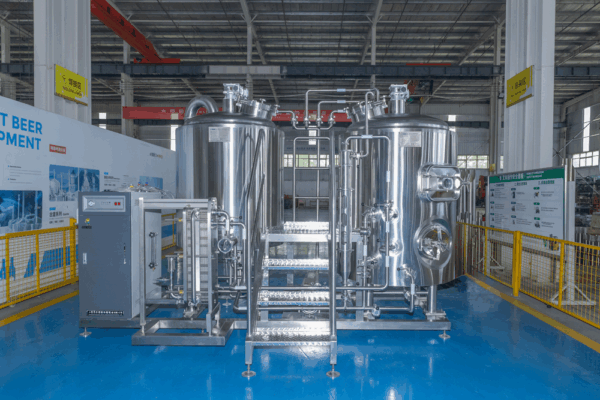
The Real Cost Factors Behind a 5000L Brewery System
The equipment purchase price is the most visible cost, but it is rarely the largest. Site preparation often exceeds the brewhouse cost itself. Floor drainage, steam or electric service upgrades, glycol piping insulation, ventilation for the brewhouse, and building modifications to accommodate tank height all add up quickly. A brewery that spends $300,000 on tanks may spend another $150,000 on installation.
Utility infrastructure is a recurring cost that varies significantly by location. Glycol chillers draw substantial power during peak cooling periods. Steam generation for the kettle requires either a boiler installation or high-capacity electric elements. Water usage for cleaning and cooling increases linearly with batch volume. A 5000L brewhouse running two batches per day consumes roughly 20,000 to 30,000 liters of water per day between brewing and cleaning cycles. Municipal water rates and wastewater treatment fees become a meaningful line item at this scale.
The level of automation you choose has direct implications for both upfront cost and operating labor. A fully automated 5000L system with programmable logic controllers for mash schedules, sparge timing, and CIP sequences can be operated by a smaller crew but requires specialized maintenance skills. A manual system costs less to install but demands more labor per batch and increases the risk of operator error during complex sequences. Most breweries at this scale settle on semi-automated controls that handle temperature regulation and valve sequencing while leaving recipe adjustments and manual interventions to the brewer.
CIP chemical consumption at 5000L is higher than many planners expect. The surface area of tanks, piping, and heat exchangers increases faster than vessel volume, meaning cleaning chemical usage per liter of beer is higher at this scale than at smaller scales. A proper CIP system with recirculation loops and spray ball coverage reduces chemical waste, but the initial design cost is higher than a bucket-and-hose approach.
Underestimating infrastructure costs is the most common reason 5000L projects exceed their budget or fail to launch. Breweries that spend heavily on the brewhouse and fermenters without allocating funds for building modifications, electrical upgrades, and installation labor often find themselves with equipment sitting in crates while they scramble for additional financing. The payoff from a 5000L system is real when demand is clear, but the margin for error in planning is thin.
FAQ
How many fermenters do I need for a 5000L system?
You need enough fermenters to hold multiple batches at different fermentation stages. A common starting point is 4 to 6 fermenters per brew per week you want to produce. If you brew three times per week, plan for 12 to 18 fermenters to maintain consistent output without rushing fermentation cycles.
Can I expand from a 3-vessel to a 4-vessel brewhouse later?
It is expensive and rarely straightforward. Expanding requires modifying the brewhouse floor layout, adding a dedicated whirlpool vessel, reconfiguring piping runs, and potentially upgrading the control system. Most breweries that anticipate higher throughput choose the 4-vessel configuration upfront.
What utilities should I plan for in advance?
You need a dedicated electrical service sized for the brewhouse and glycol chiller under peak load, a natural gas or propane supply for steam generation if applicable, a municipal water connection with sufficient flow rate, and a wastewater system rated for the volume and temperature of your cleaning cycles.
How long does installation typically take?
Installation of a complete 5000L system usually takes four to eight weeks, depending on building readiness, the complexity of the piping and electrical work, and whether the equipment is modular or requires site fabrication. Commissioning and testing add another one to two weeks.
Do I need a dedicated brewer to manage the 5000L line?
Yes. A 5000L system operating at capacity requires at least one experienced brewer dedicated to production scheduling, yeast management, recipe scaling, and troubleshooting. Additional staff are needed for packaging, cleaning, and cellar work. The scale does not allow a single person to handle brewing, packaging, and lab work simultaneously.
