In order to thoroughly implement the superior authorities’ key directives on work safety, steadily advance the special rectification campaign for work safety, tighten and consolidate the primary responsibility for work safety, and effectively prevent and curb all types of safety accidents, our company has, during this month, centered on the theme of Work Safety Month and carried out a comprehensive, multi‑level, and ongoing series of activities, including publicity and education, hazard inspections, and special rectifications, so as to build a solid line of defense for work safety. The work carried out during this Work Safety Month is summarized as follows:
I. Strengthening organizational leadership and making careful work arrangements
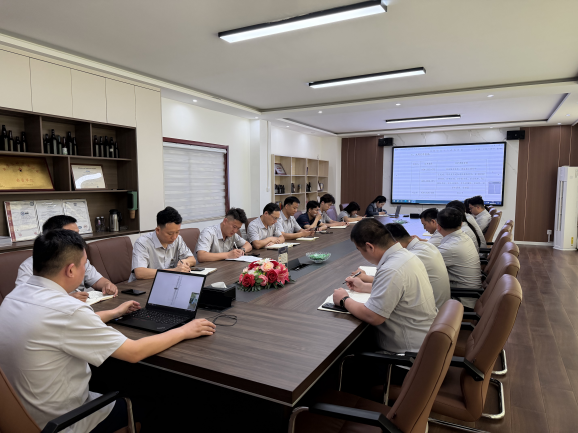
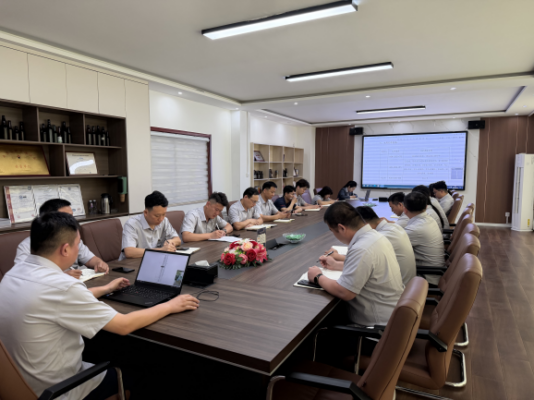
To ensure that the Work Safety Month activities were carried out in an orderly and efficient manner, the company attached great importance to this effort. A special work deployment meeting for Work Safety Month was convened at the earliest opportunity, and a special task force was established, with the General Manager as the group leader and department heads as members. In line with the company’s actual production and operating conditions, the Notice on Carrying out the 2026 Work Safety Month Activities was issued, clearly defining the activity theme, work objectives, key tasks, division of responsibilities, and time milestones. Various work measures were refined, and a work safety framework featuring “top leaders personally overseeing the work and all employees jointly participating in implementation” was put in place, providing a solid organizational guarantee for the effective implementation of all Work Safety Month activities.
II. Deepening publicity and education to build a strong ideological defense line
This month, with a focus on disseminating safety knowledge and raising safety awareness, we adopted multiple measures to carry out comprehensive publicity and education activities, creating a strong atmosphere of “everyone emphasizes safety and everyone is capable of emergency response.”
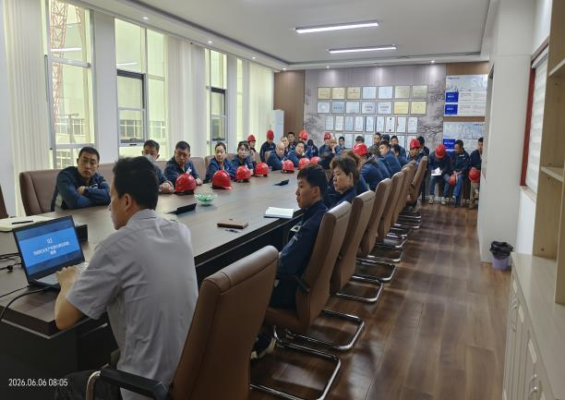
First, we conducted thematic publicity sessions. A Work Safety Month general meeting was organized for all employees, during which we explained work safety laws and regulations, industry safety standards, and position‑specific safety operating procedures. Combined with typical safety accident cases, we conducted in‑depth analyses of accident causes and drew lessons, enabling employees to deeply understand the importance of work safety and the dangers of non‑compliant operations.
Second, we diversified our publicity channels. Through electronic display screens in the plant area, safety banners, and warning posters, we regularly disseminated safety knowledge, emergency response tips, and risk alerts, covering all key areas including offices, production zones, and living quarters.
Third, we carried out specialized training. We organized company‑wide safety skills training focusing on position‑specific safety risks, fire safety, electrical safety, hazard identification, and other key content.
III. Intensifying hazard inspections to consolidate the safety foundation
Adhering to the principle that “a hidden danger is an accident, and an accident must be dealt with,” we carried out regular, comprehensive, and thorough safety hazard inspection and rectification work, eliminating all safety blind spots and plugging loopholes. First, we conducted a comprehensive self‑inspection and self‑correction campaign, in which each department inspected, item by item, critical production equipment, electrical circuits, fire‑fighting facilities, worksites, storage areas, emergency supplies, and other key locations and links, with a focus on rectifying prominent issues such as illegal equipment operation, inadequate safety protection, expired fire‑fighting equipment, aging wiring, and poor site management.
Second, we carried out special supervision inspections. The task force conducted unscheduled spot checks, surprise inspections, and on‑site supervision to specifically inspect the hazard rectification efforts of each department, preventing superficial inspections and incomplete rectification.
Third, we established a hazard ledger. All hazards identified during inspections were recorded in detail, including location, problem description, risk level, person responsible for rectification, and deadline for rectification, implementing a “list‑based management and closed‑loop rectification” approach to ensure that every hazard discovered is rectified and eliminated. During this month, a total of 26 safety hazards of various types were identified, and all have been fully rectified, with a rectification rate of 100%, effectively preventing various safety risks.
IV. Conducting solid emergency drills to enhance response capabilities
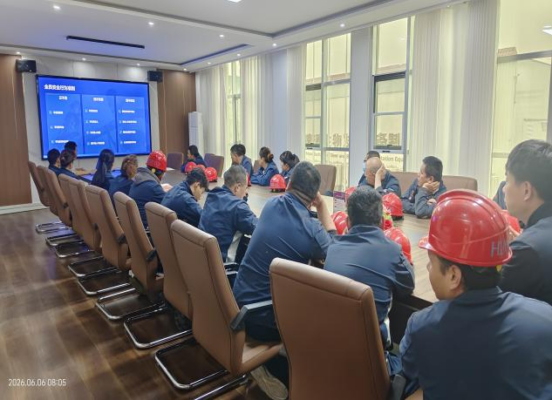
To further improve emergency response procedures, enhance employees’ emergency evacuation and self‑rescue and mutual‑aid capabilities, and test the practicality and operability of emergency plans, we carried out targeted emergency drill activities this month based on the company’s actual conditions. Through practical drills, we effectively improved the overall capabilities of all employees in rapid response, coordinated operations, and emergency handling, and improved the company’s emergency support system.
V. Existing problems and shortcomings
Although we have achieved certain results during this Work Safety Month campaign—with significantly enhanced safety awareness among all employees and effective rectification of safety hazards—there are still some shortcomings when measured against the high standards and strict requirements for work safety.
First, some employees’ safety awareness still needs to be further improved. There remains a sense of complacency, and occasional habitual non‑compliant operations occur in daily work, indicating insufficient awareness of standardized operations.
Second, the level of detail in hazard inspections is still insufficient. Some hidden and subtle safety hazards were not identified in a timely manner, and the depth and breadth of hazard inspections still need to be expanded.
Third, emergency response capabilities require further strengthening. Some employees are not yet proficient in emergency procedures and the operation of emergency equipment, and their flexibility and professionalism in handling emergencies are insufficient.
Fourth, the regularized work safety management mechanism is not yet fully developed. The continuity and targeting of daily safety supervision and regular education still need to be improved.
VI. Next‑step work plan
In light of the problems and deficiencies identified during this Work Safety Month, and in line with the company’s overall work safety deployment, we will continue to maintain a strong focus on work safety, regularly and thoroughly implement all work safety measures, and resolutely guard the bottom line of work safety.
First, we will strengthen the regularized ideological education. We will continue to carry out tiered and categorized safety training and case‑based warning education, diversify publicity formats, refine training content, and specifically address weak links in position‑specific safety. We will thoroughly eliminate employees’ luck‑based mentality and non‑compliant operations, effectively integrating safety awareness into daily work and putting it into practice.
Second, we will deepen refined hazard inspections. We will establish a regular hazard inspection mechanism, refine inspection standards, expand the scope of inspections, focus on hidden and deep‑seated safety risks, and regularly conduct special inspections and cross‑checks. We will improve the closed‑loop mechanism of inspection, rectification, re‑inspection, and long‑term control, so as to prevent safety accidents at the source.
Third, we will enhance professional emergency response capabilities. We will further optimize emergency plans, regularly conduct diversified and practical emergency drills, improve all employees’ practical emergency response skills and their ability to handle emergencies, ensuring rapid and scientific response to unexpected situations.
Fourth, we will improve the long‑term management mechanism. We will continue to strengthen the work safety responsibility system for all employees, improve safety management systems, operating procedures, and assessment mechanisms, incorporate work safety into daily performance evaluations, and regularly carry out safety supervision and inspections. This will promote the standardization, regularization, and normalization of work safety, ensuring that the company’s work safety situation remains consistently stable and positive.
The implementation of this Work Safety Month campaign has effectively consolidated the company’s work safety foundation and enhanced the safety awareness and management level of all employees. Going forward, we will take this Work Safety Month as an opportunity to summarize experiences, address shortcomings, and regularly implement all work safety measures. We are determined to prevent all types of safety accidents and provide a solid safety guarantee for the company’s high‑quality development.
