The gap between what a brewhouse is rated for and what actually reaches the tap is wider than most restaurant operators expect. A 1000L system sounds like a lot of beer until the first summer weekend hits and the kitchen is pouring through kegs faster than the fermenters can cycle. The real question isn’t whether 1000 liters is enough — it’s whether the rest of the brewery is built to keep up with it.
A 1000L 3‑Vessel brewhouse is a genuine business commitment, not a piece of display equipment. Seven practical checks determine whether it becomes a reliable production asset or a source of recurring downtime. This guide walks through them from a production-planning standpoint, not a spec-sheet tour.
Why 1000L Per Batch Is the Capacity a Restaurant Actually Needs
The arithmetic starts with batch volume, not annual capacity. A 1000L batch equals roughly 8.5 US barrels. At three batches per week, that works out to about 25 barrels of monthly production — enough to carry a mid-volume taproom with a handful of house taps running consistently.
Most restaurant breweries overestimate how much volume they can move through on-premise sales alone. A busy brewpub might pour 10–15 barrels a week across six to eight taps. A 1000L system running two to four brews weekly sits in a practical zone: it produces enough to keep taps rotating without forcing the kitchen to warehouse packaged inventory it doesn’t have room for.
The capacity slot matters too. Small 5-barrel pub systems struggle to keep up with weekend demand spikes. Industrial installations are overkill for a restaurant’s floor plan and utility budget. Beer Brewing Equipment 1000L 3 Vessel sits between those extremes, sized for restaurants and pubs that produce their own beer as a core part of the operation rather than a side experiment.
One thing the capacity math rarely accounts for: a nominal 1000L batch does not equal 1000L of saleable beer. Trub, yeast, and transfer losses quietly cut usable output. Operators who plan for a real-world yield margin of 85–90 percent avoid the surprise of coming up short on a scheduled tap change.
What the Three Vessels Actually Do on a Brew Day
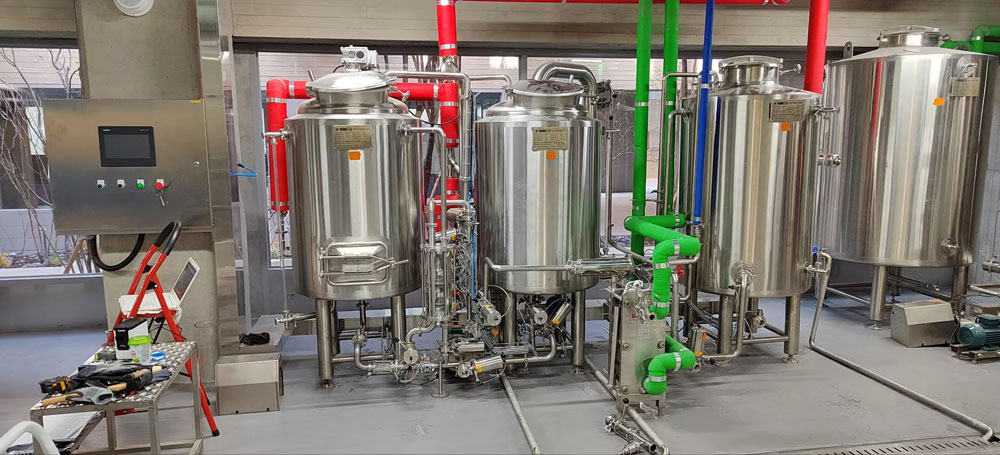
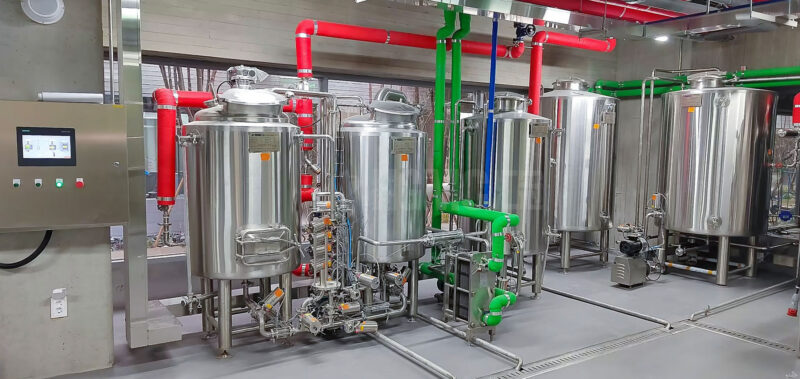
The three-vessel layout divides the brewhouse into dedicated process steps: the mash mixer handles mashing, the lauter tun separates wort from grain, and the combined kettle–whirlpool manages boiling and trub separation. This division of labor matters more on a restaurant schedule than on a pilot system.
With a two-vessel system, the mash mixer doubles as the lauter tun. That saves floor space but creates a bottleneck — the vessel can’t start the next mash until lautering finishes. A three-vessel setup lets the operator mash in the next batch while the previous one is still lautering or boiling. For a restaurant running multiple brews per week, that scheduling flexibility translates directly into more batches per month.
The dedicated vessels also make cleaning more straightforward. Each tank can be isolated for its own CIP cycle without taking the whole brewhouse offline. Insulation quality affects both energy cost and brew-day consistency — rock wool insulation at 80mm thickness holds temperature steady through the mash and boil, and weld polish precision to Ra0.6µm means fewer crevices where residue builds up between cleanings.
| Vessel count | Brew-day flexibility | Cleaning isolation | Footprint | Typical cost direction |
|---|---|---|---|---|
| 2-vessel system | Limited — mash/lauter shares a tank | Shared process steps complicate isolation | Smallest | Lowest |
| 3-vessel system | Good — mash and lauter run in parallel | Individual CIP per vessel | Moderate | Mid-range |
| 4-vessel system | Maximum — full parallel workflow | Complete isolation | Largest | Highest |
The three-vessel configuration is the balance point for a restaurant operation. It offers enough parallel workflow to keep a weekly brew schedule realistic without the footprint and cost of a four-vessel industrial layout.
Matching the Brewhouse to Fermentation, Bright Tanks, and Cooling
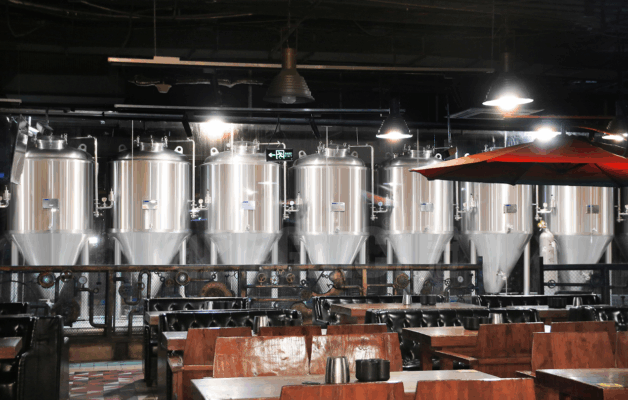
Here is where most restaurant brewery plans go sideways. The brewhouse gets all the attention, but fermentation and bright tank capacity is what actually determines how much beer reaches the taps. A 1000L brewhouse can produce a batch in a day, but that wort sits in a fermenter for 10–21 days depending on the style. The fermentation cycle, not the brew day, sets the real production rhythm.
A typical ale fermentation runs 10–14 days; lagers stretch to 21 days or more. With a 1000L brewhouse running three batches a week, the operator needs enough cylindrical-conical fermenters to hold three to four weeks of production. Under-buying tankage means the brewhouse idles while fermenters finish their cycle — a costly bottleneck that shows up as empty taps.
Bright tanks add another layer. Beer needs conditioning and carbonation time before service, which ties up additional vessel capacity. The glycol cooling loop ties everything together: a glycol water tank, chillers, and a sanitary centrifugal pump circulate cooling energy through the fermenters and heat exchanger. If the cooling system is undersized, fermentation temperature drifts, and the schedule slips.
The non-obvious pattern: operators routinely under-buy tankage and cooling while over-buying brewhouse capacity. The brewhouse is the visible purchase; the fermenters and chillers are the unglamorous infrastructure that actually determines output.
Automation, Controls, and the Maintenance Realities of a 1000L Brewhouse
The control package on a modern 1000L 3‑Vessel system is not optional decoration. A Siemens PLC with touchscreen control, Schneider circuit breakers, and Airtac electromagnetic valves form the operating brain of the brewery. Fully piped and wired skids with integrated valves and sensors mean the system arrives ready to run rather than requiring weeks of on-site assembly.
The CIP system deserves scrutiny. Separated CIP loops for individual tanks prevent cross-product interference — the difference between a clean fermenter and one that carries residual flavors from the previous batch. For a restaurant rotating through different beer styles, that separation matters. A shared CIP loop can silently taint a pale ale with traces of a previous stout.
One restaurant operator learned this the hard way. The system was sized for a nominal 1000L batch, but the glycol cooling loop and fermenter count were under-bought to save on the initial quote. Within the first summer season, wort transfers stretched to six hours as the undersized pump struggled against the cooling demand, and fermentation temperature drifted in the afternoon heat. Every subsequent batch got pushed back a full day, and the kitchen had to drop two scheduled tap selections to keep the remaining beers from running out.
The maintenance reality of a 1000L brewhouse comes down to material quality. Inner jacket SUS304 at 3.0mm thickness, external jacket at 2.0mm, and a 3.0mm seal head — these numbers determine how the vessel holds up to years of thermal cycling and caustic cleaning. Argon gas welding and polished surfaces to Ra0.6µm mean less buildup and shorter cleaning cycles. The Beer Brewing Equipment 1000L 3 Vessel is built around these specifications, which is why the maintenance conversation should focus on the control and cooling loop rather than the stainless itself.
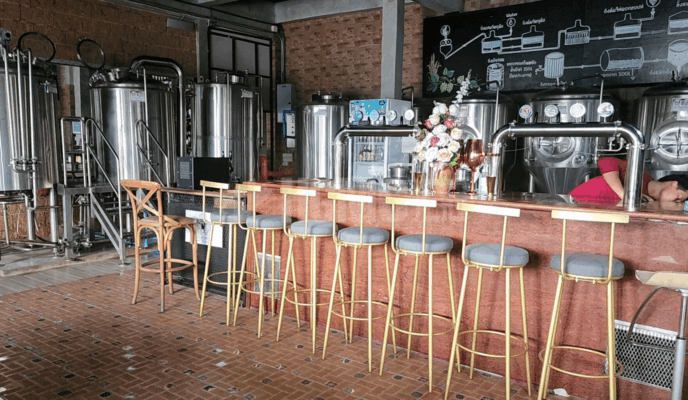
Budget, Customization, and What to Lock Down Before You Sign in 2025
The vessel combination is only part of the cost picture. A complete brewery includes platforms, staircases, and slip-resistant walk-on surfaces that let operators actually reach the vessels for cleaning and inspection. These are often quoted separately, and they add up quickly. Perforated, sectional walk-on surfaces with slip resistance are a safety line item that should never be cut for budget reasons.
Custom process design matters more than most buyers expect. The best suppliers design the entire brewery with client input — vessel combinations, tank quantities, and process flow tailored to the specific beer styles the restaurant plans to produce. A standard package might work, but the customization conversation surfaces issues that would otherwise appear after installation.
Documentation and compliance are the other side of the 2025 purchasing decision. Project documentation should cover piping and instrumentation diagrams, electrical schematics, and operational manuals. Lead times for mid-size brewhouse orders in 2025 have stretched compared to pre-pandemic norms — component availability for PLCs and valves, plus fabrication queue times, typically push delivery to 8–16 weeks depending on the supplier’s workload. A restaurant planning a seasonal opening needs to factor that timeline into the construction schedule, not assume the brewery arrives when the contractor does.
Total landed cost should include freight, customs clearance, installation supervision, and commissioning support. A quote that covers only the equipment itself will surprise the buyer at the port. Locking down the complete scope before signing prevents the budget overruns that turn a well-planned brewery into a financial headache.
FAQ
How much beer can a 1000L 3-vessel system produce in a week?
At three batches per week, a 1000L system produces roughly 25 US barrels monthly. That assumes fermentation and bright tank capacity keeps pace — the brewhouse itself can brew daily, but the 10–21 day fermentation cycle sets the real weekly ceiling.
What is the real difference between a 2-vessel and a 3-vessel brewhouse?
A 2-vessel system combines mashing and lautering in one tank, creating a scheduling bottleneck. A 3-vessel system separates these steps, letting the operator mash the next batch while the previous one lauteres. For multiple brews per week, that parallel workflow adds up to more batches per month.
How many fermentation tanks do I need alongside a 1000L brewhouse?
With a 10–14 day ale fermentation cycle, plan for at least three to four fermenters to hold three weeks of production. Lagers need more. Under-buying fermenters means the brewhouse idles while tanks finish their cycle.
How much floor space does a 1000L 3-vessel brewery require?
A complete system with fermenters, bright tanks, and cooling typically needs 100–150 square meters, depending on layout and whether platforms stack the vessels vertically. The brewhouse itself is compact, but the fermentation and cooling infrastructure takes up the real footprint.
Can a 1000L system handle different beer styles without installing extra tanks?
Yes, within limits. The brewhouse can produce all standard beer styles, but rotating styles means dedicating fermenter capacity to each batch. A lager occupying a tank for 21 days reduces the number of batches that tank can process in a month, so style diversity comes at the cost of total output.
