
A brewery owner walks through the facility on a Thursday evening and sees the weekend schedule: three different beer styles, a hard seltzer run, and a request to test a non-alcoholic stout recipe. The old brewhouse can not switch between batches without hours of cleaning and reconfiguration, and the aging system temperature control is starting to show drift in the final product. Equipment decisions made this year will determine whether a brewery captures value in a maturing, competitive market or falls behind while demand shifts around it.
The State of Craft Beer Market Heading into 2026
The craft beer industry is entering 2026 in a fundamentally different position than five years ago. After the explosive growth phase that defined the 2010s, the market has matured. Success now depends less on sheer volume and more on value, brand identity, and operational efficiency. The global craft beer market is expected to exceed USD 142 billion in 2026, with a compound annual growth rate of approximately 10.91 percent in the following years. That growth is not evenly distributed. It is concentrated among breweries that can deliver high-quality, unique, and locally relevant products consistently.
Consumer behavior is driving this shift. Drinkers are willing to pay a premium for beer that feels intentional—small-batch, locally sourced, and distinct from the mass-produced alternatives. At the same time, breweries are increasingly functioning as beverage companies rather than just beer producers. Non-alcoholic beer, hard seltzer, kombucha, and other fermented drinks now share production floor space with traditional ales and lagers. This diversification is not a side project. It is becoming a core revenue stream for many operations.
The hidden bottleneck in this transition is equipment. Many breweries expanded rapidly between 2018 and 2022, investing in systems designed for high-volume production of a narrow range of styles. Those same systems are now struggling to keep up with a rotating pipeline of diverse beverages. The operational cost of this mismatch shows up in extended cleaning cycles, temperature inconsistencies between batches, and lost production time during changeovers. Brewers who upgrade equipment now are positioning themselves to capture value in a market that rewards flexibility, not just output.
Why Versatility Has Become a Survival Feature in Brewing Equipment
The conversation with brewers about equipment has changed fundamentally in the last few years. Five years ago, the primary question was about capacity: how many barrels per week can this system produce? Today, the question is about range: what beverages can this system handle without sacrificing quality or efficiency?
A brewery that can produce a hazy IPA on Monday, a traditional German-style lager on Tuesday, and a hard seltzer on Wednesday without major downtime gains a structural advantage over competitors locked into a single production profile. This versatility comes down to specific equipment features. Flexible mash tuns with adjustable temperature ramps allow brewers to handle different grain bills without manual reconfiguration. Multi-purpose fermenters designed to optimize for both ale and lager conditions save floor space and reduce the number of dedicated tanks needed. Quick-change filtration systems and adjustable carbonation stones let brewers move between styles with minimal cleaning between runs.
The financial penalty of running a rigid brewhouse is often invisible until a competitor launches a seasonal lager or a non-alcoholic option that draws customers away. A brewery that invested in single-purpose, non-modular equipment in 2022 is now facing expensive retrofits to produce the same beverages. Some are discovering that their existing infrastructure cannot maintain the precise low-temperature control needed for lager fermentation, forcing them to either outsource production or skip the trend entirely. Meanwhile, breweries that specified modular systems with adaptable transfer logic and programmable temperature profiles are launching new products in weeks, not months.
This resurgence of lager is not a retro trend. It is creating a new equipment specialization demand that many brewers are unprepared for. Clean, crisp lagers require extended cold conditioning and precise temperature management. Traditional ale-focused brewhouses simply do not have the thermal envelope to handle this efficiently. Brewers who anticipate this shift are specifying systems with integrated glycol jackets, automated temperature ramps, and extended cold storage capacity from day one.
Automation and Data Integration Are No Longer Optional for Quality Control
Advanced automation was once a luxury reserved for the largest production facilities. That is no longer the case. PLC-controlled systems for temperature regulation, automated transfer sequences between vessels, and programmable cleaning cycles are becoming standard across breweries of all sizes. The price of sensors and control hardware has dropped, and the software layer that ties it together has become more accessible.
The operational impact of automation shows up most clearly during fermentation. Manual temperature checks introduce variability. A single degree of drift over a three-week fermentation can change ester profiles, final gravity, and overall consistency. Real-time temperature sensors feeding back to a central controller eliminate this drift. The result is repeatable beer quality across batches, regardless of shift changes or operator experience.
| Feature | Traditional Approach | Automated Approach | Impact on Consistency | Impact on Labor |
|---|---|---|---|---|
| Temperature control during fermentation | Manual checks, manual valve adjustments | Real-time sensor feedback, automated glycol valve modulation | Drift reduced from 2-3°F to ±0.3°F | Frees brewer from overnight temperature checks |
| Transfer between vessels | Manual hose connections, visual flow monitoring | Automated valve sequences, flow meter control | Reduces oxygen ingress and transfer losses | Eliminates need for operator to manage transfer duration |
| Cleaning cycle | Manual CIP setup, chemical concentration measured by hand | Programmed CIP cycles with conductivity monitoring | Consistent cleaning every cycle, fewer off-flavors from residue | Cuts cleaning time by 40-60 percent |
| Recipe execution | Manual hop additions, timing logged on paper | Recipe library with automated hop dosing | Repeatable bitterness and aroma profiles | Reduces operator error during complex dry-hop schedules |
Consider a microbrewery that invested early in automated systems in 2021. By 2024, that brewery was running two fermentation schedules simultaneously—one for a hazy IPA and one for a cold-conditioned lager—without adding night shift labor. Meanwhile, a neighboring brewery that delayed automation investments lost an entire batch of seasonal lager in 2023 because a manual temperature check was missed during a busy Friday shift. The loss was not just the batch cost. It was the taproom revenue, the distributor relationship, and the seasonal momentum that took a full year to rebuild.
Data dashboards connected to the brewhouse are now feeding recipe refinement in ways that were difficult to achieve with paper logs. Temperature trends, fermentation curves, and gravity readings across multiple batches can be compared to identify which variables produce the best results. Some breweries are using this data to predict when a specific yeast strain will finish fermentation within hours, allowing tighter scheduling on tank turnaround.
The tradeoff between automation cost and labor savings is worth examining honestly. Automated systems carry higher upfront capital cost. A fully integrated PLC system with sensors, valves, and software can add 15 to 25 percent to the cost of a new brewhouse. But the labor savings, combined with the reduction in lost batches and the ability to run more production cycles per week, often recovers that premium within two years.
Sustainability as a Competitive Necessity, Not a Marketing Add-On
Sustainability in brewing is no longer a badge that earns goodwill from environmentally conscious drinkers while costing the brewery money. Done right, it is an operational savings lever with a measurable payback period. The equipment choices made today around energy and water efficiency directly affect the bottom line.
Thermal efficiency improvements start with the brewhouse itself. Heat recovery systems capture energy that would otherwise be vented during the boiling process and redirect it to preheat strike water or clean-in-place solutions. Steam condensers reduce the volume of steam released into the brewhouse, which lowers HVAC load and improves working conditions during summer production runs. Low-energy boilers designed specifically for brewery steam loads can cut natural gas consumption by 20 to 30 percent compared to general-purpose industrial boilers.
Water reclamation systems address one of the largest operational costs for any brewery. A typical production facility uses three to seven barrels of water for every barrel of beer produced. Most of that water ends up as wastewater that carries sewer charges. Water recycling units that treat and reuse rinse water from CIP cycles and packaging lines can cut total water usage by 30 to 50 percent. The payback timeline for these systems typically ranges from 18 to 36 months, depending on local water and sewer rates.
Compact modular systems reduce financial risk more than operational risk, which shifts the calculus for new entrants compared to traditional scaling models. A brewery that starts with a 7-barrel modular brewhouse and adds capacity by purchasing additional fermentation tanks rather than replacing the core brewhouse avoids the disruptive and expensive teardown and rebuild phases that older scaling models required. This approach also allows brewers to test new products on a small scale before committing to larger tank capacity.
The upfront cost of sustainability-focused equipment is real. A heat recovery system adds roughly 10 to 15 percent to the cost of a new brewhouse, and a water reclamation loop can add another 20 to 30 percent depending on system complexity. But the utility savings over a five-year period typically exceed the premium. Brewers who treat sustainability as a capital expenditure with a defined ROI, rather than a marketing expense, get the operational benefit and the brand advantage together.
Compact and Modular Systems Supporting Scalable Growth
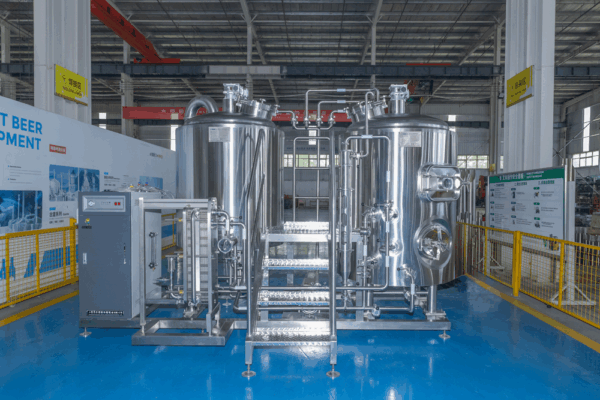
Nano and microbreweries continue to open at a steady rate, and the equipment serving this segment has become more sophisticated than the stripped-down starter systems available a decade ago. Small-footprint brewhouses now include the same automated temperature control, programmable CIP cycles, and data logging capabilities found in larger production facilities. The difference is size, not capability.
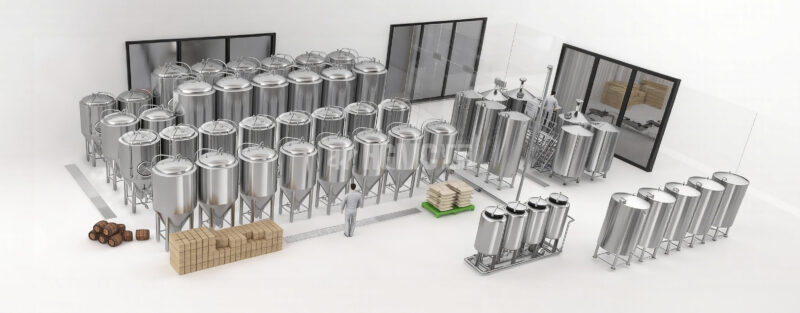
Modular designs allow these breweries to add capacity incrementally. A brewery can start with a 5-barrel brewhouse and three fermentation tanks. When demand grows, it adds two more tanks without modifying the existing piping or control system. When the brewhouse itself becomes the bottleneck, it upgrades to a 10-barrel system by adding a module rather than replacing the entire unit. This incremental approach reduces capital risk and avoids the months of downtime that come with a full facility overhaul.
The link between system design and niche local demand is becoming clearer. A brewery serving a small city can not afford to produce twenty different beers year-round on a single brewhouse unless that brewhouse can switch styles quickly. Modular systems with quick-change fittings, programmable recipe libraries, and flexible tank zoning make that possible. The brewer who can respond to local preferences—a rye ale for the winter farmers market, a brut IPA for the summer festival, a low-ABV session beer for the weekday crowd—keeps taproom traffic steady and distributor relationships strong.
These systems also reduce the logistical overhead of expanding into new beverage categories. Adding hard seltzer or non-alcoholic production to a modular brewhouse does not require a separate production line. The same system, with adjusted recipes and temperature profiles, handles the transition. Compact modular systems reduce financial risk more than operational risk, which changes the calculus for new market entrants compared to traditional scaling models that forced brewers to commit to full capacity from day one.
FAQ
What specific equipment features make a brewhouse versatile for different beverages?
A versatile brewhouse includes flexible mash tuns with programmable temperature ramps, multi-purpose fermenters that handle both ale and lager conditions, and quick-change filtration and carbonation systems. Separated hot liquor tanks and adjustable cold-side plumbing further reduce turnaround time between styles.
How does automation affect the consistency of craft beer production?
Automation eliminates the variability introduced by manual temperature checks and manual valve adjustments during transfers. Real-time sensor feedback keeps fermentation temperature within ±0.3 degrees, and automated CIP cycles ensure consistent cleaning chemical concentration across every batch. The result is repeatable beer quality regardless of shift changes.
What are the most impactful sustainability upgrades for an existing craft brewery?
Heat recovery systems that capture energy from the boil kettle are typically the highest-ROI upgrade. Water reclamation systems that treat and reuse CIP rinse water come second, with payback timelines of 18 to 36 months. Low-energy boilers also provide significant gas savings but require a larger upfront investment.
Can a small nano brewery justify the investment in automated systems?
Yes, particularly if the brewery plans to produce multiple beverage styles or expand capacity over time. The labor savings from automated temperature control and CIP cycles allow a single brewer to manage more production volume. The reduced risk of lost batches from temperature drift offsets the higher upfront hardware cost.
How long does it typically take to retrofit a brewery for lager production using modern equipment?
A full retrofit that adds glycol chilling capacity, automated temperature control, and extended cold storage typically takes 8 to 12 weeks from order to commissioning. Breweries that already have modular fermenters with adaptable temperature zones can complete the retrofit in 4 to 6 weeks by adding dedicated lager conditioning tanks and updating control software.
