
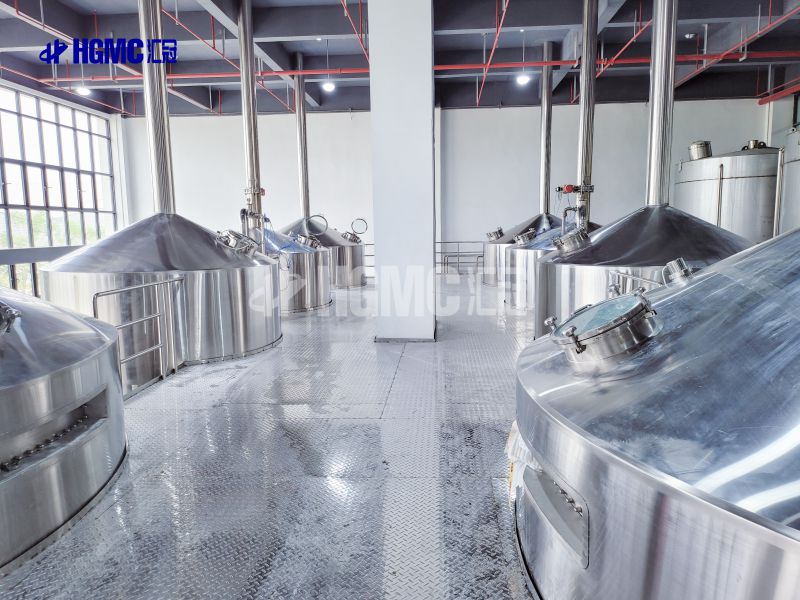
You are standing in front of a brewery equipment quote and the numbers do not lie—a fully automated 10-bbl system costs roughly 60% more upfront than a manual counterpart. I have watched dozens of brewery owners stare at that same spreadsheet, weighing the immediate hit to their startup capital against the promise of lower labor costs and consistent output six months down the road. The marketing material makes both sides look attractive, but the operational reality is messier. After observing more than 1,000 brewery installations across North America, Europe, and Asia over the past decade, the difference between automation and tradition comes down to exactly three things: how stable your production is, how much you pay per batch for labor, and how hard it is to double your capacity without tearing the floor apart.
The short answer is that automated breweries typically outperform traditional operations within 18 to 24 months of commissioning. That gap is not theoretical—it shows up in yield data, staffing costs, and batch rejection rates. But the decision is not universal. Your brewery size, your team’s technical comfort, and your growth timeline all shift the math.
What Defines an Automated Brewery vs. a Traditional Brewery
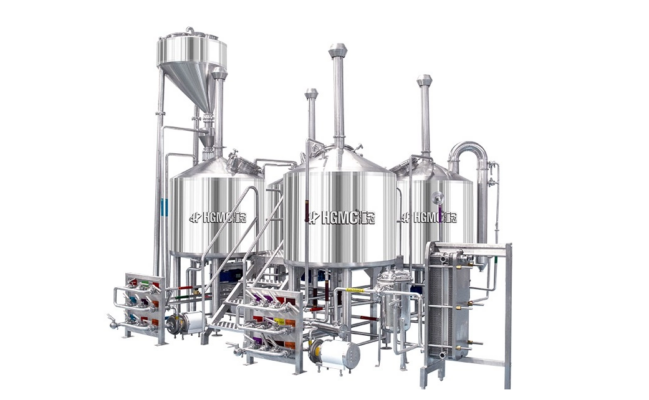
An automated brewery is a facility where the core production processes—mashing, lautering, boiling, fermentation, cooling, and cleaning—are managed through a programmable logic controller (PLC) and a supervisory control and data acquisition (SCADA) system. You control mashing temperature with a touchscreen instead of a thermometer. The human-machine interface (HMI) displays real-time temperature curves, flow rates, and pressure data for every vessel. The clean-in-place (CIP) cycle runs automatically after each batch without an operator handling caustic chemicals.
A traditional brewery, by contrast, relies on manual operation and the experience of the brewmaster. The brewer lights the burner, watches the temperature climb on a dial gauge, opens a manual valve to transfer wort, and judges lautering completion by eye. That approach works—many world-class beers come out of manual brewhouses—but the variability is real. A brewer with a cold and a bad night of sleep can produce a different batch than the same brewer on a fresh morning.
The core components of an automated system include:
- Brewhouse automation: Programmable mash temperature profiles, automated wort transfer, controlled boiling and whirlpool cycles
- Fermentation control: Precision temperature and pressure management, yeast pitching and harvesting systems, data logging
- CIP system: Automated caustic and acid cleaning cycles with rinse and sanitization programs, minimal water and chemical waste
- Central control platform: PLC with touch-screen HMI, recipe management, remote monitoring capability
The architectural difference is not just about convenience. It changes who can run the brewery and how many batches they can finish in a day.
Five Operational Advantages That Drive ROI
The first advantage is batch consistency. Every commercial brewery needs the beer that leaves on Tuesday to taste identical to the beer that left on Friday. An automated system achieves this by controlling every variable—mash temperature within 0.5°C, hop addition timing to the second, final gravity within 0.1°P. I have seen data from a 20-bbl automated brewhouse that produced 480 consecutive batches with less than 2% variance in bitterness units. That kind of repeatability builds brand trust faster than any marketing campaign.
The second advantage is labor cost reduction. One trained operator can manage an entire automated brewhouse. The same capacity in a traditional setup typically requires two to three people per shift. For a brewery running two shifts, that difference alone saves $60,000 to $90,000 annually in most mid-market regions.
The third advantage is higher yield. Precise control reduces beer loss during transfers, minimizes oxygen pickup, and limits product waste at every stage. Automated systems typically achieve 96% to 98% yield from raw materials, compared to 90% to 93% in manual setups. That difference adds up to roughly 200 additional barrels per year on a 10-bbl system.
The fourth advantage is faster production cycles. Automated transitions between stages remove the idle time that accumulates when a brewer has to walk between vessels, manually open valves, or wait for temperature to stabilize. A 2025 time study on a 15-bbl automated brewhouse recorded a total brew cycle of 4.5 hours, against 6.2 hours for the same recipe run manually.
The fifth advantage is scalability. Adding fermentation tanks or expanding the brewhouse integrates seamlessly into the existing automation platform. The control software recognizes the new vessels, the CIP sequence extends automatically, and the recipe scales without re-engineering the entire layout.
The tradeoff is that initial cost is higher and the team needs training on the control system. A traditional brewery can start brewing with a crew that has never seen a SCADA screen. An automated brewery requires at least one person who can troubleshoot a PLC fault at 2 a.m. on a Saturday.
Breaking Down the Cost and ROI Comparison
The upfront difference is the first thing everyone notices. A 10-bbl automated brewhouse with full PLC control, HMI, and integrated CIP typically costs $180,000 to $250,000. A comparable manual system runs $100,000 to $150,000. That $80,000 to $100,000 gap feels large when you are signing the first check.
The five-year operating picture tells a different story.
| Cost Factor | Traditional Brewery | Automated Brewery |
|---|---|---|
| Equipment cost | Lower | Higher |
| Labor | High | Low |
| Energy efficiency | Moderate | High |
| Product loss | Higher | Lower |
| Maintenance cost | Moderate | Lower |
Automated breweries achieve a 15% reduction in water and energy usage through integrated heat recovery systems. That means a brewery consuming 10,000 gallons of water and 200 therms of gas per week drops to 8,500 gallons and 170 therms. At typical utility rates, the annual savings come to roughly $4,000 to $6,000 depending on your region.
Labor is the bigger lever. A traditional 10-bbl brewery running 1,500 barrels per year might employ three full-time brewers at $45,000 each, totaling $135,000. The automated equivalent runs with one operator at $50,000 and a backup part-time role at $18,000, totaling $68,000. That is $67,000 saved per year, every year.
Product loss compounds. At 2% higher yield on 1,500 barrels at $200 per barrel wholesale, the automated brewery recovers an additional $6,000 annually that the traditional brewery loses to spillage, trub loss, and transfer waste.
When you run the numbers, most automated breweries reach ROI in 24 to 36 months. I have seen one 15-bbl operation in Oregon break even at month 19 because the owner aggressively scaled contract brewing and brought in a second shift without hiring additional staff.
The equipment selection process for a long-term investment needs to go beyond price tags. Technical standards matter—the stainless steel grade, the weld quality, the automation platform reliability. A reputable supplier provides certifications for AISI 304 or 316L stainless steel, pressure vessel ratings like ASME or CE, and documented surface finishes down to Ra 0.4 μm. These specifications determine whether the equipment lasts ten years or twenty. This is exactly the kind of vetting that product covers in its technical evaluation framework, and I have seen breweries that skipped this step end up with micro-fissures forming in poorly argon-shielded welds—a failure mode that costs upwards of $10,000 per tank per week when a batch gets contaminated.
Choosing the Right Automation Level for Your Brewery Size
Small breweries in the 3 to 10 BBL range typically benefit from partial automation—automating the brewhouse and CIP while keeping fermentation temperature control manual. The capital outlay stays around $50,000 to $80,000 over a manual system, and the ROI still holds because the labor saved is proportional. A brewpub running 200 barrels a year does not need a full SCADA stack, but it does need consistent mashing and cleaning cycles.
Medium breweries in the 10 to 30 BBL range are the sweet spot for full automation. At this scale, the brewery is producing 500 to 2,000 barrels annually and running multiple shifts. The labor savings alone justify the investment. A 20-bbl system with full PLC automation, integrated CIP, and fermentation monitoring costs $250,000 to $400,000 and pays back within 30 months.
Large breweries in the 30 to 100 BBL range operate at commercial production scale. Automation is not optional—it is necessary for regulatory compliance, food safety certification, and cost control at volume. These systems run on Siemens or Allen-Bradley PLCs, feature multi-vessel control, and integrate packaging lines, grain handling, and wastewater treatment into a single control platform.
Technical specifications matter at every scale. Tanks should be built from 316L stainless steel for corrosion resistance, especially in high-chloride water environments. The interior surface finish should be Ra 0.4 μm or smoother to prevent bacterial adhesion. CIP systems must use rotating jet nozzles instead of static spray balls—rotating nozzles achieve 99.8% coverage versus 85%, and cut cycle time from 45 minutes to 25 minutes per tank. A 2024 study on 30 yeast strains found that fermenters with 60-degree cone angles yielded 25% higher yeast viability for repitching, saving $600 to $1,200 per pitch on fresh yeast cultures.
A detailed buyer’s checklist, such as the one provided by product, helps verify these technical specifications before purchase. I have seen buyers skip the cone angle question and end up with flat-bottom tanks that made yeast harvesting nearly impossible, forcing them to repitch every batch at full cost.
Heat recovery is another specification that separates good equipment from great. A custom steam jacket designed for an 8% to 10% boil-off rate reduces gas consumption by 18% compared to standard electric immersion elements. That is not a trivial saving—on a 20-bbl system running 200 batches per year, it translates to roughly $3,500 in annual energy cost reduction.
The less obvious tradeoff is that PLC-controlled hop dosing reduces bittering variance by 12% across 500 consecutive batches. That level of precision is unreachable by manual operations, even with the most experienced brewmaster. If you are building a brand around a flagship IPA, that consistency protects your retail relationships. Distributors notice when the bitterness shifts by 5 IBUs between shipments.
FAQ
What is the main difference between an automated and a traditional brewery?
An automated brewery uses PLC and SCADA systems to control mashing, lautering, boiling, fermentation, and cleaning through a central interface. A traditional brewery relies on manual operation and the brewer’s judgment. The automated approach produces more consistent batches and requires fewer operators per shift.
How long does it take to recoup the higher investment in automation?
Most automated breweries reach ROI within 24 to 36 months. The payback comes from labor savings—typically $60,000 to $90,000 per year—combined with higher yield, lower energy costs, and faster production cycles. Some operations break even in under 20 months if they maximize shift output.
What size brewery benefits most from full automation?
Medium breweries in the 10 to 30 BBL range gain the strongest benefits. At this scale, labor savings are large enough to offset the automation premium quickly, and the production volume justifies the control system investment. Small brewpubs below 10 BBL often do better with partial automation focused on the brewhouse and CIP.
Can a traditional brewery be upgraded to automation later?
Yes, but the cost is higher than specifying automation upfront. Retrofitting requires adding control valves, sensors, and PLC wiring to existing vessels, plus bringing old tanks up to sanitation standards. The upgrade typically costs 60% to 80% of a new automated system and may still leave constraints from the original tank geometry.
What technical certifications should brewery equipment have?
Equipment should carry AISI 304 or 316L stainless steel certification, pressure vessel ratings such as ASME or CE, and documented interior surface finish at Ra 0.4 μm or better. Weld certifications with argon shielding and hydro-testing at 1.5 times working pressure are essential to prevent micro-fissures that cause batch contamination.
