
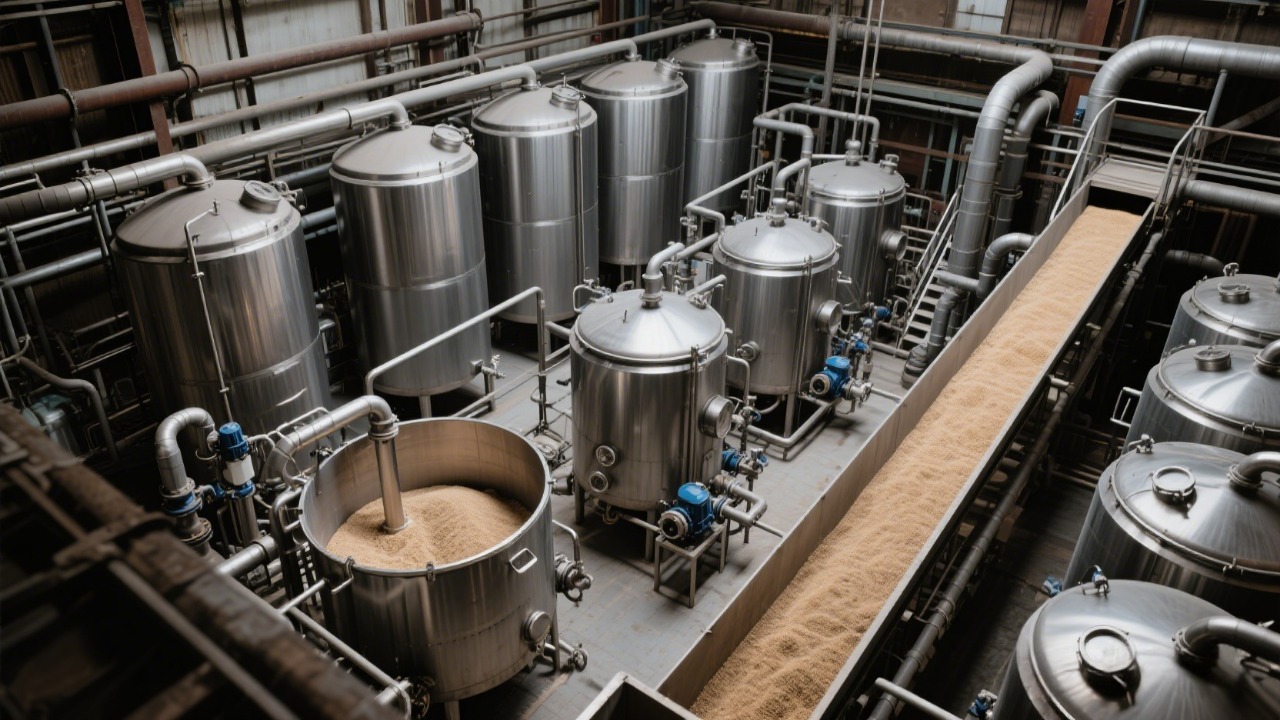
The moment a brewery starts shipping pallets instead of cases, the entire planning equation shifts. Equipment that worked fine at 500‑liter batches begins showing cracks—literally and operationally. Scaling to industrial output means accepting that brewhouse decisions made in the first six months will either enable or cap production for the next decade. Industrial brewery equipment is not simply a larger version of a craft system; it requires integrated thinking across vessel configuration, fermentation capacity, automation depth, and utility infrastructure. Getting these decisions wrong means rebuilding, not tweaking.
Core Design Principles for an Industrial Brewhouse
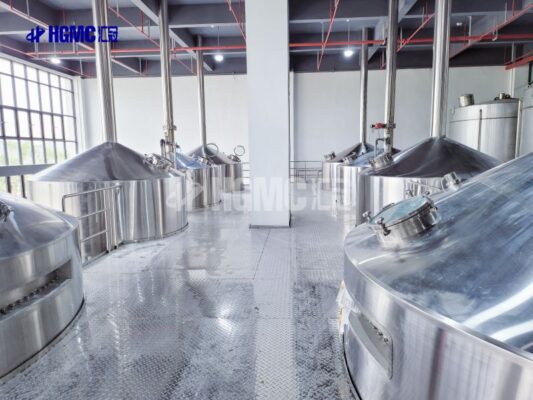
When designing a brewhouse for volumes above 2000 liters per batch, the vessel configuration becomes the primary throughput lever. Three‑vessel and four‑vessel setups are the standard for this range. A three‑vessel system typically combines mash and lauter functions in one tank, then transfers to a boil kettle and a whirlpool. Four‑vessel systems separate mash and lauter into dedicated vessels, allowing parallel processing that can push two batches through before the first one finishes boiling.
Parallel processing is where the real gains live. With a four‑vessel layout, one batch can be lautering while the next batch is mashing in. This overlap can raise daily batch counts from three to five or more, depending on recipe complexity and cooling capacity. The brew house must include heavy‑duty pumps, valves, and piping rated for frequent cycling—standard food‑grade components wear out prematurely under the duty cycles of a 12‑batch day.
Heat exchange and energy recovery deserve more attention than most project teams give them. A well‑sized heat exchanger paired with a hot water recovery tank can cut steam consumption by 20‑30%. Many industrial breweries install oversized chillers without first optimizing heat recovery, then struggle with utility costs that eat into margins. A wort cooler that recovers heat for the next mash saves both energy and time.
Automation at this scale is unavoidable. PLC‑based systems with recipe control and data logging let you repeat batches reliably batch after batch. But there is a trap here. Over‑automation can mask simple mechanical issues. A pressure sensor glitch or a valve that is slightly stuck can go unnoticed for weeks because the alarm thresholds are too broad or the visualization screen buries the detail. When maintenance is finally called, the root cause is often a pump seal that should have been replaced two months earlier. Keep the control system accessible, and train operators to verify equipment physically, not just through a dashboard.
Fermentation and Maturation at Scale
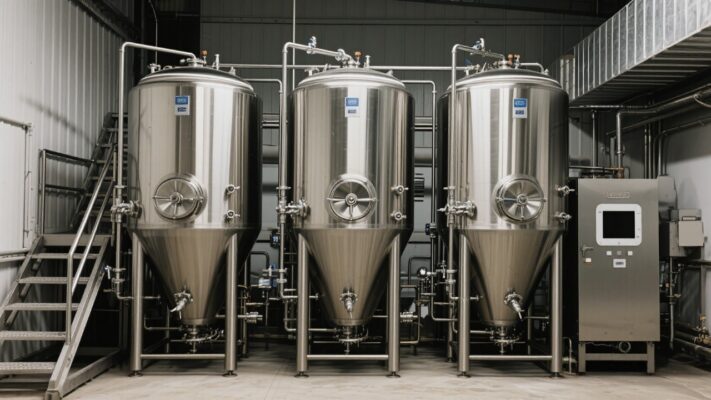
The transition from a craft tank farm to an industrial one is not just about volume. Cylindroconical tanks for industrial production typically use aspect ratios between 3:1 and 4:1. That ratio directly affects yeast sedimentation, temperature gradients, and beer consistency. A taller tank with a narrower diameter creates better convection currents during fermentation, which helps yeast stay in suspension longer and reduces the risk of incomplete attenuation.
Multizone glycol jackets are essential for maintaining stable temperatures across the full tank height. A single zone jacket cannot compensate for the temperature stratification that occurs in a 30‑meter tank. Separate jackets for the cone, the middle section, and the top allow operators to fine‑tune cooling based on fermentation activity. Without this zoning, the bottom of the tank may be five degrees cooler than the top, producing inconsistent ester profiles across the same batch.
One aspect of tank farm planning that consistently gets underestimated is the space required for CIP systems and cleaning water recovery. Many facilities design the tank farm first, then try to fit cleaning lines, chemical storage, and water recovery tanks into whatever floor space remains. The result is a bottleneck: cleaning cycles take longer because the CIP unit is undersized or poorly positioned, which reduces the number of fermentation turns per month. A dedicated CIP room with adequate tankage for caustic, acid, and rinse water recovery should be part of the initial layout, not a retrofit.
Centralized monitoring for temperature, pressure, and CIP status becomes critical when you are managing thirty tanks or more. Manual readings are too slow and too error‑prone. A well‑designed control system with tank farm visualization lets one operator manage the entire fermentation schedule. But the monitoring system must include alerts for small deviations—a 0.2°C drift over eight hours often signals an impending issue that can be corrected before the batch is affected.
Automation, Safety, and Regulatory Compliance
Industrial brewery automation is primarily about risk reduction and repeatability. A PLC‑based control system with alarm visualization allows operators to see deviations in real time and respond before they cascade. But the automation layer must be paired with physical safety devices that cannot be overridden by software.
Pressure relief valves, emergency stops, and lockout/tagout provisions are not optional. For example, pressure equipment regulations in many jurisdictions require third‑party inspection above 0.5 bar. That means every vessel in the brewhouse and tank farm must have documented materials, weld certifications, and hydrostatic test reports ready for inspectors. Adding safety features after the design is finalized leads to commissioning delays that can push opening dates by weeks.
Traceable materials and welding documentation also matter for hygiene standards. Industrial breweries are subject to regular audits from distributors, retailers, and sometimes government agencies. Stainless steel grade, weld finish, and surface roughness all play into whether a tank passes inspection. If the manufacturer cannot provide material certificates and weld maps, the brewery risks supply rejection later.
The tradeoff here is that strict compliance lengthens the commissioning phase. Every valve, every pressure sensor, every electrical junction box must be documented and checked. But non‑compliance risks shutdowns during production, which costs far more than the extra weeks spent on thorough commissioning. Build the compliance checklist into the project timeline from the start.
Utility Distribution and Plant Layout
Utility planning is where most industrial brewery projects encounter hidden costs. Steam, hot water, glycol, compressed air, and electrical power must be sized not just for current peak demand but for the next expansion phase. Utility rooms should be sized at least 15-20% above current peak capacity. That extra margin costs relatively little during construction but becomes prohibitively expensive to add later.
The physical layout of the brewery matters more than most first‑time industrial operators assume. The brewhouse should be located close to the grain receiving area to reduce material handling distance. The tank farm should sit between the brewhouse and the packaging hall so that beer flows by gravity or short pumping distances. Fermentation tanks near the packaging line reduce transfer times and product loss.
Drainage and water handling are often an afterthought. Cleaning operations in an industrial brewery generate large volumes of hot caustic water, rinse water, and condensate. If drains are undersized or poorly sloped, water pools create slip hazards and slow down cleaning cycles. Floor drains should be sized for full CIP flow rates, not just incidental spillage.
Utility room placement for boilers, chillers, and compressed air systems should allow easy access for maintenance without interfering with production traffic. A chiller failure in the middle of a production day is disruptive enough without having to move pallets and kegs to reach the service panel. Think about maintenance access the way you think about production flow.
FAQ
What is the typical batch size for industrial brewery equipment?
Industrial batch sizes typically start around 2000 liters and go up to 50,000 liters or more per brew. The exact size depends on production targets, vessel configuration, and available floor space. Most manufacturers offer standard sizes at 2000L, 5000L, 10,000L, and 30,000L increments.
How many vessels should an industrial brewhouse have?
Three‑vessel and four‑vessel configurations are the most common for industrial output. Three vessels work well for breweries producing up to four batches per day. Four vessels allow parallel processing and can support six or more batches per day if the fermentation and packaging lines can keep up.
What safety certifications are required for industrial brewing tanks?
Pressure equipment certifications are typically required for vessels operating above 0.5 bar. Documentation must include material certificates, welding logs, heat treatment records, and hydrostatic test results. Some regions also require CE marking or ASME compliance depending on local regulations.
Can an existing craft brewery be scaled up with the same equipment?
Rarely. Craft systems are designed for manual, small‑batch workflows with lower cycling demands. Industrial equipment requires heavy‑duty components, integrated automation, and utility infrastructure that a craft brewhouse cannot support. Retrofitting usually costs more than building a new industrial line.
How long does it take to commission an industrial brewery?
Commissioning typically takes three to six months from equipment delivery to first commercial batch. The timeline depends on the complexity of automation, the number of tanks, and the speed of regulatory inspections. Delays are common if safety documentation or u
