
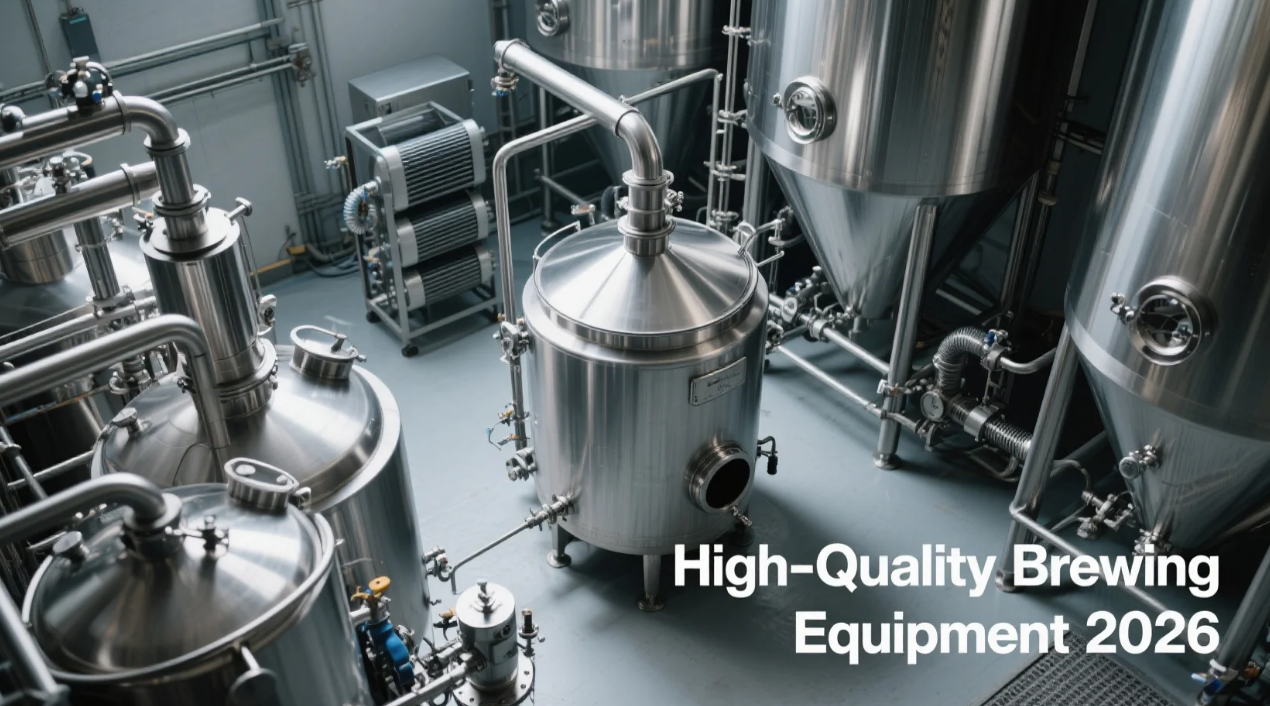
You unbox a new brewhouse, everything polished bright, and six months later you are fighting inconsistent mash temperatures and valves that weep. The stainless steel still shines, but the process is already unreliable. That gap between how equipment looks and how it performs is where most breweries lose money.
High-quality brewing equipment is not about a glossy brochure or thick metal for its own sake. Real quality shows up in three places: repeatable mash performance, surfaces that clean predictably, and components that still seal correctly after two thousand brews. Equipment that fails on any of those dimensions is expensive metal, nothing more.
Defining High-Quality Brewing Equipment
Quality in brewing equipment is operational, not aesthetic. A tank that looks beautiful but leaves weld crevices where bacteria colonize will ruin a beer style faster than any recipe mistake. Quality means the equipment helps you produce consistent wort, clean efficiently, and keep staff safe without requiring constant workarounds.
The concrete attributes are straightforward. Food-grade materials come first—304 stainless steel for most applications, 316L for high-chloride environments or particularly acidic processes. Wall thickness matters, but within reason: 3–5 mm for small vessels up to 1000 liters, thicker steel for larger tanks that must withstand higher hydrostatic pressure. A 10-barrel tank does not need battle-ship plate, but it does need a thickness that prevents deformation during CIP heating cycles.
Internal fabrication is where most budget equipment fails. Smooth welds and polished interiors eliminate product traps. A weld that feels rough to the touch will accumulate protein and hop residue, and no CIP cycle length compensates for poor surface finish. Process-oriented design means the vessel geometry matches what you are actually doing—a lauter tun shaped for efficient sparging, a whirlpool sized to create proper trub cone formation.
Reliable fittings sound trivial until a sample valve leaks during fermentation logging. Manways that seal correctly, pressure relief valves that actuate at rated pressure, and sanitary valves that disassemble for gasket replacement all determine whether a tank is an asset or a recurring headache. Integrated CIP spray devices and properly positioned access points complete the picture: equipment that supports cleaning and safety is equipment that will still perform years later.
Key Characteristics to Inspect in Any Brewhouse
The brewhouse is where equipment quality directly changes beer—or fails to. When you evaluate a mash or lauter tun, start with the rake geometry and false bottom design. Rakes that do not clear the false bottom evenly cause channeling during sparging, which reduces extract and increases the risk of a stuck mash. False bottom slot spacing needs to match your malt bill; a generic 0.7 mm gap works for well-modified barley but clogs immediately with wheat or rye.
Sparging arrangements matter more than most buyers realize. A lauter tun with poor sparging arm distribution produces uneven sugar extraction across the grain bed. The difference between a well-designed lauter tun and a generic one can be 2–4 percentage points in extract yield. That is not a theoretical number—over a year of production it translates into thousands of dollars of lost fermentable sugar.
Kettle and whirlpool engineering is equally specific. Kettle diameter-to-height ratio affects boil intensity and evaporation rate. A kettle that is too tall for its diameter creates a weak convection current, producing inconsistent isomerization and DMS removal. Whirlpool geometry determines trub separation efficiency. A whirlpool that is too shallow or has an off-center inlet will leave a diffuse trub pile, pulling sediment into the heat exchanger and ultimately into the fermenter.
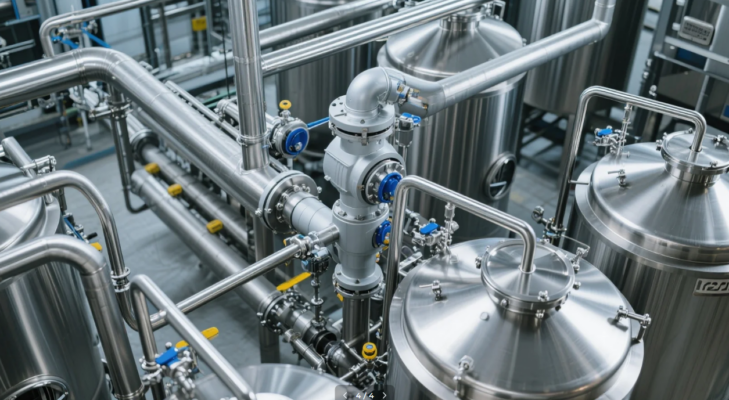
Pump and piping selection follows the same logic. Pumps matched to expected flow rates avoid cavitation and oxidation during transfers. Sanitary connections mean tri-clamp fittings, not threaded joints that trap soil. Piping routed with clean-in-place in mind—no dead legs, minimal horizontal sections, drainable slopes—reduces cleaning time and chemical consumption.
Platform and access design is the detail that operational staff notice immediately. Walkways positioned at manway height, ladders with correct rung spacing, and handrails at proper elevation reduce fatigue and the risk of injury during grain-outs and cleaning. Equipment that is physically uncomfortable to operate breeds shortcuts, and shortcuts in brewing cause contamination.
One brewery I worked with bought an inexpensive kettle with walls that looked impressively thick. The welds were unground on the interior surface, small crevices everywhere. Within six months, beer coming out of that kettle developed a metallic, slightly sour note that was not there before. Swabs confirmed biofilm in the weld crevices. The tank was cheaper initially, but the replacement cost plus the lost batches made it three times as expensive as a properly fabricated vessel would have been. Surface finish and weld geometry mattered far more than the metal gauge ever did.
Fermentation and Conditioning Tanks – Where Cleanability Meets Stability
Fermentation and conditioning is where tank quality protects the work you already did in the brewhouse. A poorly designed tank here can ruin months of careful production.
Cylindroconical geometry is the standard for good reason: the cone angle allows yeast and trub to settle compactly, enabling transfers that leave sediment behind. Tanks with shallow cones or poorly positioned outlets force brewers to either leave beer behind or risk transferring sludge into the next vessel.
Multizone cooling jackets are not a luxury. A single cooling zone on a tall tank creates temperature stratification—warmer at the top, colder at the bottom—which produces inconsistent fermentation rates and off-flavors from stressed yeast. Two or three independently controlled zones allow uniform temperature management throughout the fermentation and conditioning profile. Glycol cooling systems paired with proper PID control keep temperatures within ±0.5°C, which is the difference between a clean lager profile and diacetyl problems.
Insulation and cladding are often underestimated for their impact on energy cost and temperature stability. A tank with poor insulation will drive glycol usage up and make maintaining serving temperature a constant battle. That operational cost accumulates every day the tank is in use.
Access points and CIP integration determine how much labor cleaning consumes. Sample valves positioned at multiple heights allow monitoring without opening the manway. Manway placement that lets a person actually see inside the tank makes visual inspection possible. Spray ball coverage is the most overlooked quality feature on fermentation tanks. Many buyers carefully calculate tank volume but never check whether the spray ball reaches the upper dome and cone bottom. A CIP cycle needs a flow rate of 1.5–2.5 m/s across all internal surfaces to remove organic soil. If the spray ball pattern misses the upper dome, biofilm forms there within a few cycles, and manual cleaning is the only fix—adding hours per tank per week.
Tank sizing matters for capacity planning. Common volumes like 1000L, 3000L, and 5000L fit standard batch sizes, but breweries should size tanks to match their fermentation schedule, not just available floor space. A tank that is too large for typical batch volume wastes refrigeration and cleaning chemicals; a tank that is too small forces multiple batches and extends turnaround time.
When Quality Is Built as a Complete System – Turnkey Brewery Considerations
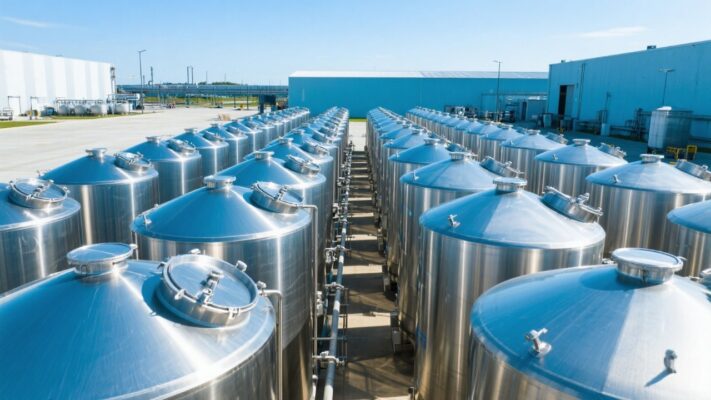
Individual equipment quality matters, but component matching determines whether a brewery runs smoothly or produces constant friction. A brewhouse from one manufacturer, fermentation tanks from another, a cleaning system from a third—each piece might be well-built, but they were never designed to work together.
Control compatibility is the most common pain point. A brewhouse with a PLC running one control protocol paired with cellar tanks using different temperature controllers forces operators to learn two interfaces and manually coordinate steps that should be automated. PID tuning parameters that work for one manufacturer’s heating jacket may not transfer to another’s, producing temperature oscillations during crucial fermentation phases.
CIP requirements differ between equipment brands. One manufacturer’s tanks may need a specific flow rate and chemical concentration that another manufacturer’s CCT cannot tolerate without damaging gaskets or surface finish. Mixing brands often means maintaining multiple cleaning protocols, increasing the risk of a CIP error that contaminates a tank.
Installation complexity multiplies with mismatched equipment. A turnkey system where the brewhouse, fermentation tanks, glycol chiller, and control panel are planned as one package can reduce installation and commissioning time by 30–50% compared to piecing components together from different suppliers. That time saving is not just about scheduling—it avoids the debugging phase where no single vendor takes responsibility for integration problems.
For breweries expanding in phases, planning a coherent system from the start is still possible. Define the final capacity and choose equipment that can integrate incrementally. Standardizing on one supplier for vessels, or at least one control platform, prevents the compatibility issues that emerge later.
The tradeoff is worth stating directly: a turnkey system from a reputable manufacturer costs more upfront than sourcing individual pieces from different fabricators. What you pay for is reduced commissioning risk, a single point of accountability, and equipment that was designed to operate as one process rather than as separate machines. For a brewery that needs to reach production reliably and on schedule, that premium is often cheaper than the downtime caused by integration failures.
FAQ
Q1: What minimum tank wall thickness should I look for in a 10-barrel system?
For a 10-barrel (approximately 1170-liter) vessel, 3 mm wall thickness is standard for atmospheric tanks, while 4 mm is preferred for tanks that undergo pressure transfers or CIP heating cycles. Cone sections typically need thicker steel—4 mm minimum—because of the higher stress from hydrostatic pressure. Always verify that the manufacturer uses the same thickness for the cone as specified for the sidewall; some fabricators use thinner material in the cone to reduce cost.
Q2: How often should I replace gaskets and seals on high-quality equipment?
EPDM gaskets on manways and tri-clamp fittings should be replaced every 12–18 months under normal production schedules. Silicone gaskets last slightly longer, typically 18–24 months. The actual trigger should be visual inspection: any gasket showing compression set, cracking, or discoloration needs immediate replacement regardless of age. A leaking manway gasket during fermentation introduces oxygen that affects both flavor and shelf stability.
Q3: Can I retrofit a CIP system on an older tank, or is it better to buy new?
Retrofitting a CIP system is possible if the tank has adequate access ports for spray ball installation and the internal geometry allows complete drainage. The main limitation is weld quality on older tanks—rough internal welds will never clean properly regardless of spray ball coverage. If the tank has smooth internal welds and a proper cone angle, retrofitting with a fixed spray ball and CIP return line is cost-effective. If the internal finish is poor, replacement is the better investment.
Q4: What is the most overlooked quality feature when buying a lauter tun?
False bottom support structure. Many buyers check slot spacing and material grade but ignore how the false bottom is supported underneath. A false bottom that sags under grain load creates uneven bed depth and channeling, reducing extract yield. Look for multiple support rings or cross-bracing, not just a single perimeter ledge. The gap between the false bottom and the tun bottom should also be verified—too small, and flow is restricted; too large, and grain passes through.
Q5: Does stainless steel grade (304 vs 316L) really matter for a brewery?
304 stainless steel is adequate for 90% of brewery applications, including brewhouse vessels, fermentation tanks, and bright beer tanks. 316L becomes important in environments with high chloride exposure—breweries near coastlines or those using caustic cleaning chemicals with elevated chloride content. 316L also provides better corrosion resistance for acid washing protocols. For most inland breweries, 304 is cost-effective and performs well for decades. Paying for 316L where it is not needed adds expense without benefit.
