
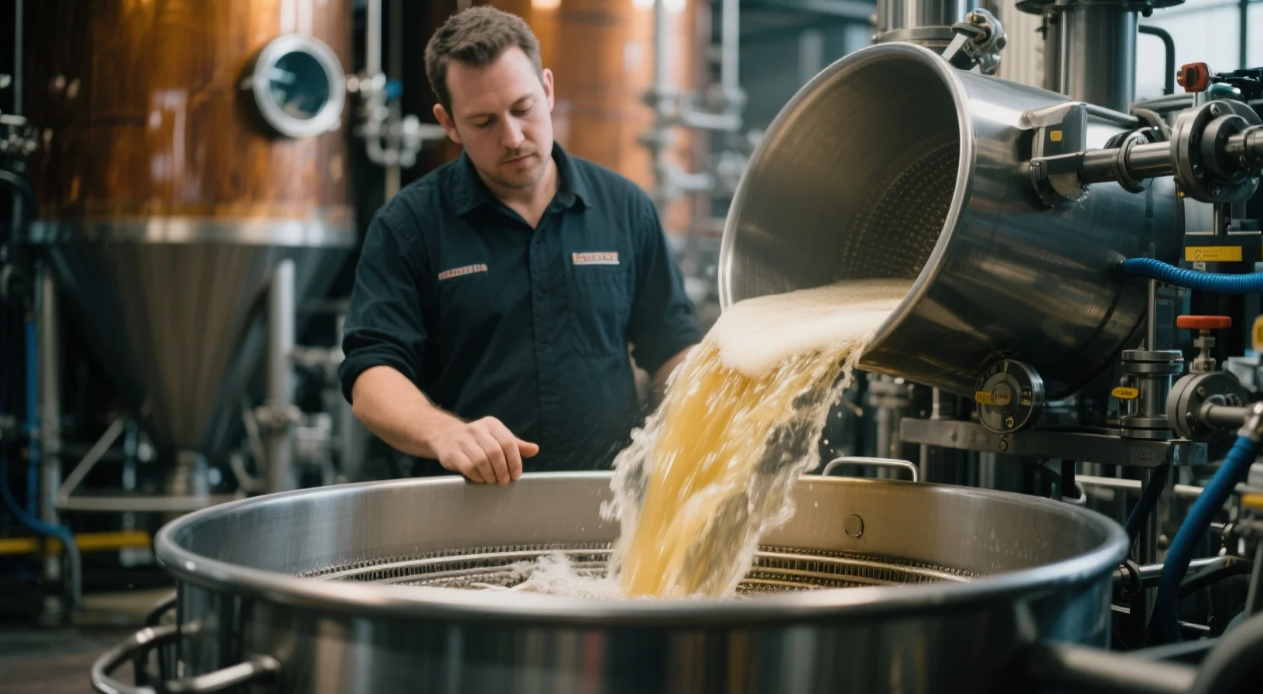
The brew day started at six in the morning. By noon the mash tun had clogged twice, the CIP cycle on the fermenter took forty minutes longer than the schedule allowed, and the transfer to the bright beer tank ran so slowly that the packaging team had to stay an extra hour.
This is not a rare story. It happens every week at breweries that bought equipment based on volume numbers rather than how those vessels actually behave during production. Many operators assume that high efficiency means bigger tanks, more automated valves, or a fully digital control panel. But the breweries that consistently make good beer on schedule are not always the ones with the most expensive gear.
They are the ones whose equipment makes every step more predictable and less prone to interruption. Understanding what beer making equipment high efficiency really requires means looking past the spec sheet and examining how each vessel, pipe, and cleaning circuit affects the rhythm of the day.
Why Efficiency in Brewing Is a Predictability Problem, Not a Speed Problem
Efficiency in a brewery is usually measured in brewhouse yield, energy per barrel, or liters of water per liter of beer. Those numbers matter, but they describe the outcome, not the operational reality that produces it. A brewer who loses thirty minutes because the lauter tun drained slowly or the kettle took too long to reach a rolling boil is not just losing time on that batch.
They are losing a brewing slot that cannot be recovered. Over a five-day production week, a single thirty-minute disruption effectively eliminates one full batch per week when multiplied across the schedule.
The problem is not that the equipment is slow. It is that the equipment is unpredictable. A stuck mash does not happen every time, but when it does, nobody knows whether it will take twenty minutes or an hour to resolve. A CIP cycle that works fine on Monday may leave residue on Friday because the spray ball orientation shifted slightly during cleaning.
That unpredictability forces brewers to pad every step with extra time, which reduces the total output the facility can deliver even if the theoretical capacity seems adequate.
The real cost of unpredictability goes beyond lost time. It creates variability in the beer itself. When a mash runs longer than expected, the enzymatic profile changes. When a whirlpool rest time is cut short to catch up, trub carryover increases. Consistent beer requires consistent timing, and consistent timing requires equipment that behaves the same way batch after batch.
This is why beer making equipment high efficiency should be understood as a predictability problem first. The equipment that wins is not the one with the highest heat exchange rate or the biggest grain bill capacity. It is the one that lets the brewer run the same process every time without surprises.
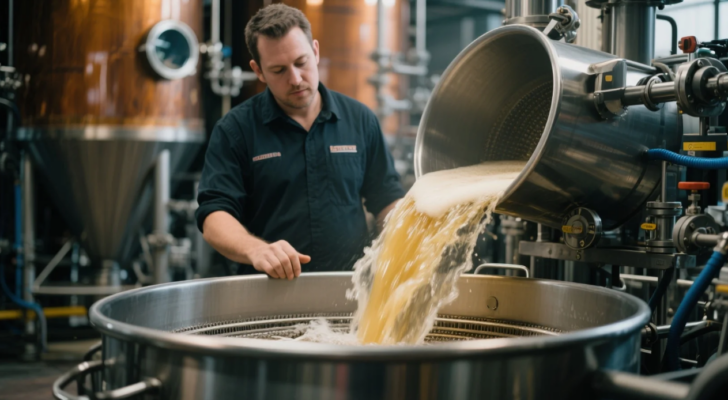
Breaking Down Efficiency by Brewery Area: Brewhouse, Cellar, and Cleaning
Efficiency is a system property, not a component spec. A brewhouse that runs fast does not help if the cellar cannot keep up, and a cellar with ample capacity is wasted if cleaning cycles take too long to turn tanks around. Each area contributes to the overall rhythm, and the weakest link sets the pace for the entire brewery.
Brewhouse
The brewhouse is where the most visible efficiency gains live, but also where the most common design mistakes hide. The mash system must handle grain flow smoothly. A mash tun with a poorly designed raking mechanism or an undersized auger will create dough balls that reduce extraction. The lauter tun needs a false bottom or screen system that allows even drainage across the full surface. If the grain bed compresses unevenly, the runoff slows and the brewer either accepts lower yield or extends the lauter beyond the planned time.
The kettle and whirlpool are often treated as simple vessels, but their geometry matters. A kettle with an overly wide diameter heats unevenly unless the steam jacket is specifically designed for that shape. A whirlpool with an insufficient cone angle or an off-center inlet will not form a proper trub cone, sending solids into the heat exchanger and downstream.
Pump selection and piping layout are frequently underestimated. An undersized pump creates slow transfers. An oversized pump aerates the wort. Pipes with too many elbows or mismatched diameters add friction that wastes energy and time.
Cellar
The cellar is where hidden gains accumulate or leak away. Fermentation tank cooling performance is the most obvious factor. A tank with insufficient jacket surface area or a poorly matched chiller will struggle to maintain temperature during the peak of fermentation, leading to off-flavors and extended fermentation times. But the layout of the cellar itself matters just as much.
A well-designed cellar places fermenters and bright beer tanks in a sequence that matches the production flow. Transfer lines should be as short as possible, with gentle bends and consistent diameter. A brewery that routes beer through twenty meters of unnecessarily long hose because the tank layout was not thought through will lose twenty to thirty percent of its transfer time to friction and cleaning complexity.
Bright beer tank scheduling is another overlooked factor. If the brite tank capacity is not aligned with the fermenter volume and the packaging line speed, brewers end up either waiting for a tank to free up or rushing a beer out of conditioning before it is ready. The cellar should be planned so that the sequence of filling, conditioning, and emptying creates a continuous loop rather than a series of stop-and-wait steps.
Cleaning
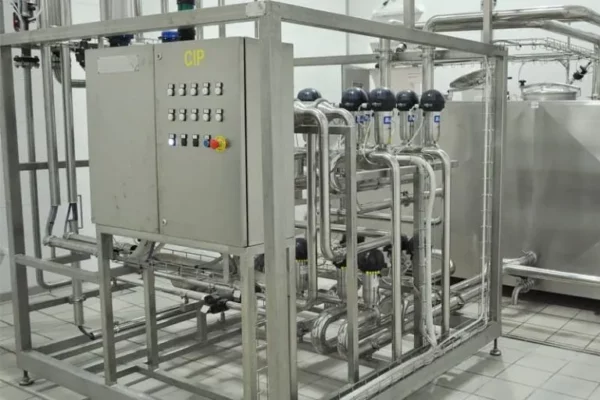
Cleaning is the anchor that drags on throughput more than most brewers realize. A single fermenter CIP cycle that takes ninety minutes instead of sixty may not seem catastrophic, but across six fermenters and a weekly schedule, that extra half hour per tank consumes an entire production day. The design of the CIP system determines how long cleaning takes. A CIP manifold that requires manual reconnection for each tank wastes labor and invites error. Internal surface finish matters more than many equipment buyers know. A tank with a rough weld or an unpolished interior corner will hold soil longer, requiring extended caustic recirculation or manual scrubbing.
The connection style between vessels and the CIP supply also affects speed. Tri-clamp connections are standard, but the time required to open and close each clamp adds up when a brewery cleans ten tanks per week. Simple design choices, such as using larger diameter CIP return lines and avoiding dead legs in the piping, can cut cleaning time by a measurable margin without any automation.
Practical Design Choices That Improve Output Without Adding Complexity
The assumption that efficiency requires complex automation or massive vessels is one of the most persistent misconceptions in the industry. Many of the most effective improvements come from straightforward design decisions that reduce friction in daily work.
Rightsizing
Oversized equipment is a common mistake. A brewery that buys a mash tun capable of handling a 50 percent larger batch than it will ever produce assumes that extra capacity provides flexibility. In practice, that oversized tun takes longer to heat up, holds more thermal mass than needed, and creates a grain bed that is too shallow for proper lautering. A shallow grain bed increases the risk of channeling and stuck mashes, which defeats the purpose of having extra volume in the first place. Rightsizing to realistic production goals means the equipment operates near its design point most of the time, which is where it performs most reliably.
Clear Process Flow
The physical path that materials follow through the brewery should be logical and direct. Malt should move from the mill into the mash tun without unnecessary vertical transfers. Wort should flow from the kettle to the whirlpool and then to the heat exchanger along the shortest practical route. Beer moving from fermentation to bright beer tanks should travel through pipes that are straight, short, and easy to clean. Every extra meter of pipe, every unnecessary elevation change, and every poorly placed valve adds resistance that slows production and creates cleaning difficulty.
Simple Access
A brewer who has to climb awkwardly to reach a manway or stretch to turn a valve is more likely to skip routine checks or perform them hastily. Platform stairs placed at logical points, manways positioned for easy visual inspection, and valves grouped within comfortable reach all reduce operator fatigue and the errors that come with it. In many mid-size breweries, adding a single well-placed access platform near the filter or heat exchanger can cut cleaning and maintenance time by fifteen minutes per run simply because the brewer can work efficiently instead of fighting the layout.
Stable Control
Automation is not the enemy, but it is also not a requirement for efficiency. A brewery with reliable temperature control, basic high and low alarms, and clear visual indicators on the control panel can produce consistent beer without a full PLC system. The key is stability. A temperature probe that drifts by half a degree over a twelve-hour fermentation will create inconsistency that the brewer cannot see until the beer is finished. Stable instrumentation, proper insulation on tanks and pipes, and control elements that do not require constant adjustment are the foundation of repeatable production.
Energy, Water, and Product Loss – The Real Metrics of Brewery Efficiency
The three waste streams that define long-term brewery efficiency are energy, water, and product loss. They are interconnected, and improving one can sometimes hurt another if the tradeoffs are not understood.
Energy
Heating and cooling account for the largest share of energy use in most breweries. Large temperature swings waste energy because every heating and cooling cycle must overcome the thermal mass of the vessel and its contents. Correctly sized cooling equipment is critical. An oversized chiller short-cycles, wasting electricity and failing to maintain stable temperature.
Insulation is another area where small investments yield large returns. A well-insulated fermenter loses far less cold to the ambient environment, which reduces chiller runtime. A brewery with well-insulated tanks and a heat recovery system can reduce energy consumption by fifteen to twenty-five percent compared to one without.
Water
Water efficiency is often measured in liters per liter of beer produced, but the real driver of water use is cleaning effectiveness. If a cleaning cycle does not remove all soil on the first pass, the brewer must run it again or add manual scrubbing, both of which consume more water and time. Cooling water reuse is another practical measure.
Many breweries run cooling water through a heat exchanger once and then send it to drain. Capturing that water for cleaning or for the next mash reduces water consumption significantly without affecting beer quality.
Product Loss
Product loss is the most expensive waste because it represents beer that was brewed, fermented, and conditioned but never sold. Vessel geometry plays a large role. A cone angle that is too shallow leaves beer trapped in the cone after transfer. A bright beer tank bottom outlet that is not positioned at the lowest point of the tank leaves a measurable heel behind.
Transfer line design matters as well. Long lines with multiple elevation changes require higher pump speeds, which increase foaming and entrainment losses. Blow-down losses during fermentation are sometimes accepted as unavoidable, but a well-designed blow-off system can recover a significant portion of the foam and yeast that would otherwise be discarded.
The tradeoff here is that chasing one metric aggressively can hurt another. A brewery that reduces water usage by shortening CIP cycles may end up with inadequate cleaning, leading to microbial contamination and product loss.
A brewery that focuses only on energy reduction by raising glycol temperatures may extend fermentation times and reduce tank turnover. The goal is not to maximize any single metric but to find the operating point where all three are acceptable and the process remains stable.

FAQ
What is the most overlooked factor in brewery efficiency?
Cleaning is the most overlooked factor. Most breweries track brewhouse yield and energy per batch, but few measure how much time and labor goes into cleaning each vessel. A design that cuts cleaning time by ten minutes per tank across a six-tank cellar frees up an hour of production time per cleaning cycle, which can translate into an extra brew day per week.
Can a small brewery achieve high efficiency without automation?
Yes. Small breweries often benefit more from practical design choices than from expensive automation. Rightsized vessels, logical process flow, simple access platforms, and reliable temperature control provide most of the efficiency gains that matter. Automation helps with consistency, but it does not fix a poorly laid out brewhouse or an undersized cleaning system.
How often should I review my equipment’s efficiency performance?
At least quarterly. Track brewhouse yield, energy per barrel, water usage, and cleaning cycle times. Compare the data to previous periods. Small drifts in yield or cleaning time are early indicators of equipment wear or process drift. Catching them early prevents larger losses.
What is the biggest waste of energy in a typical brewhouse?
Heating the strike water and the boil are the two largest energy consumers. But the most avoidable waste comes from poor insulation and temperature swings. A brewhouse that heats the mash tun to strike temperature, then lets it cool during a delay, then reheats, wastes energy every time the temperature cycles.
Does bigger equipment always mean more efficient production?
No. Oversized equipment often reduces efficiency. A mash tun that is too large creates a shallow grain bed that increases the risk of stuck mashes. An oversized kettle takes longer to heat and cool. Bigger tanks require longer cleaning cycles. Rightsizing to actual production volume is almost always more efficient than buying extra capacity that will never be fully used.
