
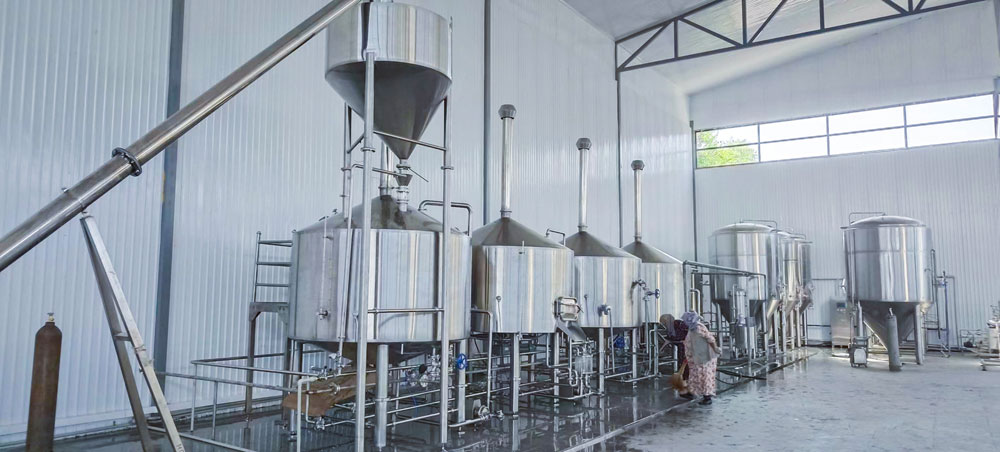
Beer quality is not determined by recipes alone. In modern brewing—whether you’re building a serious home setup, a pilot system, or a small commercial brewhouse—equipment choices and process control are what turn “a batch” into repeatable, shelf-stable beer. This guide explains the essential beer production equipment you need, what each component does, how it affects flavor, and how to prioritize purchases without compromising safety or consistency.
The brewing industry’s investment trends also reflect how critical equipment has become. For example, Grand View Research estimated the global brewery equipment market at USD 18.45 billion in 2024, with projected growth driven by demand for craft beer and modernization of brewhouses. (Source: Grand View Research, “Brewery Equipment Market Size, Industry Report, 2030”)
Why equipment matters more than most beginners think
Brewing is essentially controlled chemistry and microbiology. Your equipment determines:
Extraction efficiency (how much sugar you get from malt)
Fermentability (how dry vs. sweet the finished beer is)
Microbial risk (infection and off-flavors)
Oxidation exposure (staling, muted aroma, color darkening)
Repeatability (the ability to brew the same beer twice)
A well-designed system minimizes variability: stable temperatures, predictable transfers, effective cleaning, and low oxygen pickup after fermentation.
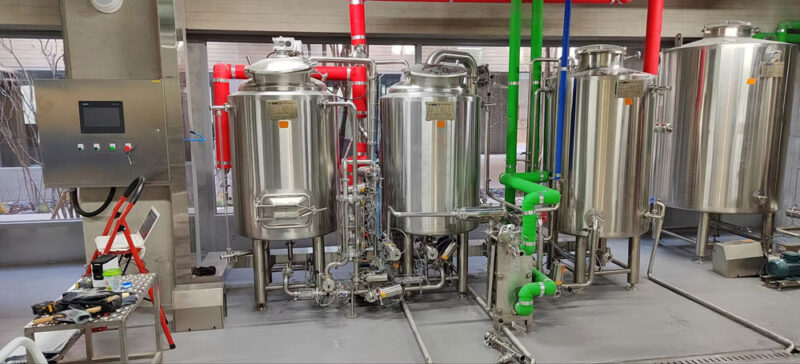
The essential components of beer production equipment
1) Malt mill (grain mill)
What it does: Crushes malted barley (and other grains) to expose starches while ideally keeping husks relatively intact.
Why it matters: The crush affects both:
Sugar extraction (efficiency)
Lautering performance (risk of stuck mash/runoff)
What to look for:
Adjustable roller gap
Consistent feed
Easy cleaning and low dust exposure
Typical materials: Stainless steel rollers/housing are common for durability and corrosion resistance.
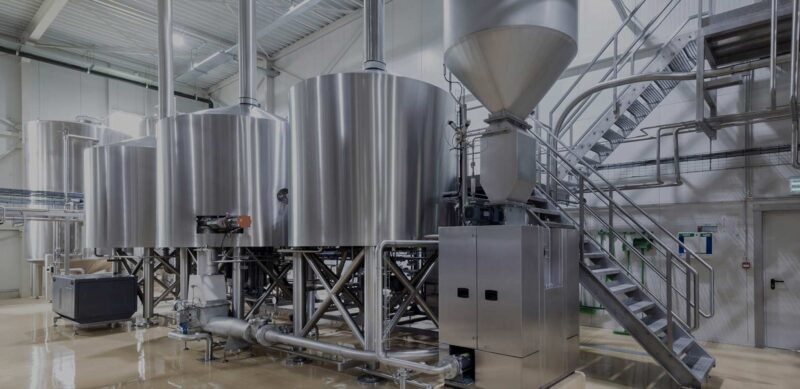
2) Mash tun (mash/lauter vessel)
What it does: Mixes crushed grain with hot water to convert starch into sugars (the mash) and then separates sweet wort from spent grain (lautering).
Why it matters: Mash temperature directly shapes beer body and fermentability because different enzymes are active at different temperatures. Practical brewing references commonly describe beta-amylase working best at lower mash temperatures and alpha-amylase at higher temperatures—one reason many brewers operate in a “balanced” mid-range depending on style. (Source: BeerSmith, “Enzymes in the Mash and Mash Temperatures for Beer Brewing” https://beersmith.com/blog/2020/03/17/enzymes-in-the-mash-and-mash-temperatures-for-beer-brewing/)
Common operating ranges:
Many single-infusion mashes fall roughly in the 60–71°C (140–160°F) range depending on goals and style.
Mash duration is often 60–90 minutes for many standard processes.
What to look for:
Insulation (temperature stability)
False bottom/manifold designed for your grist and flow rate
A valve that doesn’t trap grain (cleanability matters)
Pro tip: If your mash temperature drifts or stratifies, you can end up with “different beer” even when using the same recipe.
3) Boil kettle (brew kettle)
What it does: Boils wort to sterilize it, drive off volatile compounds, isomerize hop acids (bitterness), and concentrate wort to target gravity.
Why it matters: A vigorous, consistent boil supports:
Predictable bitterness extraction
Consistent evaporation rate (gravity control)
Sanitation of the wort
What to look for:
Adequate volume headspace (to prevent boil-overs)
Heat source with controllable output
A strong whirlpool capability if you use hop-heavy recipes
Materials: Stainless steel is common; aluminum is also used at some scales.
4) Wort cooling system (heat exchanger / chiller)
What it does: Rapidly cools hot wort to yeast-pitching temperature.
Why it matters: Slow chilling increases time in a “danger zone” where wort is vulnerable to contamination and can develop unwanted flavor effects. Efficient chilling also improves process consistency and enables more reliable yeast performance.
Common types:
Plate heat exchanger (fast, compact; requires excellent cleaning practices)
Counterflow chiller (efficient, often easier to manage than plates)
Immersion chiller (simple, common in homebrewing)
Materials: Copper or stainless steel are widely used.
5) Fermentation vessel (fermenter / fermentation tank / unitank)
What it does: Holds cooled wort while yeast converts sugars into alcohol and CO₂—and while key flavor-active compounds are produced or cleaned up.
Why it matters: Fermentation is where beer is “made,” not just where it rests. Temperature control, sanitation, and oxygen management at this stage determine whether beer is clean, ester-forward, solventy, sulfurous, etc.
A widely cited practical point from the American Homebrewers Association is that yeast can behave very differently without temperature control, and higher fermentation temperatures can push undesirable flavors depending on strain and conditions. (Source: AHA, “Understanding Fermentation Temperature Control” https://homebrewersassociation.org/how-to-brew/understanding-fermentation-temperature-control/)
Material choices (and what they really mean):
Stainless steel: best durability, easiest long-term sanitation, supports pressure transfers and CIP (clean-in-place) in many setups.
Glass: inert and traditional, but fragile and less scalable.
Food-grade plastic: budget-friendly and common, but can scratch and retain odors; scratches can become sanitation risks over time.
What to look for:
Headspace and blow-off handling
Temperature control capability (jacketed tanks, fermentation chamber, glycol loop, etc.)
Dump valve (helpful but not mandatory)
Ability to do closed transfers (big quality upgrade)
6) Packaging equipment (bottling, canning, kegging)
What it does: Transfers finished beer into its final container while controlling carbonation and minimizing oxygen exposure.
Why it matters: Packaging is one of the most common points where breweries lose quality. Post-fermentation oxygen pickup can quickly dull hop aroma and shorten shelf life. Industry education resources explicitly emphasize that too much dissolved oxygen in packaged beer contributes to staling, muted flavors, and reduced shelf life. (Source: American Society of Brewing Chemists (ASBC), “The Piercer” tool description https://www.asbcnet.org/lab/samplingplan/tools/Pages/Piercer.aspx)
What to look for (by format):
Kegging: reliable CO₂ system, sanitized lines, pressure-rated transfers, purging practices.
Bottling/canning: filler design that reduces oxygen pickup; CO₂ purge/evacuation steps; consistent seam/cap performance.
Some packaging technology providers publish measurable performance targets. For example, KHS describes systems capable of very low oxygen pickup (reported values like 20 ppb under certain conditions) through container evacuation and CO₂ purging methods. (Source: KHS Group, “Oxygen pickup in beer filling…” https://www.khs.com/en/company/news/press-releases/detail/oxygen-pickup-in-beer-filling-state-of-the-art-filling-technology-the-answer-to-familiar-challenges)
Bottom line: If you invest in only one “quality upgrade,” consider improving packaging oxygen control—especially for hop-forward styles.
Supporting (but often overlooked) equipment that protects quality
Even though the list above covers the essentials, real-world brewing also depends on:
Cleaning & sanitation tools
You cannot “sanitize dirt.” You need:
A proper cleaner (removes organic/inorganic soil)
A sanitizer (reduces microbes to safe levels)
Time, temperature, concentration discipline
If you’re brewing at any meaningful volume, cleaning becomes a system: dedicated hoses, spray balls, pumps, and chemical storage.
Measurement & control
Accurate thermometers
Hydrometer/refractometer (plus correction knowledge)
pH measurement (especially for mash performance)
Dissolved oxygen measurement is common in commercial settings (and increasingly desired in serious small breweries)
A practical buying priority list (best ROI for most brewers)
If you want a clean, scalable setup, prioritize in this order:
Fermentation temperature control (prevents major flavor faults)
Reliable sanitation workflow (reduces infections and batch losses)
A consistent mash/lauter setup (efficiency and repeatability)
Effective chilling (process stability and microbial safety)
Packaging upgrades to minimize oxygen pickup (shelf-life and aroma protection)
This order mirrors how quality problems typically appear: fermentation and packaging issues ruin more beer than slightly imperfect mash efficiency.
Q&A (FAQ): Beer production equipment
Q1: What is the single most important piece of equipment for beer quality?
Fermentation temperature control. Yeast performance is highly temperature-sensitive, and uncontrolled fermentation can produce inconsistent or undesirable flavors depending on strain and conditions. (Source: American Homebrewers Association https://homebrewersassociation.org/how-to-brew/understanding-fermentation-temperature-control/)
Q2: Do I really need a mash tun if I have a kettle?
Not necessarily—some all-in-one systems combine mash and boil. However, a dedicated mash/lauter design often improves temperature stability and lautering reliability, which helps repeatability and efficiency.
Q3: Stainless steel fermenter vs. plastic fermenter—what’s the real difference?
Stainless generally wins on longevity, scratch resistance, and cleanability, especially if you plan to brew frequently. Plastic can be perfectly workable when it is truly food-grade and kept in good condition, but scratches and wear can increase sanitation risk over time.
Q4: Why is rapid wort cooling so important?
Fast chilling reduces time spent at temperatures where contamination risk is high and supports consistent yeast pitching. It also helps you hit repeatable fermentation profiles.
Q5: What causes “wet cardboard” flavor in beer?
Oxidation. Oxygen exposure after fermentation is a major driver of staling and muted flavors. Brewing quality resources emphasize that excess dissolved oxygen in packaged beer can result in staling and reduced shelf life. (Source: ASBC https://www.asbcnet.org/lab/samplingplan/tools/Pages/Piercer.aspx)
Q6: Is it worth investing in better packaging equipment?
If you sell beer (or want hop-forward beer to taste fresh longer), yes. Packaging is a high-risk point for oxygen pickup. Some modern filling systems report extremely low oxygen pickup through evacuation and CO₂ purging approaches. (Source: KHS https://www.khs.com/en/company/news/press-releases/detail/oxygen-pickup-in-beer-filling-state-of-the-art-filling-technology-the-answer-to-familiar-challenges)
Q7: How big is the brewery equipment market, and why does that matter?
Market data suggests substantial ongoing investment. Grand View Research estimated USD 18.45B in 2024 for the global brewery equipment market, reflecting growth in craft brewing and equipment upgrades. (Source: https://www.grandviewresearch.com/industry-analysis/brewery-equipment-market)
This matters because it signals continued innovation (automation, efficiency, oxygen control) and wider availability of advanced equipment even for smaller producers.
Conclusion: Build a system, not a pile of gear
“Essential beer production equipment” is less about owning everything and more about building a connected, cleanable, controllable process. Start with the core production chain:
Mill → Mash/Lauter → Boil → Chill → Ferment (controlled) → Package (low oxygen)
If each step is stable and sanitary, your beer becomes predictable—and that predictability is what creates true brewing skill.
References (authoritative sources used)
Grand View Research — Brewery Equipment Market Size (2024 estimate, projections): https://www.grandviewresearch.com/industry-analysis/brewery-equipment-market
American Homebrewers Association — Fermentation temperature control guidance: https://homebrewersassociation.org/how-to-brew/understanding-fermentation-temperature-control/
American Society of Brewing Chemists (ASBC) — Dissolved oxygen relevance to staling (Piercer tool): https://www.asbcnet.org/lab/samplingplan/tools/Pages/Piercer.aspx
KHS Group — Oxygen pickup in beer filling (reported ppb values under certain conditions): https://www.khs.com/en/company/news/press-releases/detail/oxygen-pickup-in-beer-filling-state-of-the-art-filling-technology-the-answer-to-familiar-challenges
BeerSmith — Enzymes and mash temperature ranges (practical brewing reference): https://beersmith.com/blog/2020/03/17/enzymes-in-the-mash-and-mash-temperatures-for-beer-brewing/
