
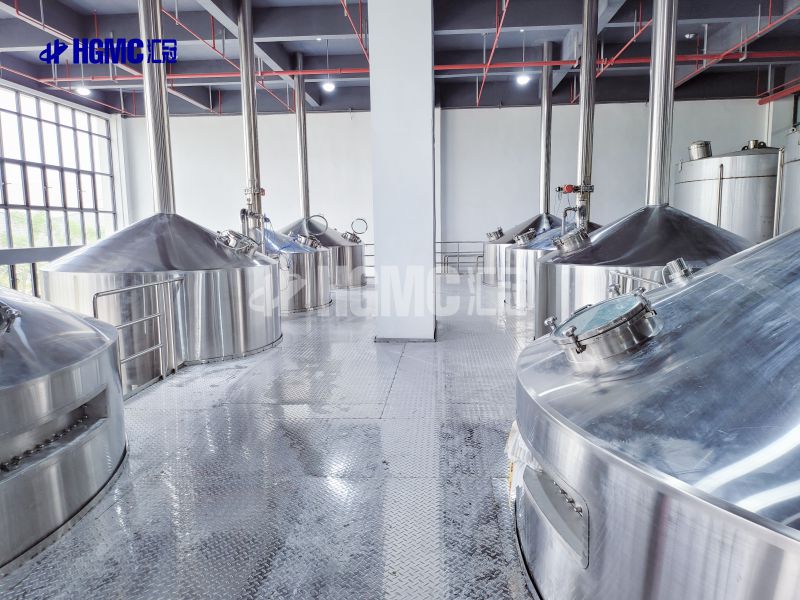
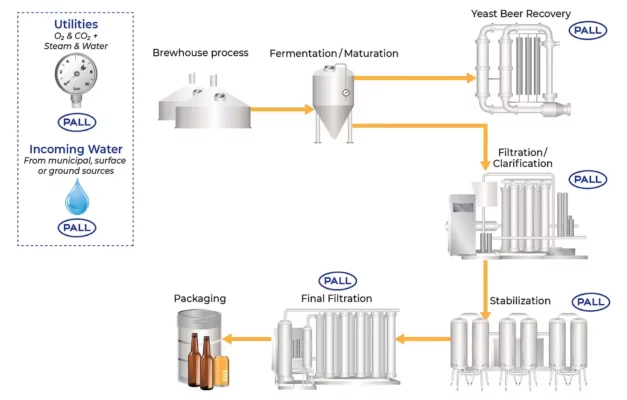
Beer production is equal parts craft and engineering. Great recipes matter, but consistent quality and profitable throughput depend heavily on beer brewing equipment—from the brewhouse to fermentation, filtration, packaging, and clean-in-place (CIP) systems.
That focus on equipment is only getting stronger. Industry research estimates the global brewery equipment market was about USD 18.45 billion in 2024 and is expected to grow at a ~6.1% CAGR from 2025 to 2030, driven by brewery expansion, modernization, and efficiency upgrades (Grand View Research). At the same time, competition among breweries is intense. In the U.S. alone, the Brewers Association reported 9,796 operating craft breweries in 2024, and noted that closings outpaced openings for the first time since 2005—evidence of a maturing, more competitive market where operational excellence matters (Brewers Association).
This article breaks down the essential equipment used in beer production, explains how to choose systems that fit your process and scale, and includes an FAQ section for common buyer questions
Why Beer Brewing Equipment Matters More Than Ever
A brewery’s equipment choices influence:
Beer consistency (repeatable extraction, stable fermentation, controlled oxygen pickup)
Efficiency and yield (extract efficiency, beer loss, downtime)
Food safety and hygiene (sanitary design, drainability, cleanability)
Energy and water use (heat recovery, optimized CIP, automated controls)
Scalability (adding tanks, automation, packaging speed without redesign)
In a tighter market, a “good enough” system can become expensive—through contamination risk, inconsistent quality, high labor, or maintenance problems that reduce uptime.
Core Stages of the Beer Brewing Process (and the Equipment Behind Them)
1) Milling: Malt Mill / Grist Mill
What it does: Crushes malted grain to expose starch while preserving husk structure for lautering.
What to evaluate:
Roller count (2/4/6 rollers), differential speeds
Throughput (kg/hr)
Dust control (explosion risk mitigation where required)
Consistency of crush (impacts lauter performance and extract yield)
Common mistakes:
Over-crushing increases stuck mash risk
Under-crushing reduces extract and brewhouse efficiency
2) Mashing and Lautering: Mash Tun / Mash Mixer + Lauter Tun (or Mash/Lauter Combo)
What it does: Converts starch to fermentable sugars and separates sweet wort from grain solids.
Key design variables:
Heating method (steam jacket, internal calandria, direct-fire on smaller systems)
Agitation design (gentle mixing, no dough balls, minimal shear)
Lauter plates/wedges, underlet, rakes, plow design
Instrumentation: temperature probes, flow meters, differential pressure
Process benchmark: Many brewers mash around 65–71°C (150–160°F) depending on style and fermentability targets (a widely used process range in brewing operations).
3) Wort Boiling: Boil Kettle / Wort Copper
What it does: Sterilizes wort, drives off unwanted volatiles, isomerizes hop acids, and sets wort color and flavor.
What to evaluate:
Boil vigor and evaporation rate
Steam capacity, condensate handling
Whirlpool integration and trub separation approach
Venting/condensation handling for safety and facility requirements
Quality angle: Effective boiling and downstream cooling help reduce off-flavor risk (and support stable fermentation performance).
4) Whirlpool: Whirlpool Tank or Integrated Whirlpool
What it does: Separates hot break and hop solids from wort before cooling.
What to evaluate:
Tangential inlet design and flow velocity
Rest time and cone formation
Knockout clarity targets and trub loss control
5) Wort Cooling: Heat Exchanger (Plate or Tubular) + Cold Liquor Tank (CLT) + Glycol System
What it does: Rapidly cools hot wort to yeast pitching temperature while minimizing contamination risk and off-flavor formation.
A modern brewery commonly uses a plate heat exchanger in counterflow, sometimes with staged cooling (e.g., water then glycol). A technical discussion of plate heat exchanger operation and why slow cooling increases infection/off-flavor risk is described by Brew Your Own (BYO Magazine).
What to evaluate:
Heat transfer capacity (kW), approach temperature, fouling tolerance
Sanitary connections, gaskets, CIP ability
Oxygenation integration (inline O₂ dosing with flow control)
Microbiological safety (sanitary design + cleaning validation)
6) Fermentation: Unitanks / Cylindroconical Fermenters (CCVs)
What it does: Yeast converts sugars into alcohol and CO₂; fermentation control defines a large part of beer flavor.
Common tank choices:
Unitank (ferment + carbonate in one vessel)
Dedicated fermenter + brite tank configuration
What to evaluate:
Cooling jacket zoning (cone + body zones)
Pressure rating, safety valves, instrumentation
Racking arm design, sample ports, manways
Surface finish and weld quality (sanitation and cleaning speed)
Yeast harvesting geometry and bottom outlet design
Market context: Specialized equipment like fermentation tanks is seeing sustained demand as breweries scale and modernize (one example market report forecasts significant growth through the next decade; see: Grand View Research for broader brewery equipment demand drivers).
7) Conditioning and Bright Beer: Brite Tanks + Carbonation System
What it does: Clarifies, stabilizes, and carbonates beer before packaging.
What to evaluate:
Pressure rating and carbonation stone design
Temperature stability and insulation quality
Oxygen pickup prevention (purging, closed transfers, DO monitoring)
8) Clarification / Filtration (Optional): Centrifuge, DE Filter, Sheet Filter, Membrane
What it does: Improves clarity and can improve stability depending on process goals.
Trade-offs:
Filtration can increase shelf stability but may affect mouthfeel/aroma if over-applied.
Centrifuges reduce beer loss and can be gentler for certain styles.
What to evaluate:
Target clarity (haze vs bright)
Product portfolio (hazy IPA vs pilsner vs lager)
Operating cost (media, water, CIP chemicals), maintenance, oxygen management
9) Packaging: Kegging Line, Canning Line, Bottling Line
What it does: Transfers finished beer into market-ready formats with minimal oxygen pickup and consistent fill volumes.
What to evaluate:
Throughput (cans/hr or bottles/hr), changeover time
Dissolved oxygen (DO) control, CO₂ purging efficiency
Seam quality (cans), capper performance (bottles)
Pasteurization needs (depends on distribution and stability targets)
10) Clean-In-Place (CIP): The “Hidden” System That Protects Quality
What it does: Provides controlled cleaning and sanitizing of tanks, lines, heat exchangers, fillers, etc.
What to evaluate:
CIP skid sizing (flow, pressure, heating capacity)
Chemical tanks (caustic/acid/sanitizer), recovery loops
Spray devices (spray balls/rotary jets) matched to tank geometry
Documentation and repeatability (especially for larger operations)
Materials and Sanitary Standards: What Buyers Should Look For
For hygienic processing, stainless steel selection, fabrication quality, and sanitary design principles matter as much as the equipment layout.
304 vs 316 stainless steel: Both are widely used in food processing; 316 generally offers stronger corrosion resistance in more aggressive chemical/chloride environments, which can be relevant depending on your cleaning regime and local water chemistry (AZoM—Food Grade Stainless Steel: 304 vs 316).
Sanitary design standards: In high-hygiene industries (bioprocessing/pharma), ASME’s BPE standard is often referenced for design, materials, fabrication, inspection, and cleaning requirements (ANSI Blog overview of ASME BPE-2024). While breweries may not require BPE certification, many of the underlying sanitary concepts are still useful: drainability, cleanable welds, minimized crevices, and validated cleaning.
Practical buyer tip: Ask for documentation on weld finishing, surface roughness targets (Ra), passivation practices, pressure test procedures, and the manufacturer’s QA process—not just a brochure.
How to Choose the Right Brewery Equipment (A Buyer’s Checklist)
Define your production reality first
Before comparing vendors, document:
Target annual volume and peak seasonality
Core beer styles (hazy vs bright, high adjunct vs all-malt, lagering needs)
Packaging mix (keg vs can vs bottle; local vs export)
Available utilities (steam, electric, water pressure/quality, glycol, air)
Focus on repeatability and serviceability
High-performing systems are designed for:
Easy cleaning (CIP coverage, easy access, drainability)
Fast maintenance (standard valves/seals, local spare parts availability)
Good instrumentation and controls (repeatability reduces labor and waste)
Evaluate total cost of ownership (TCO), not just purchase price
Equipment cost is only part of the picture. Consider:
Energy and water consumption
Chemical consumption (CIP efficiency)
Downtime and spare parts lead time
Operator labor per hectoliter/barrel
Beer Production Equipment Trends Influencing Purchasing in 2026
Efficiency + automation upgrades (consistent outcomes with fewer manual steps)
Sustainability-focused retrofits (heat recovery, water reduction, optimized CIP)
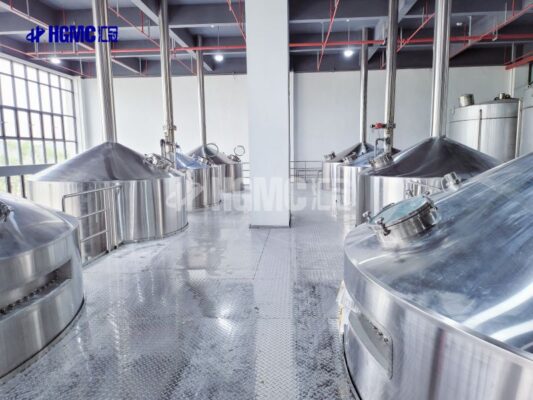
Flexible fermenter cellars (unitanks and modular expansion)
Packaging capability as a growth lever (especially canning performance and DO control)
These align with the broader growth outlook for brewery equipment investment and modernization (Grand View Research).
Frequently Asked Questions (FAQ)
1) What are the most essential pieces of beer production equipment for a new brewery?
At minimum: a malt mill, mash/lauter system, kettle/whirlpool, wort heat exchanger, fermenters, brite tank (or unitanks), a glycol system, and basic packaging (kegging or canning), plus a CIP solution. Skipping CIP planning often creates quality and labor problems later.
2) Why is rapid wort cooling so important?
Rapid cooling reduces the time wort spends in a temperature range that can encourage contamination and can contribute to quality issues. Plate heat exchangers are widely used because they provide efficient counterflow heat transfer and can be integrated into sanitary processes (BYO Magazine).
3) Should I choose unitanks or separate fermenters and brite tanks?
Unitanks simplify transfers and can reduce oxygen pickup when designed and operated well.
Separate brite tanks can improve scheduling flexibility (ferment while another tank is conditioning/packaging).
Best choice depends on your beer portfolio, number of SKUs, packaging schedule, and growth plan.
4) What stainless steel grade is better for brewery equipment: 304 or 316?
Both can be appropriate; 316 generally provides better corrosion resistance in harsher environments (e.g., higher chloride exposure or more aggressive cleaning chemistry), while 304 is common and cost-effective for many brewery applications. A practical comparison and food-processing context is summarized here: (AZoM).
5) Is the craft brewing industry still growing?
The competitive landscape is evolving. In the U.S., the Brewers Association reported 9,796 operating craft breweries in 2024, and that closings exceeded openings—a sign of a maturing market where differentiation and operational excellence matter (Brewers Association). Even in mature markets, equipment investment continues as breweries upgrade for efficiency, consistency, and new product formats.
6) How big is the brewery equipment market?
One industry estimate puts the global brewery equipment market at ~USD 18.45 billion in 2024, with projected growth of ~6.1% CAGR (2025–2030) (Grand View Research). Different firms publish different numbers, but most analyses point to steady growth driven by modernization, automation, and capacity expansion.
Conclusion: Build for Quality, Cleanability, and Scalable Throughput
The “best” beer brewing equipment is the equipment that reliably produces your target beer styles, fits your utilities and facility constraints, and supports growth without constant rework. For most breweries, the winning combination is:
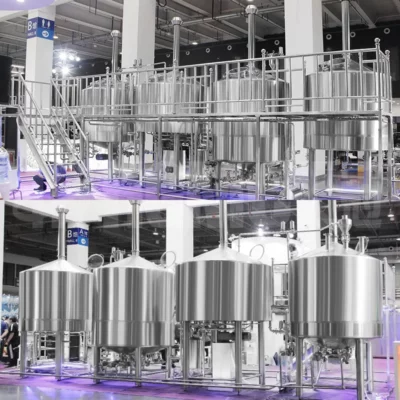
Strong brewhouse fundamentals (mash/lauter + stable boil/whirlpool)
Reliable fermentation temperature control
Fast, sanitary wort cooling and oxygen control
A packaging plan that protects freshness (especially DO control)
A CIP strategy that ensures repeatable hygiene
As competition increases and buyers expect consistent quality, investing in dependable equipment—and validating it through process design, documentation, and service support—becomes a direct path to better beer and a stronger business.
References
Grand View Research — Brewery Equipment Market Size & Trends: https://www.grandviewresearch.com/industry-analysis/brewery-equipment-market
Brewers Association — 2024 U.S. Craft Brewing Industry Figures: https://www.brewersassociation.org/association-news/brewers-association-reports-2024-u-s-craft-brewing-industry-figures/
Brew Your Own Magazine — Cooling Hot Wort Science: https://byo.com/articles/cooling-hot-wort-homebrew-science/
AZoM — Food Grade Stainless Steel: 304 vs 316: https://www.azom.com/article.aspx?ArticleID=24472
ANSI Blog — ASME BPE-2024 overview: https://blog.ansi.org/ansi/asme-bpe-2024-bioprocessing-equipment/
