
When a brewery moves from a 10-barrel pilot system to a 50-barrel production line, the equipment decision carries weight across every future batch. The wrong manufacturer means inconsistent output, regulatory headaches, and supply chain friction that compounds with each expansion.
HGMC has built a reputation as a global supplier of brewing equipment, holding more than 30 national authorized patents and ISO9001:2015 certification, with exports reaching over 120 countries. But for a brewery operator evaluating whether HGMC fits their specific operation, the question is not whether the company has credentials — it is whether those credentials translate into reliable daily production.
A brewery scaling production needs equipment that maintains consistency across larger volumes while meeting local safety and quality regulations. HGMC manufactures brewing equipmenthttps://www.hgmcbrewing.com/brewery-system/, beverage equipment, and canning and bottling lines, offering both individual machines and complete turnkey projects.
The company’s export volume and patent count suggest a mature manufacturing operation, but commercial brewers should examine how that translates into on-the-ground performance before committing to a supplier. The reality is that patent numbers and certification logos tell only part of the story — the rest emerges during installation, commissioning, and the first year of production.
Company Background and Product Range
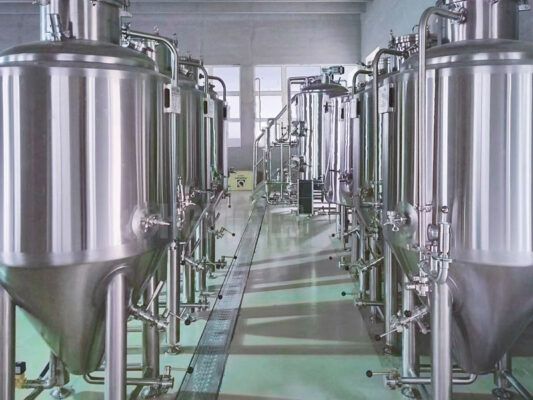
HGMC operates as a manufacturer of beer brewing equipment, beverage equipment, and packaging lines including canning systems and bottling lines. The company provides individual equipment pieces — mash tuns, lauter tuns, brew kettles, whirlpools, fermenters, bright beer tanks, and filtration systems — as well as full turnkey projects that cover everything from brewhouse design to installation and commissioning.
This range means a brewery can either source a single fermenter to expand existing capacity or contract HGMC to build an entire production facility from scratch.
The company reports exporting to more than 120 countries, which gives it logistics experience across diverse regulatory environments. For a brewery in Europe, Southeast Asia, or Africa, this reach can simplify procurement — HGMC already understands shipping routes, customs documentation, and voltage standards across multiple regions.
However, breadth of export does not automatically equal depth of local support, a point worth examining before signing a contract. A brewery in Chile and a brewery in Poland will have very different experiences with spare parts availability and service response times.
HGMC holds ISO9001:2015 certification for its quality management system, and the company lists over 30 national authorized patents and more than 20 high-tech achievements. These numbers signal an R&D investment that many smaller manufacturers cannot match.
For a commercial brewer, the practical implication is that HGMC equipment undergoes documented quality control processes and incorporates proprietary design elements aimed at efficiency and consistency. The company’s manufacturing facility follows standardized welding procedures, pressure testing protocols, and surface finishing requirements that are audited annually.
The company positions itself as a one-stop supplier, which appeals to breweries that want to avoid coordinating multiple vendors for tanks, piping, and packaging equipment. A turnkey approach reduces integration risk — the same manufacturer designed the brewhouse, the fermentation vessels, and the packaging line, so compatibility issues are less likely.
But turnkey projects also concentrate responsibility. If one component underperforms, the entire project timeline can slip, and the brewery has no alternative vendor to lean on during troubleshooting.
Patented Technologies and Innovation
HGMC’s patent portfolio covers more than 30 authorized inventions and utility models, with an additional 20-plus high-tech achievements recognized by Chinese authorities. While the company does not publish detailed patent filings publicly in English, the general focus areas are visible from the equipment designs: automated cleaning systems, heat recovery integration, and energy-efficient vessel geometry.
These are not cosmetic improvements — they directly affect operating costs and labor requirements over the equipment’s lifespan.
The automation angle is worth examining closely. HGMC has invested heavily in control systems that reduce manual intervention during brewing and cleaning cycles. For breweries in labor-scarce markets — parts of North America, Western Europe, or Australia — this automation directly reduces staffing costs and human error.
A brewhouse that can run a full CIP cycle with a single button press rather than a three-person crew saves money over the equipment’s lifespan. The automated systems also reduce variability between batches, which matters for breweries producing consistent branded products.
But this same automation creates a tradeoff that breweries in labor-abundant markets should consider. If your operation has skilled workers available at lower cost, the premium you pay for automated systems may not deliver proportional savings. More importantly, HGMC’s patented control boards and proprietary sensors are not off-the-shelf components. When a sensor fails or a control board needs replacement, you cannot walk into an electrical supply shop and buy a substitute.
One brewery in Southeast Asia learned this the hard way. After a power surge damaged the control board on a 30-hectoliter brewhouse, the replacement required ordering directly from HGMC’s factory. The lead time stretched to six weeks, during which the brewery could not produce.
A comparable system built with standard industrial controllers would have been repaired within days using locally available parts. This is not a reason to avoid HGMC, but it is a reason to stock critical spares at the time of purchase and to verify the availability of replacement components before signing the order. Breweries should negotiate a spare parts package that includes control boards, sensors, and valves for the first two years of operation.
The heat recovery patents are more straightforwardly beneficial. HGMC integrates energy capture into its brewhouse designs, recovering heat from the boiling process to preheat brewing water. For a 50-barrel brewhouse running four batches per day, this can reduce energy consumption by 15 to 20 percent compared to a system without heat recovery.
Over a year of production, the savings offset a meaningful portion of the equipment cost. The payback period on the heat recovery system alone typically falls between 18 and 24 months for a brewery operating at capacity.
Quality Management and Compliance
ISO9001:2015 certification means HGMC maintains a documented quality management system that is audited annually by an accredited third party. For a commercial brewer importing equipment across borders, this certification reduces several categories of risk. It means the manufacturer has defined procedures for material sourcing, welding inspection, pressure testing, and final inspection. It does not guarantee zero defects, but it does mean there is a traceable process when defects occur.
The annual audit requirement is important. ISO9001:2015 certification is not a one-time achievement — it must be renewed each year, and the certifying body can revoke it if the manufacturer fails to maintain standards. HGMC has held its certification continuously, which suggests consistent manufacturing quality over time.
During an audit, the certifying body reviews production records, calibration logs, non-conformance reports, and corrective action records. A brewery purchasing from HGMC can request recent audit summaries as part of their due diligence.
For international buyers, ISO9001:2015 provides a baseline that many import authorities recognize. Customs and food safety regulators in various countries accept ISO9001 certification as evidence of manufacturing quality, which can streamline equipment import approvals. However, breweries should verify whether HGMC holds additional certifications specific to their target market.
A brewery importing into the European Union may need CE marking in addition to ISO9001. A US-based brewery may require ASME certification for pressure vessels. HGMC may offer these certifications on request, but they are not automatically included with every order.
The quality management system also covers material traceability. HGMC documents the source of stainless steel sheets, fittings, and valves used in each vessel. If a material defect is later discovered, the manufacturer can trace it back to the specific batch and supplier.
For a brewery producing beer for public sale, this traceability matters for liability and recall scenarios. A brewery in Germany reported that when a fermenter developed a hairline crack along a weld seam after 14 months of operation, HGMC was able to identify the welding operator and the batch of filler material used, which helped determine whether the issue was isolated or systemic.

Global Service and Turnkey Project Execution
HGMC offers installation supervision, commissioning, and operator training as part of its turnkey project services. For a brewery that does not have in-house engineering staff, these services reduce the risk of incorrect installation and startup delays. The company sends technicians to the project site to oversee equipment assembly, connect utilities, and verify that each system operates within specified parameters. The commissioning process typically takes one to two weeks depending on the complexity of the installation.
The training component covers standard operating procedures for brewhouse operation, CIP cycles, and packaging line adjustments. For a new brewery, this training can shorten the ramp-up period from weeks to days. For an existing brewery adding new equipment, it ensures that the production team understands the specific quirks of HGMC’s control systems. Training documentation is usually provided in English and Chinese, so breweries should confirm language availability for their operators.
HGMC’s export reach across 120 countries means the company has experience with international logistics — container shipping, customs clearance, and import duties. The company can typically provide documentation packages that satisfy most customs authorities, including certificates of origin, packing lists, and inspection reports. For a first-time importer, this documentation support reduces the chance of customs delays that can cost thousands of dollars in demurrage fees.
But the turnkey model has a hidden friction point. HGMC relies on local partners or distributors in many regions for on-site installation and after-sales support. In countries where the distributor network is well established — Germany, the United Kingdom, Australia — response times for service requests are measured in days. In regions where HGMC has fewer local partners — parts of Africa, Central Asia, or South America — response times can stretch to weeks.
A brewery in East Africa reported that a routine fermentation temperature sensor calibration required a technician to fly in from a neighboring country because no local distributor had the training to service HGMC’s proprietary control system. The calibration itself took 30 minutes. The travel and coordination took four days.
This kind of delay is manageable for planned maintenance but becomes a crisis during unexpected breakdowns. The same brewery later negotiated a remote diagnostic setup that allowed HGMC engineers to troubleshoot control system issues via VPN, reducing the need for on-site visits.
Breweries considering HGMC for a turnkey project should ask for references from other breweries in their region. If HGMC has an established local partner with a stock of spare parts and trained technicians, the risk profile is low.
If the nearest service technician is in another country, the brewery should either negotiate a comprehensive spare parts package upfront or plan for longer downtime during repairs. A written service level agreement specifying response times and parts availability is worth requesting before purchase.
FAQ
What types of brewing equipment does HGMC manufacture?
HGMC produces beer brewing equipment including mash tuns, lauter tuns, brew kettles, whirlpools, fermenters, bright beer tanks, and filtration systems. The company also manufactures beverage processing equipment and packaging lines for canning and bottling.
Does HGMC offer turnkey brewery solutions?
Yes. HGMC provides turnkey project services covering brewhouse design, equipment manufacturing, installation supervision, commissioning, and operator training. The company can deliver a complete production facility from concept to first brew.
Is HGMC equipment certified for quality?
HGMC holds ISO9001:2015 certification for its quality management system, which is audited annually by an accredited third party. The company also holds more than 30 national authorized patents and over 20 high-tech achievements.
How many countries does HGMC export to?
HGMC reports exporting to more than 120 countries worldwide, with experience handling international logistics, customs documentation, and import compliance across diverse regulatory environments.
Can HGMC provide after-sales support for international customers?
HGMC offers after-sales support including installation supervision, commissioning, and training. In many regions, support is delivered through local distributors or partners. Breweries should verify the availability of local service and spare parts before purchasing.
