
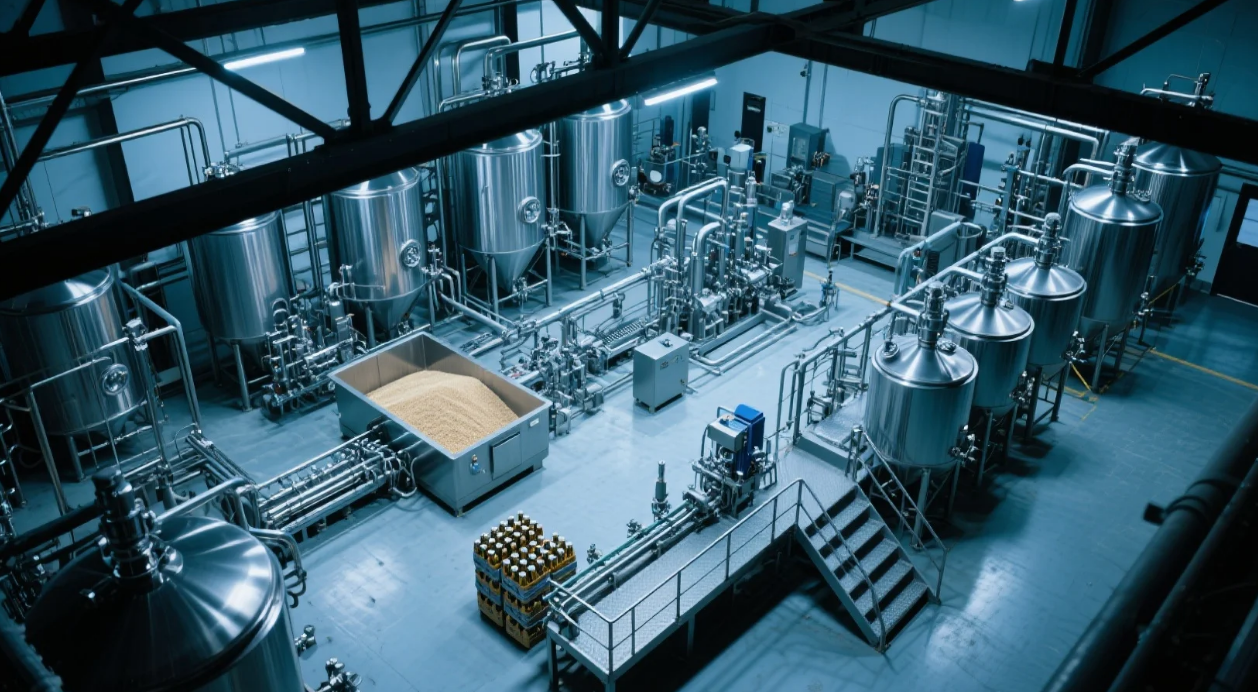
Most brewery projects begin the same way: an owner finds a tank at a good price, adds a mash tun from another supplier, and picks up a heat exchanger from a liquidation sale. Six months later, the brewhouse can barely keep up with the fermenters, the cleaning route forces staff to carry hoses across the entire room, and the cooling system chokes every time two tanks crash at the same temperature.
A real brewery equipment solution is not a collection of parts. It is a complete operating plan that covers every step from grain intake to packaged beer, with each component sized and arranged to work with the others. If any part—brewing, fermentation, cleaning, cooling, or workflow—is treated as an afterthought, the brewery becomes harder to run every day. This article explains what a genuine solution includes and why buying pieces separately often creates hidden costs that a system approach avoids.
A brewery equipment solution is more than a list of tanks, pumps, and pipes. It is a complete plan for how a brewery will produce beer from the first mash to the final packaged product. That plan needs to cover brewing, fermentation, cleaning, cooling, control, workflow, and future growth. If any one of those parts is ignored, the brewery may still exist on paper, but it will be harder to run in practice.
For a new brewery or an expanding one, the most important goal is not simply to buy equipment. The real goal is to build a system that works together. The brewhouse must match the cellar. The cellar must match the cleaning system. The cleaning system must match the staff and the schedule. A true brewery equipment solution brings those pieces together into one operating logic.
Why a System Approach Beats Buying Piece by Piece
You may think you are saving time by grabbing a fermenter here and a bright tank there, but that incremental approach nearly always catches up with you. The data bears this out: most piecemeal projects encounter at least one major mismatch within the first 12 months of operation. One owner bought a 2000L brewhouse on impulse and later added a 10000L cellar, forcing them to brew five times just to fill one fermenter.
Another installed a lauter tun that was slightly too narrow for the mash tun they already owned, creating stuck sparges every batch.
When you buy equipment separately without a system plan, several things go wrong:
- Tank sizes drift out of sync. The brewhouse capacity and the cellar capacity stop matching, so either the brewhouse sits idle or the fermenters stay half empty.
- Cleaning routes become awkward. The CIP station ends up far from the vessels that need sanitation, so staff waste time dragging hoses across the brewery floor.
- Utilities are undersized. The glycol chiller or boiler that looked adequate on paper turns out to be too small for the actual heat load once all tanks are running.
A system approach avoids those problems by treating the brewery as one connected process. Instead of spending on parts that do not fit together well, the brewery can invest in equipment that supports daily production. Capital allocation becomes more efficient because every dollar goes toward components that have a known role.
Predictable output follows from matched vessel sizes and balanced workflow. Expansion later becomes easier because the core system was designed with future growth corridors in mind.
A brewery built as a system is usually easier to operate, easier to maintain, and easier to grow. The alternative—adding equipment gradually without a plan—often costs more in retrofits, lost production time, and frustrated staff.
The Four Core Blocks of a Complete Brewery Solution
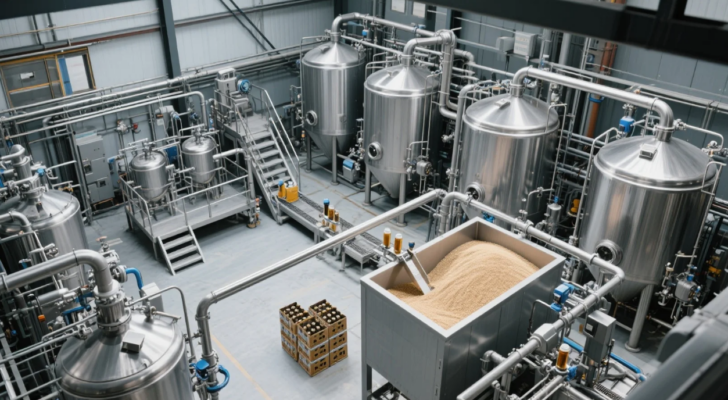
A genuine brewery equipment solution includes four interdependent blocks. Each block has a different role, but all of them must work together. If the brewhouse output exceeds the cellar capacity by even 20%, the whole schedule falls apart. If the CIP system cannot reach every vessel in time, sanitation becomes inconsistent. The table below summarizes each block, its components, its role, and the common mistake buyers make.
| Block | Core Components | Role in the System | Common Mistake |
|---|---|---|---|
| Brewhouse | mash tun, lauter tun, kettle, whirlpool, heat exchanger, pumps, piping | Wort production — converting grain and water into fermentable wort at the right volume, gravity, and temperature | Undersizing or oversizing relative to cellar, causing either downtime or wasted capacity |
| Fermentation and bright beer cellar | fermenters, bright tanks, conditioning vessels | Beer volume throughput — holding wort during fermentation and maturation, then storing finished beer for packaging | Cellar too small for brewhouse output, forcing extra brew days to fill tanks |
| Cleaning system (CIP) | CIP setup, spray devices, cleaning circuits, fittings | Sanitation and turnaround time — removing soil and biofilm from vessels and lines between batches | Treating cleaning as optional, leading to contamination risks and longer turnaround |
| Cooling and control | temperature control, process control, utility sizing | System stability — maintaining fermentation temperature schedules, controlling brewhouse processes, and ensuring utilities deliver enough cooling and heating | Ignoring utilities until too late, resulting in temperature swings and inconsistent beer quality |
Take a typical 2000L brewhouse. That size requires cellar capacity of at least 4000L to 6000L to maintain brew frequency. If the owner buys only a single 2000L fermenter, they can brew only one batch every couple of weeks. The brewhouse sits idle most of the time, and the capital tied up in it does not generate return.
The brewhouse block itself must be configured for the brewery’s needs. A two-vessel brewhouse works for small craft breweries that value compact layout and simple operation. A three-vessel brewhouse with a dedicated lauter tun gives better efficiency and faster turnaround for higher throughput. A four-vessel system adds a pre-mash vessel or a separate whirlpool for even tighter scheduling.
The choice depends on brew frequency, expected growth, and the floor plan available.
The cleaning system block is often the most underestimated. A proper CIP setup includes spray devices that clean every surface of a tank, cleaning circuits with the right pump sizing and flow rates, and fittings that make connections quick and leak-free.
If cleaning is difficult, the brewery loses time and risks inconsistent beer quality. One brewery skipped CIP and relied on manual scrubbing for six months; they eventually discovered bacterial contamination in two fermenters that required a full strip-down and reconditioning.
Cooling and control keep the entire process stable. Fermentation tanks need precise temperature control—a swing of more than 2°C during primary fermentation can produce off-flavors. The brewhouse may need process control for mash temperature steps and kettle boil. Utilities like the glycol chiller and steam boiler must be sized to handle the peak load when multiple tanks are crashing simultaneously.
How to Size and Configure a Brewery for Real Production Needs
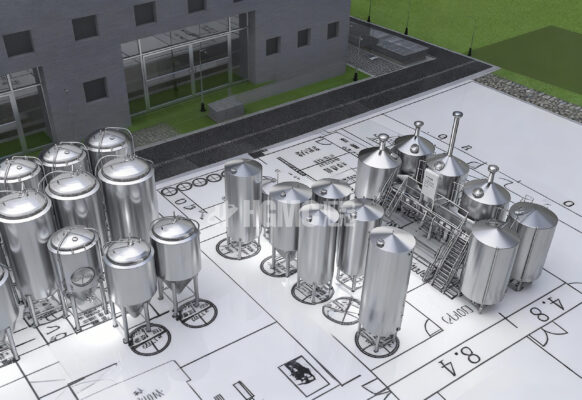
Every brewery equipment solution should begin with the same basic question: how much beer does the brewery need to make, and how often? That answer shapes everything else. Sizing a brewery by tank volume alone ignores brew frequency and cellar turnover, which are more decisive for real output.
A small craft brewery may need flexibility more than speed. It might produce four or five beer styles, change recipes often, and rely on a compact layout that fits in a tight space. For a small craft brewery aiming for 500L to 1000L per batch, a two-vessel brewhouse with a few 1000L fermenters often works well.
The key is to have enough fermenters to keep the brewhouse busy while allowing some tanks to remain free for fouled, washed, or idle cycles. A common ratio is three to four fermenters per brewhouse batch.
A regional brewery producing 20,000 L per week typically needs 4–6 fermenters and a minimum 4-brew-day schedule with a 2,000 L to 3,000 L brewhouse. At that scale, brew frequency becomes critical. If the brewery wants to produce 20,000 L in a week with a 2,000 L brewhouse, that means ten brews. With a 3,000 L brewhouse,
it takes about seven brews. The number of workdays per week and the availability of staff set a practical ceiling on brew frequency. A well-designed regional brewery solution also accounts for seasonal peak demand—for example, doubling lager volume in summer may require additional conditioning tanks.
A larger brewery with output above 50,000 L per week needs higher throughput, stronger utilities, and a more detailed control strategy. The brewhouse may run two or three turns per day, and the cellar must turn over every 7 to 14 days for ales. Cellar turnover—how fast beer moves from fermenter to bright tank to packaging—is often more important than total tank volume. If tanks sit full for weeks because packaging cannot keep up, the entire system backs up.
Growth plans are another dimension. A brewery that expects to double output in three years should size the brewhouse and utilities at least 30% above current needs. The cellar can be expanded by adding tanks later, but the brewhouse and utility core are harder and more expensive to replace.
One non‑obvious fact that many owners discover only after they start operating: brew frequency matters more than individual tank size. A brewery with a 1,500L brewhouse that brews six times a week can produce 9,000 L per week with a relatively small cellar.
A brewery with a 3,000L brewhouse that brews only three times a week also produces 9,000 L per week, but needs a larger cellar to hold those bigger batches. The choice between these two approaches depends on available labor hours and floor space.
Why Layout Is a Decisive Part of the Solution
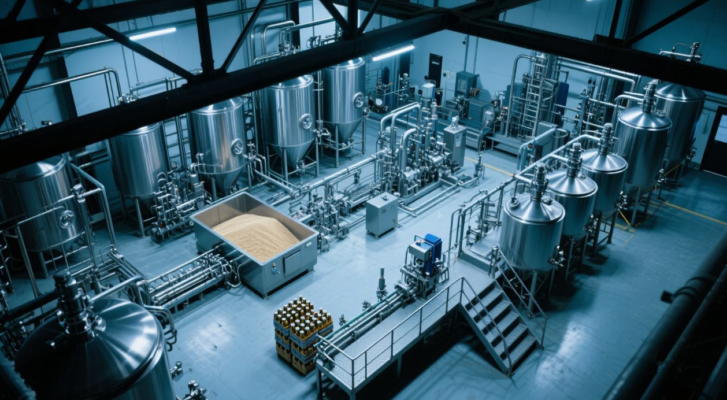
Layout is often an afterthought, but it directly affects daily operations. Many buyers think about equipment items first and layout later. In reality, layout is one of the most important parts of a brewery equipment solution. The way the brewery is arranged affects every part of daily work.
Poor layout can add 15–20% to daily labor time compared to a well-planned layout of the same equipment. That number comes from observing breweries that built without layout planning: staff spend extra minutes walking between the mill room and the brewhouse, carrying hoses from the CIP station to fermenters across the building, and moving finished kegs through narrow aisles. Over a year, those extra minutes add up to hundreds of labor hours that could have been spent on production or quality.
A good layout should support clear flow from raw material to finished beer. Grain enters at one end of the building, moves to the mill room, then to the brewhouse. Wort flows by gravity or pump to the fermenter cellar. Beer moves to bright tanks and then to the packaging area. Each step moves forward with minimal backtracking. Short and logical transfer routes reduce pump wear and the risk of oxidation from overly long piping runs.
Easy access for cleaning and inspection is another layout requirement. Every vessel should have enough clearance for staff to reach the manway, inspect the interior, and connect CIP arms without climbing over other tanks. A brewery that squeezes tanks into a tight space often discovers that cleaning takes twice as long because staff must work in awkward positions.
Safe movement for staff is equally important. Wet floors, low overhead clearance, and sharp corners increase accident risk. A good layout includes slip-resistant flooring, adequate lighting near every workstation, and pathways wide enough for keg dollies and cleaning carts.
Room for future growth must be planned from day one. Even if the brewery does not need a sixth fermenter now, leaving a space where one can fit later saves enormous cost. A brewery that planned for expansion can add tanks over a weekend. A brewery that did not plan may need to shut down for weeks to reconfigure the building.
Layout also affects beer quality in a subtle way that many owners miss. Poor flow can increase oxidation risk—long transfer routes with unnecessary elbows and elevation changes introduce more oxygen. Sanitation becomes harder when the CIP system has to pump cleaning solution through tortuous piping runs.
One brewery noticed a persistent diacetyl problem that traced back to a dead leg in a transfer line between the brewhouse and the cellar, a problem that would not have existed if the layout had been designed for straight, short runs.
The failure scenario here is familiar: a brewery buys well‑made equipment but squeezes it into a layout that was never drawn up systematically. Within a year, the owner realizes that every batch takes longer than it should. Retrofits are expensive—moving a tank costs several thousand dollars in rigging, plumbing, and electrical work. Skipping layout planning is a mistake that compounds every day the brewery operates.
FAQ
What is the single most common mistake new breweries make when buying equipment?
Buying the brewhouse first and the cellar second without matching the sizes. Many owners pick a brewhouse based on budget or appearance, then later realize they need three times as many fermenters to keep it running. That mismatch forces either partial capacity usage or an unplanned purchase of additional tanks.
How much cellar capacity do I need relative to my brewhouse size?
For ale breweries, a common rule is 2–3 times the brewhouse batch size. A 2000L brewhouse typically needs 4000L–6000L of fermentation capacity. For lagers with longer conditioning, the ratio jumps to 4–5 times because tanks are occupied for two to three weeks instead of one.
Do I really need a dedicated CIP system for a small brewery?
Yes. Manual cleaning is rarely thorough enough to prevent contamination, and it takes 30–40% longer than automated CIP. Even a small 200L CIP cart pays for itself in labor savings and quality consistency within one year.
Can I add tanks later if I plan the layout correctly from the start?
Yes, but only if you leave the physical space, utility connections, and CIP circuit capacity for them. A well-planned layout includes spare floor positions, spare glycol and compressed air ports, and extra CIP pump capacity so that future tanks can be installed without redoing the whole infrastructure.
How do I decide between a 2-vessel and a 3-vessel brewhouse?
A 2-vessel brewhouse is suitable for breweries brewing fewer than 10 times per week and producing ales primarily. It saves floor space and cost. A 3-vessel system with a separate lauter tun allows faster turnaround (sparge while mashing the next batch), better efficiency (1–2% higher extract yield), and the ability to handle heavier grist loads. If your brew frequency exceeds 10 per week or you plan to brew high-gravity lagers, go with three vessels.
