
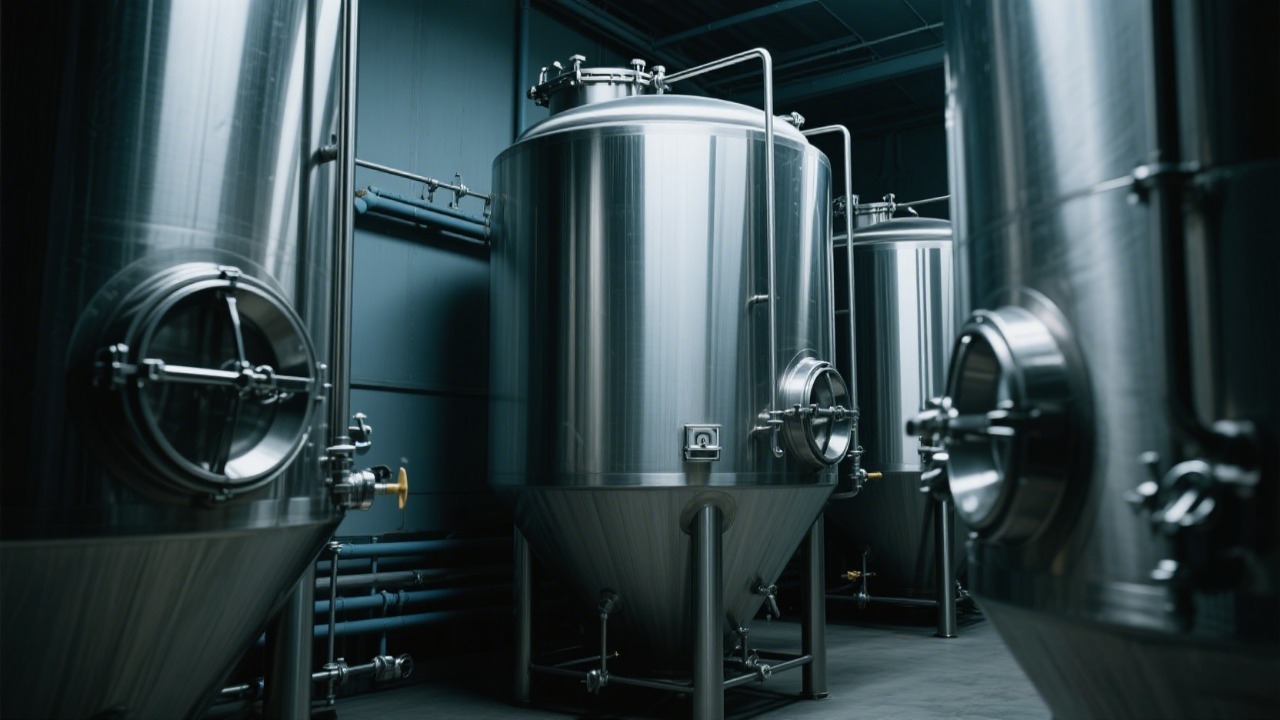
Every brewery build-out starts with a tank choice that looks simple on paper but often leads to expensive corrections. The gap between a single-wall fermenter and a dimple-jacket unit is not just a price difference—it determines whether your temperature control struggles cause batch variability from day one. This comparison draws on real installation projects and decade-plus field experience to give you the operational facts, not marketing fluff.
The core difference is straightforward: single wall tanks rely on ambient room temperature control, while dimple jacket tanks integrate glycol cooling directly into the vessel wall. That distinction cascades into every part of brewing operations, from your monthly utility bill to whether you can reliably produce a clean lager. Brewers who understand this early avoid expensive mid-course corrections that I have seen derail otherwise promising brewery launches.
Temperature Control – The Single Biggest Difference
Temperature management during fermentation is not a minor optimization—it is the foundation of consistent beer production. Single wall fermentation tanks have no integrated cooling mechanism. They depend entirely on the ambient temperature of the room they sit in. This works passably in climate-controlled pilot spaces, but it fails during active fermentation when yeast activity generates internal heat that can push the vessel 5–8 °C above ambient.
A 2–3 °C fluctuation during fermentation can negatively affect yeast performance and beer flavor. That swing changes ester production, alters attenuation rates, and can force yeast into early flocculation or stress-induced off-flavors. For breweries producing lagers, the problem compounds because lager fermentation requires precise stepped temperature control through cooling, diacetyl rest, and cold crashing. A single wall tank cannot deliver these phases reliably.
Dimple jacket fermentation tanks solve this by circulating glycol through a welded jacket that surrounds the cone and body of the vessel. The dimpled surface increases heat transfer surface area compared to a plain jacket, so the tank responds quickly to temperature adjustments. You set the target temperature on a controller, and the jacket holds it within ±0.5 °C regardless of what the room temperature does.
For IPAs, high-gravity beers, and especially lagers, this is not a nice-to-have feature. It is essential. I have watched brewers attempt lager production in single wall tanks by cooling the entire room to 10 °C—an incredibly inefficient approach that still failed during the exothermic peak of fermentation, when the tank’s internal temperature climbed past 14 °C despite the cold room. The resulting diacetyl levels and sulfur notes made the beer unsalable.
Energy Efficiency and Operating Costs
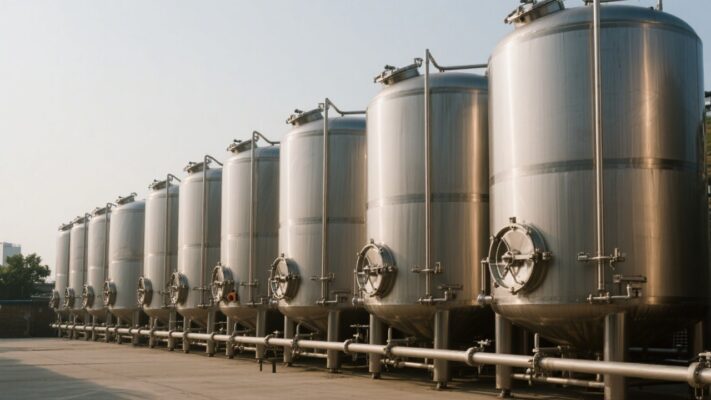
Cooling an entire room to control one tank is wasteful. Single wall tanks require the surrounding space to act as a cooling chamber, which means your glycol chiller or air conditioning unit works overtime to keep several hundred cubic feet of air cold just to indirectly cool the beer inside the tank. Heat escapes continuously through the uninsulated stainless steel wall, so the cooling system runs almost constantly during active fermentation.
Dimple jacket tanks apply cooling energy exactly where it is needed—directly to the vessel wall. The jacket contacts the stainless steel surface, and the glycol absorbs heat from the fermenting beer efficiently. Most dimple jacket tanks also include an insulation layer, often polyurethane foam, that further reduces heat exchange with the room. This means the cooling system cycles on and off rather than running continuously.
| Feature | Single Wall Tank | Dimple Jacket Tank |
|---|---|---|
| Cooling method | External room-based | Integrated glycol jacket |
| Energy usage | High and inefficient | Optimized and controlled |
| Heat loss | Significant | Minimal with insulation |
| Long-term cost | Higher | Lower |
Consider the multi-year utility bill. A 10-barrel single wall setup running a 3-ton glycol chiller can consume 40–60% more energy than an equivalent dimple jacket tank setup, depending on ambient temperature and insulation quality. Over three years of continuous production, that difference easily reaches several thousand dollars in electricity alone. Dimple jacket tanks pay for themselves through lower energy bills, often within the first 18 months of commercial operation.
Upfront Price vs Long-Term Investment
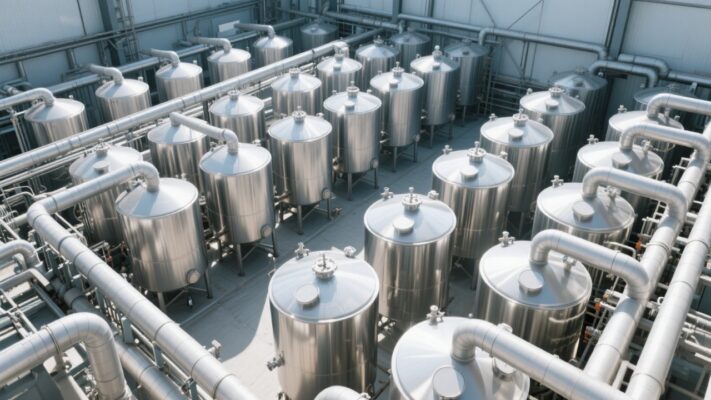
The temptation to save money upfront is understandable, especially when starting a brewery with limited capital. Single wall tanks cost significantly less to manufacture because they lack the welding labor, pressure testing, and insulation of a jacketed vessel. A typical 500-liter single wall tank might cost 40–50% less than an equivalent dimple jacket tank.
But initial purchase cost is only part of the equation. Breweries that start with single wall tanks often replace them within 2–3 years. The triggers are usually the same: inability to control fermentation temperature during summer months, batch consistency problems that make recipe reproducibility impossible, or a decision to start producing lagers or more complex beer styles.
The hidden costs include energy waste, beer quality losses from temperature-compromised batches, limited production flexibility that prevents you from expanding your beer lineup, and the eventual cost of purchasing dimple jacket tanks anyway—while the single wall tanks sit unused or sold at a loss. This is the most common failure pattern I have observed in startup breweries.
The recommendation after seeing this pattern repeat across dozens of installations is straightforward: buy once and buy right. If your budget cannot accommodate dimple jacket tanks initially, consider starting with a smaller number of jacketed vessels rather than filling your brewery with single wall tanks you will outgrow or need to replace within three years.
Beer Quality and Batch Consistency
Beer quality and batch consistency are inseparable from temperature stability. Yeast health depends on maintaining the target temperature within a narrow band throughout the fermentation cycle. When the temperature fluctuates, yeast metabolism changes. The same yeast strain can produce dramatically different ester profiles, phenol levels, and attenuation rates across a 3–4 °C range.
I have seen breweries struggle through months of inconsistent IPA batches before tracing the problem back to their single wall tanks. The fermentation room was cooled to 18 °C overnight but climbed to 22 °C by afternoon during summer weeks. Each batch fermented at a slightly different temperature curve, and the resulting beers varied in bitterness perception, fruitiness, and body mouthfeel. Customers noticed. Retailers returned kegs.
Dimple jacket tanks deliver repeatable recipes because the temperature profile is locked in regardless of external conditions. You set the fermentation temperature for days 1–3 at 20 °C, then drop to 18 °C for diacetyl rest, then crash to 4 °C for cold crashing—and the tank executes that sequence identically every time. This repeatability is what makes commercial production viable. Consistent yeast health leads to consistent ester development, reliable attenuation, and predictable flavor profiles batch after batch.
For breweries selling beer to the public, consistency is non-negotiable. Customers expect an IPA they bought in January to taste the same in July. Single wall tanks cannot guarantee that across seasonal temperature shifts.
Choosing the Right Tank for Your Brewery Size
No single tank type fits every situation. The right choice depends on your production scale, beer styles, and growth plans.
Single wall fermentation tanks are appropriate for home brewing setups, research and development pilot systems under 300 liters, and educational brewery installations where precise temperature control is not the primary goal. They also work for experimental small-batch fermentations where the brewer manually manages temperature through water baths or immersion chillers, accepting the variability for the sake of cost savings on low-volume runs.
If you are opening a commercial brewery, start with dimple jacket tanks from day one. Craft breweries, brewpubs, and industrial breweries all require the temperature precision that only jacketed vessels provide. Dimple jacket tanks are the industry standard for commercial beer production for good reason—they support the full range of fermentation profiles from cold lagers to warm ales, scale from 500-liter pilot vessels to 100,000-liter industrial tanks, and allow future expansion without replacing your core fermentation capacity.
Brewpubs producing 3–10 barrels per batch often try to justify single wall tanks because their volumes are small. In practice, the same temperature control problems occur regardless of batch size, and the reputational risk of inconsistent beer is higher when customers are drinking in your own establishment. A brewpub that serves an off-flavor IPA risks losing regulars who may not give it a second chance.
Scalability also matters. If you plan to expand from a 5-barrel to a 15-barrel system within 3–5 years, buying dimple jacket tanks now means you can repurpose them for specialty or pilot batches later. Buying single wall tanks now means you will either sell them at a loss or keep them around as expensive, underutilized vessels.
FAQ
Can I ferment lagers in a single wall fermentation tank?
Technically yes, but the results are inconsistent. Lagers require precise temperature control through a multi-phase fermentation profile that includes primary fermentation at 8–12 °C, a diacetyl rest at 18 °C, and cold crashing near 0 °C. Single wall tanks cannot maintain these different temperatures without external room cooling, which is inefficient and often fails during the exothermic peak of fermentation. Most commercial lager breweries use dimple jacket tanks exclusively.
How much more expensive is a dimple jacket tank compared to a single wall tank?
The price difference depends on size and configuration. A 500-liter dimple jacket tank typically costs 40–60% more than a comparable single wall tank. For a 10-barrel (1,170-liter) tank, the premium is roughly 30–50%. The higher manufacturing cost comes from the welded dimple jacket, pressure testing, insulation, and additional fittings for glycol circulation.
Is it possible to retrofit a cooling jacket onto an existing single wall tank?
Retrofitting is technically possible but rarely practical. Welding a jacket onto an existing tank requires emptying the vessel, cutting into the stainless steel, welding the jacket panels, pressure testing for leaks, and repassivating the interior surface. The labor cost often approaches 60–80% of a new dimple jacket tank’s price, and the retrofit may compromise the vessel’s structural integrity or sanitation surface finish. Most breweries find it more cost-effective to replace the tank.
What is the typical lifespan of a dimple jacket fermentation tank?
With proper maintenance, dimple jacket tanks last 15–25 years in commercial service. The stainless steel body requires no replacement if it is passivated and cleaned regularly. The jacket welds can develop pinhole leaks over time due to thermal cycling, but pressure testing every 12–18 months catches these early. Most breweries amortize dimple jacket tanks over 10–15 years and sell them secondhand to startup breweries or homebrew clubs when upgrading capacity.
Do dimple jacket tanks require more maintenance than single wall tanks?
Yes, slightly. Dimple jacket tanks require glycol system maintenance—checking coolant levels, monitoring pump seals, inspecting jacket welds for leaks, and verifying temperature probe calibration. Single wall tanks have none of these requirements. However, the additional maintenance is minimal. A well-designed glycol system with a proper expansion tank and pressure relief valve requires only monthly checks during production season and an annual pressure test of the jacket welds.
