
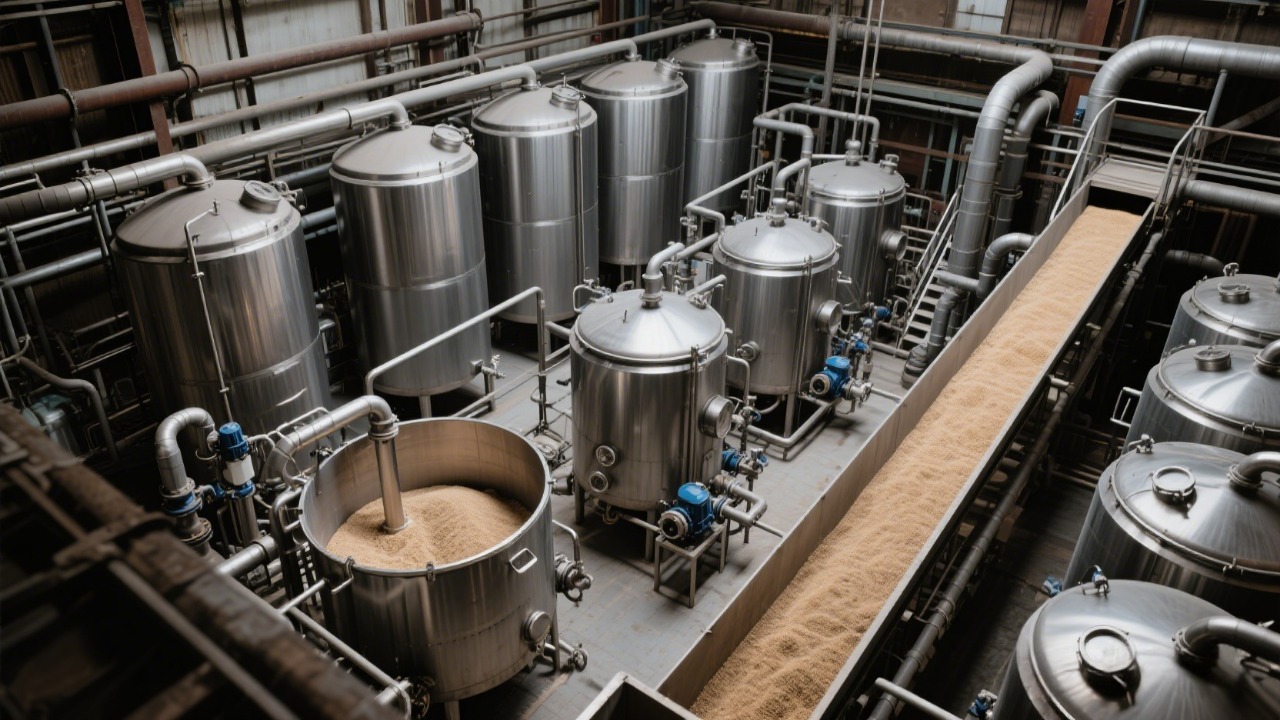
Building a craft brewery that can turn out consistent, high-quality beer batch after batch is harder than it looks from the taproom side of the bar. Most new brewers focus on recipes and yeast strains, but the real bottleneck is equipment. If your mash tun doesn’t hold temperature evenly, if your cooling plate can’t handle peak season volume, or if your CIP cycle leaves residue in a valve you can’t see, the beer will tell you—usually after you’ve already packaged it. For anyone moving from homebrew scale to commercial production, the selection of core brewing supplies directly determines whether you spend your days brewing or troubleshooting.
A commercial brewery produces a wide range of beer styles, from crisp German lagers to heavily dry-hopped NEIPAs and barrel-aged stouts. Each style places different demands on the brewhouse. The mash schedule for a high-adjunct stout is completely different from a simple pale ale. The boil vigor needed for DDH IPA differs from what a delicate Kolsch requires. This means the brewhouse supplies you choose must handle that range without forcing you to compromise on process. The difference between a brewery that can pivot between styles easily and one that fights its own equipment every time often comes down to a few well-chosen components.
Brewhouse Supplies That Handle a Wide Range of Recipes
The mash-lauter tun is where grain bills either work or don’t. Brewers running high-adjunct recipes—say a stout with flaked oats, rye, or raw barley—need a tun that can handle a thick, sticky mash without channeling or stuck runoff. A false bottom with sufficient slot area, combined with a power rake that can break through dense grain beds, makes the difference between a 90-minute lautering session and a three-hour nightmare. Similarly, brewers who make both high-gravity barleywines and low-ABV session ales need a tun that accommodates dramatically different grist-to-liquor ratios without having to modify the equipment mid-brew.
The kettle heating system controls more than just boil intensity. Gentle simmering during a decoction step requires a heating jacket that distributes heat evenly across the vessel wall without scorching the wort. On the opposite end, a vigorous, rolling boil for hop utilization in an IPA benefits from a steam-heated kettle that can push enough BTU into the liquid without creating hotspots. Many growing breweries choose steam-jacketed kettles over direct-fire systems because steam provides more consistent heat transfer and allows finer temperature control throughout the mash and boil phases. Typical craft brewhouse sizes start around 2,000L for breweries that are growing beyond nanobrewery scale, and at this volume, uneven heating becomes a real problem if the jackets aren’t designed properly.
Whirlpool vessels often get less attention than kettles, but trub separation directly affects fermentation health. A properly designed whirlpool with a tangential inlet and a gentle cone angle lets the brewer separate hot break and hop debris before the wort reaches the chiller. Brewers who skip this step or use an undersized whirlpool end up with cold-side aeration issues or stuck fermentations. The geometry of the whirlpool matters more than most beginners expect.
After the whirlpool, the wort needs to cool quickly and cleanly. Plate heat exchangers are standard in most craft breweries, but the piping layout matters. Oxygen-safe piping downstream of the chiller prevents hot-side aeration from oxidizing the wort before it even reaches the yeast. Many breweries that upgrade from an older direct-fire system to a modern steam-heated brewhouse also install a heat exchanger plate with sufficient capacity for future expansion.
Fermentation Supplies for Precise, Reproducible Cellar Work
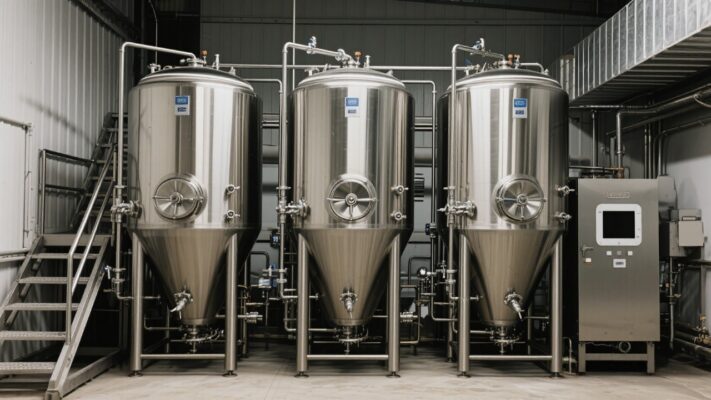
The fermentation cellar is where the recipe becomes final product, and temperature control is the single most underappreciated variable in craft brewing. Cylindrical conical tanks (CCTs) are the standard for good reason, but not all CCTs are equal. Multi-zone glycol cooling allows the brewer to control temperature independently across the top, middle, and cone sections of the tank. This matters because fermentation generates heat, and that heat rises. During the peak of fermentation, the top of a tank can be several degrees warmer than the cone, which can lead to off-flavors if the cooling jacket can’t compensate. Multi-zone cooling allows temperature control within ±0.5°C across batches, which is the difference between a clean lager fermentation and a diacetyl disaster.
Tank sizing creates a constant tension between flagships and seasonals. Most breweries run their core brands through larger tanks—typically 20–30 hectoliters or more—while reserving smaller tanks for seasonal and limited releases. A standard argument for CCTs is that a 15-hectoliter tank imposes a floor on seasonal batches. If you only have 30-hectoliter tanks, you commit to a minimum batch size that may be too large for a test recipe or a new hop trial. Maintaining a mixture of tank sizes in the cellar gives the brewer flexibility without tying up cellar space.
Dry-hop ports are no longer optional for any brewery making hazy IPAs, but they need to be designed for oxygen-free addition. A simple top-port addition introduces oxygen that degrades hop aroma within weeks. A dedicated dry-hop port with a pressure-rated gasket that allows purging and closed transfer changes the shelf life of hoppy beers from weeks to months. Sanitary sampling valves let the brewer pull a sample without opening the tank and exposing the beer to oxygen or contaminants. Pressure-rated fittings allow the tank to hold CO2 head pressure during closed transfers, which minimizes oxygen pickup throughout packaging.
Bright beer tanks are the last stop before packaging, and their design mirrors the CCTs. Standardizing one tank design across the entire cellar—same valve types, same tri-clamp sizes, same glycol connection layout—simplifies maintenance and cleaning. When every tank has a different gasket profile or a different sampling valve thread, the maintenance team spends more time hunting for parts than servicing equipment.

Cleaning and Hygiene – The Non-Negotiable Craft Brewing Supplies
No amount of recipe artistry compensates for a dirty tank. A brewery that invests in a cheap, non-standard CIP system may face inconsistent cleaning within the first year, leading to off-flavors and costly tank replacement. This isn’t hypothetical—I’ve seen a brewery lose an entire batch of lager because a spray ball in a fermenter was clogged with hop debris from the previous IPA. The off-flavor wasn’t detectable until the beer was carbonated, and by then the batch was already packaged. The cost of that single loss covered the price of a proper CIP system.
Clean-in-place spray balls need to be installed in every tank and designed to reach all internal surfaces, including the cone, the manway gasket, and the racking arm. A CIP station or manifold circulates cleaning solution sequentially through tanks, hoses, and heat exchangers. The circuit must ensure proper flow rate and contact time. A typical CIP cycle runs 30–60 minutes per tank, including caustic wash, acid rinse, and final sanitizing step. Breweries that try to shortcut this cycle—skipping the acid step or reducing contact time—usually discover the problem during a forced fermentation test or, worse, during a sensory evaluation.
The chemical resistance of hoses and gaskets is another overlooked detail. Standard EPDM gaskets work for most applications, but silicone gaskets last longer under repeated CIP cycles and high-temperature exposure. Tri-clamp fittings create a sanitary seal between vessels and transfer lines, but only if the gaskets are rated for the cleaning chemicals being used. Sight glasses installed at strategic points in the CIP return line let the operator verify that cleaning solution is actually reaching every leg of the circuit. If the return line stays clear during a CIP cycle, the solution is bypassing a valve somewhere—and that valve is not getting cleaned.
Sight glasses themselves need regular inspection. A cloudy or scratched sight glass can hide buildup on the interior tank wall. Many breweries install sight glasses on the CIP return line specifically to monitor cleaning effectiveness. When the return flow looks murky or contains visible particles, the cleaning cycle parameters need adjustment.
Scaling Up Without Starting Over
Most craft breweries outgrow their initial equipment within three to five years. The question isn’t whether you’ll expand, but how painful the expansion will be. Plan for a 3- to 5-year expansion horizon when selecting initial equipment. Breweries that think in terms of “this is all I need for now” often face the full cost of replacing major vessels within two years.
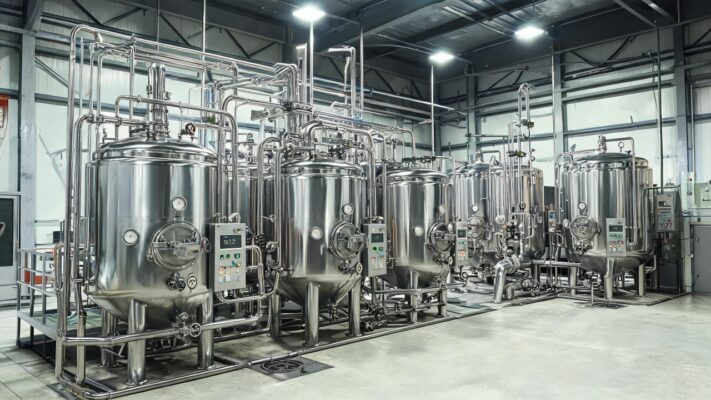
Modular brewhouse designs let you add vessels or upgrade automation without tearing out what you already have. For example, a two-vessel brewhouse can be expanded to three vessels later by adding a dedicated lauter tun. The key is to ensure the original vessels have compatible ports and fittings for future tie-ins. Standardize on tri-clamp fitting sizes across all vessels. When every tank uses 1.5-inch tri-clamps for sample ports and 3-inch tri-clamps for transfer lines, you order one set of spares. When a brewery mixes metric and imperial fittings, the maintenance team spends hours searching for adapters.
Glycol capacity planning is another area where breweries get caught. If you buy a glycol chiller sized for your initial tank count and add fermentation tanks without upgrading the chiller, you’ll find out at the peak of summer fermentation when the chiller can’t keep up. Spare glycol capacity and a tank layout that leaves room for additional vessels should be part of the initial planning. Control systems with expandable I/O let you add new tanks and sensors later without replacing the entire automation platform.
PLC controls with modular I/O cards are worth the upfront investment, because they accommodate additional temperature sensors, flow meters, and valve actuators as the brewery grows. A brewery that starts with manual valve control on a handful of tanks can incrementally motorize valves and automate CIP sequencing, but only if the control system architecture supports expansion.
| Approach | Cost at install | Expansion flexibility | When it breaks |
|---|---|---|---|
| Non-modular brewhouse, mixed fitting sizes | Lower upfront | Limited; vessels likely need replacement | Two years in, when a new tank doesn’t match existing piping |
| Modular brewhouse, standardized tri-clamps | Moderate | High; vessels and automation can be integrated gradually | Rarely; spares are universal and expansion is planned |
| Undersized glycol chiller, no expansion plan | Lowest upfront | None; entire glycol system must be replaced | First heat wave after adding a third fermentation tank |
FAQ
What are the most critical craft brewery supplies for a new brewery?
A reliable mash-lauter tun with a false bottom, a steam-heated kettle with proper heat distribution, a chilling system with oxygen-safe downstream piping, and CCTs with multi-zone glycol cooling. CIP spray balls and a properly designed CIP station are non-negotiable from day one. Prioritize vessels with standardized tri-clamp fittings.
How do I choose between a two-vessel and three-vessel brewhouse?
A two-vessel system is simpler and cheaper to install, but limits your ability to sparge and mash independently. A three-vessel system adds a dedicated lauter tun, which gives you more control over mash profiles and helps with high-adjunct recipes. Start with two vessels if you mainly produce pale ales and simple lagers; choose three if you plan to brew stouts, Belgians, or any recipe that requires a separate mash and lautering step.
How often should I clean my fermentation tanks?
Every tank should go through a full CIP cycle immediately after emptying, before the next batch is pitched. The full cycle runs 30–60 minutes, including caustic wash, acid rinse, and sanitizing step. Between batches, the tank can be rinsed with hot water and held under CO2 pressure, but a complete CIP is required before each use to prevent microbiological buildup.
What size fermentation tank is best for seasonal beer releases?
Smaller CCTs in the 10- to 15-hectoliter range give you flexibility for seasonal batches and test recipes without committing to a full production volume. Pair them with larger tanks in the 20- to 30-hectoliter range for your core brands. Maintaining a mix of tank sizes in the cellar lets you rotate seasonals efficiently.
Can I automate my cellar cleaning as I grow?
Yes, and it’s worth planning for early. CIP automation reduces labor time and improves consistency across cycles. Start with a PLC-controlled CIP station that can sequence caustic, acid, and sanitizing steps automatically. As you add tanks, expand the control system to handle multiple CIP circuits. Automated CIP reduces human error and frees up the brewing team for other tasks.
