
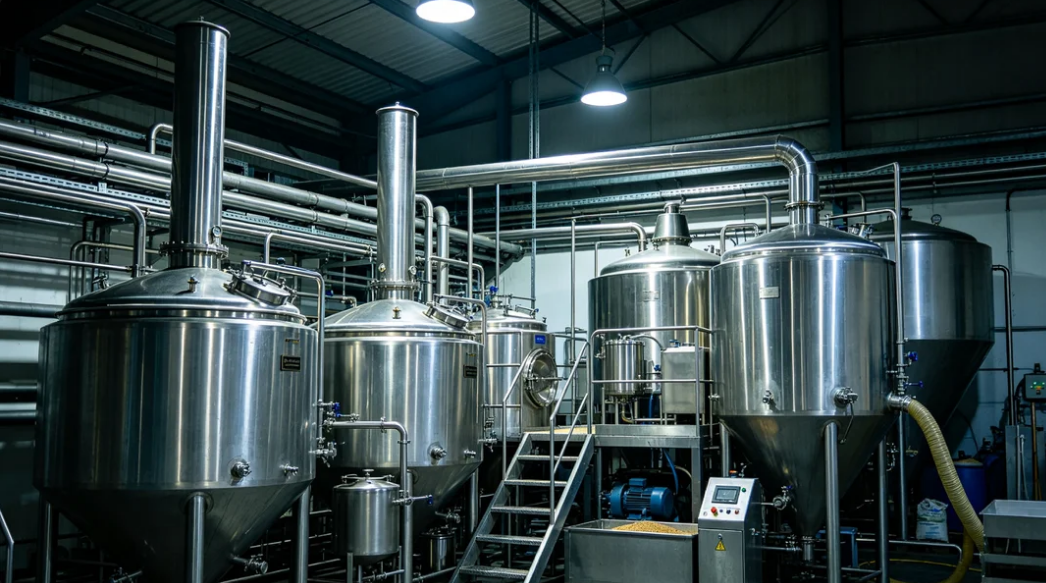
Choosing reliable Brewing Equipment Manufacturers is one of the most important decisions for brewery investors and beer producers because equipment quality directly affects production efficiency, beer consistency, energy consumption, and long-term operating costs.
Professional manufacturers provide not only brewing systems but also complete solutions including brewhouses, fermentation tanks, bright tanks, filling systems, automation controls, and after-sales support. By selecting an experienced brewing equipment partner, breweries can achieve stable production, flexible expansion, and higher profitability.
What Should Buyers Know About Brewing Equipment Manufacturers Before Purchasing?
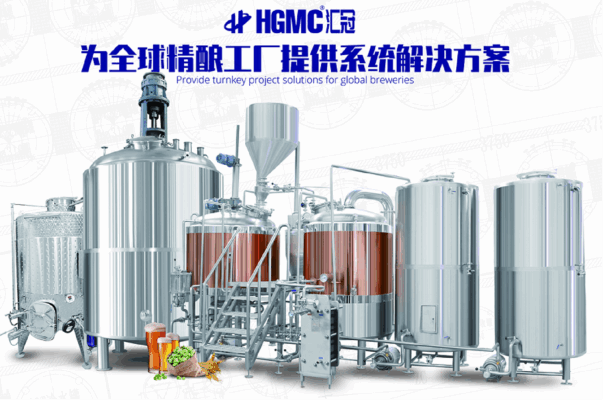
Professional Brewing Equipment Manufacturers Provide Complete Brewery Solutions
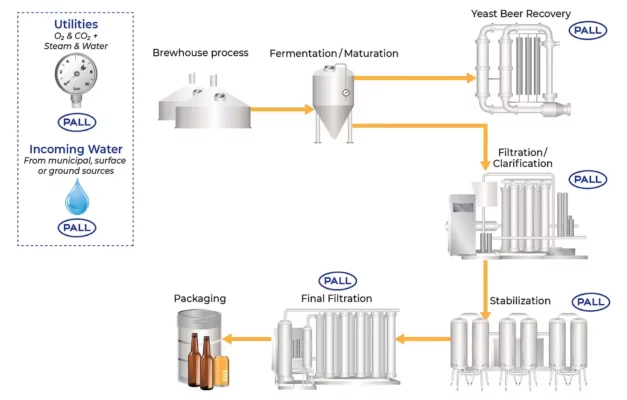
The main value of experienced brewing equipment manufacturers is that they provide integrated solutions instead of individual machines. A complete brewery requires multiple connected systems, including malt handling, brewhouse equipment, fermentation tanks, cooling systems, cleaning systems, and packaging equipment.
A reliable manufacturer focuses on the entire brewing process. The equipment design must ensure that each stage works together smoothly, from raw material processing to final beer packaging. Manufacturers with turnkey capabilities can reduce installation difficulties, improve production efficiency, and simplify communication for brewery owners.
Modern brewing equipment suppliers usually provide solutions for different brewery scales, including:
- Nano breweries
- Brewpubs
- Craft breweries
- Commercial breweries
- Large industrial beer factories
For example, professional manufacturers commonly offer 2-vessel, 3-vessel, and customized multi-vessel brewhouse systems to meet different production requirements.
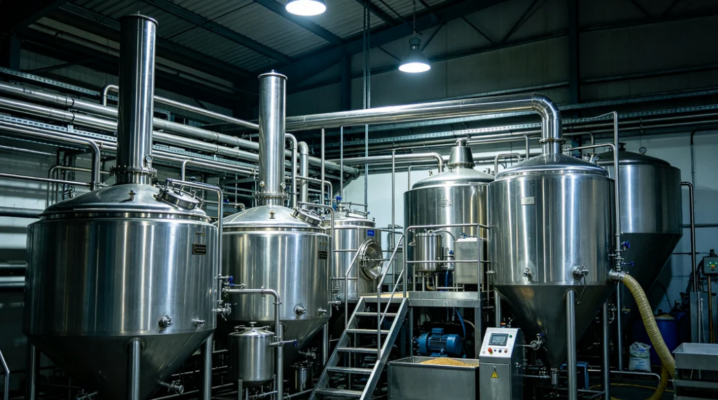
Why Are Experienced Brewing Equipment Manufacturers Important for Brewery Projects?
Manufacturing Experience Ensures Better Equipment Performance
Experienced brewing equipment manufacturers understand the technical requirements of beer production better because they have worked with different brewery projects worldwide. Their experience helps them design equipment based on production capacity, beer styles, factory layout, and local operating conditions.
A professional manufacturer can provide:
- Accurate brewery layout design
- Production capacity planning
- Customized equipment configuration
- Installation guidance
- Operator training
- Long-term technical support
New brewery investors often focus only on equipment prices, but equipment reliability has a greater influence on total investment returns. Poorly designed systems may create problems such as unstable fermentation temperatures, inefficient heating, excessive water consumption, and difficult maintenance.
Therefore, choosing a manufacturer with engineering experience helps breweries avoid unnecessary modification costs after installation.
What Types of Equipment Do Brewing Equipment Manufacturers Supply?
Complete Brewhouse Systems Control the Foundation of Beer Quality
Brewhouse equipment is the core production system of every brewery because it determines wort quality, extraction efficiency, and brewing consistency.
A professional brewing equipment manufacturer usually provides:
1. Mash System
The mash system controls the conversion of starch into fermentable sugar. High-quality mash vessels provide accurate temperature control and efficient mixing.
2. Lauter Tank
The lauter system separates wort from grain while maximizing extraction efficiency.
3. Boiling System
The boiling vessel controls evaporation, hop utilization, and sterilization.
4. Whirlpool System
The whirlpool tank helps separate solid particles and improves wort clarity.
Fermentation Tanks Ensure Stable Beer Maturation
Fermentation tanks are another critical product supplied by brewing equipment manufacturers.
High-quality fermentation tanks normally include:
- Stainless steel construction
- Cooling jackets
- Pressure control systems
- Temperature monitoring
- CIP cleaning capability
- Conical bottom design
The fermentation process directly affects beer flavor, aroma, alcohol content, and shelf stability. Therefore, manufacturers must design tanks according to yeast requirements and production goals.
Packaging Equipment Helps Breweries Enter the Market Faster
Modern brewing equipment manufacturers also supply packaging systems, including:
- Beer bottling machines
- Beer canning machines
- Keg filling systems
- Labeling equipment
Packaging quality directly affects customer experience and product shelf life. Integrated packaging solutions allow breweries to maintain better control from production to distribution.
How Can Buyers Compare Different Brewing Equipment Manufacturers?
Equipment Specifications Should Be Evaluated Before Price
The cheapest supplier is not always the most cost-effective choice. Buyers should compare technical specifications, materials, production capacity, automation level, and service capability.
The following table shows typical differences between brewery equipment configurations:
| Equipment Type | Small Craft Brewery System | Medium Commercial Brewery System | Large Industrial Brewery System |
|---|---|---|---|
| Brewing Capacity | 100L-1000L | 1000L-5000L | 5000L+ |
| Brewhouse Type | 2 Vessel | 2-4 Vessel | Multi Vessel Automated System |
| Material | SUS304 Stainless Steel | SUS304/SUS316 Optional | Industrial Stainless Steel |
| Automation Level | Semi Automatic | Automatic Control | Fully Integrated Control System |
| Fermentation Tank Size | 100L-2000L | 2000L-10000L | 10000L+ |
| Application | Brewpub, Startup Brewery | Craft Brewery Expansion | Large Beer Factory |
| Expansion Capability | Limited | Flexible | Designed for Large Output |
This comparison shows that brewery investors should select equipment based on future production plans rather than only current demand.
What Makes a High-Quality Brewing Equipment Manufacturer Different?
Customized Engineering Capability Creates Better Brewery Results
A professional manufacturer does not simply sell standard machines. Instead, they analyze each customer’s requirements and create customized solutions.
Important customization factors include:
Production Capacity
The equipment size should match expected annual beer output. Oversized systems increase investment costs, while undersized systems limit business growth.
Brewery Layout
Manufacturers need to consider:
- Factory space
- Equipment placement
- Material flow
- Worker operation routes
- Maintenance access
Beer Style Requirements
Different beer styles require different production conditions. For example:
- Lager beer requires precise low-temperature fermentation.
- IPA production requires efficient hop management.
- Sour beer production may require specialized separation systems.
Experienced manufacturers adjust equipment design according to brewing objectives.
How Do Brewing Equipment Manufacturers Improve Brewery Efficiency?
Automation Technology Reduces Labor Costs and Production Errors
Automation has become an important trend in modern brewery equipment. Automated control systems allow brewers to monitor temperature, pressure, flow rate, and cleaning procedures more accurately.
Benefits of automation include:
- Reduced manual operation
- Improved brewing consistency
- Lower energy consumption
- Faster production cycles
- Better quality control
Advanced brewing systems may include PLC control panels, digital sensors, automatic valves, and data monitoring systems.
Automation is especially valuable for commercial breweries because small improvements in efficiency can create significant cost savings over long-term operation.
Why Should Buyers Consider Turnkey Brewing Equipment Manufacturers?
One-Stop Solutions Simplify Brewery Construction
Turnkey brewing equipment manufacturers provide a complete project service from design to installation. This approach reduces coordination problems between different suppliers.
A turnkey solution may include:
- Brewery planning
- Equipment manufacturing
- Factory testing
- Shipping arrangement
- Installation support
- Staff training
- After-sales service
Manufacturers offering complete solutions can help new brewery investors shorten project preparation time and reduce technical risks.
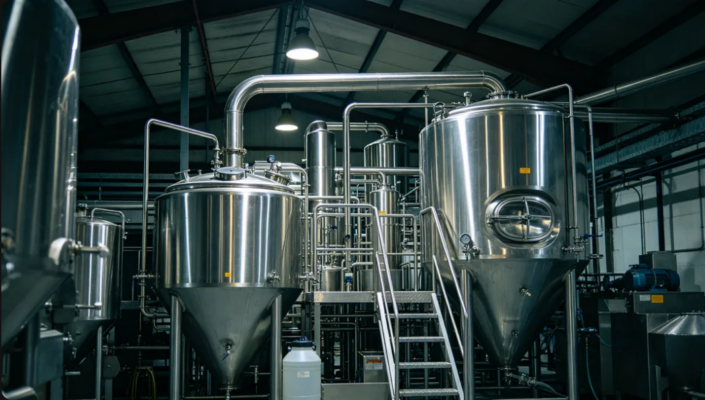
How Can Buyers Evaluate Brewing Equipment Manufacturer Reliability?
Certification and Customer Experience Show Manufacturing Capability
Before purchasing, buyers should check:
Factory Capability
A professional manufacturer should have:
- Modern production facilities
- Experienced engineers
- Quality inspection processes
- International project experience
Certifications
Common certifications include:
- CE certification
- ISO quality management certification
- Pressure vessel certifications
Customer References
Previous brewery projects demonstrate whether the manufacturer can successfully deliver complex systems.
Global project experience indicates that the manufacturer understands different market requirements and installation environments.
What Future Trends Are Brewing Equipment Manufacturers Following?
Smart Brewing Systems Are Becoming More Popular
The future of brewing equipment is moving toward intelligent manufacturing.
Key trends include:
Smart Control Systems
Digital monitoring allows operators to track production data in real time.
Energy-Efficient Equipment
Modern manufacturers focus on reducing:
- Steam consumption
- Water usage
- Cooling energy
- Cleaning costs
Modular Brewery Design
Modular systems allow breweries to expand production without replacing the entire brewery setup.
This approach is especially valuable for craft breweries that plan gradual growth.
How Should Buyers Choose the Right Brewing Equipment Manufacturers?
Selecting a Long-Term Equipment Partner Is More Important Than Buying Machines
The right manufacturer should provide a combination of quality equipment, engineering expertise, customization ability, and reliable service.
Before making a decision, buyers should ask:
- Does the manufacturer understand my production goals?
- Can they provide complete brewery solutions?
- Are equipment materials and components reliable?
- Can they provide installation and technical support?
- Can the system expand with future business growth?
A strong manufacturing partner helps breweries achieve stable production and long-term competitiveness.
Conclusion: Reliable Brewing Equipment Manufacturers Build the Foundation for Successful Breweries
Choosing professional Brewing Equipment Manufacturers is essential for building an efficient, scalable, and profitable brewery. The best manufacturers provide complete brewing solutions, customized engineering, advanced automation, and continuous technical support. Instead of focusing only on equipment prices, brewery owners should evaluate manufacturing experience, product quality, system design, and long-term service capability.
A reliable equipment partner can help breweries produce consistent beer quality, improve operational efficiency, and successfully grow from startup operations into professional beer production businesses.
Frequently Asked Questions About Brewing Equipment Manufacturers
1. How Do I Choose the Right Brewing Equipment Manufacturer?
The right manufacturer should have proven industry experience, complete product capabilities, customization services, and strong after-sales support. Buyers should compare equipment quality, technical specifications, and previous brewery projects before making a decision.
2. How Much Does Brewery Equipment From Manufacturers Usually Cost?
The cost depends on brewery capacity, automation level, equipment materials, and configuration. Small craft brewery systems may require a smaller investment, while commercial and industrial systems require larger budgets due to higher production capacity and advanced technology.
3. Can Brewing Equipment Manufacturers Customize Systems for Different Breweries?
Yes. Professional manufacturers can customize brewhouse capacity, fermentation tank numbers, automation systems, layout design, and packaging solutions according to different production requirements.
4. Do Brewing Equipment Manufacturers Provide Installation and After-Sales Support?
Most experienced manufacturers provide installation guidance, technical training, spare parts support, and maintenance services. These services help breweries operate equipment efficiently after commissioning.
