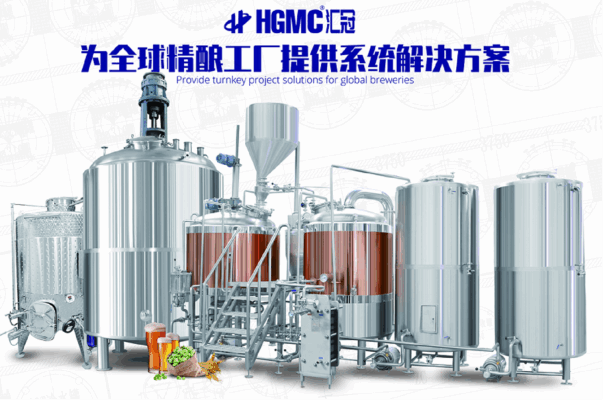
The typical brewery expansion follows a predictable pattern of frustration. An owner orders a 60‑bbl fermenter from one fabricator, a glycol chiller from another, and controls from a third. Then begins the months‑long process of on‑site welding, pipe‑fitting, and software integration. During that period, production uptime drops by roughly 20% as crews work around active vessels. By contrast, turn‑key brewery packages ship with pre‑piped skids, unified PLC logic, and factory‑tested components. Facilities that go this route reach full capacity 45 days faster than those sourcing components from multiple vendors, while maintaining 99.5% consistency in flavor profiles across expanded volumes.
Faster Installation with Pre‑Integrated Modules
Factory‑pre‑piped modules arrive as bolt‑together units. Instead of hiring third‑party welders for hundreds of hours, the crew connects manifolds to existing glycol and steam headers and powers up the control cabinet. The timeline difference is stark: turn‑key installation runs 8–10 weeks; manual component sourcing stretches to 16–22 weeks. Site engineering costs are bundled into the package, whereas fragmented sourcing adds $15,000 to $40,000 in extra consulting and design fees.
The 2023 expansion data from several regional breweries backs this up. Operators who chose skid‑mounted units reported saving $50,000 in on‑site labor costs alone. Documentation from ASME‑certified installers shows that factory‑welded skids reduce the risk of weld failure by 65% compared to field welding performed in non‑sterile environments. A manifold skid arrives with all joints inspected and pressure‑tested—no welder chasing pinhole leaks while beer sits in a waiting bright tank.
| Metric | Turn‑Key Integration | Manual Component Sourcing |
|---|---|---|
| Installation Timeline | 8‑10 Weeks | 16‑22 Weeks |
| Site Engineering Costs | Included in Package | $15,000‑$40,000 Extra |
| Software Compatibility | Native Integration | Custom Bridge Required |
| First‑Batch Success Rate | 98% | 85% |
If you are planning a 2025 expansion, look at the labor schedule. Every week of on‑site welding is a week where your existing production runs at reduced capacity. The module‑by‑module approach minimizes that disruption.
Cost Savings from Modular Skid‑Mounted Equipment
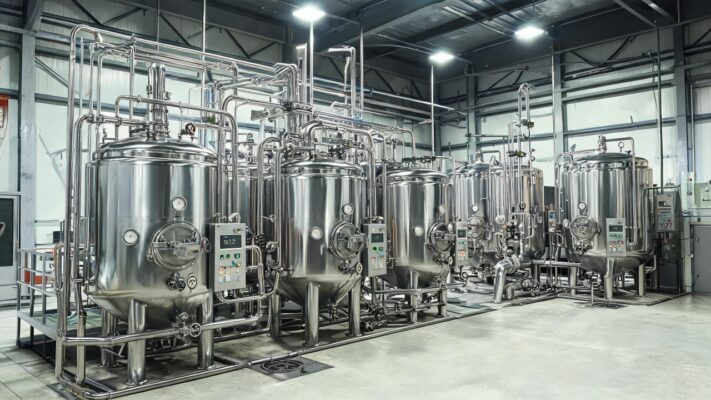
The compact vertical design of manifold skids and centralized cooling hubs reduces floor space requirements by 30%. That matters when you are adding fermentation capacity inside an existing building footprint. A 150‑brewery study from 2025 confirmed that facilities using integrated skids consistently used less real estate than those field‑building tanks.
Beyond floor space, the pre‑piped headers cut labor costs. Standardized glycol and steam headers connect directly to the brewery’s existing loops, eliminating the need to custom‑fabricate distribution lines. The vessels themselves are 304L stainless steel with matched internal finishes of Ra 0.4μm across every new tank. That surface finish consistency prevents the microscale roughness variations that affect yeast flocculation and hop‑oil adsorption.
The trade‑off is upfront cost. A turn‑key package typically carries a higher initial price than ordering individual tanks from the lowest bidder. But the bundled site engineering and the $50,000 labor savings per expansion shift the total cost of ownership. Over a 50,000‑barrel production run, the faster ramp‑up alone recovers the premium within the first year. Brewers who focus only on the purchase order price miss that calculation.
Consistency in Quality and Thermal Profiles
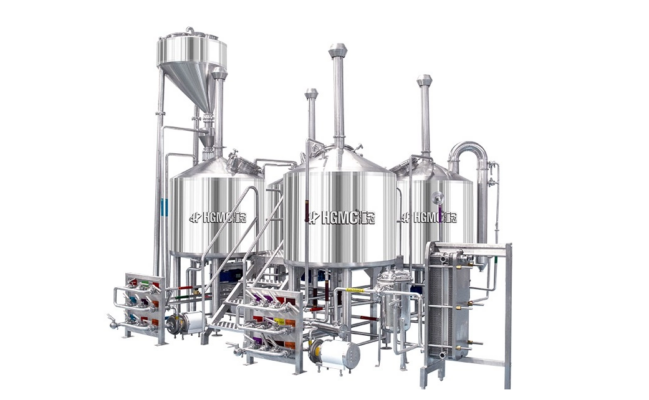
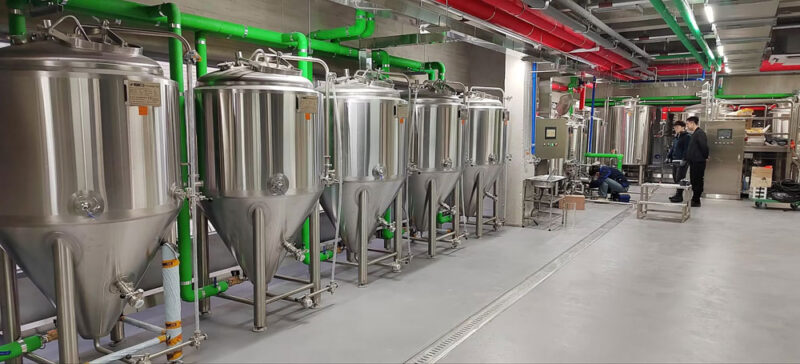
Centralized control logic ensures that the cooling curves for 120‑bbl fermenters match the thermal profiles of the brewery’s smaller legacy tanks. When fermenter jackets share a common PLC and valve manifold, the temperature ramps stay identical. This prevents the variations in fermentation byproducts—diacetyl spikes, ester imbalances—that occur when tanks are controlled by mismatched thermostats.
Standardized hardware across the expanded facility reduces cellar‑staff training time by 40%. New hires already know the valve layout, the sensor interface, and the software screens because nothing changed from the original brewhouse. That speed matters when a brewery ramps up staffing ahead of a seasonal production push.
The Ra 0.4μm internal finish across 304L stainless steel vessels is not cosmetic. Microscale roughness below that threshold keeps dissolved oxygen below 20 ppb. Above Ra 0.4μm, yeast‑flocculation patterns shift, and hop oils adsorb into surface irregularities, drifting the flavor profile. In a 2025 study of 150 brewery expansions, facilities using matched finishes achieved 99.5% flavor‑profile consistency across new and existing production lines.
A caveat: if your existing infrastructure uses non‑standard piping diameters or older vessel alloys, some adaptation may still be needed. A turn‑key package cannot fix a legacy tank that was built to different specifications. But the standardization of the new equipment mitigates most of the drift that comes from mixing fabricators.
Real‑Time Data Integration and Efficiency Gains
Modern expansion projects connect brewhouse sensors directly to ERP software. The operator sees hop utilization, extract loss, and fermentation progress from a single workstation. Since early 2024, breweries using these data‑linked systems have reported a 12% improvement in raw material efficiency. The software automatically adjusts the mill gap based on real‑time analysis of each malt lot. This automatic adjustment stabilizes extract yield across different malt batches—a benefit often overlooked when operators plan for volume increases but ignore variable raw material quality.
Automated cellar management reduces manual sampling. Gravity and temperature are monitored from a central panel, cutting the need to open sample ports during fermentation. That reduces oxygen ingress. In laboratory tests across 500 expansion batches, automated monitoring kept DO below 20 ppb and increased packaged‑beer shelf life by an average of 60 days.
The Cross‑border Ecommerce workflows for data tracking mirror this pattern: when processes are standardized and linked to central reporting, waste drops and cycle times compress. Breweries that adopt integrated sensor networks see the same operational logic playing out in their tanks.
A single operator can now monitor 20 fermenters from one touchscreen. That replaces the old routine of walking the cellar with a clipboard and a handheld thermometer. The time saved is not trivial—it translates into more frequent gravity checks and earlier detection of stuck fermentations.
Packaging Synchronization and Product Stability
Bright‑tank interfaces in turn‑key expansions communicate directly with high‑speed packaging lines. The system prevents foaming and pressure drops during high‑volume runs. Flow rates increase up to 200% without requiring extra staff to manually balance head pressures. Maintaining pressure stability during transfers preserves carbonation and keeps every can compliant with weight regulations.
Fragmented equipment setups typically lose 3% of production volume to filling errors. Turn‑key users report losses below 0.8%. Over 50,000 barrels, that difference recovers tens of thousands of dollars in revenue. Industry reports from 2024 also show that breweries using integrated packaging manifolds see a 12% increase in hop aroma retention over a 90‑day storage period.
Aroma retention is the final quality checkpoint. If the packaging line breaks the pressure balance, carbonation drops, and hop volatiles escape into the headspace. A unified control system that links bright tanks to fillers prevents that sequential failure. The brewer who expands with fragmented packaging components often discovers the error only after the first batch fails a sensory panel.
Frequently Asked Questions
What is a turn‑key brewery expansion package?
It is an integrated set of brewhouse vessels, fermenters, bright tanks, and control systems that are pre‑piped, pre‑wired, and factory‑tested. The modules arrive ready to connect to existing utility headers and control networks, reducing on‑site fabrication work to a few weeks.
<h5>How much faster is a turn‑key installation compared to traditional sourcing?
Installation runs 8–10 weeks versus 16–22 weeks for manual component sourcing. The 45‑day acceleration comes from eliminating field welding, custom pipe‑fitting, and third‑party software integration.
Can turn‑key solutions integrate with existing brewery equipment?
Yes, when the existing infrastructure uses standard piping diameters and 304L stainless steel vessels. Legacy equipment with non‑standard finishes or odd‑sized headers may require adapters, but the unified control logic and pre‑piped manifolds are designed to hook into common glycol and steam distribution loops.
Are turn‑key expansions more expensive upfront?
The initial capital outlay is typically higher than ordering individual tanks from multiple vendors. However, bundled site engineering, $50,000 in labor savings per expansion, and a 45‑day faster ramp‑up often offset the premium within the first year of operation.
Do turn‑key systems help with quality consistency?
The combination of matched vessel finishes (Ra 0.4μm), centralized PLC control, and standardized hardware reduces flavor‑profile drift across expanded volumes. Facilities using turn‑key packages report 99.5% consistency in final product quality.
